Award-Winning Trigonometry Tutors
serving Anaheim, CA
Trigonometry
Tutors in Anaheim
Private 1-on-1 tutoring, weekly live classes for academic support, test prep & enrichment, practice tests and diagnostics, and more to elevate grades and test scores.
Based on 3.4M Learner Ratings
UniversitiesSchools & Universities
DeliveredHours Delivered
ProficiencyGrowth in Proficiency
Who needs tutoring?
No obligation. Takes ~1 minute.

Trig identities and the unit circle tend to feel like arbitrary memorization until someone shows you the geometry underneath. Brian unpacks concepts like the law of sines, inverse trig functions, and polar coordinates by connecting them to the physics and engineering applications he studied at Caltech, giving each identity a reason to exist.
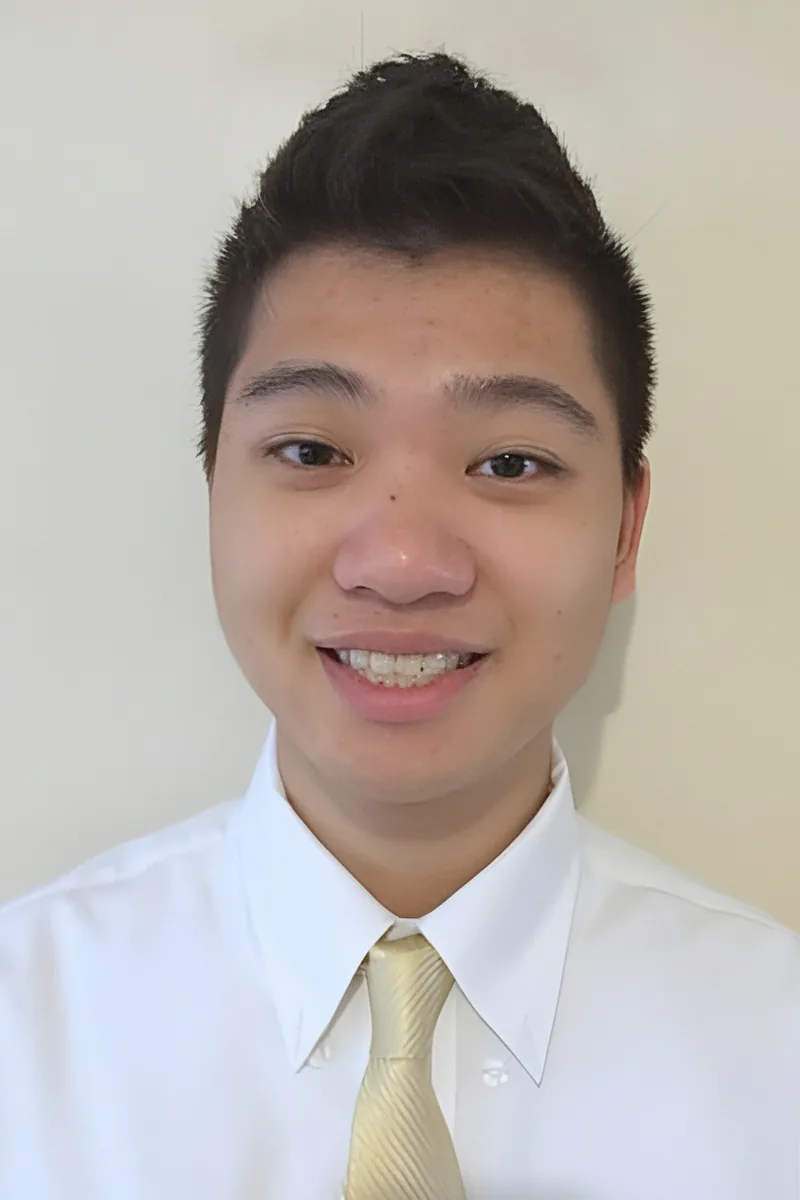
Trig identities and the unit circle trip up students who try to memorize without understanding why sin²θ + cos²θ = 1 or how reference angles actually work. Chris connects these ideas back to their geometric origins, making the relationships intuitive rather than arbitrary. His engineering coursework at UCLA keeps trigonometry in constant use, so he teaches it as a living tool, not a standalone chapter.
The unit circle trips up nearly every student the first time they see it, and Shant knows the trick is connecting sine, cosine, and tangent to something geometric and visual rather than leaving them as abstract ratios. His science-heavy UCLA coursework required fluency with trig identities and wave functions, so he teaches these concepts from experience rather than from a script. He's especially effective at demystifying graphing transformations and inverse trig functions.
Trig identities and unit circle values tend to feel like arbitrary memorization until someone shows you the geometry behind them. John connects sine, cosine, and tangent back to triangles and real-world applications — an approach sharpened by years of applying math in his biology and pre-med coursework at Loyola Marymount.
The unit circle trips up most trig students because it feels like pure memorization, but there's a geometric story underneath every identity and ratio. Mitch unpacks that story, walking through sine, cosine, and tangent as actual relationships between angles and distances rather than formulas to cram before an exam.
Trig identities and the unit circle tend to feel like arbitrary memorization until someone shows you the geometry underneath. Alok uses trigonometry constantly in his mechanical engineering work — from force decomposition to rotational dynamics — and teaches it by connecting sine, cosine, and tangent to physical situations students can visualize.
The unit circle doesn't have to be a memorization nightmare. Gerardo teaches trig identities and angle relationships by connecting them to the physics problems where they naturally appear — wave motion, vector components, projectile analysis — so students see why the math works the way it does. His dual background in physics and math education makes him particularly effective at demystifying Law of Sines and Cosines applications.
Trig identities and unit circle values can feel like an endless list to memorize, but Whitney teaches them as a connected system where each identity builds from a handful of core relationships. Her quantitative training in neuroscience at Pomona College means she's comfortable moving between sine and cosine graphs, inverse functions, and real-world applications like wave behavior and oscillation.
Trig identities can feel like an endless list of formulas to memorize, but Michael teaches students to derive most of them from the unit circle and a handful of core relationships. That approach turns verification problems and equation-solving into logical puzzles instead of memory tests. His range across math — from geometry through calculus — means he can show exactly where sine, cosine, and tangent reappear in later coursework.
The unit circle trips up most trig students because they try to memorize it as a table instead of understanding the geometry behind it. Jack teaches identities and angle relationships by tying them back to the triangles and circles that generate them, so formulas like the law of cosines actually make intuitive sense. His background spans biology, physics, and calculus — all subjects where trig shows up constantly.
The unit circle is where most trig students either lock in or start falling behind — Kellie tackles it by connecting each identity and ratio back to geometric intuition rather than treating them as formulas to memorize. She also covers graphing sinusoidal functions, inverse trig, and the Law of Sines and Cosines with an emphasis on sketching and visualization. Her broad math teaching range, from algebra through calculus, means she knows exactly where trig fits in the bigger picture.
I'm an affable chemistry-loving person whose joy come from delivering knowledge :D
The unit circle tends to be the make-or-break moment in trigonometry — once it clicks, identities, graphs, and inverse functions all start to connect. Alex approaches trig by building that geometric intuition first, drawing on his mathematics training at UCLA to show why sine and cosine behave the way they do rather than asking students to memorize charts.
The unit circle doesn't have to be a memorization nightmare. Drew teaches trig identities and sinusoidal graphs by building them from scratch — starting with right-triangle definitions and extending into radian measure — so students actually understand why sin²θ + cos²θ = 1 instead of just accepting it.
Trig identities can feel like an endless list of formulas to memorize — until someone shows you the unit circle logic underneath all of them. Daniel, a Harvey Mudd engineering graduate, treats trigonometry as a geometric story about circles and triangles, connecting sine, cosine, and tangent to physical intuition so that identities and inverse functions start making sense on their own.
The unit circle is where most trig students either build real understanding or start memorizing blindly. Joanne breaks down identities, inverse functions, and the Law of Sines and Cosines by tying each one back to that circle, so the relationships feel logical rather than arbitrary. She holds a 5.0 rating across her students.
The unit circle tends to be the make-or-break moment in Trigonometry — once it clicks, identities and graphing start to follow naturally. Lizzy teaches students to see trig functions as relationships between angles and ratios rather than formulas to memorize, connecting each concept back to that foundational circle.
Planning to pursue graduate work in mathematical game theory, Alain thinks about trig functions through the lens of strategic optimization — where periodicity and angular relationships show up in modeling cyclical decision-making. His UCLA math minor means he's worked through the proofs behind identities and the unit circle, not just the plug-and-chug versions. He breaks down topics like the law of sines and graphing transformations by tying them back to the algebraic logic students already trust.
The unit circle tends to feel like arbitrary memorization until someone shows you the geometry behind it. Nathan connects sine, cosine, and tangent back to right-triangle relationships students already know, then extends that intuition to identities, inverse functions, and graphing transformations so each new topic feels like a natural next step.
Trig identities and unit circle values tend to feel like arbitrary memorization until someone shows you the geometric reasoning underneath. Fady breaks down concepts like the law of sines, radian measure, and sinusoidal graphing by tying each one back to a visual or physical intuition — an approach shaped by years of applying trig in physics and calculus problem sets.
Trig is where math stops feeling like arithmetic and starts feeling like a foreign language — unit circles, identities, inverse functions all hit at once. Sean breaks down each concept with a sense of humor and a knack for analogy, honed through improv training at Second City, that makes even the law of cosines feel approachable.
Trig identities and the unit circle can feel like an endless list to memorize, but Hugo approaches them as interconnected patterns rather than isolated formulas. His aerospace engineering training required constant use of trigonometric functions — from analyzing wave behavior to resolving force vectors — so he explains these concepts with the fluency of someone who applies them daily.
Trig identities and unit circle values tend to feel like arbitrary things to memorize until someone shows you the geometry underneath them. Sarah approaches trigonometry by connecting each identity back to the circle and triangle relationships that generate it, drawing on the spatial reasoning she developed through her physics training at Clark University.
Trig can feel like a completely different language — unit circles, identities, inverse functions — and most students struggle because they never built strong intuition for what sine and cosine actually represent geometrically. Brian's math background through calculus at UChicago means he teaches trig concepts with an eye toward why they matter, connecting each identity back to the triangle or circle it describes.
Trig is where algebra meets geometry, and the shift from memorizing SOH-CAH-TOA to actually understanding unit circle relationships and identities trips up a lot of students. Zachary's biochemistry and biophysics background means he used trig constantly — modeling wave functions, analyzing molecular angles — so he teaches it as a toolkit with real applications, not just abstract formulas.
The unit circle is where most trigonometry students either click or stall, and everything from graphing sine and cosine to verifying identities depends on truly internalizing it. Dalton approaches trig by anchoring each new identity or equation back to that geometric foundation, so students can derive relationships on the fly instead of relying on a memorized sheet.
Trig identities and the unit circle can feel like a wall of disconnected formulas until someone shows you the geometry underneath them. Jake teaches students to visualize sine, cosine, and tangent as relationships on the coordinate plane, turning memorization into understanding that carries through to calculus.
The unit circle tends to be the make-or-break moment in trigonometry, and Amber teaches it as a visual tool rather than a table to memorize. From there she connects identities, inverse functions, and graphing transformations so each new topic feels like an extension of something students already understand. Her 5.0 rating speaks to how well that structured approach clicks.
Trig identities and the unit circle tend to feel like arbitrary rules until someone shows you the geometry underneath them. Daniel tackles trigonometry by connecting sine, cosine, and tangent back to the triangles and circles that give them meaning — an approach grounded in the applied math he uses regularly in his Rice biomedical engineering courses.
Trig identities and the unit circle tend to feel like a wall of disconnected formulas until someone shows you the geometry underneath them. Shun connects sine, cosine, and tangent back to the triangles and circles students already know, then builds outward to inverse functions, the law of cosines, and radian measure. His engineering-oriented materials science background means he's used trig in applied contexts most tutors haven't.
Trig identities and the unit circle stop feeling like arbitrary memorization once a student sees them as tools for describing rotation and waves. Dennis uses trigonometry constantly in his physics work — from resolving force vectors to modeling oscillations — and teaches it with that same concrete, visual intuition. He's particularly effective at demystifying inverse trig functions and the Law of Sines and Cosines.
The unit circle doesn't have to be a memorization exercise. Enrico teaches trig identities and sinusoidal functions by showing where they come from geometrically, so that formulas like the angle addition identities or the law of cosines feel like things students can derive on the spot rather than recall under pressure.
The unit circle doesn't have to be a memorization nightmare. Tim teaches trig identities and sinusoidal functions by connecting them back to the geometry students already know, building intuition for why these relationships exist — an approach sharpened by his computational science coursework at MIT, where trigonometric functions show up constantly in modeling and signal analysis.
Trig can feel like a wall of formulas unless someone connects the unit circle back to the triangles it came from. Ayako teaches students to see sine, cosine, and tangent as relationships rather than buttons on a calculator, then builds from there into identities and graphing transformations. Her 5.0 client rating speaks to how clearly she makes those connections land.
Trig identities and unit circle values click faster when a student understands *why* sine and cosine behave the way they do, not just where to look on a reference sheet. Czarina's biophysics coursework at Johns Hopkins means she uses trigonometric functions constantly — in wave equations, vector decomposition, and signal analysis — so she teaches them with real context baked in.
Testimonials
Because the right Trigonometry tutor makes all the difference.
Average Session Rating – Based on 3.4M Learner Ratings
Practice Trigonometry
Free practice tests, flashcards, and AI tutoring for Trigonometry
Nearby Trigonometry Tutors
Other Anaheim Tutors
Related Math Tutors in Anaheim
Frequently Asked Questions
Varsity Tutors matches Anaheim students with expert Trigonometry tutors for 1-on-1 instruction. We pair each student with a tutor based on their specific needs, learning style, and goals.
Whether you need homework help, exam prep, or want to get ahead, our Trigonometry tutors are ready to help.
Common challenges include gaps from earlier material, difficulty with specific concepts, and trouble applying learning to new problems. These issues can snowball quickly in Trigonometry.
A tutor identifies where you're stuck, fills in gaps, and provides targeted practice. The 1-on-1 format means you get help exactly where you need it.
Tutors work with your student's actual coursework—homework assignments, class notes, and upcoming tests. This keeps tutoring directly relevant to what's happening in the classroom.
When you share information about your student's school and curriculum, we can match you with a tutor who has relevant experience.
All tutors complete background checks, credential verification, and teaching evaluation. Many of our Trigonometry tutors hold advanced degrees or have years of teaching experience.
You can review tutor profiles to find someone with the right background for your student's level and needs.
Many students see improved grades within a few weeks, along with better understanding of Trigonometry concepts and more confidence tackling challenging material.
Tutors track progress and adjust their approach to ensure continued improvement.
Most students benefit from 1-2 sessions per week. More frequent sessions help if your student is significantly behind or has an important exam coming up.
Your tutor can recommend a schedule based on your student's specific situation and goals.
Tutoring is purchased in packages of hours, with rates varying by tutor experience. Varsity Tutors offers several options to fit different budgets and needs.
You can discuss pricing during your consultation to find what works best.
Your tutor will assess where your student is, discuss goals, and start working on priority areas. Most students bring current homework or upcoming test material to focus on.
By the end, you'll have a clear sense of how the tutor can help and a plan for moving forward.
Let’s find your perfect tutor
Answer a few quick questions. We’ll recommend the right plan and match you with a top 5% tutor.