Award-Winning Tutors
Who needs tutoring?
FEATURED BY


TUTORS FROM
- YaleUniversity
- PrincetonUniversity
- StanfordUniversity
- CornellUniversity
Find Expert Tutors Nationwide
Browse tutors by location, subject, or university
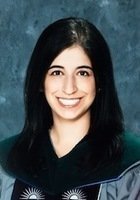
Certified Tutor
I am a licensed physician from Florida who is currently changing careers. I graduated from the University of Pennsylvania in 2009 and have extensive tutoring and editing experience. While a student, I became a certified writing tutor through the Critical Writing Department. Since I completed my writ...
Nova Southeastern University
PHD, Medicine
University of Pennsylvania
Bachelors, History
University of Pennsylvania
undergraduate
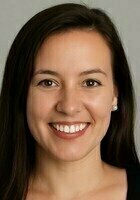
Certified Tutor
Kate
I'm available to tutor biology, chemistry, physics, math from Algebra up through AP Calculus, SAT test prep, and French. I've been tutoring students in science and math for 7 years. I also spent 8 months working and studying in France, and have tutored high school and adult students in French. When ...
Massachusetts Institute of Technology
Masters, Environmental Engineering
Massachusetts Institute of Technology
Bachelors
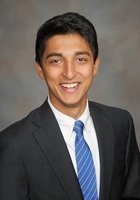
Certified Tutor
9+ years
Jai
I'm a recent Stanford graduate (Electrical Engineering and Computer Science), and have been working at a major Management Consulting firm for a few years now. I personally scored a 2360 (out of 2400) on the SAT and 35 on the ACT and was successful in gaining admission to several top universities. I'...
Stanford University
Bachelors in Electrical Engineering and Computer Science
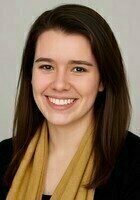
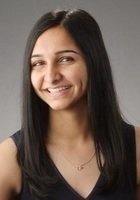
Certified Tutor
Erika
I am available to tutor middle and high school math, history and test prep. I have tutored math and history in the past and I previously taught a test prep course at a school in Hanoi, Vietnam. I have a lot of experience teaching all the need-to-know tricks to doing great on the SATS/ACTS! When I am...
Harvard University
Master of Public Policy, Public Policy
Certified Tutor
6+ years
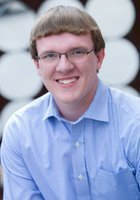
Rhea
I am a current student at the University of Chicago. I am working towards a Bachelor of Science in Biological Sciences, and I am on the pre-medical track. I am extremely passionate about tutoring, and I have several years of experience tutoring students in my high school's learning center in various...
University of Chicago
Bachelor of Science, Biology, General
Certified Tutor
6+ years
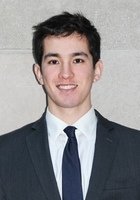
Jeffrey
I am enrolled in the Mechanical Engineering PhD program at Rice University which will begin Fall 2020, and I am hoping to return to academia as a professor after earning my PhD. In the meantime, I am looking to share my passion for gaining knowledge, specifically in STEM, by educating the up and com...
University of Notre Dame
Bachelor of Science
Rice University
Doctor of Philosophy, Mechanical Engineering
Certified Tutor
10+ years
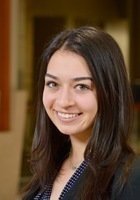
Zachary
I am passionate about teaching and tutoring and I thoroughly enjoy helping students gain an understanding and a drive for their studies. I have a long history of working with students of all grade levels and abilities (elementary school through college), and I have a good understanding of strategies...
Yale University
Bachelors, Biochemistry and Biophysics
Certified Tutor
5+ years
Tiffany
I am available to tutor a broad range of subjects, I am passionate about test preparation, Accountancy, and Algebra.
University of Notre Dame
Bachelor in Business Administration, Accounting
University of Chicago
Juris Doctor, Legal Studies

Certified Tutor
9+ years
Annie
I am currently a second year medical student. I was a Physiological Sciences major at UCLA (class of 2015), and pursued research during my gap year between undergrad and medical school.
University of California Los Angeles
Bachelors, Physiological Sciences
Drexel University College of Medicine
Current Grad Student, MD
Certified Tutor
6+ years
I am willing to address any issue with an open mind and I try to develop strategies that play to a student's strengths. I would like to think I am very approachable and personable, and I have had very positive experiences with many students in the past using this philosophy. Outside of academics, I ...
University of Notre Dame
Bachelor in Arts
Top States
Find expert tutors in your state





Meet Our Expert Tutors
Connect with highly-rated educators ready to help you succeed.
Sami
Pre-Algebra Tutor • +19 Subjects
I am a Duke University graduate in Economics and Computer Science. I am currently pursuing an MBA degree at the Yale School of Management. I have worked in the financial field, both at a management consulting firm and a fortune 500 company. My hobbies include playing and coaching soccer. Hobbies: reading, writing, art, books, music
Charles
AP Calculus AB Tutor • +25 Subjects
I am a junior Mechanical Engineering major at Yale, and I hope to become a Naval Aviator after college. I am also a varsity sailor, and enjoy playing music with friends when I can get some free time. I have been tutoring my fellow students throughout my entire academic career, and I would best describe my tutoring style as one that adapts to each students' needs. For example, I have always tried to frame questions in a different way so that the student can better understand the question. Some students need visual representations of numbers and systems to understand them, and others benefit more by understanding the concepts behind each formula. I prefer to tutor in math and physics, and especially with real world application problems. I hope to help students improve their standardized test scores and their understanding of the math and sciences so that they can achieve their academic goals! Hobbies: art, books, running, reading, music, writing
Tony
Calculus Tutor • +28 Subjects
I am a recent graduate of Yale University and incoming first year medical student at Columbia University. Originally from the DC area, I have always had a passion for science and medicine and pursued a degree in Biology while at Yale. During the 2008-2009 academic year, I tutored science, math, English, history, and Mandarin Chinese part-time with a DC-based tutoring company. At Yale, I worked as a freshman counselor to provide academic and career advice to incoming freshmen. I have taken both SAT and MCAT test prep classes and am familiar with both tests as well as the preparation necessary to score well. My personal career goals include attending medical school to pursue either immunology/infectious diseases or psych/neurology, teaching biology at the university level, and working in public/global health with either the CDC or the WHO.
MaryAnn
Calculus Tutor • +21 Subjects
I am a published author who has enjoyed “coaching” our daughter, as she navigated through high school, college and graduate school. I mentor college juniors who are seeking careers in financial services, and I serve as a peer resource to professionals who are transitioning from private industry to the nonprofit sector. Hobbies: reading, cooking, writing, books, music, art, travel
Samuel
AP Calculus AB Tutor • +29 Subjects
I am a freshman at Caltech majoring in Applied and Computational Mathematics. My favorite subject to tutor is math because I find it very rewarding to simplify complex topics to aid in understanding. I have lots of tutoring experience. In high school, I ran and taught an SAT prep class and was vice president of my school's NHS chapter where I ran our tutoring program, and I, myself, tutored. I also was a teaching assistant in the summer of 2020 for a class in discrete mathematics through a program called PACT (Program in Algorithmic and Combinatorial Thinking). I love learning and hope to make the process enjoyable for you!
Matthew
Pre-Algebra Tutor • +39 Subjects
I'm a highly creative person who works best with visual thinkers. Very recently graduated from Stanford University, I majored in Human Biology with a concentration in Bioinformatics and Stem Cell Science. Technical though my background may be, I am currently gigging as a singer/songwriter/composer in NYC and tackle even the most hard-science of problems with a top-down, big-picture, holistic approach. If you have a propensity to look at problems in a cross- or inter-disciplinary manner (or want to learn how to do so), I'm the tutor for you!
Sharon
Pre-Algebra Tutor • +29 Subjects
I am a graduate of the University of Chicago, and I will be starting a graduate program at Columbia in August. I am about to complete a year of service with City Year, an education non-profit that places young adults into under-served schools. As a City Year member, I worked full-time in the classroom with middle-school students who were in approximately the 10th percentile for math (meaning they score lower than 90% of students). One-fourth of those students were able to grow around 15 percentile points by the end of the year! Hobbies: reading, cooking, gardening, music, art, nature, books, writing
Earnest
Pre-Algebra Tutor • +26 Subjects
I am comfortable with either setting. I'm confident that I can help you (or your student) achieve to the best of their ability, so please don't hesitate to get in touch!
Pinelopi
Pre-Algebra Tutor • +25 Subjects
I am a Duke University graduate with a Bachelors degree in Psychology. I have experience tutoring all levels of Spanish language, all sections of the SAT, as well as algebra, pre algebra, geometry, and pre-calculus! I love kids & I have a very flexible schedule and a lot of patience! Let me help you :)
Samantha
Pre-Algebra Tutor • +38 Subjects
I'm a first-year medical student and recent graduate from Duke University, where I studied Global Health Determinants, Behaviors, and Interventions. From running a piano program at a nonprofit children's theatre to private tutoring in math, science, and standardized test prep, I enjoy helping my students become confident and self-sufficient learners! Hobbies: photography, travel, reading, music, writing, running, art, books, traveling
Browse by Subject Category
Top 20 Subjects
Top 20 Universities
Find The Best Tutors
Connect with expert tutors tailored to your learning needs