Award-Winning Chemistry
Tutors
Chemistry
Tutors
Private 1-on-1 tutoring, weekly live classes for academic support, test prep & enrichment, practice tests and diagnostics, and more to elevate grades and test scores.
Based on 3.4M Learner Ratings
UniversitiesSchools & Universities
DeliveredHours Delivered
ProficiencyGrowth in Proficiency
Who needs tutoring?
No obligation. Takes ~1 minute.
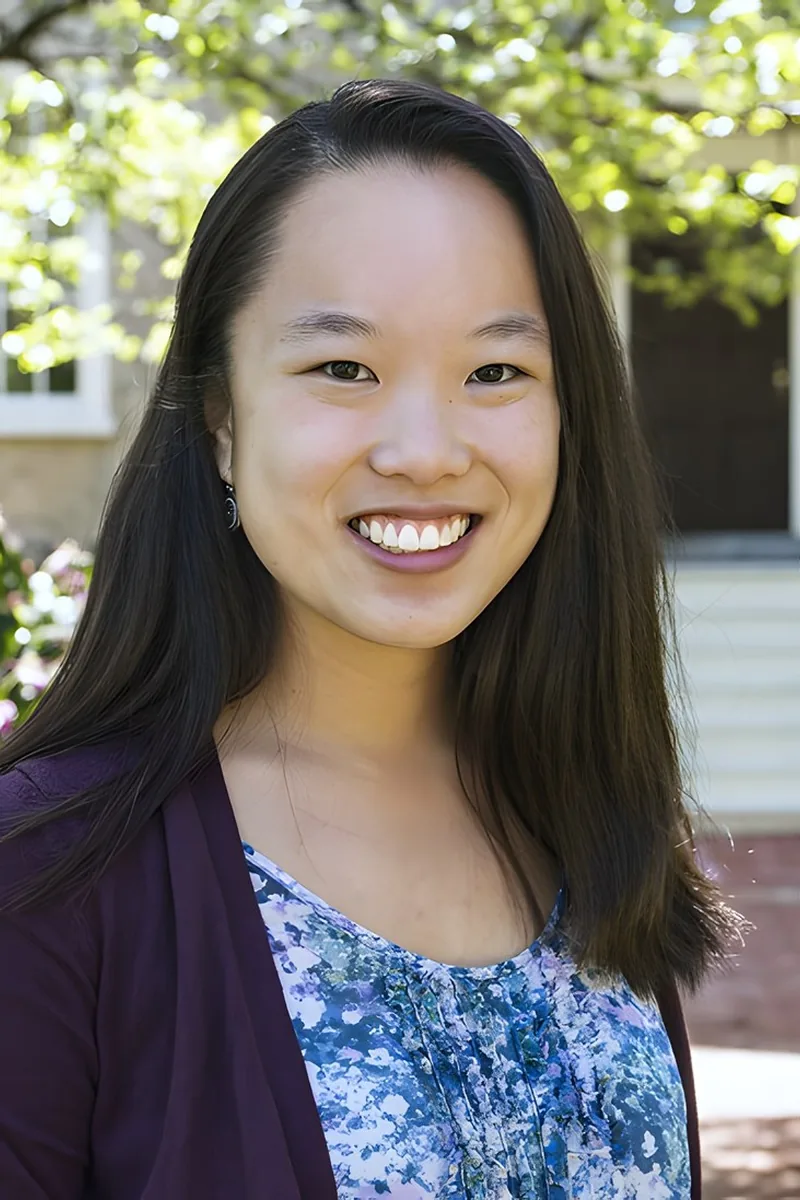
As a certified chemistry teacher running a 12th-grade course at one of Philadelphia's top magnet schools, Kathleen tackles everything from stoichiometry and gas laws to electrochemistry and organic functional groups. She connects each concept to lab-scale reasoning — predicting what should happen, explaining what actually did, and figuring out why they sometimes differ.

A chemistry degree from Yale means Zosia has spent serious time with stoichiometry, equilibrium, acid-base theory, and thermochemistry — the exact topics that tend to make or break a student's grade. She approaches each concept by building up from the atomic level, so balancing equations or predicting reaction products starts to feel like reasoning rather than guesswork. Rated 4.9 by students.
Stoichiometry, equilibrium, and thermodynamics all click faster when a student sees how they connect to real systems — and Kate's environmental engineering background means she can tie every chemistry concept to tangible processes like water treatment or combustion reactions. She breaks down dimensional analysis and reaction balancing into repeatable steps that build genuine confidence on exams.
Stoichiometry, equilibrium, and thermodynamics all click faster when you can see the math underneath them — and JF's math and computer science background at Stanford means that quantitative backbone comes naturally. He breaks down problems like limiting reagent calculations and ICE tables into logical steps that make the numbers feel intuitive rather than overwhelming.
Stoichiometry, electron configurations, thermodynamics — Chemistry asks students to think at the atomic level while solving problems that feel like math puzzles. Michelle spent four years at Rice immersed in chemistry coursework as a biochemistry major and now applies that knowledge daily in medical school, so she can explain not just how to balance equations but why the underlying principles matter.
Tim taught chemistry to middle and high school students at a STEM summer camp, where he learned to explain concepts like stoichiometry and molecular bonding without relying on the textbook's notation-heavy approach. His computational science background at MIT also means he's comfortable with the quantitative side — equilibrium calculations, thermodynamics, and kinetics — that trips up students transitioning from conceptual to problem-solving chemistry.
Stoichiometry, equilibrium, and thermodynamics all share one thing in common: they reward students who understand the "why" behind each calculation. Bidyut's biomedical engineering training at Johns Hopkins required deep chemistry coursework, and he draws on that background to explain concepts like reaction kinetics and molecular bonding with precision. He's especially good at walking through dimensional analysis and unit conversions until they become second nature.
Having designed and optimized light filters for optical-electronic multiplexers, Dennis understands chemical bonding, molecular geometry, and spectroscopy from a hands-on engineering perspective. He tackles tricky chemistry topics — stoichiometry, reaction balancing, periodic trends — by grounding them in the physical principles that explain why atoms behave the way they do.
Stoichiometry, equilibrium, acid-base reactions — chemistry rewards students who can think in ratios and relationships, not just memorize formulas. Sydny's triple-science undergraduate background and medical training mean she can explain why a reaction behaves the way it does at the molecular level, then connect that understanding to the math on the page.
From stoichiometry and equilibrium to thermodynamics and acid-base chemistry, Josef approaches each topic by tying it back to observable phenomena he encountered in Cornell's research labs. He scored in the 99th percentile on the MCAT's Chemical and Physical Foundations section, which required exactly the kind of rapid, conceptual chemistry reasoning he now teaches.
Stoichiometry and mole conversions trip up most chemistry students because they look like pure math divorced from anything real. Caroline connects these calculations to tangible examples — like how much reactant a chemical plant actually needs — drawing on her years working at an ExxonMobil refinery. That industrial context makes balancing equations and predicting yields feel purposeful.
A chemistry degree gives Sung the depth to teach everything from stoichiometry and equilibrium to organic reaction mechanisms and thermodynamics at the college level. He treats problem sets as opportunities to trace the reasoning behind each step — balancing equations, for instance, becomes an exercise in conservation laws rather than trial and error. Rated 5.0 by students.
Premed coursework demands a deep understanding of chemistry, from thermodynamics and equilibrium to acid-base reactions and electrochemistry. Nishad tackles these topics by linking abstract concepts to tangible applications — explaining buffer systems through blood pH regulation, or teaching reaction kinetics through enzyme behavior.
A summa cum laude biochemistry degree from Rice plus years of medical school coursework gave Sugi deep fluency across general chemistry — from stoichiometry and equilibrium through electrochemistry and coordination compounds. She teaches the reasoning behind each concept so students can tackle unfamiliar problems, not just reproduce memorized steps. Rated 5.0 by students.
Stoichiometry and equilibrium tend to be the two places where chemistry students lose their footing, often because the underlying logic gets buried under conversion steps. Yu tackles these topics by making students narrate what's happening at the molecular level before touching any math. Her education training at Harvard sharpened her ability to pinpoint exactly where a concept breaks down for each learner.
Mechanical engineering at Harvard means Christopher lives in the overlap between chemistry and physics — material properties, thermodynamics, and reaction energetics show up constantly in his coursework. He breaks down topics like bonding, gas laws, and enthalpy calculations by tying them to tangible engineering problems, which gives abstract concepts a concrete anchor. Rated 4.8 by students.
Balancing equations and unit conversions might seem straightforward, but chemistry gets genuinely tricky once gas laws, equilibrium expressions, and acid-base calculations enter the picture. James majored in chemistry at Harvard and has tutored students across general and organic chem, so he knows how to connect early concepts like mole ratios to the more complex problems they enable later. That forward-looking approach keeps students from having to re-learn fundamentals mid-semester.
Political science might seem far from chemistry, but Asta's 35 ACT — including the Science section — required quick, accurate reasoning through data-heavy passages on reaction rates, gas behavior, and experimental design. She applies that same structured, analytical approach to breaking down chemistry problems like dimensional analysis and mole conversions, making the logic behind each step visible. Rated 5.0 by students.
Stoichiometry, equilibrium, and acid-base reactions all require a kind of disciplined reasoning that Jessica developed through years of medical training, where chemistry underpins everything from pharmacology to metabolic pathways. She breaks down each problem type into a clear sequence of decisions rather than a wall of formulas to memorize.
Stoichiometry, electron configurations, acid-base equilibria — chemistry has a reputation for feeling like a new language. Perry approaches it that way, teaching students the underlying grammar of moles, bonding, and reaction types so that problem-solving becomes intuitive rather than formulaic.
Stoichiometry, electron configurations, and equilibrium calculations all demand a specific kind of careful, step-by-step reasoning. As a pre-med biomedical engineering student at Yale, Ellie uses chemistry constantly — from biochemistry coursework to her research in the School of Medicine. She's particularly good at teaching students to set up dimensional analysis and reaction problems methodically so they stop making the small errors that tank exam scores.
Balancing redox reactions or predicting products from a solubility table requires a kind of structured problem-solving that doesn't always come naturally. Akarsh's molecular biology training gave him deep fluency in chemical bonding, stoichiometry, and reaction kinetics, and he teaches students to approach each problem type with a clear, repeatable method.
From balancing redox equations to predicting molecular geometry with VSEPR, chemistry rewards students who understand the 'why' behind each rule. Garrett unpacks concepts like electronegativity trends and equilibrium shifts by tying them back to atomic structure, so students build a mental model they can apply to new problems. His science background across biology and physical chemistry gives him a wide lens for making connections that stick.
Stoichiometry, molecular bonding, and reaction mechanisms are the backbone of Aimee's entire academic career in chemical engineering. She explains concepts like mole ratios and electron configurations by grounding them in the lab and industrial processes she's studied at Georgia Tech, which gives students a concrete anchor for material that can otherwise feel purely theoretical. Rated 4.9 by students.
Balancing equations, understanding mole ratios, distinguishing ionic from covalent bonds — chemistry has a vocabulary and logic all its own. John spent years teaching and chairing a science curriculum in Philadelphia, which gave him a sharp sense of how to sequence these ideas so each one builds naturally on the last.
Mole conversions, reaction types, gas laws — chemistry is full of concepts that seem disconnected until someone shows you the thread running through them. Amber excels at making those connections explicit, walking students through dimensional analysis and molecular interactions in a way that clicks. She tutors across math and science subjects, which means she's comfortable tackling the quantitative side of chemistry head-on.
Balancing equations is mechanical; understanding why copper sulfate is soluble while barium sulfate isn't requires a different kind of thinking. Maggie's dual degree in economics and molecular biology means she learned chemistry from both the quantitative and the conceptual side, and she uses that range to tackle everything from mole conversions to acid-base equilibria. She's especially effective at connecting lab observations to the underlying theory.
As a pre-med student at Duke, Camille completed a full chemistry sequence — general through organic — and knows firsthand how abstract concepts like stoichiometry and electron configuration can feel before they finally click. She unpacks each topic by connecting molecular-level ideas to tangible examples students can actually visualize.
Between stoichiometry, equilibrium, and thermodynamics, chemistry asks students to think in multiple registers — quantitative, conceptual, and visual — sometimes in the same problem. Kade's dual focus on biology and chemistry at Northwestern means he's constantly applying these ideas across disciplines, which gives him a practical lens for explaining everything from mole conversions to acid-base titrations.
Alec started his teaching career running problem-solving sessions as a general chemistry TA at Cornell, walking students through stoichiometry, equilibrium, and thermochemistry. That hands-on experience taught him exactly where students lose the thread — often at the jump from conceptual understanding to quantitative problem-solving — and he's been closing that gap ever since. Rated 4.8 by students.
Stoichiometry, equilibrium, and thermodynamics all demand comfort with both the math and the conceptual model behind it, which is exactly where a biomedical engineering background pays off. Annie connects chemical principles to real applications — reaction kinetics in biological systems, acid-base balance in the body — making abstract ideas tangible. She holds a 4.9 rating from past students.
Balancing equations and understanding the mole concept are often the first real hurdles in chemistry, and Paula unpacks both by tying them to tangible, everyday examples. She scored a 1520 SAT and 32 ACT, reflecting the kind of cross-disciplinary thinking that makes abstract chemistry topics more accessible.
The periodic table isn't just a chart to memorize — it's a map that predicts bonding behavior, reactivity, and molecular geometry if you know how to read it. Matthew teaches chemistry through that lens, connecting electron configuration to the "why" behind everything from Lewis structures to acid-base reactions. His biochemistry research at Yale keeps these ideas grounded in real applications.
Balancing equations, stoichiometry, and molecular bonding each require a different kind of thinking, and Mosab adjusts his explanations accordingly. His health sciences background means he regularly uses chemistry concepts in his own coursework, so he can show students why moles and electron configurations actually matter beyond the textbook. He holds a 5.0 client rating.
A neuroscience degree with a chemistry minor means Matt didn't just take general chemistry — he built on it through organic, analytical, and biochemistry courses that kept reinforcing core principles like equilibrium, thermodynamics, and molecular bonding. He unpacks abstract concepts like Le Chatelier's principle or orbital hybridization using concrete examples that make the logic click rather than feel arbitrary.
Sanjana's applied math background at Harvard gives her a quantitative lens on chemistry — she's especially effective at breaking down stoichiometry, equilibrium calculations, and unit analysis into logical steps. She treats chemistry problem sets the way she treats math: find the pattern, set up the framework, then solve.
Balancing equations and memorizing the periodic table are just the entry point — chemistry gets interesting when students start predicting what happens during a reaction and why. Jonathan digs into stoichiometry, acid-base equilibria, and bonding theory by connecting each concept to observable phenomena, an approach shaped by his extensive lab experience in Cornell's science program.
Understanding stoichiometry or molecular geometry becomes much easier when a student can visualize what's happening at the atomic level, not just balance numbers on a page. Emily's computational biology work at Cornell keeps her deeply engaged with chemical principles, and she brings that perspective to topics from bonding and Lewis structures through acid-base equilibria.
Cornell's chemical engineering program is notoriously rigorous on the chemistry side — physical chemistry, organic chemistry, and thermodynamics are all baked into the curriculum before students ever touch reactor design. Rahul graduated magna cum laude from that program, which means he's internalized concepts like reaction kinetics, equilibrium, and energy transfer at a level most chemistry tutors simply haven't reached. He pushes for conceptual understanding over memorization, so students learn to predict what should happen in a reaction rather than just recalling what the textbook says.
A solid grasp of mole conversions, Lewis structures, and acid-base equilibria sets the stage for everything else in chemistry. Abrahim earned his biology degree cum laude from UCLA with heavy chemistry coursework and now applies that knowledge in medical school, so he explains foundational concepts with precision and quickly identifies which specific skill — whether it's dimensional analysis or electron geometry — needs attention.
Testimonials
Because the right Chemistry tutor makes all the difference.
Average Session Rating – Based on 3.4M Learner Ratings
Practice Chemistry
Free practice tests, flashcards, and AI tutoring for Chemistry
Top 20 Science Subjects


Top 20 Subjects
Frequently Asked Questions
Students typically find stoichiometry, equilibrium, and acid-base chemistry most difficult because they require understanding multiple interconnected concepts simultaneously. Balancing chemical equations trips up many students—not because the concept is complex, but because it demands careful attention to atomic conservation and pattern recognition. Thermodynamics and kinetics also challenge students because they involve abstract thinking about energy transfer and reaction rates that aren't directly observable. A tutor can break these topics into smaller, manageable pieces and use visual models to make the invisible visible.
Understanding is always the foundation—memorization without conceptual understanding leads to mistakes and makes it impossible to solve novel problems. However, Chemistry does require some memorization: the periodic table trends, common polyatomic ions, and solubility rules are tools you'll use repeatedly. The key is memorizing strategically only what you need as a foundation, then building deep understanding of how those pieces connect (like why Group 1 metals behave similarly, or how electronegativity predicts molecular polarity). A tutor helps you distinguish between what's worth memorizing and what you should understand deeply, then teaches you how to derive answers from first principles when you need them.
Balancing equations requires a systematic approach that many students never learn—they try random guessing instead. A tutor teaches you the step-by-step method: identify what's on each side, balance one element at a time (usually metals first, then nonmetals, then oxygen and hydrogen), and use the smallest whole number coefficients. Beyond the mechanics, a tutor helps you understand what balancing actually means (conservation of mass) so you recognize when an equation doesn't balance and can troubleshoot why. They'll also show you how to handle trickier cases like polyatomic ions and fractional coefficients, then practice with you until the process becomes automatic.
Unit conversions in Chemistry are harder than in other sciences because you're often converting between different types of units simultaneously—moles to grams, liters to milliliters, molarity to molality—and you need to know which conversion factors apply to which situations. Students often memorize conversion factors without understanding what they represent, so they plug numbers into formulas incorrectly. A tutor teaches you dimensional analysis as a problem-solving tool: set up your conversion so units cancel logically, which forces you to think about what you're actually calculating rather than just following a formula. This approach works for any conversion, from simple stoichiometry to complex gas law problems.
Many students see lab as separate from lecture—they follow procedures without understanding why they're doing each step or how it connects to the theory they learned in class. A tutor bridges this gap by explaining the purpose behind each lab procedure and how it demonstrates or tests theoretical predictions. For example, in a titration lab, understanding the theory of acid-base equilibrium and indicator color changes makes the procedure meaningful instead of just "add solution until color changes." Tutors also help you analyze lab data critically: What do your results tell you? Do they match theoretical predictions? Why or why not? This develops genuine scientific thinking rather than just following steps.
Chemistry requires you to think in three dimensions about particles you can't see, which is genuinely difficult—many students struggle with Lewis structures, VSEPR theory, and molecular geometry because they can't picture what's actually happening. A tutor uses multiple visualization strategies: drawing Lewis dot structures carefully to show electron distribution, using molecular models or 3D sketches to show spatial arrangement, and relating abstract concepts to tangible analogies (like electron pairs repelling like magnets). They'll also teach you to predict molecular shape from bonding theory rather than just memorizing shapes, so you understand why methane is tetrahedral and why water is bent. Regular practice with visualization tools—whether physical models, drawings, or digital simulations—trains your spatial reasoning so these concepts become intuitive.
A formula-focused tutor shows you how to plug numbers into equations; a problem-solving tutor teaches you to analyze what the problem is actually asking, identify which concepts apply, and choose the right approach. In Chemistry, the same numbers might require different solution paths depending on context—calculating molarity is different from calculating moles in a stoichiometry problem, even though both involve the mole concept. A skilled tutor helps you develop a systematic approach: read carefully, identify what you know and what you're solving for, draw diagrams or write out the relevant equations, check that your answer makes sense (is it the right magnitude? right units?). This metacognitive approach transfers to any Chemistry problem, not just the ones you've practiced.
Look for tutors with strong Chemistry backgrounds—ideally a degree in Chemistry or a related science field, or extensive teaching experience in Chemistry at the high school or college level. Beyond credentials, the best Chemistry tutors understand common student misconceptions and can explain why students make certain mistakes (for example, why students often forget to balance oxygen last, or why they confuse molarity with molality). They should be comfortable with lab concepts and real-world applications, not just textbook problems, and able to explain the "why" behind procedures and theories. When you connect with a tutor through Varsity Tutors, you can discuss their specific Chemistry experience and teaching approach to ensure they match your learning style and goals.
Let’s find your perfect tutor
Answer a few quick questions. We’ll recommend the right plan and match you with a top 5% tutor.