Award-Winning Mathematica
Tutors
Mathematica
Tutors
Private 1-on-1 tutoring, weekly live classes for academic support, test prep & enrichment, practice tests and diagnostics, and more to elevate grades and test scores.
Based on 3.4M Learner Ratings
UniversitiesSchools & Universities
DeliveredHours Delivered
ProficiencyGrowth in Proficiency
Who needs tutoring?
No obligation. Takes ~1 minute.
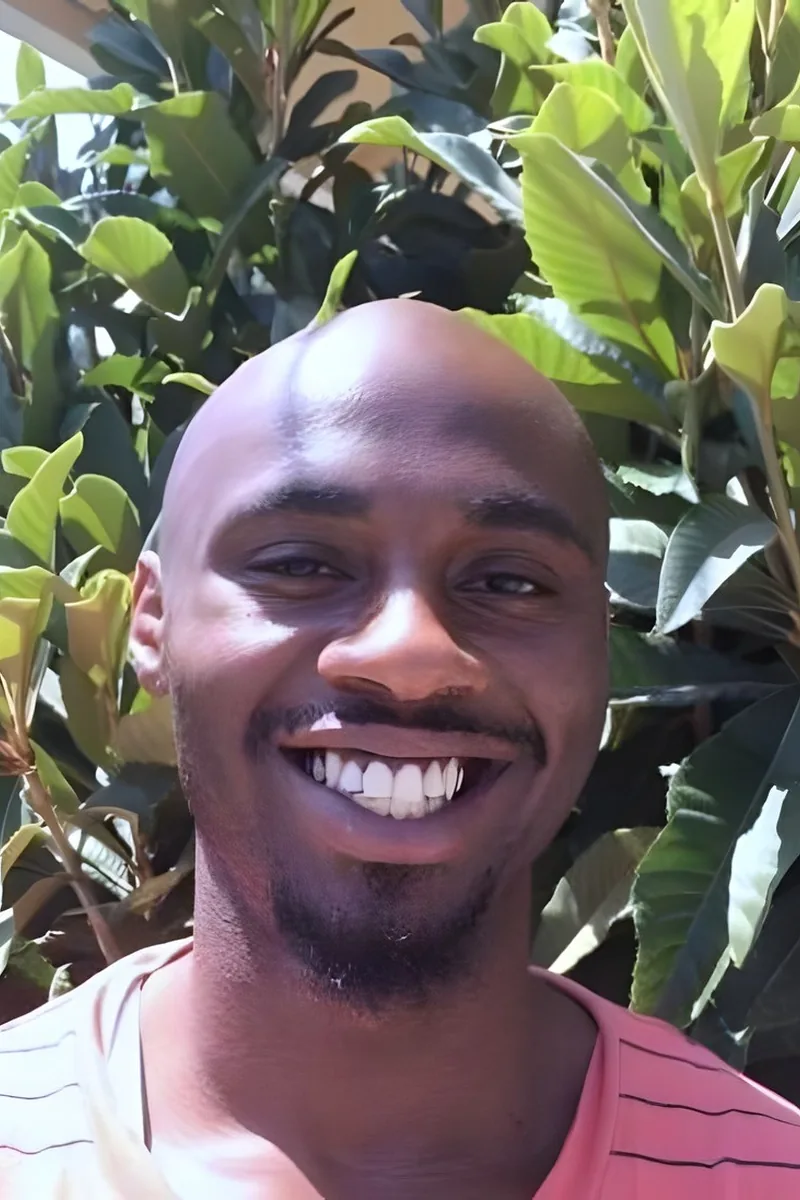
Mathematica's symbolic computation engine is powerful but unintuitive, and students often struggle with its functional programming syntax and notebook-based workflow. Brian used Mathematica extensively during his Caltech coursework for everything from solving differential equations symbolically to plotting multivariable functions, so he knows the shortcuts and pitfalls that textbooks skip.

Three engineering degrees plus a concentration in applied mathematics meant Rahi spent serious time translating calculus, linear algebra, and differential equations into computational workflows. He approaches Mathematica by connecting its Wolfram Language commands directly to the math students already understand — so defining a function or solving an integral in code feels like a natural extension of pencil-and-paper work, not a separate skill to learn from scratch.
Studying mathematics and computer science at Harvard means Matthew regularly moves between abstract math and writing code that executes it — exactly the dual fluency Mathematica demands. He tackles the Wolfram Language from a programmer's perspective, teaching students how list manipulation, pattern matching, and functional constructs map onto the calculus and linear algebra problems they're trying to solve. Rated 4.9 by students.
Physics Ph.D. work at Carnegie Mellon means Madeline lives in Mathematica — using it to solve differential equations symbolically, run numerical simulations, and generate plots that make complex physical systems visible. She teaches the Wolfram Language the way she learned it: by tying every command back to the math and physics it represents, so students build notebooks that solve real problems instead of mimicking tutorial examples. Rated 4.8 by students.
Most students encounter Mathematica when a physics or math course suddenly demands symbolic computation and they've never touched the software. Moe has used it throughout his electrical and nuclear engineering work for everything from solving differential equations to visualizing complex functions, and he can get students productive in the environment quickly.
Between her programming experience in C++, Python, and R and her strong math coursework through calculus, Marissa sits at the intersection Mathematica occupies — computation meets mathematics. She teaches students how to translate familiar algebraic and calculus operations into Wolfram Language commands, turning abstract notebook workflows into something that actually clicks.
Computer engineering coursework at URI put Alfred in front of Mathematica for tasks like symbolic algebra, plotting, and automating calculations — the kind of work where knowing both the math and the programming logic makes the difference. He breaks down Wolfram Language syntax alongside the underlying concepts so students can build notebooks that actually do what they intend. Rated 5.0 by students.
Few tutors know both the math and the software well enough to teach Mathematica properly — Irene does. Her PhD work in mathematics and computer science means she can walk through symbolic computation, plotting, matrix operations, and custom function definitions while explaining the underlying math each command automates.
A mechanical engineering Ph.D. means Adel has spent years feeding differential equations, matrix operations, and thermodynamic models into Mathematica's symbolic and numerical solvers — the kind of applied problems where one misplaced bracket can derail an entire notebook. He teaches students to structure their Wolfram Language code around the math they already know, so tasks like solving coupled ODEs or generating parametric plots become repeatable workflows rather than trial-and-error guessing.
As a physics major at UC Berkeley, Susanna uses Mathematica regularly for symbolic computation, solving differential equations, and visualizing complex 3D surfaces. She walks students through the logic of Mathematica's functional programming style, which trips up anyone used to writing procedural code. Whether the task is simplifying integrals or running numerical models, she knows how to get Mathematica to cooperate.
Studying math education means Michelle spends her time figuring out how to make abstract concepts land — a skill that transfers directly to teaching Mathematica, where the challenge is less about the math itself and more about expressing it in Wolfram Language syntax. Her coursework through multivariable calculus and her coding experience in Java and Python give her the dual fluency to walk through function definitions, symbolic manipulation, and plotting commands without losing sight of the math underneath.
A computer engineering degree means Sasha spent years writing code and grinding through calculus, discrete math, and beyond — the exact combination Mathematica's Wolfram Language sits on top of. She teaches students to stop treating the software like a black box and start reading its functional syntax as a direct expression of the math they already know, whether that's symbolic integration, recursive definitions, or plotting transformations.
While Mathematica isn't Terry's core specialty, his applied mathematics and college-level math background means he understands the computational concepts — symbolic algebra, function plotting, data manipulation — that the software is built to handle. He approaches Mathematica as a tool for translating math knowledge into code, connecting syntax to the underlying operations students already recognize.
Astrophysics coursework at Harvard keeps Ander deep in computational problem-solving — the kind where Mathematica's symbolic engine handles everything from integrating complex functions to visualizing orbital mechanics. He pairs that daily exposure with programming fluency in C++, Java, and MATLAB, so he can teach Wolfram Language syntax as code rather than mystery incantations. Rated 5.0 by students.
Abhi's background in both computer science and advanced mathematics means he treats Mathematica as more than a calculator — it's a tool for symbolic computation, visualization, and algorithm prototyping. He unpacks topics like function definitions, pattern matching, and numerical solving so students can use the platform for everything from calculus homework to research-level modeling.
Mathematica's power is also what makes it intimidating: the symbolic computation engine can solve integrals, plot complex surfaces, and manipulate matrices, but only if you know how to talk to it. Allison used Mathematica extensively in her engineering coursework at Georgia Tech and walks students through its syntax, function structures, and notebook workflow so they can actually leverage the tool for their own problem sets.
While Mathematica isn't Alexandra's primary specialty, her broad math tutoring experience — spanning elementary through college-level coursework — means she understands the mathematical concepts students are trying to implement in code. She can walk through how to set up functions, plot graphs, and solve symbolic equations within the software's syntax. Her methodical, step-by-step teaching style translates well to learning a computational tool.
I am very interested in a career in the medical field, so I am apart of some pre-medical organizations. I really enjoy playing all different sports, from soccer to volleyball to tennis.
Most students hit Mathematica already knowing the math — what trips them up is getting the Wolfram Language to cooperate. Lawton's mathematics coursework plus his programming experience in C++ and Python give him the right lens for teaching Mathematica: he treats it as a coding problem layered on top of familiar calculus and algebra concepts, so debugging a symbolic expression or structuring a notebook feels methodical rather than mysterious. Rated 5.0 by students.
Harvey Mudd's engineering curriculum throws students into Mathematica early — symbolic solvers for differential equations, plotting tools for multivariable functions, notebook workflows for lab reports — and Daniel worked through all of it in small classes where professors actually watched how students used the software. He teaches the Wolfram Language by tying each command back to the calculus or algebra concept driving it, so students build notebooks that reflect their own problem-solving logic rather than copied syntax.
I am listening to and learning about him or her as an individual. I can also discover what motivates the student during this conversation and plan for how to frame future tutoring sessions in terms of what the student already knows and enjoys.
Engineering physics at Colorado School of Mines meant Cody was solving differential equations, modeling physical systems, and running multivariable calculations — exactly the problems Mathematica is designed to handle. He teaches students to translate the math they're grinding through on paper into Wolfram Language commands that actually compute, plot, and verify their work.
As a mechanical engineer, Noah used Mathematica extensively for solving differential equations, running simulations, and visualizing complex data sets. He teaches students how to write clean, efficient code in the Wolfram Language — from symbolic computation and plotting to building interactive models. His approach connects each Mathematica function to the underlying math so students understand what the software is actually doing.
While Mathematica isn't Kyle's core specialty, his calculus and statistics background means he understands the math that the software is executing — from symbolic integration to matrix operations. He can walk students through writing basic Mathematica syntax and interpreting output, connecting each command back to the underlying mathematical concept.
Mathematica's symbolic computation engine can solve integrals, plot 3D surfaces, and run simulations — but only if you know how to talk to it. Anthony's background in calculus, engineering, and applied math means he teaches Mathematica as a tool for exploring real problems, from differential equations to materials modeling. He breaks down the syntax so students spend less time fighting the software and more time interpreting results.
A physics degree means Jonathan spent years working through the exact kinds of problems — mechanics simulations, differential equations, waveform analysis — that Mathematica handles well when you know how to set them up. He teaches students to write Wolfram Language commands that mirror the physics and calculus logic they're already using on paper, so building a notebook feels like extending their problem-solving rather than learning a separate tool from scratch.
Christian's math degree gives him the analytical foundation Mathematica runs on, and his experience with MATLAB and Java means he already thinks in terms of translating equations into executable code. He teaches students to write clean Wolfram Language notebooks — defining functions, manipulating symbolic expressions, generating plots — by treating each command as a direct extension of the calculus or algebra concept behind it.
I am really excited about working with students in the Philadelphia area! I grew up in Northern Virginia and graduated high school with an IB diploma. For college, I moved to Houston to attend Rice University, where I majored in Psychology. I then earned a masters degree in Religion at Yale and I am now working towards a degree in Bioethics at UPenn. I also completed the premedical requirements during this time.
I am currently conducting breast cancer research as the lab manager in an immunology lab at Columbia University Medical Center. I am extremely comfortable with physics and mathematics (from my studies) as well as biology, chemistry, and biochemistry (through my research experience) and sincerely enjoy tutoring students in those areas. I also enjoy tutoring for standardized tests. While I was studying for the SAT, ACT, and MCAT, all of my preparation was through self-study; as a result, I have a unique approach to preparing for tests that emphasizes knowing the test itself more than the actual material. In addition to tutoring natural sciences and standardized test prep, I tutor Spanish, which I studied for 7 years and spoke for a year while living in Spain. In my spare time, I play guitar, cook for my friends, read, and play with my cat Suki.
I am a graduate of Texas A&M University; I received a Bachelor of Science in Biology along with being a minor in Spanish. I also studied at Plano ISD in high school. As Plano ISD is recognized for its academic achievements and competitiveness, I have always been positively challenged by my curriculum and by my peers to improve and to push myself to excel. From a young age, I have always been a part of the Gifted and Talented program. Trying to challenge myself and wanting to be different, I took a risk and joined the International Baccalaureate (IB) Program, a program that was not as well recognized at the time and was extremely difficult. Joining the IB program was the best decision I have taken thus far. I gained knowledge from all around world- different insights, different histories, different philosophies, different literature, etc.
I am able to create short-cuts, tricks, and other useful methods that students love because I, myself, am a student. Therefore, I can relate well with all my students. Since my experiences range far and wide, I am confident that I can provide the best services as a tutor in my subject areas.
I am Sungae, ph.d in Engineering (from Texas Tech University). I have ~8 years teaching experience in math and science: teaching assistant, private tutor, teaching small group of class in private institution. I love math and science, and my goal is to have my students enjoy studying with me.
I am now an independent contractor and science writer. Some of my work is on my website, www.karistahudelson.com. I am passionate about education and truly enjoy helping students with science and math courses. I have tutored for undergraduate level chemistry, algebra, and biology courses and taught undergraduate level environmental science, biology, genetics, and molecular biology laboratory sections.
I'm a student at MIT! I enjoy tutoring and mentoring students in all levels of math and economics. I participated in two volunteer tutoring programs while in college and they have had a terrific impact on my time here. In my free time I enjoy playing soccer, traveling and wearing fun earrings!
I am a graduate of The University of Pennsylvania in Philadelphia. I received a Bachelor of Arts in Biology (Neurobiology concentration), a Bachelor of Science in Economics (Healthcare Management and Policy concentration), and a Master's in Biology. Throughout my undergraduate, I have loved tutoring college and high school students in Math, English, Physics, and Biology. I have also volunteered as an ESL instructor. As a medical school applicant, I have taken numerous standardized tests, and I love helping students figure out strategies that work best for their learning! In my spare time, I enjoy teaching kickboxing, dancing, and baking.
I'm a very patient tutor and love to use fun games to engage students while making sure that they understand the material rather than just memorizing. I'm passionate about learning, but outside of academia I spend my free time traveling, cooking, and making art. In college, I was lucky enough to study in Abu Dhabi, Florence, and Buenos Aires, and enjoyed seeing more of the Middle East, Europe, and South America. Now that I'm sticking closer to New York City, I'm spending my time doing a lot of cooking and baking, and occasionally painting and drawing, in between exploring what the city has to offer.
I am currently a graduate student at Institute of Optics at the University of Rochester conducting research in Biophysical Chemistry. I recently graduated in June 2017 from the University of California - Irvine with two Bachelor degrees. One was in Biomedical Engineering and the other was in Materials Science and Engineering. With two engineering degrees, I feel comfortable working with students in all realms of Math and Science.
I am a graduate student who will start their PhD from University of Maryland in Applied Mathematics this fall. I completed my MSc in Applied Mathematics from the Swiss Federal Institute of Technology Zurich in Switzerland. I did my Bachelor in Science, majoring in Mathematics, from Lahore University of Management Science in Pakistan.
I am a graduate of the honors college of the State University of New York at Stony Brook, where I received Bachelor of Science degrees in Computer Science and Applied Mathematics. My previous experiences include tutoring 7th grade math and serving as a teaching assistant at Stony Brook. I have also been helping friends with their class work since high school. I tutor mathematics and computer science, which I enjoy primarily because of the logic utilized in identifying the problems and applying the correct methods to solve them. In my spare time, I enjoy playing video games, reading, and participating in sports such as soccer, bowling, and tennis.
I am a graduate of Yale University with a B.A. in Literature, including studies in modern fiction, comparative literature and communications. My professional sales and marketing background includes several decades in industries ranging from retail and hospitality to TV programming and distribution. Years of management experience taught me the importance of teaching, practice, sound strategy and motivation to improve any performance. I also have an advanced math aptitude that I put to use in business analysis, problem-solving (for fun!) and tutoring middle- and high-school students. I have tutored all subjects and strategies for ACT and SAT test prep. I am also the parent of teenagers (boy and girl), who have helped me understand the value of patience and encouragement when tackling high school studies and tests. My personal interests include sports, movies, music and technology.
Testimonials
Because the right Mathematica tutor makes all the difference.
Average Session Rating – Based on 3.4M Learner Ratings
Top 20 Technology and Coding Subjects


Top 20 Subjects
Frequently Asked Questions
Mathematica is a computational software platform that shifts focus from manual calculations to conceptual problem-solving and visualization. Instead of spending time on tedious arithmetic, students use Mathematica to explore mathematical concepts, manipulate complex expressions, and see patterns emerge through graphs and symbolic computation. This allows deeper engagement with ideas like calculus, linear algebra, and differential equations—students can test hypotheses, experiment with parameters, and understand the 'why' behind mathematical principles rather than just the mechanics of solving problems.
Most students become functionally comfortable with Mathematica's basics—entering commands, creating simple plots, and solving equations—within 2-4 weeks of consistent practice. However, moving from basic syntax to fluent problem-solving typically takes 6-8 weeks. The key is understanding that Mathematica has its own logic and language; it's less about memorizing commands and more about thinking in terms of functions and symbolic manipulation. Tutors help students overcome the initial syntax barrier quickly so they can focus on using Mathematica as a tool for exploring mathematical ideas rather than fighting with the interface.
Mathematica encourages students to document their thinking through well-organized notebooks that combine code, output, and written explanations. This actually strengthens mathematical communication—students learn to articulate why they're using a particular function or command, interpret computational results, and explain the logic of their approach. Tutors guide students in creating clear, annotated work that demonstrates understanding: commenting on code, explaining each step in plain language, and reflecting on what the output means mathematically. This builds habits of clear mathematical reasoning that go far beyond Mathematica itself.
The biggest hurdles are syntax errors (forgetting brackets or capitalization), struggling to translate a math problem into Mathematica code, and misinterpreting computational output. Students also often get stuck trying to force Mathematica to solve problems procedurally rather than leveraging its strengths in symbolic computation and visualization. Additionally, some students become over-reliant on Mathematica to solve everything, losing touch with underlying mathematical concepts. Expert tutors address these by teaching students to read error messages, break problems into steps that map cleanly to Mathematica's functions, and—critically—when and why to use Mathematica versus when to work through concepts by hand first.
Absolutely. Mathematica is a tool that scales across the entire math curriculum. At precalculus and calculus levels, students use it to visualize functions, compute derivatives and integrals, and solve complex equations. In linear algebra, it handles matrix operations and system-solving elegantly. For differential equations and upper-level courses, Mathematica becomes invaluable for modeling, solving symbolically, and generating publication-quality graphics. Tutors who work across levels help students apply Mathematica appropriately to their specific course—whether that's exploring polynomial behavior in Algebra II or simulating dynamical systems in a graduate course.
Mathematica empowers students by letting them test ideas quickly and see results immediately—whether a graph looks right or an algebraic simplification checks out. This rapid feedback loop builds confidence because students experience success faster and can experiment without fear of tedious hand calculations. Tutors leverage this by encouraging exploration: 'What if we change this parameter?' or 'Can you visualize this equation?' Students discover patterns themselves rather than just following procedures, which deepens understanding and self-assurance. Over time, students shift from 'Will I get the right answer?' to 'Let me explore this and see what it tells me'—a fundamental mindset change that extends far beyond Mathematica.
Yes, that's essential. Mathematica tutors work with students on assignments and problem sets from their courses, ensuring that computational skills directly support what they're learning in class. Whether a student is working through a calculus project, a physics problem set, or research-oriented coursework, tutors help them leverage Mathematica as a thinking tool aligned with curriculum expectations. They also help students understand when professors expect hand calculations versus computational solutions—this contextual understanding prevents Mathematica from becoming a shortcut that obscures learning.
Let’s find your perfect tutor
Answer a few quick questions. We’ll recommend the right plan and match you with a top 5% tutor.