Award-Winning Organic Chemistry
Tutors
Organic Chemistry
Tutors
Private 1-on-1 tutoring, weekly live classes for academic support, test prep & enrichment, practice tests and diagnostics, and more to elevate grades and test scores.
Based on 3.4M Learner Ratings
UniversitiesSchools & Universities
DeliveredHours Delivered
ProficiencyGrowth in Proficiency
Who needs tutoring?
No obligation. Takes ~1 minute.

Reaction mechanisms are the language of organic chemistry, and Daniel learned to speak it fluently through his microbiology and dental science training. He walks through arrow-pushing, stereochemistry, and functional group reactivity by emphasizing the "why" behind each electron movement — so students can predict products on exam day instead of relying on memorized templates.
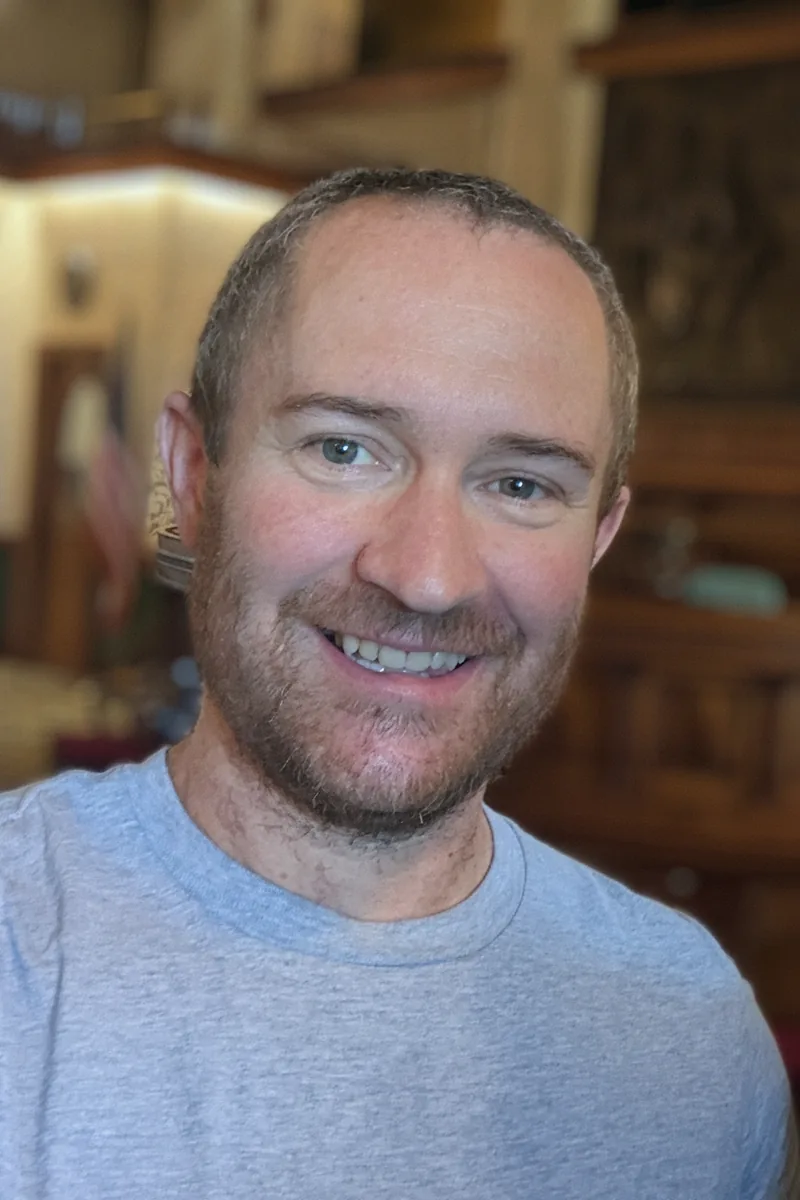
I am a dedicated educator with a love of learning. I have experience working with students from varying backgrounds and levels ranging from kindergarten to graduate school. I am known for my patience and understanding. My teaching method is to encourage students with hints and guidance guiding them to learn according to their own pace and abilities. I have an undergraduate degree in chemistry from Harvard University and a PhD in organic chemistry from UC San Diego, where I studied natural products synthesis. In addition to my academic credentials, I have many years of real world experience working in the biotechnology sector.
Having earned a chemistry degree from Yale, Zosia spent years immersed in the subject well past the introductory orgo sequence — which means she can contextualize tricky topics like electrophilic aromatic substitution and acyl chemistry within the broader landscape of how molecules actually behave. She walks students through spectral analysis and multi-step synthesis by building from first principles of electronegativity and sterics, so each new reaction type feels like an extension of what they already know rather than a fresh page to memorize. Rated 4.9 by students.
Reaction mechanisms become far more intuitive when you understand the electron-level logic behind each arrow push. Andrew earned his biochemistry degree and continues working in biochemical laboratories, so he teaches organic chemistry as a language of molecular behavior — connecting nucleophilic substitutions, elimination pathways, and carbonyl chemistry to the biological contexts where they actually matter.
Reaction mechanisms are the backbone of organic chemistry, and most exam mistakes trace back to shaky arrow-pushing fundamentals. Abhinav teaches students to classify reactions by nucleophile-electrophile interactions first, then layer on stereochemistry and regiochemistry — an approach that turns a seemingly infinite number of reactions into a manageable set of patterns.
Reaction mechanisms in organic chemistry are less about memorizing hundreds of arrows and more about recognizing a handful of recurring patterns — nucleophilic attacks, leaving group stability, and electron density shifts. Aidan studied organic chemistry as part of Notre Dame's premed track and teaches students to predict products by understanding why electrons move, not just where.
A bio-organic chemistry degree means Alex didn't just pass orgo — the entire major was built around understanding how molecular structure dictates reactivity, from substitution and elimination selectivity to multi-step synthesis design. He breaks down each mechanism by identifying the nucleophile, electrophile, and driving force first, so students develop a repeatable framework instead of a growing pile of flashcards. That same logic scales directly into spectroscopy interpretation and retrosynthetic analysis when exams get harder.
I am a freshman at Vanderbilt University studying biochemistry and involved in analytical chemistry research. Despite my studies being very science oriented, I also enjoy studying English and the humanities. I'd be happy to tutor you in any of these areas!
Reaction mechanisms are the language of organic chemistry, and David treats them that way — once a student can read electron flow through curved arrows, predicting products for substitution, elimination, and addition reactions becomes systematic rather than overwhelming. His Yale neuroscience training required two semesters of organic chemistry, and he still uses those fundamentals daily in his bioethics graduate work.
Reaction mechanisms are the language of organic chemistry, and Josef teaches students to read them — arrow pushing, stereochemistry, and functional group reactivity — rather than memorize hundreds of individual reactions. His biochemistry focus at Cornell means he can connect orgo concepts like nucleophilic substitution and carbonyl chemistry directly to biological molecules students will encounter later.
Reaction mechanisms in organic chemistry are essentially molecular storytelling — electron pairs move, bonds break and form, and stereochemistry shifts in predictable ways. Andrew's molecular biology training required deep fluency with organic reactions at the biomolecular level, so he teaches arrow-pushing and functional group transformations as logical sequences rather than steps to memorize.
Reaction mechanisms are the backbone of organic chemistry, and learning to predict products means recognizing electron-density patterns, not memorizing hundreds of individual reactions. Alec's approach — honed through years of TA work in Cornell's chemistry department — emphasizes arrow-pushing logic and functional group reactivity so that substitution, elimination, and addition reactions start to feel like variations on a theme rather than separate things to memorize.
Studying physics with a concentration in chemical principles at Penn means Max encounters organic chemistry from the physical side first — thermodynamics of reaction pathways, orbital interactions driving nucleophilic attacks, and the energy landscapes that determine whether a substitution or elimination wins out. That perspective lets him teach mechanisms by grounding arrow-pushing in the physics of why electrons move, not just where they go.
Being on the pre-med track at Northwestern while studying both biology and chemistry means Kade is taking organic chemistry alongside the same students he tutors — he knows which professors emphasize what, which problem sets are brutal, and where the common mistakes hide in topics like stereochemistry and acyl substitution. That proximity to the material gives him a practical, recently-tested understanding of how to break down multi-step synthesis problems into manageable pieces.
Reaction mechanisms are the backbone of organic chemistry, and most students struggle not because the material is impossibly hard but because they try to memorize hundreds of reactions instead of learning the handful of electron-pushing patterns that explain almost all of them. Rebecca's science training means she teaches students to read a mechanism the way you'd read a sentence — subject, verb, object — so new reactions become predictable rather than surprising.
Studying chemistry at Harvard while preparing for Columbia Medical School means James has worked through organic chemistry from both the academic and pre-med sides — understanding mechanisms deeply enough to satisfy a chemistry major, and efficiently enough to apply them in biochemistry and pharmacology contexts. He's particularly strong at teaching students how to predict reaction outcomes by analyzing charge stability and leaving group trends rather than treating each transformation as a new thing to memorize. Rated 4.9 by students.
Most organic chemistry frustration comes from trying to memorize hundreds of reactions instead of recognizing the handful of electronic patterns — nucleophilic attack, leaving group ability, steric effects — that drive all of them. Garrett teaches students to read arrow-pushing mechanisms as stories about electron movement, which makes predicting products and regiochemistry intuitive. His approach turns reaction maps from overwhelming charts into logical flowcharts.
Jonathan's human biology degree and pre-med track at Cornell meant organic chemistry wasn't just a prerequisite — it was the course that connected molecular structure to everything he'd later study in physiology and biochemistry. He tackles synthesis problems and spectroscopy interpretation by linking functional group behavior back to biological relevance, which gives students a reason to care about each mechanism. Rated 4.9 by students.
Reaction mechanisms are the language of organic chemistry, and most students struggle because they try to memorize arrows instead of understanding electron flow. Abrahim unpacks each mechanism — SN1 vs. SN2, E1 vs. E2, electrophilic aromatic substitution — by starting with nucleophilicity, sterics, and leaving-group ability so the logic drives the arrow-pushing rather than the other way around. His 5.0 rating speaks to how well that approach clicks.
Chemical engineering at Cornell meant Rahul didn't just pass organic chemistry — he applied it daily in reactor design, synthesis planning, and thermodynamic analysis of reaction pathways. That engineering lens gives him a distinctive angle on topics like carbonyl chemistry and stereoselectivity, where he ties mechanism logic back to energy landscapes and kinetic versus thermodynamic control. Rated 4.9 by students.
Penn's pre-health track put Brittany through rigorous chemistry coursework alongside her psychology degree, and she spent her undergraduate years tutoring General Chemistry I and II at the university's Tutoring Center — building the kind of fluency with reaction fundamentals that carries directly into organic mechanisms. She approaches topics like nucleophilic substitution and carbonyl reactivity by connecting them back to the foundational principles of electron behavior and molecular structure, making each new reaction type feel like an extension of something students already know.
Reaction mechanisms are the language of organic chemistry, and Jon spent his Master's work at Princeton immersed in that language daily. He unpacks arrow-pushing, stereochemistry, and functional group reactivity by tying each mechanism back to the electron behavior driving it, so students build intuition instead of relying on rote memorization. His TA students at Princeton gave him reviews strong enough to earn a teaching award — a good sign for anyone staring down a semester of orgo.
Most organic chemistry struggles come down to not recognizing patterns — why a nucleophile attacks here and not there, or how electron-pushing arrows predict a product. Eric's graduate training in chemistry means he teaches reaction mechanisms as a connected framework of electronic and steric principles rather than a list of isolated reactions. Students rated him 5.0.
I'm a current medical student at VCU School of Medicine, and a graduate of Johns Hopkins University. I received my Bachelor of Science in Molecular and Cellular Biology. I've had the pleasure of tutoring a diverse range of students for 5 years; while I tutor a broad set of subjects, I'm most passionate about biology, psychology, and chemistry. I'm a big proponent of ensuring understanding over memorization and teaching concepts that last for years to come (particularly for other students interested in medicine!) In my free time, I love to write poetry, edit essays, and gush about game writing with friends.
Max spent much of high school independently pursuing organic chemistry through coursework and projects well beyond what was required — the kind of deep, self-driven study that builds real fluency with reaction types and synthesis logic. His chemistry degree from MIT and mathematical instincts mean he approaches problems like retrosynthetic analysis and multi-step mechanism design as structured puzzles, breaking each one into clear decision points. Rated 5.0 by students.
Reaction mechanisms are the backbone of organic chemistry, and spotting nucleophilic attacks or predicting stereochemical outcomes requires genuine pattern recognition, not rote memorization. Lauren's chemistry minor at Duke and her hands-on lab research give her a practical fluency with functional group reactivity that she translates into clear, step-by-step reasoning for each mechanism type.
Biomedical engineering at Johns Hopkins means Nicholas encounters organic chemistry where it intersects with real applications — polymer biomaterials, drug delivery systems, and the functional group chemistry that governs how molecules interact with biological tissue. He teaches reaction types by grounding them in that engineering context, turning abstract arrow-pushing into something students can visualize and reason through. Rated 4.8 by students.
Reaction mechanisms, stereochemistry, and functional group transformations all require a kind of visual logic that's unlike anything in general chemistry. Greg's chemical engineering background at Vanderbilt gave him deep exposure to organic reaction pathways, and he teaches students to trace electron movement step by step so they can predict products instead of relying on memorization.
Having taught General Chemistry, Organic Chemistry, and GOB courses for health professions repeatedly at the college level, Jeremy approaches reaction mechanisms as skills to be practiced — not facts to be memorized. His PhD in Chemistry from Yale means he can trace arrow-pushing, stereochemical analysis, and multi-step synthesis all the way down to first principles, then rebuild them at whatever level a student needs. He holds a 4.6 rating.
Currently majoring in chemistry at MIT, Nicholas is immersed in the reaction logic and electron-pushing that organic chemistry demands — and he's learning it at a program known for its rigorous mechanistic approach. He breaks down topics like nucleophilic additions and stereochemical outcomes by connecting them to the underlying thermodynamic and kinetic reasoning, making unfamiliar transformations feel predictable rather than random. Rated 5.0 by students.
Reaction mechanisms are the language of organic chemistry, and Jhonatan treats them that way — teaching students to read electron flow through arrow-pushing until substitution, elimination, and addition reactions feel like variations on a theme rather than isolated procedures to memorize. His biochemistry expertise is especially useful when carbonyl chemistry and amino acid reactivity come into play. He holds a 5.0 client rating.
I am a person who genuinely enjoys both writing and chemistry (especially organic). To most people, this seems like an odd combination but for me it's natural. I have been able to leverage both of these skills in order to obtain a PhD in organic chemistry. Also, I have written a couple of articles about chemistry on Medium. Understandably, some students struggle in these areas and I would like to help. When I am working with students, I like to be flexible with my teaching approach. During our first session, the student and I will set goals for our time together and we will discuss your learning style. In the subsequent sessions, student and I will work together to develop a learning environment that will help you Education: - Ph.D. in Organic Chemistry from the University of Notre Dame (2014) - B.S. in Biochemistry from Xavier University of Louisiana (2008) Experience: 1. 5 years working as a lecture teaching assistant for general chemistry I and organic chemistry I and II at the University of Notre Dame 2. 1 year experience tutoring a high school student in chemistry (1 hour per week) 3. 6 years experience in helping undergraduate students understand organic chemistry and biology
Studying biochemistry and molecular biology means Raj encountered organic chemistry not as a single course but as the language underlying everything from enzyme kinetics to metabolic pathways — so he teaches functional group reactivity and stereochemistry with that bigger picture always in view. His 5.0 rating and a perfect 36 ACT reflect someone who thinks systematically, which translates directly into how he walks students through multi-step synthesis problems: identify the transformation, trace the electron flow, then confirm the regiochemistry.
Most students dread organic chemistry because it feels like a new language, but the logic underneath reaction mechanisms is surprisingly consistent once someone lays it out clearly. Ade approaches each reaction type — substitution, elimination, addition — by teaching students to read electron movement and predict products rather than memorize hundreds of individual reactions.
Reaction mechanisms are the backbone of organic chemistry, and Natasha teaches them the way she learned them in her biomolecular engineering program — by tracing electron movement step by step until the logic feels inevitable rather than arbitrary. She digs into arrow-pushing, stereochemistry, and functional group reactivity by asking students to predict products before revealing answers, building real intuition for how molecules behave.
Reaction mechanisms are essentially stories told with curved arrows, and the trick is learning to read them rather than memorize hundreds individually. Mark approaches organic chemistry by teaching students to recognize patterns — nucleophilic attacks, leaving group stability, steric effects — so they can predict products on reactions they've never seen before. His chemistry coursework at Notre Dame keeps these concepts fresh and grounded in real molecular behavior.
Reaction mechanisms are the language of organic chemistry — if you can't follow electron movement through a nucleophilic substitution or an elimination, every new reaction feels like something to memorize from scratch. Cassandra teaches students to recognize the patterns that repeat across seemingly different reactions: leaving group quality, steric effects, acid-base behavior. That pattern-recognition approach, sharpened by her biology and biochemistry background, turns a notoriously overwhelming course into something students can actually reason through.
The arrow-pushing in organic chemistry isn't arbitrary — every curved arrow represents real electron movement, and once that clicks, reactions stop feeling random. Ava tackles mechanisms by teaching students to recognize nucleophiles, electrophiles, and leaving groups as recurring characters across substitution, elimination, and addition reactions. Her chemistry background from James Madison University means she can trace those patterns from introductory orgo all the way through complex multi-step synthesis problems.
I am currently a medical student at the University of Texas Southwestern. I completed a major in Biology with a triple minor focus in Chemistry, Sociology, and Medicine and Society. During my undergraduate career, I tutored hundreds of students through my work with the American Chemical Society, LAUNCH, and Scholars Enrichment Program. While I tutor a broad range of subjects, I am most passionate about Chemistry and Organic Chemistry. I have recently taken my MCAT and I would love to help you prepare for that especially if you need help with Chemistry based questions. In my experience helping struggling students prepare for Standardized Tests such as the ACT and the MCAT, I always find new ways to engage my students and make testing strategies more accessible to them. I believe the best way to learn is to teach. Therefore, my main teaching strategy will be filling any knowledge gaps and allowing you the opportunity to re-explain material in order to ensure you will remember it.
As an MD/PhD student at Northwestern doing doctoral research in organic synthesis, Austin lives in the world of reaction design — figuring out which bonds to form, which protecting groups to use, and why one retrosynthetic route beats another. That daily immersion means he teaches mechanisms and stereochemistry with the fluency of someone who actually builds molecules, not just someone who once passed the course.
Testimonials
Because the right Organic Chemistry tutor makes all the difference.
Average Session Rating – Based on 3.4M Learner Ratings
Practice Organic Chemistry
Free practice tests, flashcards, and AI tutoring for Organic Chemistry
Top 20 Science Subjects


Top 20 Subjects
Frequently Asked Questions
Organic Chemistry is challenging because it requires visualizing molecules in 3D space and understanding reaction mechanisms that aren't immediately intuitive. Many students struggle with memorization overload, trying to learn hundreds of reactions without grasping the underlying principles of how and why they occur.
Personalized tutoring addresses this by helping you move beyond rote memorization to understand the core concepts—like electron behavior, molecular interactions, and reaction patterns. Once you see the logic behind reactions, the material becomes far more manageable and retention improves dramatically.
Organic Chemistry is fundamentally about spatial reasoning—understanding how atoms are positioned in 3D and how they move during reactions. Expert tutors use multiple visualization strategies, including drawing mechanisms step-by-step on whiteboards, using molecular models, and working through resonance structures until the concepts click.
Rather than passively reading structures in a textbook, you'll actively construct and manipulate them with guidance, which builds the mental visualization skills that are essential for success on exams and in the lab.
Memorizing reactions is a dead end—there are far too many to memorize, and exams test your ability to predict new reactions you haven't seen before. Understanding mechanisms means learning why a reaction happens: how nucleophiles attack, how carbocations form and rearrange, and how different functional groups behave.
Tutors focus on teaching you to think like an organic chemist, recognizing patterns and predicting outcomes based on fundamental principles. This approach not only works better for exams but also prepares you for advanced chemistry, biochemistry, and laboratory work where applying concepts matters far more than recall.
Organic Chemistry underpins pharmaceuticals, materials science, polymers, food chemistry, and countless other fields. Making these connections helps motivation and retention—it's much easier to remember a concept when you understand why it matters.
Great tutors weave real-world context into lessons, explaining how reaction mechanisms apply to drug design, how stereochemistry affects drug efficacy, or how polymers are synthesized. These connections transform abstract concepts into tangible knowledge and help you see why you're learning this material.
The best Organic Chemistry tutors have strong chemistry backgrounds and, ideally, lab experience. More importantly, they can explain complex mechanisms clearly, ask probing questions to identify gaps in your understanding, and teach you how to approach problems systematically rather than memorize solutions.
You want someone who emphasizes conceptual understanding over memorization, uses multiple explanation methods (drawing, models, analogies), and can adjust their teaching style to match how you learn. Varsity Tutors connects you with expert tutors who specialize in meeting students where they are and building genuine mastery.
Organic Chemistry exams test conceptual reasoning and problem-solving, not just recall. Personalized tutoring focuses on your specific weak points—whether that's stereochemistry, synthesis planning, or reaction prediction—rather than generic review.
Tutors work with you on practice problems similar to exam questions, teach you strategies for tackling unfamiliar reactions, and help you develop the systematic approach that leads to consistent answers. This targeted preparation typically leads to significant score improvements and genuine confidence going into exams.
Yes. The lecture component focuses on theory and mechanisms, while the lab component tests your ability to apply those concepts in practice—carrying out reactions, analyzing results, and troubleshooting when things don't go as planned. Both require understanding, not just following procedures.
Expert tutors help strengthen your conceptual foundation so lab work makes sense, teach you how to think through experimental design and error analysis, and help you see connections between the reactions you study in lecture and what you observe in the lab. This integrated approach leads to stronger performance across both components.
Let’s find your perfect tutor
Answer a few quick questions. We’ll recommend the right plan and match you with a top 5% tutor.