Award-Winning Geometry
Tutors
Geometry
Tutors
Private 1-on-1 tutoring, weekly live classes for academic support, test prep & enrichment, practice tests and diagnostics, and more to elevate grades and test scores.
Based on 3.4M Learner Ratings
UniversitiesSchools & Universities
DeliveredHours Delivered
ProficiencyGrowth in Proficiency
Who needs tutoring?
No obligation. Takes ~1 minute.
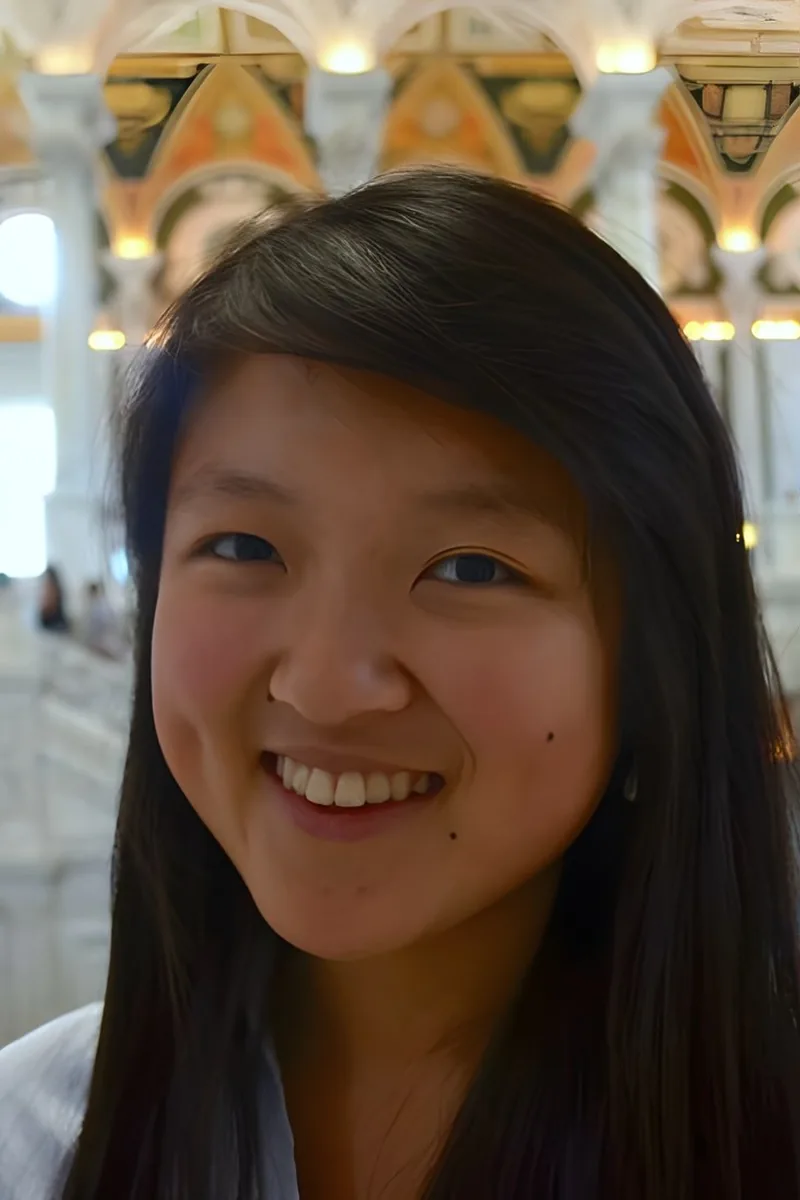
Proofs are usually where geometry goes from manageable to frustrating — suddenly students need to justify every step with logic instead of just calculating angles. Maggie approaches proof-writing as a skill closer to constructing an argument than solving an equation, a perspective sharpened by her dual background in science and the liberal arts. She also covers coordinate geometry, triangle congruence, and circle theorems with the same emphasis on reasoning over rote steps.
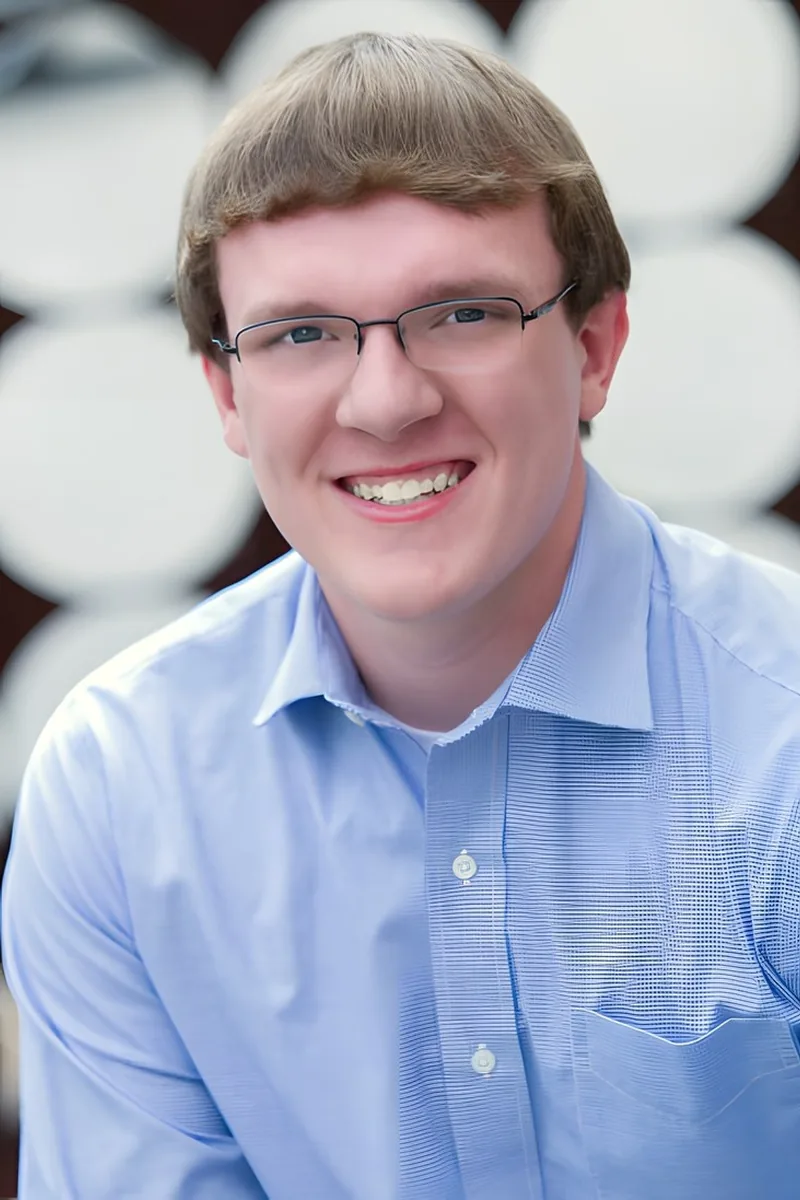
Every proof in geometry is really an exercise in building a logical argument from a set of given constraints — a skill Jeffrey sharpened through years of engineering coursework at Notre Dame and his PhD work at Rice. He teaches students to approach triangle congruence, parallel line theorems, and circle properties as puzzles with clear reasoning chains rather than formulas to memorize.
Proofs are usually the make-or-break moment in geometry, and Brian teaches students to construct them by thinking like a detective — identifying what's given, what's needed, and which theorems bridge the gap. His Caltech training in analytical reasoning sharpens how he explains congruence, similarity, and circle theorems, turning proof-writing from intimidating to methodical.
Proofs are usually where geometry students panic — the jump from calculating angles to constructing logical arguments feels like a different subject entirely. Isabella's MIT math training means formal reasoning is second nature to her, and she walks students through how to build a proof step by step, connecting geometric intuition to the structured logic on the page. She also covers coordinate geometry and triangle congruence with the same emphasis on understanding over memorization.
Dennis's research into quasicrystals and aperiodic tilings — like Penrose tilings of rhombuses — is geometry at its most fascinating, exploring how shapes fit together under unusual symmetry rules. That deep spatial intuition carries directly into high school Geometry, where he teaches proofs, congruence, and circle theorems by encouraging students to reason visually before writing anything formal.
Kevin's Philosophy, Politics, and Economics program at Penn is essentially a training ground in structured argumentation — building claims from premises, identifying logical gaps, defending conclusions — which maps directly onto geometric proof-writing. He teaches students to treat two-column proofs the same way they'd treat a debate: state what you know, justify every step, and never skip a link in the chain. His 34 ACT composite reflects the kind of precise, methodical reasoning that makes geometry's logical demands feel manageable.
Proofs are usually where geometry stops feeling like math and starts feeling like a foreign language. JF breaks down the logic behind two-column and paragraph proofs so students see them as structured arguments, not mysterious rituals. A 5.0 client rating speaks to an approach that makes even angle-chasing problems feel manageable.
A year as a course assistant in Harvard's math department taught Richard how to break abstract reasoning into concrete steps — a skill that pays off in geometry when students need to connect definitions, postulates, and theorems into a coherent proof. His government major, which is essentially an exercise in building airtight arguments from messy evidence, reinforces the same logical sequencing that two-column and paragraph proofs demand.
Proofs are usually where geometry stops feeling intuitive and starts feeling arbitrary. Anthony approaches them as logical arguments rather than rote templates, drawing on his background in math and philosophy to teach students how to construct reasoning step by step. His 5.0 rating speaks to how well that approach clicks.
Most geometry struggles come down to proofs: students can identify that two triangles look congruent but can't articulate why in a logical chain. Sam's engineering and statistics background trained him in rigorous argumentation, and he applies that same structured thinking to walk through two-column and paragraph proofs until the reasoning clicks.
Proofs are usually the first place geometry students feel lost, because suddenly they're being asked to construct arguments instead of compute answers. Ben teaches proof-writing as a logical skill: identifying what's given, what's needed, and which theorems bridge the gap. His approach turns the frustration of "I don't know where to start" into a repeatable process.
Proofs trip up most geometry students because they demand a completely different kind of thinking than computation does. Phillip approaches them as logical arguments: identifying what's given, what's needed, and which theorems bridge the gap. His engineering training at Brown means spatial reasoning and geometric relationships are second nature to him.
Julie's philosophy coursework at Princeton — where every paper is essentially a proof built from premises to conclusion — trained her in exactly the kind of structured reasoning geometry demands. She applies that logical rigor to coordinate geometry, transformations, and circle properties, teaching students to see how each theorem connects rather than treating them as isolated facts. Rated 4.9 by students.
A biology major from Rice with a 1570 SAT, Perry approaches geometry problems the way he approaches lab work — by breaking complex diagrams into discrete, manageable pieces and reasoning through each relationship step by step. He's especially effective at teaching circle theorems and polygon properties, where students often know the individual rules but freeze when a problem layers several together. Rated 5.0 by students.
In biomedical engineering, Ingrid regularly works with geometric concepts that most students only see in textbooks — calculating cross-sections, modeling curved surfaces, and reasoning about spatial relationships in 3D-printed structures she designs as president of her university's 3D printing club. That constant hands-on application gives her a practical vocabulary for teaching circle theorems, arc length, and solid geometry that connects the abstract to something students can actually visualize.
Proofs are usually the first place Geometry students feel lost, because the subject suddenly asks them to justify every step rather than just compute an answer. Christopher teaches students to treat each proof like an engineering problem: identify what's given, figure out what's needed, and build a logical bridge between the two using congruence, similarity, and angle relationships. His structured approach has earned him a 4.8 rating from students.
Proofs trip up a lot of Geometry students because they require a completely different kind of thinking — constructing logical arguments instead of just computing answers. Michelle approaches proofs and spatial reasoning the way she approaches scientific problems: systematically, breaking each claim into smaller pieces until the conclusion becomes obvious.
Most geometry struggles aren't about the shapes — they're about constructing logical arguments. Writing a two-column proof or reasoning through circle theorems requires a style of thinking that Justin, trained in mathematical proof at both the undergraduate and doctoral level, breaks down into concrete steps. He treats each theorem as a claim that needs defending, which builds reasoning skills students carry into every future math class.
A chemistry major at Harvard, James is used to thinking in three dimensions — molecular geometries, orbital shapes, bond angles — which gives him a natural fluency with the spatial reasoning geometry requires. He tackles circle theorems and polygon properties by encouraging students to sketch, label, and reason through diagrams before jumping to formulas, building the kind of geometric intuition that makes even multi-step problems feel manageable. Rated 4.9 by students.
A political science degree from the University of Chicago means Asta spent four years constructing airtight arguments from premises to conclusions — exactly the skill that makes geometric proofs click. She applies that structured reasoning to two-column proofs and logical chains involving congruence, triangle properties, and circle theorems, treating each one like a case to be built rather than a formula to memorize. Rated 5.0 by students.
Proofs are usually where geometry students start to panic, but Troy breaks them into a logical chain of small, defensible steps rather than one intimidating block. From triangle congruence to circle theorems, he walks through each problem by asking students to justify what they already see before introducing new reasoning.
Mechanical and aerospace engineering at Princeton means Matthew lives in a world of geometric constraints — fitting components into tight spaces, calculating load-bearing angles, reasoning about three-dimensional shapes on paper before they ever get built. He brings that same step-by-step precision to teaching triangle properties, angle relationships, and the logic behind constructions, typically demonstrating a technique and then handing students progressively harder problems until the reasoning becomes automatic.
Cognitive science — Sugi's major at Rice — is fundamentally about how people build mental models, and geometry is one of the few math subjects where that matters enormously: students who can't visualize a rotation or mentally decompose a figure into simpler shapes will struggle no matter how many theorems they memorize. Sugi teaches the visualization first, then layers in the formal reasoning for congruence, similarity, and circle properties so that proofs feel like describing something you can already see. Rated 5.0 by students.
Proofs are usually where geometry students hit a wall — the shift from calculating answers to constructing logical arguments feels like a completely different subject. Tom's background in American Studies, which is essentially built on evidence-based argumentation, gives him a unique angle on teaching students to chain geometric theorems into airtight reasoning. He also covers the computational side, from triangle congruence to circle theorems, with the same step-by-step precision.
Proofs are usually where geometry students panic — the logic feels nothing like the computation they're used to. Rachel spent her Dartmouth engineering program constructing logical arguments from axioms and constraints, so she's comfortable walking students through how to set up two-column and paragraph proofs while also tackling area, volume, and triangle congruence.
Having taught Geometry at a charter high school, Wamweni knows exactly where students get stuck — whether it's writing two-column proofs, applying triangle congruence theorems, or visualizing transformations on the coordinate plane. She approaches each topic by connecting it to something concrete before moving into formal reasoning. Her 5.0 rating speaks to how well that method lands with students.
Theater training builds a surprising skill for geometry: Amber's background in staging and set design means she's used to thinking about space, angles, and spatial relationships in practical, visual terms — which translates directly to topics like transformations, reflections, and symmetry. She teaches students to sketch and annotate diagrams before jumping into calculations, turning abstract problems into something they can actually see and reason through. Rated 5.0 by students.
Cornell's biological engineering program threw Mary into years of modeling physical systems — fluid flow through channels, stress on biomaterials, device dimensions — all of which demand precise geometric reasoning about shapes, cross-sections, and spatial relationships. She brings that practical fluency to topics like circle theorems, properties of quadrilaterals, and area-volume calculations, making abstract definitions feel grounded in real measurement. Rated 5.0 by students.
Proofs are usually where geometry stops feeling like math and starts feeling like a foreign language. Ava tackles that disconnect by teaching students to read diagrams actively — identifying congruent triangles, parallel line relationships, and angle pairs before ever writing a formal statement. Her engineering background means spatial reasoning is second nature to her.
Three years of tutoring math across elementary through high school gave Talia a clear picture of where geometry trips students up — and it's almost always the transition from calculating answers to constructing logical arguments in proofs. Her approach leans on breaking down each proof into plain-language reasoning first, then translating that thinking into formal geometric statements about congruence, angle relationships, or parallel lines. Rated 5.0 by students.
An MIT math major doing research in Spectral Graph Theory, Enrico brings a deep comfort with spatial structures and relationships that makes geometry's core ideas — congruence, similarity, transformations — feel like natural extensions of logical thinking rather than a pile of disconnected rules. He emphasizes building intuition around definitions so that when a problem asks students to prove two triangles congruent or reason about angle bisectors, the right approach surfaces on its own. Rated 5.0 by students.
Competition math taught Tracy to look at a geometry figure and immediately spot the relationships that matter — which triangles are similar, where auxiliary lines unlock a problem, how a single angle chase can crack open a complicated diagram. That instinct, sharpened through years of math competitions and a 36 ACT, carries over directly when she teaches students to approach proofs and problem-solving with strategy instead of panic. Rated 4.9 by students.
Proofs are where most geometry students stall — the leap from calculating angles to constructing logical arguments feels unfamiliar. Camille's interdisciplinary training at Duke and Columbia sharpened her ability to teach that kind of structured reasoning, and she applies it to everything from triangle congruence to circle theorems. Rated 5.0 by students.
Proofs are usually the first place geometry students get stuck, because suddenly math asks them to argue logically instead of just compute. Ian approaches proof-writing the way he approaches physics derivations at Yale — step by step, with each claim grounded in a specific theorem or postulate. He also covers triangle congruence, circle theorems, and coordinate geometry with the same structured clarity.
Jackie scored a 36 on the math section of the ACT, and her coursework through AP Calculus BC and Multivariable Calculus means she's deeply fluent in the reasoning skills that underpin geometry. She breaks down topics like angle relationships, area formulas, and coordinate geometry by tying them back to the algebraic thinking students already have — making new concepts feel like extensions, not mysteries. Rated 5.0 by students.
Proofs are where most geometry students stall — the jump from calculating angles to constructing logical arguments feels like a completely different subject. Caroline's engineering training at WashU required rigorous spatial reasoning and formal proof techniques, so she teaches geometry as a system of logic rather than a collection of shape formulas. She unpacks each theorem step by step until the reasoning becomes second nature.
Proofs are usually the sticking point in geometry — students can calculate angles and areas but freeze when asked to construct a logical argument from postulates. Kevin tackles this by teaching proof strategy as a skill: identifying what's given, what's needed, and which theorems connect the two. His background in computational geometry and algorithmic thinking at Stanford gives him a structured approach that clicks for students who think logically.
A math major at Washington University with a 35 ACT, Kathleen has the kind of fluency across algebra, trigonometry, and spatial reasoning that lets her spot exactly which prerequisite skill is tripping a geometry student up — whether it's solving equations inside angle relationships or applying trig ratios to right triangles. She teaches the "why" behind each theorem so students can reconstruct steps on their own instead of memorizing proof templates.
Proofs are usually where geometry students panic, but they're really just logical arguments written in a specific format. Mackenzie teaches students to read a diagram like a puzzle — identifying congruent triangles, parallel-line angle relationships, or circle theorems before ever picking up a pencil. That visual-first strategy makes even two-column proofs and coordinate geometry problems feel approachable.
Neurobiology at Harvard meant Emma spent years interpreting complex diagrams of neural pathways and brain structures — skills that translate directly to reading the dense, multi-layered figures in geometry where you have to pull out the right angle relationship or identify similar triangles buried inside a larger shape. She tackles the subject from the logic side, treating each proof like a scientific hypothesis that needs step-by-step evidence. Rated 5.0 by students.
Testimonials
Because the right Geometry tutor makes all the difference.
Average Session Rating – Based on 3.4M Learner Ratings
Practice Geometry
Free practice tests, flashcards, and AI tutoring for Geometry
Top 20 Math Subjects


Top 20 Subjects
Frequently Asked Questions
Proofs require a fundamental shift from the procedural math students learned before—instead of following steps to get an answer, students must construct logical arguments using definitions, postulates, and theorems. Many students struggle because they don't see the "why" behind each step or don't know which properties to apply. A tutor can break down proof-writing into manageable strategies: identifying what you're given versus what you need to prove, working backward from the conclusion, and building a library of common proof patterns (like proving triangles congruent before using corresponding parts). This transforms proofs from mysterious puzzles into systematic problem-solving.
Spatial reasoning—picturing how shapes move, rotate, and relate in space—doesn't come naturally to all learners, yet it's essential for topics like rotations, reflections, cross-sections of solids, and coordinate geometry. Tutors use concrete strategies like having students sketch from multiple perspectives, manipulate physical models or digital tools, and translate between 2D diagrams and 3D objects. By practicing these visualization techniques repeatedly and connecting them to specific problems, students build mental models that make concepts like volume formulas and perspective drawings click. This hands-on approach helps students move from confusion to confidence when tackling spatial problems.
Geometry word problems often require students to translate written descriptions into accurate diagrams first—a step that algebra word problems don't emphasize as heavily. Students must identify which geometric properties (like angle relationships, triangle congruence, or circle theorems) apply to the situation before they can even set up equations. Tutors teach a structured approach: carefully read and annotate the problem, sketch and label a diagram accurately, identify the relevant geometric relationships, then solve. Many students skip the diagram step and get lost; tutoring emphasizes that the diagram is your roadmap. This methodical process turns confusing word problems into solvable challenges.
Students often confuse angle relationships—complementary vs. supplementary, corresponding vs. alternate interior angles, or angles formed by tangent and chord—because there are many similar-sounding rules to remember. Rather than memorizing in isolation, tutors help students see the underlying patterns: why alternate interior angles are equal (parallel lines create symmetry), how inscribed angles relate to central angles (both measure the same arc), or why exterior angles of a triangle equal the sum of remote interior angles. By connecting these relationships to visual patterns and proofs, students understand them deeply enough to apply them in unfamiliar contexts, rather than just pattern-matching on tests.
Many students treat Coordinate Geometry as a separate topic rather than seeing it as algebra applied to shapes—they can find slopes and write equations of lines, but don't connect these tools to proving properties of quadrilaterals or finding distances. Tutors explicitly bridge this gap by showing how the distance formula comes from the Pythagorean theorem, how slope determines parallel and perpendicular lines, and how equations of lines define the sides of geometric figures. When students see that they're using familiar algebra to verify geometric properties (like proving a quadrilateral is a rectangle by checking that opposite sides are parallel), Coordinate Geometry becomes a powerful tool rather than a confusing new section.
In Geometry, getting the right numerical answer means little without explaining *why* it's correct—teachers and tests emphasize reasoning and justification more heavily than in algebra. Students must cite theorems, postulates, or previously proven statements for every claim, which feels tedious until they understand it's the entire point of the subject. Tutors teach students to think like mathematicians: state what you know, explain what property or theorem applies, and show how it leads to your conclusion. By modeling this reasoning process on simple problems and gradually increasing complexity, students internalize that Geometry is about building logical arguments, not just calculating. This shift in mindset makes grading rubrics make sense and helps students write clearer, more convincing proofs.
Students often confuse congruence (same shape and size) and similarity (same shape, different size) because both involve matching angles and proportional sides—the vocabulary sounds abstract. Tutors use visual comparisons and real-world examples: congruent triangles are identical copies you could overlay perfectly, while similar triangles are enlargements or reductions of each other. More importantly, tutors teach students to recognize *when* each concept applies: use congruence to prove that segments or angles are equal (via SSS, SAS, ASA), and use similarity to find unknown lengths or prove angle relationships in figures with parallel lines. By connecting these tools to specific problem types, students stop treating them as isolated definitions and start seeing them as strategies for solving different geometric challenges.
The circle unit introduces a flood of theorems—inscribed angles, tangent-chord angles, power of a point, secant-secant angles—that can feel overwhelming because each one looks different and has its own rule. Rather than memorizing each theorem separately, tutors help students see the unifying principle: all these angle measures relate to arcs of the circle. By focusing on how different configurations (inscribed, tangent, secant) create different angle-to-arc relationships, students build intuition rather than relying on memorization. Tutors also teach students to draw and label diagrams carefully, identify which angle and arc they're dealing with, and apply the appropriate relationship—this systematic approach makes the unit feel manageable and helps students retain concepts long-term.
Let’s find your perfect tutor
Answer a few quick questions. We’ll recommend the right plan and match you with a top 5% tutor.