Award-Winning Biology
Tutors
Biology
Tutors
Private 1-on-1 tutoring, weekly live classes for academic support, test prep & enrichment, practice tests and diagnostics, and more to elevate grades and test scores.
Based on 3.4M Learner Ratings
UniversitiesSchools & Universities
DeliveredHours Delivered
ProficiencyGrowth in Proficiency
Who needs tutoring?
No obligation. Takes ~1 minute.
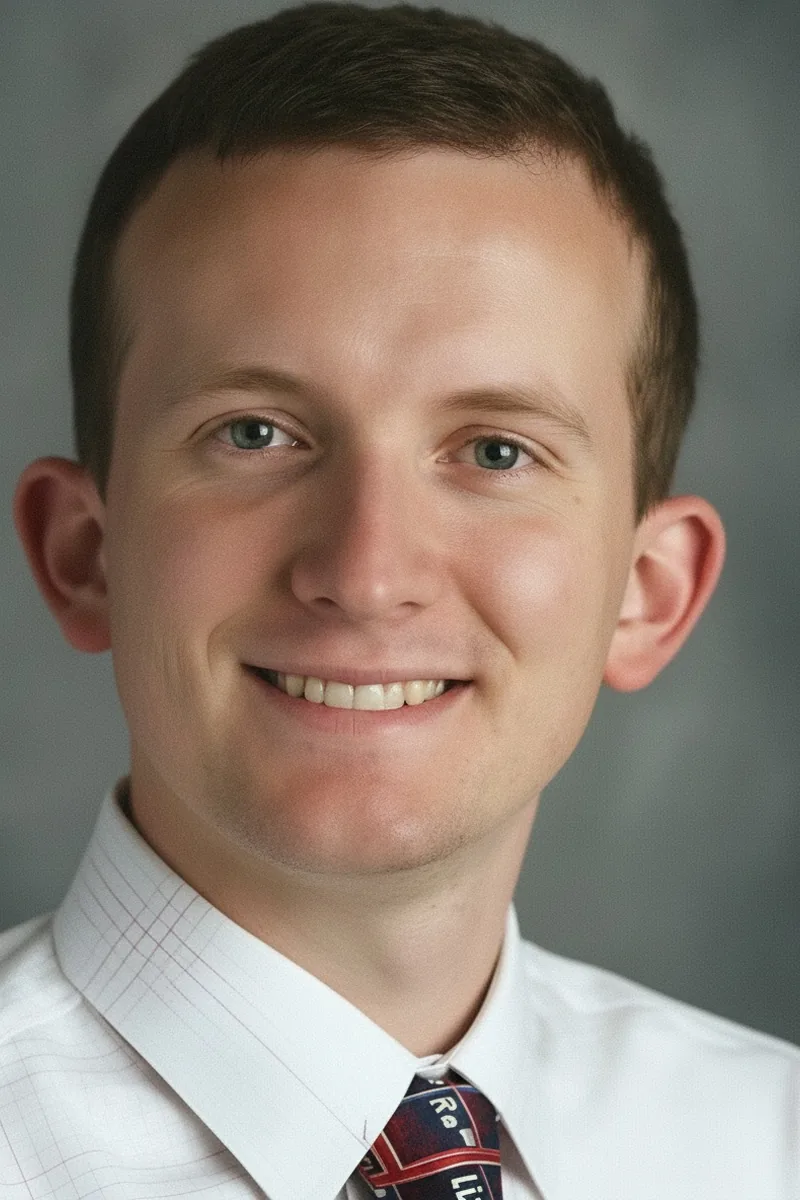
As a former middle school science teacher and curriculum chair in Philadelphia, John built his biology teaching around making processes like ecological cycles and cellular organization land for students who'd never encountered them before — a skill that translates directly to any introductory-level learner. His history training at the undergraduate level also means he naturally frames biology as a narrative, connecting concepts like natural selection or population dynamics to the story of how living systems change over time. Rated 5.0 by students.

Between his biomedical engineering major and his AP Biology background, Eric sees biology as an interconnected system rather than a pile of vocabulary terms. He unpacks topics like cellular respiration, DNA replication, and homeostasis by explaining the 'why' behind each mechanism, which makes retention far easier than flashcard drilling.
Kate approaches biology through the lens of someone trained in environmental systems, which means topics like ecology, nutrient cycling, and cellular respiration get grounded in how living organisms actually interact with their surroundings. She's equally comfortable walking through genetics problems or explaining membrane transport, drawing on seven years of science tutoring to pinpoint exactly where confusion starts.
From cell division to ecological systems, biology requires connecting processes across wildly different scales. Kristin's BA in Biological Sciences from the University of Chicago gave her deep fluency with molecular biology, genetics, and physiology — and her current nursing program at Penn keeps that knowledge sharp and clinically relevant.
A biology degree from UCLA followed by a Yale public health master's means Joseph has lived in this subject from introductory ecology to advanced genetics. He's especially sharp at connecting big themes — evolution, energy flow, homeostasis — across the individual units that textbooks often treat as separate chapters. That integrative perspective is exactly what turns a student who memorizes facts into one who actually thinks like a biologist.
From cell respiration pathways to genetics crosses, biology rewards students who can organize large amounts of interconnected information rather than memorize isolated facts. Asta's University of Chicago training in research and analytical writing translates directly to how she teaches students to map relationships between biological systems — linking, say, DNA replication to protein synthesis to gene expression in a coherent chain.
Ten years of teaching biochemistry to 10th graders and chemistry to 12th graders at a Philadelphia magnet school means Kathleen has watched thousands of students wrestle with the exact points where biology gets confusing — the shift from memorizing organelle names to actually understanding how photosynthesis and cellular respiration connect as mirror-image processes. Her chemistry background is the secret weapon: she teaches biological reactions by unpacking the molecular logic underneath, so concepts like enzyme function or ATP production feel inevitable rather than arbitrary. Rated 5.0 by students.
Dennis's Masters in Chemical and Physical Biology from Vanderbilt means he's spent years studying life at the molecular level — protein interactions, metabolic regulation, signal transduction — and can zoom out to show how those mechanisms drive the organ-system and ecological concepts that fill most introductory biology courses. His graduate research experience also makes him especially effective at teaching experimental design and data analysis, the parts of biology that trip students up precisely because they can't be memorized. Rated 5.0 by students.
Phillip's biomedical engineering studies at Brown mean he encounters biology through the lens of design — how tissues are engineered, how physiological systems can be modeled, how feedback loops in the body mirror control systems in machines. That perspective makes him especially effective at teaching topics like homeostasis, organ system integration, and cell membrane transport, where engineering intuition clarifies what pure memorization can't. Rated 5.0 by students.
Zosia's chemistry degree from Yale means she learned biology through its molecular underpinnings — organic reaction mechanisms, chemical equilibria, thermodynamics — which gives her a distinctive angle on topics like enzyme function, metabolic regulation, and signal transduction that pure biology majors sometimes treat as black boxes. Her additional coursework spanning cell biology, molecular biology, evolutionary biology, and plant biology rounds out that chemical lens with the ecological and organismal perspective students need for a complete picture. Rated 4.9 by students.
A Cornell biological engineering degree means Mary didn't just study biology — she applied it, working at the intersection of living systems and quantitative analysis. She's especially strong on cell biology, genetics, and molecular mechanisms because her coursework demanded deep fluency in all three. Whether the goal is acing an exam or genuinely understanding how DNA replication works, she connects the details to the bigger picture.
Rice University's Biochemistry and Cell Biology program forced Michelle to master biology at the molecular level — protein interactions, metabolic regulation, signal transduction — before she ever set foot in medical school at Baylor. Now in her second year of clinical training, she teaches topics like gene expression and cellular energetics by connecting them to the disease mechanisms she's actively studying, which gives students a concrete reason to care about each pathway.
JF's math and computer science training at Stanford might seem unrelated to biology, but it actually sharpens how he teaches the subject — genetics problems become probability exercises, population ecology clicks through mathematical modeling, and enzyme kinetics suddenly makes sense when you treat it like a rate equation. That quantitative lens gives students a second way into topics that feel overwhelming when approached through pure memorization alone. Rated 5.0 by students.
Tony earned his biology degree at Yale and is headed to Columbia's medical school, so he's spent years immersed in everything from molecular genetics to ecological systems. He breaks down dense material — signal transduction pathways, Mendelian inheritance, cellular respiration — by linking each concept to a bigger biological story rather than treating them as isolated facts.
From cell division to ecological systems, biology rewards students who can see how details connect to larger themes — like understanding how DNA replication errors link to both evolution and cancer biology. Zachary earned his degree in biochemistry and biophysics, which means he teaches biological concepts with molecular-level depth while keeping the big picture clear.
Shayan's biology degree and current pre-health graduate work at Penn mean he's cycled through core topics like genetics, cell biology, and ecological systems multiple times — each pass adding clinical context that makes the material stick. He teaches in examples, grounding abstract processes like signal transduction or gene expression in concrete scenarios so students can reason through problems instead of relying on rote recall. Rated 5.0 by students.
Three years running a Cell Biology lab course at Notre Dame gave Connor a front-row seat to the exact moments students lose track of what's happening — whether it's the logic connecting mitosis stages or how gene expression actually produces a functional protein. His master's work in Biomedical Sciences at Loyola Chicago layered on the molecular and physiological depth to explain those sticking points from multiple angles. Rated 5.0 by students.
First-year medical school at Thomas Jefferson means Nishad is actively building on the biology he mastered as a pre-med — genetics, cell biology, microbiology, anatomy — and seeing how each topic feeds directly into clinical problem-solving. That recent, layered exposure makes him especially effective at teaching the introductory and intermediate concepts that trip students up, because he remembers exactly which details mattered most when the material got harder.
Between conducting autism research at Yale's School of Medicine and pursuing a pre-med track in biomedical engineering, Ellie lives and breathes biology at both the classroom and laboratory level. She digs into topics like cell signaling, genetics, and organ system physiology with the kind of detail that turns rote memorization into real understanding. Her 5.0 rating speaks to how well that depth translates when she's teaching one-on-one.
Three science bachelor's degrees plus medical school means Sydny has taken biology exams at nearly every level the subject offers — from introductory ecology and genetics through the histology and pathophysiology of clinical training. What stuck with her from that journey is how to think through a biological problem rather than just recall an answer, and she teaches that same reasoning process when tackling topics like inheritance patterns, cellular energy, or organ-system integration.
Sugi's dual undergraduate degrees in Cognitive Science and Biochemistry & Cell Biology at Rice mean she studied living systems from two directions at once — the molecular machinery inside cells and the neural architecture that emerges from it. Now a fourth-year medical student at Baylor, she teaches biology by linking foundational topics like signal transduction or gene expression to the cognitive and clinical contexts that make them stick. Rated 5.0 by students.
Josef's undergraduate teaching assistant work in introductory biochemistry at Cornell gave him a front-row seat to the exact moments biology students stumble — particularly when topics like metabolism, enzyme function, or gene expression shift from descriptive to mechanistic. His dual science degrees and deep comfort with the chemistry underlying living systems mean he can anchor a concept like signal transduction in its molecular details without losing the biological big picture. Rated 5.0 by students.
Two advanced degrees in cellular and molecular biology mean Akarsh doesn't just recite textbook definitions — he explains how DNA replication, cell signaling, and ecological relationships actually work at a mechanistic level. Students come away understanding the "why" behind biological processes, which makes exam questions far easier to reason through.
A Rice biology graduate heading to medical school, Perry knows the subject from the molecular scale up — DNA replication, enzyme kinetics, ecological modeling. He unpacks complex processes by mapping out each step visually, which is especially useful for topics like cellular respiration and signal transduction where details pile up fast.
Stanford's biology program has Helen tackling everything from molecular genetics to ecology in real time, which means she's teaching the same material she's actively being tested on — a perspective that keeps her explanations current and exam-aware. She's particularly strong at breaking down processes like photosynthesis and gene expression into logical sequences that stick, drawing on four years of peer tutoring and TA experience in STEM courses. Rated 5.0 by students.
Three biology-adjacent degrees give Garrett an unusual breadth — he's studied the subject from general principles through the organic chemistry and physiology that sit alongside it, which means he can explain how a concept like enzyme kinetics connects to both the chemistry driving it and the body systems it regulates. That cross-disciplinary fluency is especially useful for students who understand individual facts but struggle to see how cellular processes, organ systems, and biochemical reactions fit into one coherent picture.
Studying molecular, cellular, and developmental biology in college — and now pursuing an MD at Stanford — Maggie knows biology at a level of detail that lets her explain not just what happens in a cell but why. She digs into topics like gene expression, membrane transport, and ecological relationships with the kind of mechanistic thinking that turns memorization into understanding. Her MCAT preparation experience also means she knows which biological concepts get tested hardest and how.
Students who find biology's vocabulary overwhelming often do better when someone shows them the logic underneath the terms. Dennis approaches topics like cell respiration, DNA replication, and membrane transport by connecting each process to the energy and chemistry driving it — a perspective that comes naturally from his physics background and makes the material easier to retain.
An English major might seem like an unusual fit for biology, but Ayako's well-rounded academic profile — including SAT Subject Test prep in Biology E/M — means she's comfortable breaking down topics like ecology, evolution, and cellular processes for high school students who need concepts explained clearly rather than clinically. Her 5.0 rating speaks to a teaching style that translates dense scientific vocabulary into language that actually sticks.
UCLA's Physiological Sciences program forced Annie to learn biology backward from how most students first encounter it — starting with how organ systems fail in disease, then drilling down into the cellular and molecular mechanisms that explain why. That perspective, now deepened by medical school, makes her especially effective at teaching topics like homeostasis, cell signaling, and metabolic regulation as cause-and-effect chains rather than disconnected vocabulary lists. Rated 5.0 by students.
Paula's psychology background gives her a useful entry point into biology — she understands behavioral and cognitive systems well enough to trace them back to their biological roots, from neurotransmitter activity to hormonal feedback loops. That perspective makes her especially effective at teaching the life science topics where behavior meets physiology, like the nervous system, endocrine signaling, and basic genetics. Rated 4.8 by students.
Rather than treating biology as a subject to memorize, Ivan approaches it as a set of nested systems — from gene expression inside a single cell up to organ-level physiology. His science training across multiple disciplines gives him a knack for explaining how concepts like cellular respiration, DNA replication, and signal transduction actually link together rather than sitting in isolated textbook chapters.
Kevin's master's work in Stanford's Biocomputation track sits at the intersection of biology and computer science, which means he thinks about molecular biology, genetics, and cellular processes through a quantitative lens. He's especially sharp on topics like gene expression, protein structure, and the logic of metabolic pathways. That computational perspective often gives students a clearer framework for understanding how biological systems actually function.
Currently pursuing graduate studies in health sciences while applying to medical school, Mosab lives and breathes biology daily. He unpacks topics like cellular respiration, DNA replication, and ecological interactions by tying them to real physiological scenarios — turning what often feels like rote memorization into a connected story about how living systems actually work.
Matt's neuroscience degree required him to learn biology from the inside out — tracing how ion channels, neurotransmitter systems, and cellular signaling give rise to everything from reflexes to memory formation. That foundation, reinforced by graduate-level biochemistry and physiology coursework in his nutrition master's, means he teaches topics like metabolism, cell communication, and organ-system integration with real mechanistic depth. Rated 5.0 by students.
Whether it's Mendelian genetics, cellular energetics, or ecological interactions, Emily approaches biology as a story with logic rather than a list of vocabulary words to memorize. She graduated Summa Cum Laude from Duke with a biology degree and is currently earning her MD at Columbia, so she's taught and re-learned this material at progressively deeper levels. That layered understanding lets her explain the same concept multiple ways until it lands.
Annie's cancer immunotherapy research at Cornell means she doesn't just teach biology concepts like cell signaling and immune response — she uses them daily in a working lab. As a teaching assistant for introductory biology courses, she's developed a knack for breaking down dense topics like gene expression and cellular metabolism into language that actually clicks.
Studying biology and chemistry simultaneously on Northwestern's pre-med track means Kade is constantly toggling between the molecular and the organismal — seeing how something like enzyme regulation in a biochemistry problem set connects directly to the ecology or genetics material he's covering the same week. That dual lens is especially useful for students who can memorize individual processes like meiosis or the light reactions but struggle to see how those pieces fit into larger biological systems. His 1550 SAT reflects the same kind of structured, cross-disciplinary thinking he brings to science tutoring.
Genetics, genomics, and development were Alec's concentration at Cornell, which means he learned biology by zooming in on how organisms are built from their DNA up — and then spent semesters as a TA helping other students make that same journey through general chemistry and genetics coursework. He teaches topics like gene expression, inheritance patterns, and molecular genetics by tying each mechanism back to its developmental consequences, so the details carry meaning instead of just filling flashcards. Rated 4.8 by students.
Between his molecular biochemistry major and hands-on lab work with gene-editing technology, Matthew lives biology at a level that makes high school and introductory concepts second nature to explain. He's particularly effective at walking through cellular respiration and photosynthesis as interconnected energy systems rather than two separate chapters to memorize.
Testimonials
Because the right Biology tutor makes all the difference.
Average Session Rating – Based on 3.4M Learner Ratings
Practice Biology
Free practice tests, flashcards, and AI tutoring for Biology
Top 20 Science Subjects


Top 20 Subjects
Frequently Asked Questions
Students often find cellular and molecular biology concepts challenging—particularly photosynthesis, cellular respiration, and DNA replication—because they require visualizing processes happening at scales we can't see. Genetics is another common sticking point, especially Punnett squares and inheritance patterns. Additionally, many students struggle to connect anatomy structures to their functions, or to understand how organ systems interact rather than treating them as isolated topics. A tutor can break these abstract processes into digestible steps and use diagrams, analogies, or interactive models to make the mechanisms click.
Real Biology learning means understanding the 'why' behind processes, not just the 'what.' Instead of memorizing that mitochondria produces ATP, you should understand how the electron transport chain uses energy from food molecules to create that energy currency. Tutors help by asking you to explain concepts in your own words, apply them to new scenarios, and connect them to real-world examples—like how your own body uses glucose during exercise. This approach builds deeper retention and prepares you better for exams that test reasoning, not just recall.
Biology labs teach scientific method skills that go beyond textbook knowledge—designing controls, identifying variables, interpreting data, and drawing conclusions. Many students struggle with the logic of experimental design or understanding why certain controls matter. Tutors can walk you through real lab scenarios, help you predict results before conducting experiments, and teach you how to troubleshoot when results don't match expectations. This builds both your technical lab skills and your ability to think like a scientist, which is essential for AP Biology, honors courses, and future science classes.
Many Biology concepts—enzyme-substrate interactions, protein synthesis, osmosis—happen at scales impossible to see directly, making them abstract and hard to grasp. Expert tutors use multiple visualization strategies: drawing step-by-step diagrams, using physical models or animations, creating analogies to familiar processes, and having you sketch out mechanisms yourself. For example, understanding how a ribosome reads mRNA becomes much clearer when you physically model the process or animate it mentally. This visual-spatial approach transforms confusing abstractions into concrete mental images you can work with.
Evolution and ecology require thinking at scales and timescales that don't match human experience—populations changing over millions of years, or ecosystems with dozens of interconnected species. Students often struggle to grasp how natural selection actually works, or how energy flows through food webs and why it matters. These topics also demand systems thinking rather than memorizing isolated facts. Tutors help by using concrete examples (like Darwin's finches or predator-prey cycles in real ecosystems), building understanding incrementally, and showing how these concepts explain patterns you can observe in nature.
Biology exams—especially AP or honors levels—test both factual knowledge and your ability to apply concepts to novel scenarios. You can't just memorize answers; you need to understand mechanisms deeply enough to explain them in new contexts. Effective preparation involves practice problems that ask 'why' and 'how,' not just 'what,' and reviewing how different topics connect (like how photosynthesis feeds into cellular respiration). Tutors help by identifying gaps in your conceptual understanding, teaching you to recognize question patterns, and building your confidence in explaining complex processes under timed conditions.
Strong Biology tutors combine deep subject knowledge with the ability to explain complex concepts clearly. Look for tutors with a background in Biology or related sciences, experience teaching or tutoring at the level you need (high school, AP, college), and—importantly—the ability to diagnose exactly where your understanding breaks down. The best tutors ask probing questions, recognize common misconceptions, and know multiple ways to explain the same concept because different students visualize and learn differently. They should also be comfortable with the specific Biology curriculum or exam format you're preparing for.
Introductory Biology focuses on building foundational understanding of cells, genetics, evolution, and ecology—tutors emphasize visualization and connecting concepts to everyday life. AP Biology demands much deeper mechanistic understanding, quantitative reasoning, and the ability to analyze data and experimental design; tutors shift toward practice with complex scenarios and exam-style questions. College-level Biology often goes even deeper into biochemistry or physiology and requires stronger critical thinking and independent problem-solving. Varsity Tutors connects you with tutors experienced at your specific level, so they can pitch explanations and practice at exactly the right depth and pace.
Let’s find your perfect tutor
Answer a few quick questions. We’ll recommend the right plan and match you with a top 5% tutor.