Award-Winning Honors Chemistry
Tutors
Honors Chemistry
Tutors
Private 1-on-1 tutoring, weekly live classes for academic support, test prep & enrichment, practice tests and diagnostics, and more to elevate grades and test scores.
Based on 3.4M Learner Ratings
UniversitiesSchools & Universities
DeliveredHours Delivered
ProficiencyGrowth in Proficiency
Who needs tutoring?
No obligation. Takes ~1 minute.
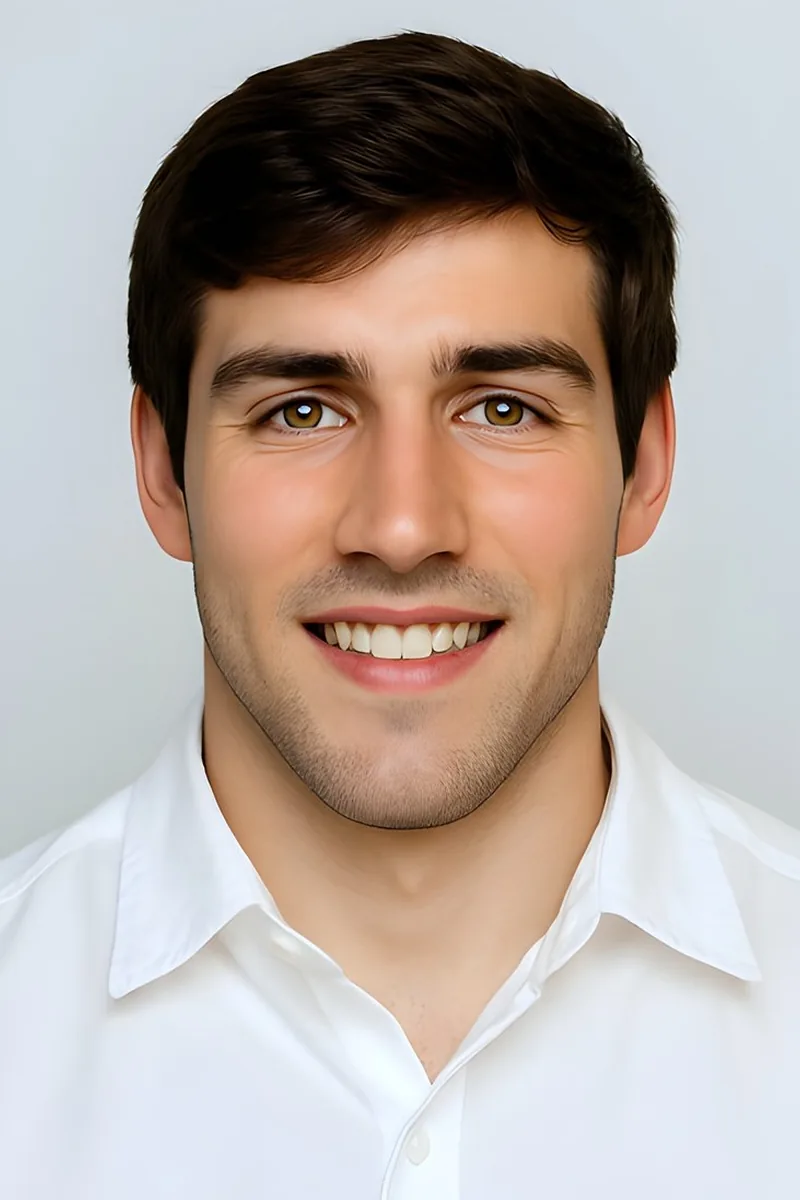
Studying chemistry at Harvard and heading to Columbia Medical School, James has worked through the full arc of the discipline — from general chemistry through organic — which means he can show honors students how early topics like atomic structure and periodicity set up everything that comes later in the course. He teaches lab-oriented concepts like calorimetry and titration calculations by grounding them in the chemical reasoning first, so the math follows naturally instead of feeling like a separate skill to memorize. Rated 4.9 by students.

Medical school at Penn required Jessica to master chemistry at a level most honors students won't encounter for years — from acid-base equilibria and thermodynamics to the molecular interactions that govern how drugs behave in the body. That clinical lens gives her a way to make abstract topics like reaction energetics and solution chemistry feel immediate, because she can show students exactly where these ideas lead. Rated 4.8 by students.
Most students stumble in honors chemistry when the course shifts from memorizing element properties to actually predicting what happens in a reaction — and that's where Amber's broad science background across chemistry and physics pays off, because she can explain *why* a precipitate forms or a gas evolves instead of just which formulas to apply. Her 35 ACT and 5.0 tutoring rating back up an approach that treats each lab and problem set as a chance to build chemical intuition, not just survive the next exam.
Maggie's double major in Economics and Molecular, Cellular, and Developmental Biology meant taking rigorous chemistry sequences where concepts like chemical kinetics, thermodynamics, and equilibrium weren't just coursework — they were the foundation for everything she studied in cell biology and biochemistry. That background gives her a practical fluency with the quantitative reasoning honors chemistry demands, from interpreting rate laws to setting up Hess's law problems. She holds a 5.0 rating from students.
Matt's chemistry and neuroscience training means he's studied bonding, molecular interactions, and reaction energetics from multiple scientific angles — useful when honors students need to see why a concept matters beyond the textbook chapter it lives in. He zeroes in on the quantitative reasoning that trips students up, like linking mole ratios to limiting reagent problems or translating periodic trends into predictions about reactivity. Rated 5.0 by students.
Li's doctoral-level medical training means she's worked extensively with the chemical principles — acid-base balance, molecular interactions, reaction energetics — that form the backbone of an honors chemistry course. She unpacks topics like solution chemistry and equilibrium by connecting them to biological systems, which gives students a concrete reason to care about what's happening in the beaker.
Going from a UCLA biology degree to medical school at the Medical College of Wisconsin meant Abrahim had to master chemistry at increasing levels of rigor — from general chemistry through organic and physical chemistry — giving him a layered understanding of concepts like gas laws, stoichiometry, and chemical bonding that honors students are tackling for the first time. He zeroes in on knowledge gaps quickly and attacks them through direct practice, walking students through multi-step problems until the reasoning clicks on its own. Rated 5.0 by students.
Physics majors develop an unusual advantage in honors chemistry: they're trained to think about energy, forces, and molecular behavior quantitatively from day one. Nima brings that physics-first perspective to topics like thermochemistry and gas laws, where understanding the math as a description of what molecules are actually doing — not just a set of formulas to memorize — makes the difference between surviving a test and genuinely knowing the material.
The pre-med track at UCSB means Aaron has taken the rigorous general chemistry sequence where topics like stoichiometry, gas laws, and acid-base reactions aren't just theory — they're gatekeepers to upper-division coursework. His bio-psychology background adds a useful angle for honors students who want to understand why molecular polarity or bonding concepts matter beyond the chemistry classroom. Rated 5.0 by students.
Environmental science coursework gave Ethan a grounding in the chemistry that governs real-world systems — gas behavior in the atmosphere, acid-base reactions in water treatment, thermodynamic cycles in ecosystems — which translates directly into the concepts honors chemistry students need to master. He leans on that applied perspective when teaching topics like equilibrium and stoichiometry, making the math feel purposeful instead of abstract. Rated 5.0 by students.
MIT's general chemistry sequence is notoriously rigorous, and Vania didn't just survive it — she tutored other MIT students through it via the university's Seminar XL and Tutorial Services Room programs. That experience means she's diagnosed the exact points where honors students get stuck on topics like stoichiometry, electron behavior, and equilibrium, and she knows how to rebuild understanding from the ground up. Rated 5.0 by students.
Chemical engineering at the bachelor's level means Abismael didn't just take honors-level chemistry — he applied it, using concepts like reaction kinetics, stoichiometry, and thermodynamics to solve process-scale engineering problems where precision actually matters. That applied background is especially useful when students struggle to connect what's happening in a balanced equation to what's physically occurring during a reaction, because he's spent years thinking about chemistry as something you *use*, not just something you memorize for a test.
Having tutored over 40 students through General and AP Chemistry, Amy knows exactly where honors students hit walls — whether it's the leap from balancing equations to predicting reaction products, or the moment thermochemistry problems start layering multiple concepts at once. Her Master's in Environmental Toxicology and Bachelor's in Chemistry mean she can trace each topic back to real chemical behavior, giving students a framework that survives tricky exam questions. Rated 5.0 by students.
A neuroscience major at Vanderbilt, Blake has spent serious time studying how people actually learn — and he applies that to the way he teaches tricky honors chemistry concepts like electron configurations, intermolecular forces, and acid-base theory. Instead of handing students a formula sheet, he builds up each idea so they understand the reasoning behind it, which pays off when exam questions twist familiar problems into unfamiliar setups. Rated 5.0 by students.
Jake's marketing degree might not scream chemistry, but his AP Chemistry coursework and 1580 SAT demonstrate the kind of rigorous quantitative thinking that honors chemistry demands — especially when students are wrestling with dimensional analysis, stoichiometry conversions, or the logic behind equilibrium expressions. He teaches problem-solving as a structured process, breaking multi-step calculations into clear decision points so students know exactly what to do when a problem combines concepts from different units.
Max's major at Penn — Physics with a Concentration in Chemical Principles — means he lives at the intersection of chemistry and physics every day. For honors chemistry students tackling thermodynamics, equilibrium, or electron configurations, he connects the math to the molecular behavior so the concepts click rather than just the formulas.
A PhD in Chemistry from the University of Chicago plus a bachelor's in physics means Mary has worked through the toughest versions of every topic honors chemistry students encounter — from thermodynamics and equilibrium to atomic structure and kinetics. That dual-science background is especially useful when students need to connect the math in a calorimetry problem or a rate law calculation to what's physically happening at the molecular level, because she's spent years thinking about chemistry from both sides.
Cornell's pre-med track put Emily through the full general chemistry sequence — stoichiometry, gas laws, electrochemistry, equilibrium — alongside physics and biology courses that forced her to apply those concepts across disciplines, not just within a single class. That cross-disciplinary habit is particularly useful in honors chemistry, where exam questions often require students to connect ideas from different units rather than recall one formula in isolation. Rated 4.8 by students.
Recent MCAT preparation sharpened Benjamin's command of the trickier chemistry concepts that separate honors from standard coursework — electron orbital theory, thermodynamics, and equilibrium calculations. His approach to stoichiometry and reaction kinetics leans on building intuition for why equations balance, not just drilling the math until it clicks.
Shawn holds a Master's in Chemistry, which means he's worked through the full depth of every honors chemistry topic — from stoichiometry and periodicity to nuclear chemistry and colligative properties — at a level well beyond what the course demands. That deeper understanding lets him explain the *why* behind something like a phase diagram or an empirical formula calculation, not just walk through the procedure. Rated 4.9 by students.
Teaching 10th and 11th graders chemistry in Rhode Island right after earning her Penn chemistry degree means Bintou knows exactly where honors students stumble — whether it's the leap from balancing equations to predicting products, or making sense of why Le Chatelier's principle actually works in a lab setting. She brings a classroom teacher's instinct for pacing and scaffolding that's hard to replicate without daily experience watching students wrestle with the material in real time.
Five years of teaching assistant work across multiple chemistry courses at Sam Houston State gave Manpinder a detailed map of where honors students break down — particularly in stoichiometry setups and the leap from memorizing periodic trends to actually using them to predict chemical behavior. Her Master's in Chemistry means she's tackled these topics at a depth that lets her trace a confusing honors problem back to the specific conceptual gap causing the confusion, whether it's mole-to-mole conversions or misunderstanding what's really happening during a phase change.
Conducting original research through the American Museum of Natural History while pursuing a biology degree at Cornell gave Krishna hands-on experience with the chemical principles — reaction stoichiometry, molecular structure, solution preparation — that honors chemistry students typically only encounter on paper. That lab fluency shows up when she teaches topics like empirical formula determination or colligative properties, because she can ground the math in what's physically happening at the bench. Her 1560 SAT speaks to the quantitative precision the course demands.
Biomedical engineering coursework forced Kevin to apply chemistry principles — gas laws, thermodynamics, equilibrium — to real systems like fluid dynamics in the body and biomaterial design, which gives him a practical angle on the same concepts honors chemistry students are learning in the abstract. He walks through the logic connecting, say, a Le Chatelier's principle problem to what's physically shifting at the molecular level, so the math and the chemistry reinforce each other. Rated 5.0 by students.
Graduate statistics work at USF sharpened Matthew's ability to break down quantitative problems step by step — a skill that translates directly to honors chemistry when students hit calculation-heavy topics like gas law derivations, molarity dilutions, or multi-step stoichiometry. His psychology background also gives him a practical understanding of how students form (and misform) mental models, so he catches conceptual errors early before they compound across units. Rated 4.8 by students.
Graduate-level organic chemistry training means Valerie has already pushed past the surface of every topic honors students encounter — she earned her Master's specifically in organic chemistry after a Bachelor's in Chemistry, so when she explains something like molecular geometry or periodic trends, she's drawing on a deep understanding of how atoms actually behave rather than reciting rules from a textbook. That depth is especially useful for the leap honors courses demand in areas like stoichiometry and gas law calculations, where knowing the underlying logic prevents the kind of mistakes that come from blindly plugging into equations.
Rice University's chemistry program is notoriously rigorous, and Asad survived it — meaning he's worked through the thermodynamics, stoichiometry, and bonding theory honors students face, but at a deeper level and under real pressure. His upcoming medical school track at UT Houston also means he knows exactly how these concepts carry forward into biochemistry and physiology, which gives him a practical answer when students ask "when will I ever use this?" Rated 4.7 by students.
Philip teaches honors chemistry as a working high school chemistry teacher — he's built curricula at the College Prep, Honors, and AP levels, so he knows exactly which concepts (like gas law calculations, periodic trend reasoning, or stoichiometry setups) students struggle with at each stage. His MIT chemical engineering degree means the math-heavy portions of the course, from calorimetry to molarity dilutions, come naturally, and he can explain the engineering applications that make those calculations matter. Rated 4.9 by students.
Dartmouth's neuroscience program required Arianna to build serious chemistry chops — particularly in areas like molecular bonding, reaction thermodynamics, and acid-base systems — before she could even get to the neuroscience coursework. That sequencing means she remembers exactly which honors chemistry concepts felt opaque the first time around and how they finally clicked, which she channels into breaking down topics like equilibrium and stoichiometry for students who are hitting those same walls. Rated 4.8 by students.
One of Eric's students jumped from an 83 to a 96 in Honors Chemistry over a single school year — a 13-point climb built on mastering stoichiometry, equilibrium, and reaction prediction at a deeper level. He teaches the course by connecting each unit's math to the chemistry behind it, so mole calculations and ICE tables stop feeling like arbitrary steps. Rated 5.0 by students.
Honors Chemistry moves fast — one week it's electron configurations, the next it's stoichiometry and limiting reagents, and students who fall behind on mole conversions struggle for the rest of the year. Michael's biology concentration in cell and molecular biology keeps him deeply connected to chemistry fundamentals, and he breaks down problems like equilibrium expressions and thermochemistry calculations step by step. His approach builds from the math underlying each concept so students can solve novel problems, not just replicate examples.
Currently studying chemistry at Carnegie Mellon, Alex is immersed in the same material honors chemistry covers — but at a college level, which means he can explain the logic behind something like a limiting reagent problem or a periodic trend prediction from genuine understanding, not just a memorized shortcut. His 4.8 rating from students reflects a teaching style built around concept-first problem solving, where each calculation step ties back to what's actually happening in the reaction.
Spending a year and a half as an Undergraduate Teaching Assistant in Pitt's Chemistry department — running one-on-one sessions and small groups through General and Organic Chemistry — gave Mary a sharp sense of exactly where honors students stumble, whether it's setting up ICE tables for equilibrium or misreading electron orbital diagrams. Her neuroscience and chemistry coursework means she's used these concepts under pressure in upper-level classes, so she explains the reasoning behind a gas law or a redox reaction rather than just modeling the steps. Rated 4.8 by students.
Five years of tutoring chemistry at Ohio State — while simultaneously pursuing his own chemistry degree — means Ricardo has seen nearly every way students stumble through topics like stoichiometry, atomic structure, and chemical bonding. He tackles honors-level material by walking through the logic of each problem type, so students learn to approach unfamiliar questions with a strategy instead of panic. Rated 4.6 by students.
Leonard's math degree from Columbia gives him an edge when honors chemistry turns heavily quantitative — dimensional analysis in stoichiometry, logarithmic pH calculations, and the algebra behind equilibrium expressions all come naturally to someone who thinks in equations first. He pushes students to defend their reasoning on each step of a problem, which builds the kind of chemical logic that holds up when exam questions combine multiple concepts in unexpected ways. Rated 4.8 by students.
Biochemistry at Boston College and graduate biomedical sciences work at Tufts meant Hunter didn't just pass through honors chemistry topics — he built on them repeatedly, layering concepts like molecular geometry, periodic trends, and reaction thermodynamics into increasingly advanced coursework. That repetition gives him a fluency with the material that's especially useful when students hit the unit where stoichiometry, limiting reagents, and solution preparation all collide at once. Rated 5.0 by students.
Tom's PhD in Biophysical Chemistry means he's spent years at the intersection of molecular behavior and quantitative analysis — exactly the combination that makes or breaks an honors chemistry student tackling topics like chemical kinetics or thermodynamic state functions. He treats the course like a language, drilling students on the practice of setting up and solving problems (not just following along in lecture), because he knows that fluency with something like an equilibrium calculation only comes from working through it repeatedly with real-time correction.
Heading to the University of Michigan to major in Mathematics this fall, Phil brings the kind of precise quantitative thinking to honors chemistry that makes the math-heavy topics — mole conversions, gas law calculations, stoichiometric ratios — feel like structured puzzles rather than overwhelming walls of numbers. His hundreds of hours tutoring chemistry means he's seen firsthand which conceptual gaps cause students to stumble on something like a limiting reagent problem, and he adjusts his explanations on the fly to close those gaps.
Brooklyn Tech's science-intensive curriculum gave Amena early, hands-on exposure to the kind of rigorous problem-solving honors chemistry requires — particularly in areas like gas law calculations and stoichiometric conversions that demand both conceptual clarity and mathematical precision. Now pursuing a pre-med biology degree at Macaulay Honors College, she connects chemical concepts like periodic trends and molecular polarity back to the biological systems students will encounter next, which tends to make the material stick. Rated 5.0 by students.
Biomedical engineering at UVA meant Colton didn't just pass chemistry — he had to apply it, using concepts like thermodynamics, reaction kinetics, and molecular interactions to solve real engineering problems in biomaterials and drug delivery systems. That applied perspective is especially useful for honors chemistry students who can handle the formulas but struggle to see what's actually happening during, say, an enthalpy calculation or a redox balancing problem. Rated 4.7 by students.
Testimonials
Because the right Honors Chemistry tutor makes all the difference.
Average Session Rating – Based on 3.4M Learner Ratings
Top 20 Science Subjects


Top 20 Subjects
Frequently Asked Questions
Balancing equations requires understanding both the symbolic representation of reactions and the conservation of mass principle—many students try to memorize patterns rather than grasping the underlying logic. A tutor can break down the systematic approach: counting atoms on each side, identifying oxidation states when needed, and using coefficients strategically. With guided practice on equations of increasing complexity (from simple combustion to redox reactions), students develop the problem-solving intuition that makes balancing automatic rather than frustrating.
Stoichiometry often feels abstract until students see it applied in actual experiments—calculating theoretical yields, understanding limiting reactants, and predicting product amounts. Tutors can walk through real lab scenarios: if you're synthesizing aspirin, how much salicylic acid do you need? Why might your actual yield be lower than predicted? This bridges the gap between mole ratios on paper and the tangible chemistry happening in beakers, making the concepts stick and building confidence for both problem sets and lab reports.
Equilibrium is fundamentally about dynamic processes at the molecular level—something invisible to the naked eye. Effective tutoring uses multiple approaches: starting with macroscopic observations (color changes, pressure shifts), then connecting to Le Chatelier's principle through molecular reasoning, and finally applying the equilibrium expression (K) to predict how systems respond to stress. Visual aids, analogies (like a bathtub filling and draining simultaneously), and worked examples help students move from memorizing 'shift right' to actually predicting reaction behavior.
Unit conversions combine multiple skills—dimensional analysis, metric prefixes, molar mass calculations, and gas law constants—and a single mistake cascades through an entire problem. Tutors diagnose where the breakdown occurs: Is it confusion about conversion factors? Trouble with scientific notation? Uncertainty about when to use molar mass versus atomic mass? By isolating the specific gap and practicing with chemistry-specific conversions (grams to moles, liters to milliliters in gas problems, ppm in solutions), students build the fluency needed to solve multi-step problems confidently.
Strong acid-base problems are straightforward, but weak acid equilibria, buffer systems, and titration curves require deeper reasoning about equilibrium shifts and molecular interactions. Tutors help students develop a mental model: understanding why a buffer resists pH change (Le Chatelier at work), how to predict whether a salt solution is acidic or basic (considering hydrolysis), and how to interpret titration curves (connecting to equivalence points and indicator selection). This conceptual foundation makes even complex problems feel logical rather than formula-dependent.
Thermodynamics and entropy are notoriously abstract—students often confuse enthalpy with entropy or struggle to predict spontaneity. Tutors connect these to observable phenomena: why does ice melt at room temperature? Why do reactions go forward even when they absorb heat? By working through ΔG = ΔH - TΔS with real examples, discussing molecular disorder at the microscopic level, and practicing Hess's Law calculations, students see how energy and disorder drive chemistry. This transforms entropy from a mysterious concept into a powerful predictive tool.
Lab reports and experiments require both technical skills (proper technique, data collection, safety) and scientific thinking (forming hypotheses, analyzing results, identifying sources of error). Tutors can help students design experiments systematically, understand why certain procedures matter, interpret unexpected results, and connect lab observations back to theory. Whether you're troubleshooting why a synthesis didn't work as predicted or writing a strong analysis of your findings, tutoring strengthens both the hands-on and analytical sides of experimental chemistry.
Effective exam prep goes beyond reviewing notes—it requires targeted practice on high-stakes topics like equilibrium, acid-base chemistry, thermodynamics, and multi-step stoichiometry problems. Tutors can identify which concepts are still shaky, provide timed practice problems that mirror exam difficulty, and teach test-taking strategies specific to chemistry (like checking units, predicting answer reasonableness, and managing calculation-heavy sections). Regular practice with feedback builds both accuracy and the confidence needed to think clearly under pressure.
Let’s find your perfect tutor
Answer a few quick questions. We’ll recommend the right plan and match you with a top 5% tutor.