Award-Winning CLEP Precalculus
Tutors
CLEP Precalculus
Tutors
Private 1-on-1 tutoring, weekly live classes for academic support, test prep & enrichment, practice tests and diagnostics, and more to elevate grades and test scores.
Based on 3.4M Learner Ratings
UniversitiesSchools & Universities
DeliveredHours Delivered
ProficiencyGrowth in Proficiency
Who needs tutoring?
No obligation. Takes ~1 minute.
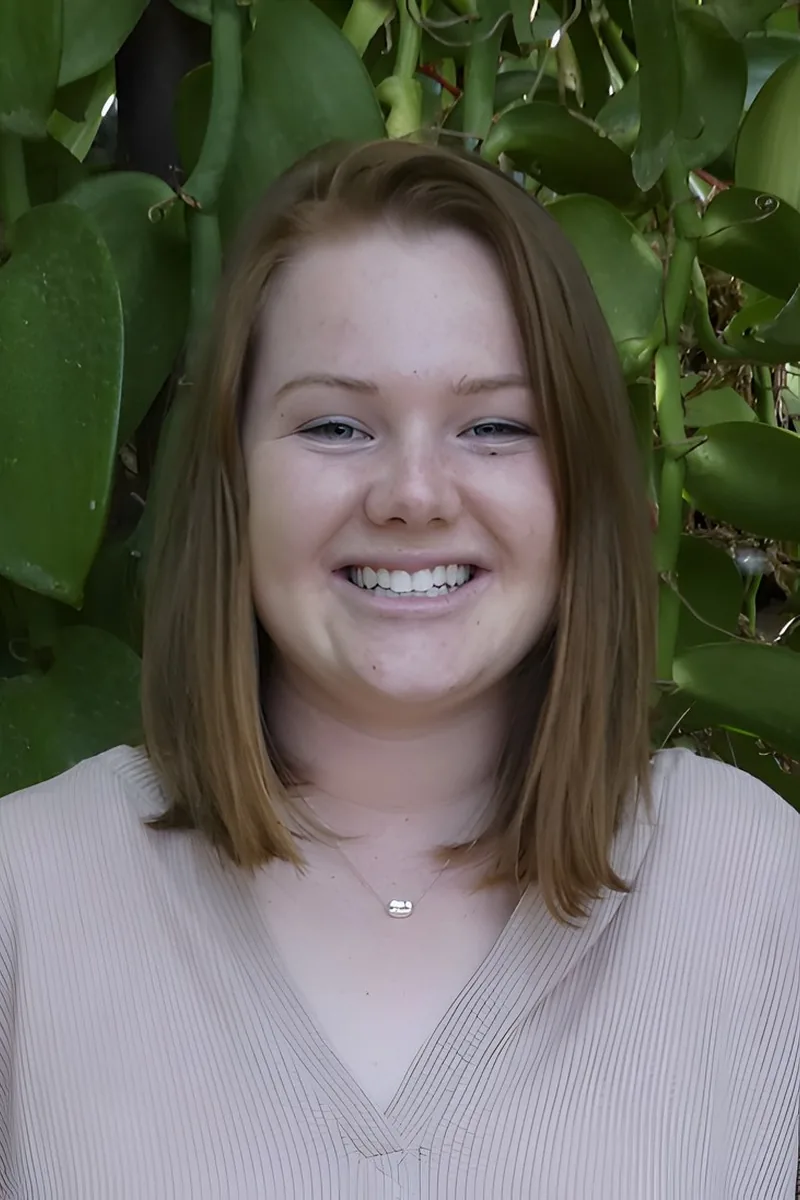
Between AP Calculus BC, trigonometry, and college algebra, Mackenzie has tutored every function family the CLEP Precalculus exam throws at students — polynomials, trig, logarithms, exponentials — and knows exactly where each one tends to trip people up. Her economics training at Northwestern means she's comfortable applying these tools to real models, not just textbook exercises. A 35 ACT reflects the kind of timed-test instinct that translates directly into efficient CLEP prep strategy.
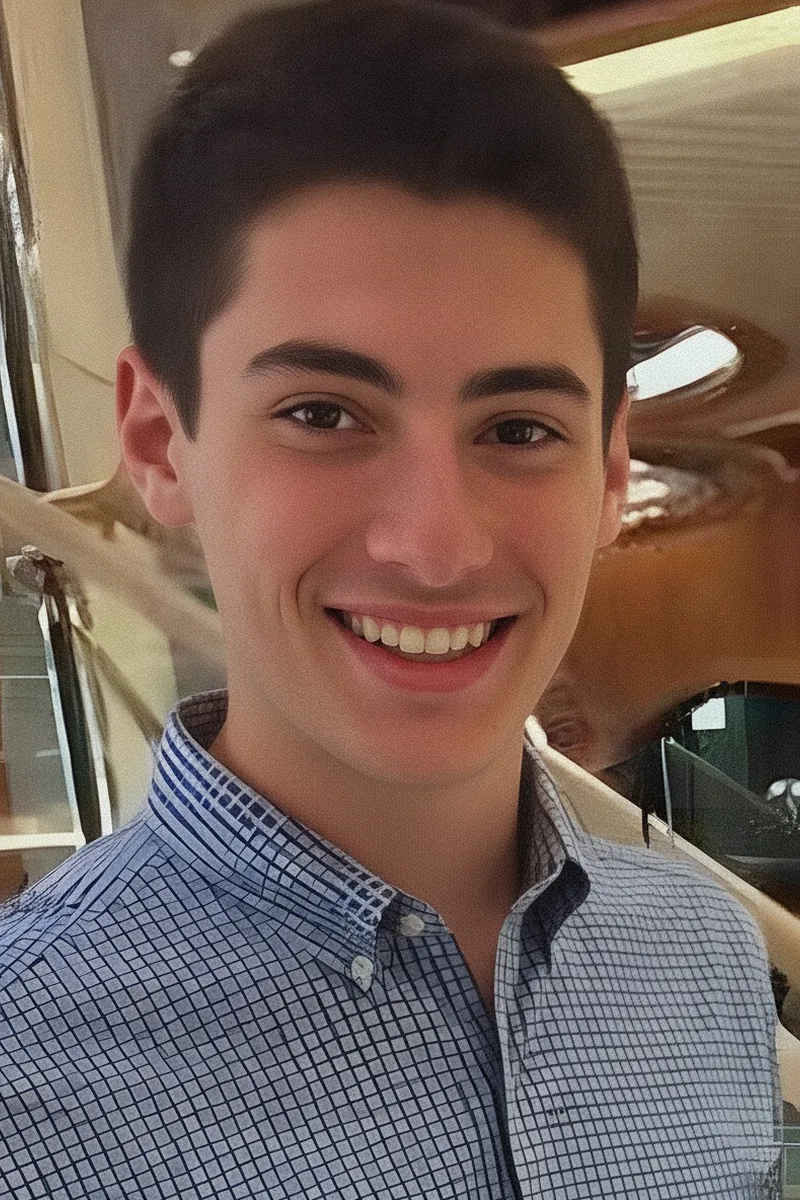
Studying applied mathematics at Stanford means Alex lives inside the function families this exam tests — polynomials, trig, logarithms, exponentials — and can explain them with the fluency of someone who uses them daily, not someone reciting formulas. He zeroes in on the specific concept gaps that cost points under timed conditions, whether that's shaky unit-circle recall or confusion around composite function behavior. Rated 4.8 by students.
Andrew's molecular biology training required constant work with logarithmic scales, exponential growth models, and the kind of quantitative reasoning that maps directly onto CLEP Precalculus content. He digs into the function families — trig, polynomial, logarithmic — by connecting them to tangible patterns, which builds the fluency a timed credit-by-exam format demands. Rated 4.8 by students.
The CLEP Precalculus exam covers a wide arc — polynomial behavior, trigonometric identities, conic sections, sequences — and expects you to move through it fast. Sarah's approach is to map out which topic clusters carry the most weight and lock those down first, then build outward to the less-tested material so study time actually counts.
The CLEP Precalculus exam tests everything from trigonometric identities to limits and composite functions — topics Rithi has taught extensively through her pre-calculus and calculus tutoring. Currently a medical student with a neuroscience degree, she built her math foundation through competition math and IB-level coursework, so she knows how to connect precalc concepts to the bigger picture of what comes next in calculus.
The CLEP Precalculus exam covers a wide arc — polynomial behavior, trigonometric identities, conic sections, sequences — and expects you to move quickly without a graphing calculator on some sections. Alyssa's Vanderbilt math coursework means she can show efficient solution paths and teach students which concepts the exam leans on hardest. She also brings a test-strategy mindset sharpened by her own 34 ACT.
Scoring 800 on SAT Math and earning 5s on both AP Calculus AB and BC, Chris has the kind of deep precalculus fluency — trig identities, function behavior, polynomial analysis — that this exam demands under time pressure. His biomedical engineering coursework at UCLA keeps these tools sharp daily, since modeling biological systems runs on exactly the exponential, logarithmic, and sinusoidal functions the CLEP covers. Rated 4.8 by students.
Shawn's MS in Chemistry means he's spent years working with logarithmic relationships in pH calculations, exponential decay in kinetics, and trigonometric models in spectroscopy — all core function families the CLEP Precalculus exam tests. That applied fluency lets him explain not just how to manipulate these functions but why they behave the way they do, which is what sticks under timed conditions. Rated 4.9 by students.
Trigonometric identities, polar coordinates, and limits — the CLEP Precalculus exam covers ground that trips up students who learned these topics in isolation without seeing how they connect. Samantha spent two years tutoring through Princeton's McGraw program and teaches math across every level from pre-algebra through differential equations, so she can quickly pinpoint which foundational gaps are causing problems. She maps out exactly which precalculus topics carry the most weight on the CLEP and prioritizes accordingly.
Katelyn's math teaching spans elementary through college-level courses, and she applies that depth to CLEP Precalculus prep by zeroing in on the function analysis, trigonometric identities, and limits concepts the exam emphasizes. Her 1540 SAT and 34 ACT demonstrate the kind of quantitative fluency that translates directly into clear, efficient explanations of abstract precalc topics.
The CLEP Precalculus exam covers a dense mix of polynomial behavior, trigonometric identities, and function composition that many self-studiers struggle to organize on their own. Remington teaches these topics daily as building blocks in his physics PhD work, so he can show exactly how each concept connects — why a unit circle matters for graphing transformations, or how logarithmic and exponential functions mirror each other.
Four years of chemical engineering coursework at the University of Kentucky meant Sarah was constantly solving problems built on the function families this exam covers — exponential models in reaction kinetics, logarithmic relationships in thermodynamics, and trig functions in fluid dynamics. That hands-on repetition makes her especially effective at teaching graph transformations and composite functions, since she can show students the logic behind each manipulation instead of just the steps. Rated 4.9 by students.
Most CLEP Precalculus prep pages list the same function families — but the real question is whether a student can recognize a graph transformation or verify a trig identity quickly enough under the clock. Arianna's triple-science background at Dartmouth, heavy on quantitative modeling in neuroscience, means she's internalized the exponential and logarithmic reasoning this exam leans on. She zeroes in on pacing and pattern recognition so students aren't re-deriving formulas when they should be moving to the next question.
The CLEP Precalculus exam covers a dense spread of material — trigonometric identities, conic sections, sequences, and function analysis — in a tight timeframe. Alexandra's math coursework at Brown and her years of tutoring pre-calc give her a clear map of which topics carry the most weight on the exam and which common mistakes to watch for. She structures review sessions around active problem-solving so concepts stick under test conditions.
The CLEP Precalculus exam packs trigonometric identities, polynomial behavior, and function composition into a tight time window, rewarding students who understand underlying structure rather than relying on memorization alone. Irene holds a Ph.D. in Mathematics and Computer Science, so she can unpack why the unit circle works the way it does or how logarithmic and exponential functions mirror each other — the kind of depth that makes tricky exam questions feel familiar.
Passing the CLEP Precalculus exam can save a full semester of tuition, but it covers a dense range of material: polynomial behavior, trigonometric functions, sequences, and limits. Ellyn teaches these exact topics in her college math courses and knows which concepts the exam emphasizes most heavily. She builds each session around active problem-solving so students develop the recall and flexibility the timed format demands.
A PhD in applied mathematics means Samuel has taught and used every concept on this exam — trig identities, polar coordinates, function transformations — at a level far beyond what CLEP requires. That depth lets him quickly diagnose where a student's understanding breaks down and rebuild it with the kind of intuition that holds up under timed conditions. Rated 5.0 by students.
I am a firm believer of this and, as such, I do not spoon feed students during sessions but rather guide them to figure out how to answer their own questions and solve their own problems. Thus, I focus not only on what to do, but how and why to do it. One of the most significant drivers of independent learning is curiosity, and this is one of the primary traits I aim to cultivate in students.
As a biology major, Daiven regularly encounters the exponential and logarithmic models that make up a significant chunk of this exam — population growth curves, pH calculations, and decay functions are baked into his coursework. He pairs that applied comfort with a 32 ACT and broad math tutoring experience spanning algebra through calculus, so he can quickly identify whether a student is stumbling on function composition, trig identity shortcuts, or graph transformation rules and drill those specific gaps before test day.
Precalculus on the CLEP exam demands fluency with function behavior — transformations, compositions, inverses — plus solid command of trigonometric identities and conic sections. Sally is completing a mathematics degree at Georgia Tech, where precalculus concepts are the foundation for nearly every upper-level course she takes. She unpacks each topic by connecting it to its graphical meaning, which makes abstract notation far easier to retain under test conditions.
Building robots in WPI's Mechanical and Robotics Engineering program means Matthew constantly translates trig functions, exponential models, and polynomial relationships into real motion and control systems — exactly the function families the CLEP Precalculus exam demands. He zeros in on the specific gaps holding a student back, whether that's shaky unit-circle fluency or confusion around graph transformations, and drills those until the reasoning is automatic under timed pressure. Rated 5.0 by students.
What sets Emily apart for CLEP prep is her unusual combination — a wildlife science degree that required constant work with population growth models, logistic curves, and periodic ecological data, plus a math tutoring background spanning pre-algebra through calculus. She knows which function manipulation skills actually get tested and where students tend to burn time, especially on logarithmic and exponential questions that reward conceptual fluency over rote computation. Rated 4.9 by students.
The CLEP Precalculus exam packs trigonometric identities, logarithmic functions, and conic sections into a single timed test, so knowing the material isn't enough — students need efficient problem-solving strategies. Jared's Cornell math and science background, combined with experience teaching IB and college-level math, gives him a clear sense of which concepts the exam emphasizes and how to tackle them under pressure.
Having tutored middle school math through calculus, Alexandra knows the exact progression of skills that precalculus sits at the center of — and where gaps from earlier algebra or trig tend to resurface under CLEP time pressure. She zeroes in on those weak links, whether it's shaky comfort with function composition or half-remembered unit-circle values, and rebuilds fluency through targeted problem sets. Rated 4.9 by students.
I am very interested in a career in the medical field, so I am apart of some pre-medical organizations. I really enjoy playing all different sports, from soccer to volleyball to tennis.
The CLEP Precalculus exam covers a dense range of material — polynomial functions, trigonometric identities, conic sections, sequences — and passing it means skipping a full semester of coursework. Josephine studied applied mathematics at Pepperdine and knows exactly which topics carry the most weight on the exam. She builds targeted review plans that prioritize high-frequency question types so students spend their prep time efficiently.
Pursuing a math degree at Tufts means Nikola isn't just reviewing precalculus topics for this exam — he's actively building on them in coursework every week, which keeps the mechanics of function manipulation and identity work sharp. His 35 ACT demonstrates the kind of timed-test composure that matters on the CLEP, where quick pattern recognition across polynomial, trig, and logarithmic problems separates passing scores from strong ones. Rated 5.0 by students.
I am listening to and learning about him or her as an individual. I can also discover what motivates the student during this conversation and plan for how to frame future tutoring sessions in terms of what the student already knows and enjoys.
As a chemistry undergrad, Srikavya regularly works with exponential and logarithmic relationships in kinetics and equilibrium problems — two function families that show up repeatedly on the CLEP Precalculus exam. She also teaches algebra through calculus, which means she can quickly trace a student's confusion on, say, composite functions or piecewise graphs back to the specific algebraic gap causing the problem and patch it efficiently.
Kayla's math tutoring spans pre-algebra through calculus, which means she's walked students through every building block that precalculus pulls together — and she knows exactly which earlier gaps in algebraic manipulation or function behavior tend to snowball on a timed CLEP exam. She breaks down tricky spots like piecewise functions and rational expressions by connecting them back to the simpler algebra students already trust, turning intimidating problems into familiar patterns. Rated 5.0 by students.
The CLEP Precalculus exam covers a lot of ground fast — polynomial behavior, trigonometric identities, conic sections, and sequences all in 90 minutes. Ashley's science background means she approaches these topics with an eye toward how they actually get used, which makes abstract function analysis and limit concepts feel more concrete. She builds each session around the specific content areas where a student is losing the most points.
Chemical engineering at Macaulay Honors College means Nicholas uses exponential models, trig functions, and logarithmic relationships in his coursework constantly — the same material the CLEP Precalculus exam tests. He tackles prep by diagnosing which function families a student actually struggles with, then drilling those specific problem types until the reasoning clicks under timed conditions. Rated 5.0 by students.
Nuclear engineering at Georgia Tech means Corey works with exponential decay models, logarithmic scaling, and trigonometric analysis on a near-daily basis — so the function families on this exam are second nature rather than abstract formulas to memorize. He's especially sharp at breaking down how graph transformations connect back to the underlying algebra, which is where most students lose time on timed exams. Rated 4.9 by students.
Earning CLEP Precalculus credit means demonstrating fluency with trigonometric identities, conic sections, polar coordinates, and function behavior — topics that reward deep understanding over memorization. Noah's engineering coursework required him to apply every one of these concepts in real modeling and design problems, so he explains them with the kind of intuition textbooks rarely provide.
The CLEP Precalculus exam covers a dense mix of polynomial behavior, trigonometric identities, and function transformations that many self-studiers struggle to organize on their own. Ben's graduate work in Mathematics Education gives him a clear framework for sequencing these topics so each one builds logically on the last. He's especially sharp at demystifying unit circle relationships and rational function analysis.
John's strongest subjects are Latin, English, and history — not precalculus — but his 35 ACT composite shows he can perform under timed conditions across quantitative sections, and he's tutored algebra and calculus alongside his humanities work. For students who need a patient walkthrough of polynomial behavior or logarithmic properties rather than an engineering-level deep dive, he brings a clear, methodical teaching style that doesn't assume prior comfort with the material.
During her undergraduate years at TCU, Zina tutored precalculus with a 100% pass rate — every student she worked with cleared the course. For CLEP prep specifically, she drills the function analysis, trigonometric identities, and limits concepts that carry the most weight on the exam.
The CLEP Precalculus exam covers a lot of ground fast — polynomial and rational functions, trigonometric identities, conic sections, and vectors all in 90 minutes. Mustafa's math degree from Rutgers and his state teaching certification mean he knows how to prioritize the highest-yield topics and drill the function analysis skills that make up the bulk of the test. Rated 4.8 by students.
Chemical physics at Centre College means Carter spends most of his time inside the math that precalculus formalizes — manipulating trig functions in wave mechanics, working with exponentials in decay models, and interpreting logarithmic relationships in thermodynamic data. For CLEP prep, he channels that daily practice into sharpening the specific skills the exam rewards: quick graph analysis, confident identity work, and clean algebraic manipulation under a tight clock.
I enjoy helping others realize their potential and making the impossible possible. Everyone can reach their goals, and it is my goal to help you reach yours! Math is my favorite subject, and I have even participated in competitions for it. I hope to help others fall in love with math as well.
Testimonials
Because the right CLEP Precalculus tutor makes all the difference.
Average Session Rating – Based on 3.4M Learner Ratings
Top 20 Test Prep Subjects


Top 20 Subjects
Frequently Asked Questions
Students preparing for CLEP Precalculus typically struggle most with trigonometric functions and their applications, particularly understanding unit circle values and solving trigonometric equations. Logarithmic and exponential functions also present challenges, especially when students need to manipulate equations algebraically or apply them to real-world scenarios. Additionally, many test-takers find polynomial and rational functions difficult—specifically analyzing asymptotes, end behavior, and factoring complex expressions. A tutor can break down these concepts into manageable pieces and help you build confidence in each area through targeted practice.
Function transformations—shifts, stretches, reflections, and compressions—are tested heavily on CLEP Precalculus, and understanding them conceptually (not just memorizing rules) is key. A tutor can help you visualize how changes to equations like f(x) translate to graph changes, and practice identifying transformations from both equations and graphs. Working through progressively complex examples—starting with simple linear shifts and building to trigonometric and exponential transformations—helps you develop intuition that carries across all function families on the exam.
Trigonometry on CLEP Precalculus requires fluency with the unit circle, inverse trig functions, and solving equations—all under time pressure. Many students benefit from learning the unit circle deeply rather than relying on memorization tricks, since this foundation helps with both straightforward questions and applied problems. A tutor can help you develop efficient problem-solving strategies, such as recognizing which trig identities to apply, understanding when to use inverse functions, and practicing pacing so you don't get bogged down on complex trig questions when easier content remains.
CLEP Precalculus assumes solid algebra skills—factoring, solving equations, working with exponents, and manipulating rational expressions—and gaps in these areas will slow you down significantly on the exam. Many students discover during practice tests that they're losing points not because they don't understand precalculus concepts, but because they struggle with the algebra required to solve problems. A tutor can quickly identify which algebra skills need reinforcement and help you rebuild them efficiently, so you can focus your remaining study time on precalculus-specific content rather than reworking foundational material.
Effective practice test strategy for CLEP Precalculus involves taking full-length tests under timed conditions to build stamina and identify weak areas, then reviewing every question—especially ones you got right—to understand why your approach worked. Many students waste practice tests by simply checking answers; instead, you should analyze which topics appear frequently, which question formats trip you up, and whether you're running out of time on certain sections. A tutor can help you interpret practice test results, create a focused study plan based on your specific gaps, and teach you test-taking strategies like when to skip difficult questions and come back, or how to estimate answers on complex problems to save time.
The CLEP Precalculus exam gives you 90 minutes for approximately 60 questions, which means you have roughly 1.5 minutes per question on average—but some questions require more time than others. Students often spend too long on difficult algebraic manipulations or trigonometric problems and run out of time for simpler questions they could answer quickly. A tutor can teach you to scan questions upfront, prioritize easier content first, and recognize when a problem is taking too long and should be skipped temporarily. Practice tests are essential for developing this timing sense; a tutor can help you analyze your pacing patterns and adjust your strategy so you maximize correct answers rather than getting stuck on one challenging problem.
Sequences and series appear on CLEP Precalculus and require understanding arithmetic sequences, geometric sequences, and their corresponding series formulas. Students often confuse when to use which formula or struggle with notation like sigma notation. Beyond memorizing formulas, you need to recognize patterns in sequences, apply formulas to word problems, and sometimes work backwards from a sum to find missing terms. A tutor can help you understand the logic behind the formulas so you're not just plugging numbers in, and practice identifying sequence types quickly so you can apply the right approach on test day.
Test anxiety on CLEP Precalculus often stems from uncertainty about whether you truly understand concepts or just memorized procedures, and from pressure when you encounter unfamiliar question formats. Working with a tutor builds genuine conceptual understanding—not just formula memorization—which naturally reduces anxiety because you can reason through problems even if you haven't seen them before. Additionally, repeated practice with timed tests under a tutor's guidance desensitizes you to the exam environment and helps you develop a realistic sense of what you can accomplish, so you approach test day with earned confidence rather than doubt.
Let’s find your perfect tutor
Answer a few quick questions. We’ll recommend the right plan and match you with a top 5% tutor.