Award-Winning Inorganic Chemistry
Tutors
Inorganic Chemistry
Tutors
Private 1-on-1 tutoring, weekly live classes for academic support, test prep & enrichment, practice tests and diagnostics, and more to elevate grades and test scores.
Based on 3.4M Learner Ratings
UniversitiesSchools & Universities
DeliveredHours Delivered
ProficiencyGrowth in Proficiency
Who needs tutoring?
No obligation. Takes ~1 minute.

Crystal field theory, coordination compound naming, and molecular orbital diagrams can feel abstract until someone maps out the spatial and energetic logic behind them. Kate's environmental engineering master's involved significant inorganic and analytical chemistry work, so she explains concepts like ligand field splitting and redox behavior from hands-on familiarity rather than textbook summaries alone.
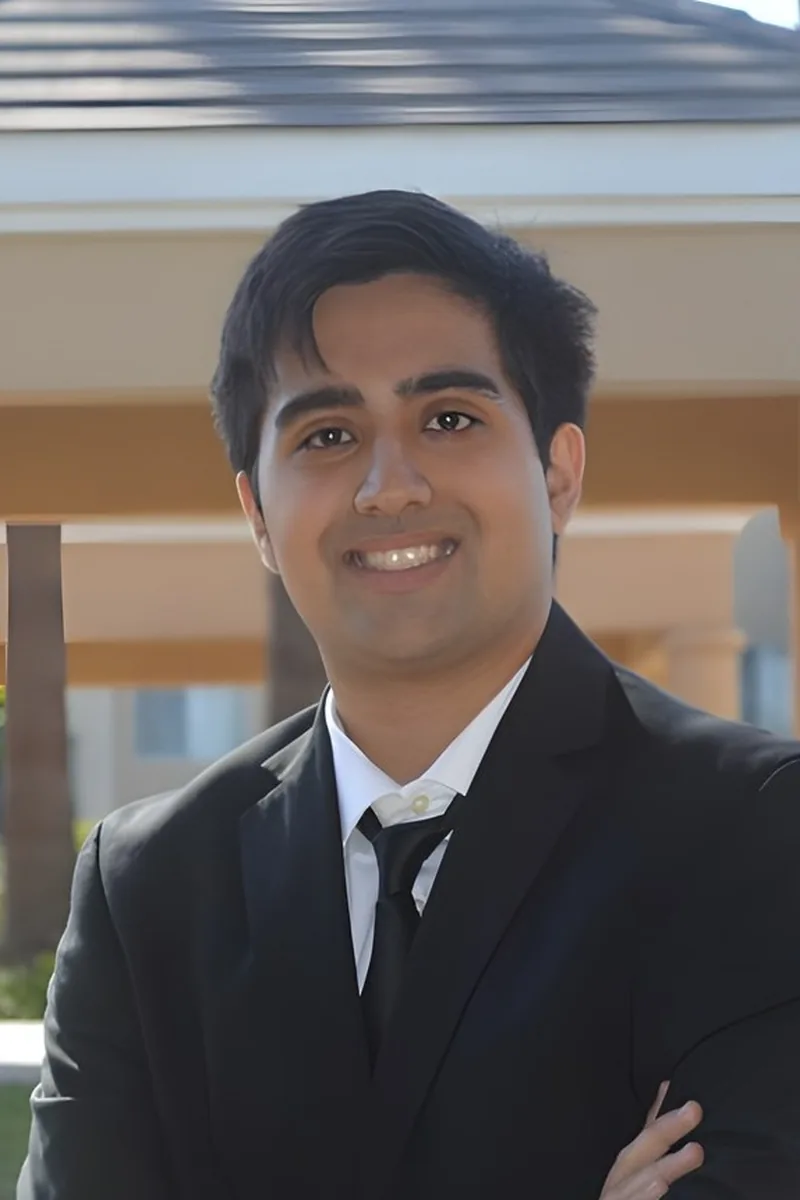
Crystal field theory, coordination compound nomenclature, and periodic trends in transition metals can feel disconnected from the rest of chemistry without a clear framework. Abrahim's science training at UCLA and medical school gave him a systematic way to organize inorganic concepts around electron behavior and bonding models, which he uses to make even d-orbital splitting diagrams intuitive.
A bio-organic chemistry degree might seem organic-leaning, but Alex's training required serious engagement with the inorganic side — acid-base equilibria, redox chemistry, and the behavior of metal centers in biological contexts. He applies that crossover knowledge to break down coordination chemistry and periodic trends by linking them to the reaction logic students often find more intuitive from general or organic chem.
Rebecca's biology degree required substantial chemistry coursework, and she teaches across general, organic, and AP chemistry — giving her a working fluency with the periodic trends, electron configurations, and acid-base logic that anchor inorganic chemistry. She tackles topics like oxidation states and redox behavior by connecting them to the broader chemical patterns students encounter in her other chemistry subjects, making the material feel like an extension of what they already know. Rated 5.0 by students.
Having earned a Master's in Inorganic Chemistry, Eric has spent graduate-level time with the exact material students are wrestling with — symmetry operations, coordination compound behavior, and the thermodynamic arguments behind ligand substitution reactions. He teaches these topics by building from the electronic structure up, so students develop intuition for why certain metal complexes are stable or reactive. Holds a 5.0 rating.
Eric's ecology and evolutionary biology degree might not scream inorganic chemistry, but the subject's core concepts — periodic trends, acid-base equilibria, and redox behavior — overlap heavily with the environmental and earth science he teaches regularly. He approaches topics like oxidation states and electron configurations by anchoring them in the broader chemical logic of how elements behave across the periodic table, making the patterns easier to reconstruct than to memorize.
Years of biochemical lab work at Columbia gave Andrew hands-on experience with the metal-ion interactions and redox processes that sit at the heart of inorganic chemistry — particularly how transition metals coordinate with ligands in biological systems. He teaches topics like electron configurations and coordination geometry by drawing on that bioinorganic context, making abstract orbital arguments feel grounded in real chemistry. Rated 4.9 by students.
Crystal field theory, coordination compounds, molecular orbital diagrams for transition metals — inorganic chemistry lives at the intersection of quantum mechanics and structural intuition. As a doctoral researcher in Harvard's Chemistry and Chemical Biology department, Breno digs into these concepts at a professional level and can unpack the logic behind ligand field splitting, symmetry arguments, and periodic trends in ways that textbooks often gloss over.
Shawn's master's in chemistry means he's tackled inorganic topics like coordination compound nomenclature, redox mechanisms, and periodic trend analysis at the graduate level — not just in survey courses. He teaches students to trace reactivity patterns back to electron configurations and orbital energetics, building the kind of reasoning that holds up on exams where memorized rules fall apart. Rated 4.9 by students.
Crystal field theory, coordination compounds, and periodic trends in reactivity make inorganic chemistry feel like a completely different language from organic or general chem. Monika's PhD in molecular biology and her biochemistry training gave her hands-on experience with metal-containing enzymes and coordination chemistry, so she unpacks these concepts by linking them to biological systems students may already recognize.
Crystal field theory, coordination compounds, and periodic trends in metallic bonding make inorganic chemistry feel like a different discipline from the gen chem most students are used to. Manpinder's graduate training in chemistry gave her deep exposure to these topics, and she unpacks concepts like ligand field splitting and molecular orbital diagrams with the kind of specificity this course demands.
Karista's PhD in environmental science and her biochemistry training mean she's spent years working with the metal-ion behavior, redox chemistry, and electron transfer processes that show up throughout inorganic coursework — particularly how transition metals cycle through different oxidation states in natural systems. She unpacks coordination chemistry and periodic trends by connecting them to the geochemical and biochemical contexts where these reactions actually play out. Rated 5.0 by students.
Katheryn's chemistry degree from the University of Georgia covered coordination compounds, crystal field theory, and periodic trends in depth — the core of inorganic chemistry that many students find deceptively tricky. She unpacks electron configurations and bonding models by connecting them to the physical properties students can observe, making abstract orbital diagrams feel concrete.
Before pursuing his education master's and pre-med prerequisites, Adam built a science foundation across three bachelor's degrees — including natural resources, where understanding mineral chemistry and geochemical cycles meant getting comfortable with periodic trends, oxidation states, and acid-base behavior in real-world systems. He uses that interdisciplinary background to teach inorganic concepts like electron configurations and redox reactions through concrete environmental and geological examples. Rated 4.7 by students.
Inorganic chemistry's emphasis on periodic trends, coordination compounds, and molecular geometry requires a different kind of thinking than organic — more spatial reasoning, more pattern recognition across the periodic table. Nicole's pre-medical coursework at UCLA covered these foundational concepts extensively, and she unpacks topics like crystal field theory and oxidation states by grounding them in the periodic trends students already know.
I am a PhD student in Inorganic Chemistry at Yale University. I've been spreading my love of chemistry for the past several years as a TA for general chemistry, and I'm excited to share my passion with you! Prior to Yale, I got my B.S. in chemistry from Caltech, where I also served as a TA for both general chemistry lab and advanced inorganic chemistry. Outside of teaching and research, I enjoy fencing, reading, and playing piano.
Coordination compounds, crystal field theory, and periodic trends in oxidation states can feel like a wall of disconnected facts without someone to organize them. Sidra unpacks inorganic chemistry by linking electronic structure to reactivity — showing, for example, why transition metals form colored complexes or how ligand field splitting actually predicts magnetic behavior.
PhD-level research at Windsor and coursework at Cornell mean Alaaeddeen has spent years immersed in the symmetry arguments, bonding models, and reaction mechanisms that define inorganic chemistry — not as exam prep, but as daily working tools. He digs into topics like coordination geometry and d-orbital splitting by walking through the logic step by step, loading each explanation with concrete examples drawn from his own research experience. Rated 5.0 by students.
Working as a research scientist studying Alzheimer's and Parkinson's therapies, Anthony regularly encounters the metal-ion chemistry and redox behavior that underpin inorganic coursework — transition metal complexes in biological systems aren't just textbook abstractions for him. His biomedical engineering training at BU and Tufts built a strong quantitative backbone for tackling topics like acid-base equilibria, coordination compound nomenclature, and periodic trend analysis. Rated 4.9 by students, he connects these concepts to real biochemical contexts that make them easier to internalize.
Susie's biochemistry degree at Swarthmore and her current research at the NIH mean she's worked extensively with metal-centered chemistry — particularly how transition metals behave in biological systems, from enzyme active sites to electron transfer chains. That bioinorganic lens gives her a practical way to teach oxidation states, coordination geometry, and ligand behavior by grounding them in contexts where the chemistry actually matters. Rated 5.0 by students.
Coordination compounds, crystal field theory, and periodic trends can feel abstract until someone maps out the logic behind them. Nishant's chemistry preparation for the MCAT — where he scored in the 98th percentile — required deep fluency with inorganic reaction mechanisms and molecular geometry. He breaks these topics into visual, step-by-step reasoning rather than rote memorization of oxidation states.
Crystal field theory, coordination compounds, periodic trends in d-block metals — inorganic chemistry requires thinking about bonding and structure in ways general chemistry never prepared you for. Edward's chemistry degree gave him a thorough grounding in these concepts, and he unpacks topics like ligand field splitting and molecular orbital diagrams with concrete visual explanations.
Crystal field theory, coordination compounds, molecular orbital diagrams — inorganic chemistry demands comfort with abstract three-dimensional thinking that most students haven't encountered before. Chad's graduate training in chemistry gave him deep familiarity with these topics, and he walks through each concept using visual models and systematic approaches to electron configurations and bonding.
Two full semesters of general chemistry at Johns Hopkins gave Michael a deep understanding of inorganic concepts like molecular geometry, acid-base equilibria, and coordination compounds. He approaches the subject by connecting abstract ideas — electron configurations, periodic trends, crystal field theory — to the reaction behavior students can actually observe. His honors-level science background means he can explain the 'why' behind each concept, not just the 'what.'
Katharine's biochemistry degree means she's spent real time with the inorganic concepts that trip students up — particularly how transition metals coordinate with ligands in biological systems and why certain oxidation states dominate in enzyme active sites. She teaches electron configurations and periodic trends by building from the chemistry students already know from general chem, then extending it into the spatial and energetic reasoning that inorganic courses demand.
Medical school at Tufts means Eric has pushed well past introductory chemistry — the biochemistry and physiology he works with daily depend on understanding how metal ions behave in biological systems, from iron's oxidation states in hemoglobin to zinc's coordination in enzyme active sites. He teaches inorganic concepts like electron configurations and periodic trends by grounding them in these physiological examples, giving students a concrete reason to care about the abstractions.
Chemical engineering at Macaulay Honors College means Nicholas has worked through the thermodynamics, acid-base equilibria, and redox chemistry that form the backbone of inorganic coursework — and he's done it with the quantitative rigor that engineering programs demand. He breaks down topics like oxidation states and periodic trend analysis by tying them back to the underlying energetics, so the patterns feel logical rather than arbitrary. Rated 5.0 by students.
Crystal field theory, coordination compounds, and periodic trends in reactivity make inorganic chemistry feel like a different language from the general chemistry most students know. Lovepreet's graduate-level chemistry background gives her the depth to explain d-orbital splitting, ligand behavior, and thermodynamic stability in terms that connect back to principles students already understand.
Pre-dental coursework at the University of Rochester means Ben is actively working through the chemistry sequence — including the periodic trends, electron configurations, and acid-base behavior that form the core of inorganic chemistry. He teaches across general, organic, and AP chemistry, so he can show students how inorganic concepts like oxidation states and redox reactions connect to material they've already encountered in adjacent courses.
Molecular and cellular biology at UC Berkeley meant Caroline didn't just memorize periodic trends and electron configurations — she had to apply them, particularly when studying how metal ions drive enzymatic function and cellular processes. She teaches inorganic chemistry by pulling from that biological toolkit, making topics like oxidation states and coordination behavior click through the lens of systems students can picture working in real time. Rated 5.0 by students.
Crystal field theory, coordination compounds, periodic trends in d-block metals — inorganic chemistry demands a different kind of spatial and electronic reasoning than most students are used to. Yuxuan's Chemical Biology degree at UC Berkeley gave him a thorough grounding in bonding models and symmetry concepts, and he breaks down topics like ligand field splitting and molecular orbital diagrams into visual, step-by-step explanations.
A psychology major might seem like an unusual fit for inorganic chemistry, but Andrew teaches across the full chemistry spectrum — general, organic, and biochemistry — which means he's fluent in the periodic trends, electron configurations, and acid-base logic that anchor inorganic coursework. He approaches tricky topics like redox behavior and oxidation states by breaking them into systematic patterns students can reason through, not just memorize. Rated 4.9 by students.
Dinesh earned his PhD specifically in inorganic chemistry, which means topics like coordination compound behavior, ligand field theory, and metal-centered reactivity aren't just chapters he studied — they were his daily research. He teaches students to reason through d-orbital splitting and symmetry arguments by connecting them to the thermodynamic and kinetic principles that actually govern why complexes form the way they do. Rated 4.5 by students.
Crystal field theory, coordination compounds, periodic trends in d-block elements — inorganic chemistry asks students to think about bonding in ways that general chem never prepared them for. Roy's university training in the physical sciences gave him hands-on experience with these concepts, and he unpacks topics like ligand field splitting and molecular orbital diagrams with clear, visual explanations.
Working as a pharmacy technician gives Ngan daily exposure to chemical compounds, molecular interactions, and the practical side of chemistry that textbooks often skip. She brings that real-world context to inorganic chemistry topics like ionic bonding, coordination compounds, and periodic trends. Students get explanations grounded in how these concepts actually show up beyond the classroom.
Transform Your Study Game with a Tutor Who Knows the Way: Expert Insight, On-Demand! I'm passionate about helping students because I love seeing that "aha!" moment when they finally understand something new. It's incredibly fulfilling to guide them through their learning journey and celebrate their successes. Over the years, I've worked with a variety of students, from those struggling with tough subjects to those aiming for excellence. Each experience has taught me how to adapt my approach to fit different learning styles, making sure every student gets the support they need. My teaching style is all about making learning fun and effective. I believe in personalizing my approach to fit each student's needs, using creative methods to make challenging concepts easier to grasp.
I have always enjoyed teaching even when I was in grade school helping my friends with their homework. I live for that 'aha!' moment with a student! I have tutored off and on for the past 10 years both as a tutor in math and chemistry and later as a teaching assistant in chemistry during graduate school. I love to meet students where they are and build from there. We break complex concepts into digestible pieces to build upon where your understanding already is.
Testimonials
Because the right Inorganic Chemistry tutor makes all the difference.
Average Session Rating – Based on 3.4M Learner Ratings
Top 20 Science Subjects


Top 20 Subjects
Frequently Asked Questions
Students often find transition metal chemistry, coordination complexes, and crystal field theory particularly challenging because they require visualizing 3D structures and understanding how d-orbital splitting affects reactivity. Balancing redox equations—especially in acidic and basic solutions—trips up many students who haven't fully internalized oxidation state logic. Thermodynamics and kinetics concepts like activation energy and reaction mechanisms also create confusion because they're abstract and require connecting mathematical relationships to real molecular behavior. A tutor can break down these concepts step-by-step, using visual models and worked examples to build genuine understanding rather than just memorization.
Balancing redox equations requires systematic thinking—identifying oxidation state changes, separating half-reactions, and balancing electrons methodically. Many students try to guess-and-check, which wastes time and builds bad habits. A tutor can teach you the half-reaction method step-by-step, starting with simple reactions and progressing to complex ones in acidic or basic conditions. They'll also help you develop a checklist approach so you catch common errors like forgetting to balance oxygen with water or hydrogen with H⁺/OH⁻, turning what feels chaotic into a predictable, reliable process.
Inorganic chemistry demands strong spatial reasoning—from understanding VSEPR geometry to picturing how ligands arrange around a metal center in coordination complexes. Many students struggle because they're working from 2D drawings on paper but need to think in 3D. A tutor can use molecular models, interactive visualizations, and drawing techniques to help you build mental models of how atoms actually arrange themselves. They can also teach you to predict properties (like magnetic behavior or reactivity) directly from structure, which deepens your understanding far beyond memorizing facts.
Lab work is where inorganic chemistry becomes real—but many students memorize procedures without understanding the chemistry driving them. A tutor can help you see why you're doing each step: why you need excess reagent, what the color change actually tells you about oxidation states, or how precipitation equilibria explain what you observe. This connection makes lab reports easier to write, helps you troubleshoot when experiments don't go as planned, and develops your scientific reasoning skills. Understanding the theory behind the experiment also helps you design your own experiments and predict outcomes with confidence.
Kinetics and thermodynamics are abstract because they require connecting mathematical equations (ΔG, Ea, rate laws) to invisible molecular behavior—you can't see activation energy or entropy, so students often just plug numbers into formulas without understanding what they mean. A tutor can ground these concepts in real examples: why some reactions are spontaneous but slow (high Ea), how temperature and concentration affect reaction rates, and what entropy really means at the molecular level. They'll help you develop intuition for predicting reaction behavior, not just calculating answers, which makes these concepts stick and transfers to new problems.
Coordination chemistry combines multiple difficult concepts: oxidation states, geometry, bonding theory, and how d-orbitals split in different ligand fields. Students often memorize spectrochemical series or crystal field splitting diagrams without understanding why certain ligands cause larger splits or why a complex is paramagnetic or diamagnetic. A tutor can build your understanding systematically—starting with simple coordination geometry, then showing how ligand field theory explains color, magnetism, and reactivity from first principles. This approach transforms coordination chemistry from a collection of memorized facts into a coherent framework where you can predict properties and explain observations.
Unit conversions and stoichiometry are foundational, but students often rush through them or lose track of what they're actually calculating—moles, grams, molarity, limiting reagents. A tutor can teach you to set up problems systematically using dimensional analysis, helping you see the logical flow from what you know to what you're solving for. They'll also help you catch common mistakes like forgetting to account for coefficients in balanced equations or confusing molar mass with molarity. Mastering these skills early makes everything else in inorganic chemistry—from limiting reagent problems to solution stoichiometry—much more manageable.
An excellent inorganic chemistry tutor needs deep content knowledge—not just knowing facts, but understanding why bonding works the way it does and how to explain abstract concepts like orbital overlap or ligand field splitting. They should be skilled at asking questions that help you think through problems rather than just giving answers, and they need strong visualization abilities to help you picture 3D structures and molecular behavior. They should also connect theory to lab work and real-world applications (like how coordination chemistry applies to metallurgy or catalysis), and adapt their explanations based on whether you learn better through models, drawings, analogies, or mathematical reasoning.
Let’s find your perfect tutor
Answer a few quick questions. We’ll recommend the right plan and match you with a top 5% tutor.