Award-Winning Spanish Tutors
serving Ann Arbor, MI
Spanish
Tutors in Ann Arbor
Private 1-on-1 tutoring, weekly live classes for academic support, test prep & enrichment, practice tests and diagnostics, and more to elevate grades and test scores.
Based on 3.4M Learner Ratings
UniversitiesSchools & Universities
DeliveredHours Delivered
ProficiencyGrowth in Proficiency
Who needs tutoring?
No obligation. Takes ~1 minute.
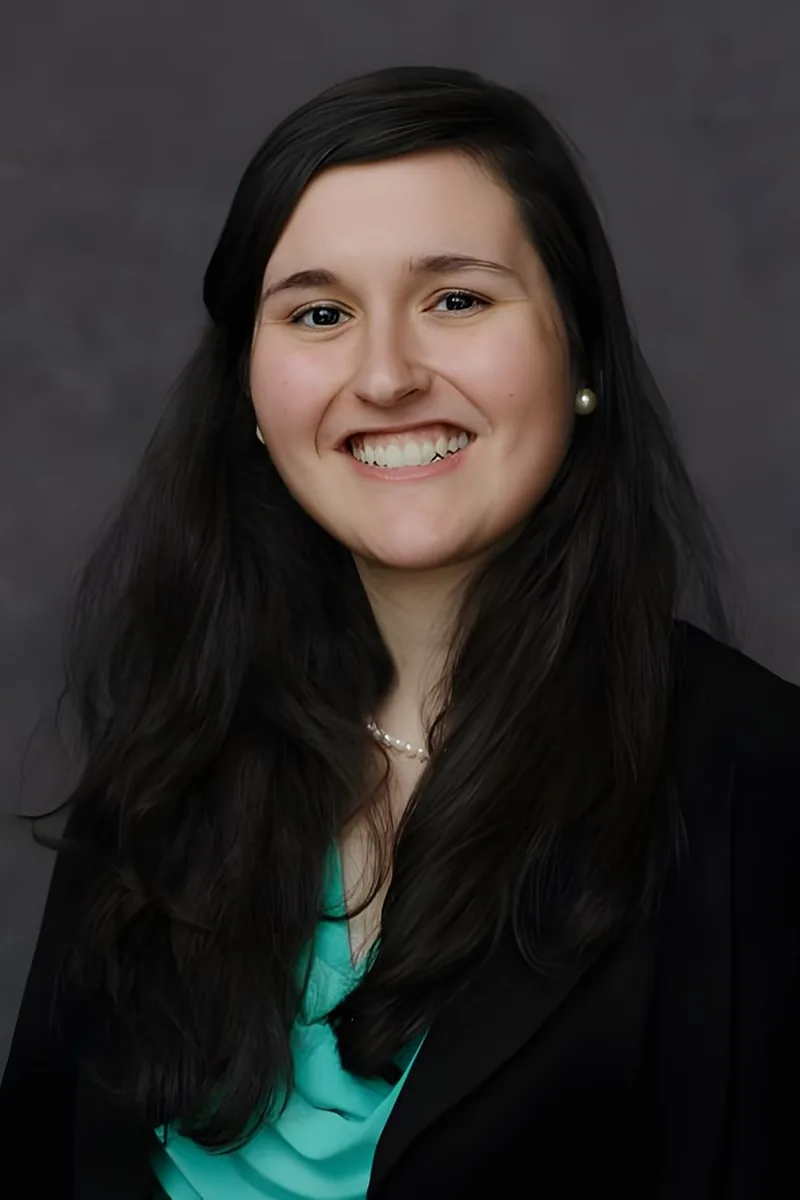
Ruth didn't just study Spanish in a classroom — she lived it as an English Teaching Assistant at the Universidad Pontificia Bolivariana in Medellín, Colombia. That immersion experience means she teaches grammar concepts like subjunctive mood and preterite vs. imperfect with real-world context baked in, connecting textbook rules to how Spanish is actually spoken.

Eva's English degree from Harvard sharpened her eye for how language works at the structural level — grammar, syntax, the logic behind why sentences hold together — and she applies that same analytical instinct to Spanish verb forms, agreement rules, and sentence construction. Her journalism background also means she values clear, functional communication over perfection, which takes the pressure off students who freeze up trying to produce flawless sentences. Rated 5.0 by students.
Trishani is completing a Spanish minor at the University of Michigan, which means she's actively working through the same grammar structures — preterite vs. imperfect, subjunctive mood, ser vs. estar — that trip up most students. She connects vocabulary and conjugation patterns to real usage so the language starts to feel intuitive rather than like a list of rules to memorize.
Rebekah teaches Spanish across multiple levels — from introductory vocabulary building through AP Spanish Language & Culture — and her science background at Brown actually sharpens how she explains grammar, treating conjugation patterns and tense rules as logical systems to decode rather than lists to memorize. She also took the SAT Subject Test in Spanish, so she knows how to prep students for the specific reading and listening comprehension demands of standardized Spanish exams. Rated 5.0 by students.
Having studied Spanish through the intermediate level alongside a demanding engineering courseload, Haley knows what it takes to internalize verb conjugations, nail preterite vs. imperfect distinctions, and actually retain vocabulary long-term. She brings a structured, pattern-oriented mindset to language learning that clicks especially well for students who think analytically.
Anna's background in speech-language pathology gives her a unique lens on Spanish — she breaks down pronunciation patterns, verb conjugations, and sentence structure by connecting them to how the brain actually processes a second language. For students tackling Spanish 1 vocabulary or building toward conversational fluency, that linguistic training makes tricky concepts like ser vs. estar click faster.
Having studied through Spanish 3 and beyond, Kavya tackles the grammar structures that trip students up most — preterite vs. imperfect, subjunctive mood triggers, and direct/indirect object pronoun stacking. She ties each rule back to real usage so the logic behind conjugation patterns actually clicks.
I am a full-time Master's student, and I enjoy Harry Potter, Doctor Who, and the Chilling Adventures of Sabrina.
Learning Spanish as a system rather than a list of vocabulary words is what separates students who plateau from those who actually become conversational. Nicole's linguistics degree gives her a framework for explaining verb tenses, subjunctive mood, and sentence structure in ways that click — especially for students who've been memorizing without understanding. She teaches across all four levels of Spanish and visits her family in Italy annually, keeping her Romance-language instincts sharp.
Pratik's strength is in science and test prep, not Spanish — but the analytical rigor of his Cornell pre-med coursework means he's wired to decode grammatical systems the same way he'd break down a reaction mechanism, finding the logic underneath conjugation patterns and sentence structure. His writing background also sharpens his ability to teach composition skills that transfer directly to Spanish essay work and written expression.
Teaching both Spanish and conversational Spanish means Sierra covers the full arc — from memorizing verb endings on paper to actually stringing together sentences in real time. Her communications background sharpens this further, since she treats language as something you use to connect with people, not just a set of grammar exercises to complete.
I am a very strong writer, communicator, and a huge science geek. I've also spent years coaching elementary and middle school students in various sports, and have found fulfillment and success working with all age ranges.
Jane minored in Spanish at Brigham Young University, building fluency across grammar, composition, and reading comprehension. She approaches verb conjugations and sentence structure with the same analytical eye she brings to English — breaking down why subjunctive mood triggers work the way they do, not just asking students to memorize charts.
A semester studying in Madrid plus several years working at a Latin American tech company in Miami gave Jonah daily, professional-level immersion in Spanish that most tutors simply don't have. He tackles grammar concepts like the subjunctive mood and preterite-vs-imperfect distinctions by grounding them in real usage patterns he picked up living and working in Spanish. His 5.0 rating speaks to how well that real-world fluency translates to the classroom.
Neuroscience trains you to learn how people learn — and Anya applies that instinct to Spanish by figuring out which memorization strategies actually stick for vocabulary and which grammar concepts need to be understood structurally before they'll hold. She scored a 36 on the ACT, so she knows how to break complex material into repeatable systems, a skill she carries into teaching everything from ser versus estar to subjunctive triggers.
Maria is fluent in Spanish, which means she teaches beyond conjugation charts and vocabulary lists — she digs into how subjunctive mood actually works in everyday conversation and why ser and estar aren't interchangeable. Her approach leans on repetition with real-world context, building the kind of instinct for the language that lets students think in Spanish rather than translate from English.
Kyleigh is pursuing a Bachelor of Science in Spanish at the University of Michigan, which means she's immersed in the language daily — from advanced literature and composition to conversational fluency. She teaches everything from verb conjugation patterns and subjunctive mood to building the confidence to think in Spanish rather than mentally translating from English.
Isaiah teaches Spanish with an emphasis on building real comprehension, not just conjugation drills. Whether a student is wrestling with the subjunctive mood or struggling to keep preterite and imperfect straight, he connects grammar rules to how Spanish is actually spoken and written. He covers Spanish 1 through 3 and scored high enough on the SAT Subject Test in Spanish with Listening to tutor it.
Living and running a nonprofit in Ecuador has given Vanessa the kind of everyday Spanish fluency that classroom instruction alone can't replicate. She uses that immersion experience to teach grammar, vocabulary, and verb conjugations through real-world context — ordering food, reading local news, navigating conversations — so the language sticks instead of feeling like an abstract exercise.
Conjugation tables are easy to memorize and easy to forget — Dalton instead teaches Spanish grammar through pattern recognition, showing students how verb tenses relate to each other so that irregular forms start making sense. He covers everything from foundational topics like ser vs. estar to more advanced concepts like the subjunctive mood. His approach builds reading and writing skills alongside speaking confidence.
Studying both German and Spanish at Carleton while majoring in psychology gives Amanda a multilingual perspective that sharpens how she teaches language — she understands firsthand where English speakers get tripped up by gendered nouns or unfamiliar verb forms because she's wrestling with those same structures across two foreign languages simultaneously. Her conversational Spanish background means sessions stay practical, connecting grammar concepts like ser versus estar to real dialogue instead of isolated worksheets.
Pre-law coursework at Vanderbilt means Kit spends most of his time building arguments, analyzing texts, and writing persuasively — skills that transfer surprisingly well to learning a second language, where reading comprehension and grammatical precision matter just as much. He tackles Spanish grammar and vocabulary with the same structured, detail-oriented approach he applies to political science, breaking down sentence construction and verb forms into clear, logical steps.
Rather than drilling conjugation tables in isolation, Meghan teaches Spanish grammar in context — building sentences that students actually want to say. She minored in Spanish at Northwestern and then spent a semester at Madrid's top-ranked university taking upper-level courses entirely in Spanish alongside native speakers. That immersion experience means she understands the gap between textbook Spanish and how the language actually works.
Public policy work in Washington, DC means Noel reads, writes, and communicates across cultural contexts daily — a professional habit that translates naturally into language instruction. He approaches Spanish as a communication tool first, connecting vocabulary and grammar concepts like direct object pronouns and verb tenses to practical reading and writing tasks rather than rote drills. Rated 4.9 by students.
Studying Philosophy, Politics & Economics means Bina spends her days parsing arguments, dissecting texts, and building structured cases — skills she applies directly to Spanish grammar, where understanding *why* a rule works (say, the logic behind ser versus estar) matters more than memorizing charts. Her background in law adds another layer: she treats sentence construction like building a legal argument, where every word has to be in the right place for the meaning to hold. Rated 5.0 by students.
Teaching high school students in Vietnam gave Alyssa firsthand experience communicating across language barriers and building comfort with imperfect fluency. She applies that same patience to Spanish, tackling verb conjugation patterns, pronoun usage, and sentence construction in ways that build real conversational and written confidence at the Spanish 2 level and beyond.
Earning a certificate of advanced language in Spanish at Yale means Maxwell doesn't just know the grammar rules — he uses the language daily in academic and social contexts. He breaks down tricky concepts like subjunctive mood triggers and ser vs. estar distinctions by connecting them to how native speakers actually think about meaning. Rated 5.0 by students.
Samuel holds a TEFL certificate and studies linguistics at Harvard, which means he understands how languages are structured at a foundational level — verb conjugation patterns, pronoun systems, sentence-building rules. He applies that systematic approach to Spanish grammar and vocabulary, making concepts like ser vs. estar or preterite vs. imperfect click rather than feel like arbitrary memorization.
Kaya teaches Spanish from conversational basics through advanced grammar, covering everything from preterite vs. imperfect distinctions to subjunctive mood in complex sentences. Her experience across Spanish 1 through 4 and IB Language B means she can pinpoint exactly where a student's gaps are and address them systematically.
Testimonials
Because the right Spanish tutor makes all the difference.
Average Session Rating – Based on 3.4M Learner Ratings
Other Ann Arbor Tutors
Related Languages Tutors in Ann Arbor
Frequently Asked Questions
Varsity Tutors matches Ann Arbor students with expert Spanish tutors for 1-on-1 instruction. We pair each student with a tutor based on their specific needs, learning style, and goals.
Whether you need homework help, exam prep, or want to get ahead, our Spanish tutors are ready to help.
Common challenges include gaps from earlier material, difficulty with specific concepts, and trouble applying learning to new problems. These issues can snowball quickly in Spanish.
A tutor identifies where you're stuck, fills in gaps, and provides targeted practice. The 1-on-1 format means you get help exactly where you need it.
Tutors work with your student's actual coursework—homework assignments, class notes, and upcoming tests. This keeps tutoring directly relevant to what's happening in the classroom.
When you share information about your student's school and curriculum, we can match you with a tutor who has relevant experience.
All tutors complete background checks, credential verification, and teaching evaluation. Many of our Spanish tutors hold advanced degrees or have years of teaching experience.
You can review tutor profiles to find someone with the right background for your student's level and needs.
Many students see improved grades within a few weeks, along with better understanding of Spanish concepts and more confidence tackling challenging material.
Tutors track progress and adjust their approach to ensure continued improvement.
Most students benefit from 1-2 sessions per week. More frequent sessions help if your student is significantly behind or has an important exam coming up.
Your tutor can recommend a schedule based on your student's specific situation and goals.
Tutoring is purchased in packages of hours, with rates varying by tutor experience. Varsity Tutors offers several options to fit different budgets and needs.
You can discuss pricing during your consultation to find what works best.
Your tutor will assess where your student is, discuss goals, and start working on priority areas. Most students bring current homework or upcoming test material to focus on.
By the end, you'll have a clear sense of how the tutor can help and a plan for moving forward.
Let’s find your perfect tutor
Answer a few quick questions. We’ll recommend the right plan and match you with a top 5% tutor.