Award-Winning College Geography
Tutors
College Geography
Tutors
Private 1-on-1 tutoring, weekly live classes for academic support, test prep & enrichment, practice tests and diagnostics, and more to elevate grades and test scores.
Based on 3.4M Learner Ratings
UniversitiesSchools & Universities
DeliveredHours Delivered
ProficiencyGrowth in Proficiency
Who needs tutoring?
No obligation. Takes ~1 minute.
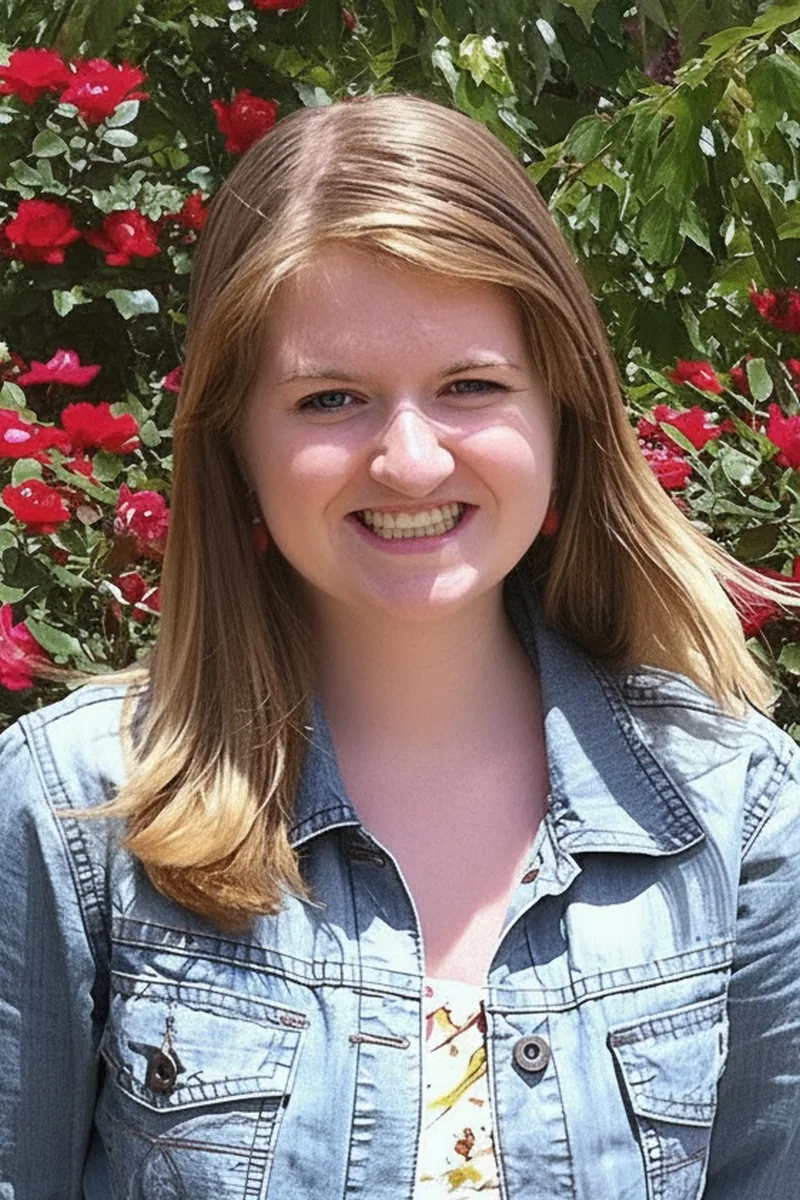
Hannah's history degree and AP US History, AP European History, and AP Human Geography teaching experience mean she's constantly working with the spatial and political dynamics — border formation, demographic shifts, colonial land-use legacies — that college geography courses build entire units around. Her MFA in Creative Writing also sharpens the argumentative essay skills these courses increasingly weight, especially when assignments ask students to synthesize dense frameworks like Ravenstein's migration laws or Rostow's development stages into coherent written analysis.

A Latin American History degree from Duke is essentially a geography degree in disguise — Jean's coursework centered on how colonial land systems, resource extraction, and migration reshaped the spatial organization of an entire hemisphere. That regional depth translates directly when college geography courses ask students to apply frameworks like dependency theory, core-periphery models, or the legacy of colonial urbanization patterns to real-world case studies.
At the college level, geography courses often blend spatial analysis, demographic data, and policy questions in ways that feel overwhelming at first. Paula unpacks topics like population distribution models, economic development theories, and geopolitical boundaries by tying them back to the human motivations and cultural forces her psychology training taught her to examine closely.
A Columbia history degree gives Molly the kind of source-analysis and argumentative writing chops that college geography courses increasingly demand — especially when assignments ask students to evaluate theories of urbanization, colonial land-use legacies, or demographic change. Her classroom teaching experience across multiple grade levels means she's practiced at scaffolding complex material, breaking down dense readings on topics like political boundaries or resource distribution into manageable, logical steps. Rated 5.0 by students.
Studying Social Policy at Northwestern with a communication emphasis means Ethan regularly engages with the same demographic data, urbanization trends, and policy frameworks that college geography courses build entire units around — topics like population distribution, land-use planning, and how institutional decisions reshape regional landscapes. His 35 ACT and 5.0 tutoring rating speak to the analytical precision he brings when walking students through dense models or data-interpretation assignments.
College-level geography demands more than memorizing capitals — it requires analyzing spatial data, understanding geopolitical systems, and writing arguments grounded in demographic and environmental evidence. Dylan's international experience living in diverse communities gives him a practitioner's understanding of concepts like urbanization, cultural diffusion, and resource geography that enrich his teaching beyond the lecture hall.
Most geography courses at the college level pivot from memorizing capitals to analyzing spatial relationships — migration flows, urbanization models, geopolitics of resource distribution. Harry's ongoing fieldwork in India gives him a practitioner's lens on topics like development geography and cultural landscapes, which he uses to make abstract GIS concepts and theoretical frameworks tangible.
Having served as a teaching assistant for college geography courses at UBC while completing his master's degree, Duncan knows exactly what professors expect on exams and research papers at the university level. He tackles topics like spatial statistics, urban theory, and qualitative fieldwork methods with the depth that college coursework demands. His 5.0 rating speaks to how well that expertise translates in one-on-one sessions.
At the college level, geography demands fluency with spatial analysis, demographic models, and the economic theories that underpin urbanization and globalization. Ryan's undergraduate economics training overlaps directly with topics like development geography, location theory, and resource allocation — concepts where the line between the two disciplines practically disappears.
Three years of Spanish study at Northwestern — including the cultural and regional analysis that comes with a language degree — gave Jack a working knowledge of how language, identity, and place intersect, which is exactly what college geography courses test when covering cultural diffusion, linguistic landscapes, or Latin American development patterns. His marketing training adds a practical angle for topics like spatial economics and demographic segmentation, since market analysis and human geography rely on the same data sets.
Studying European history at Johns Hopkins meant Alexander was constantly mapping how trade routes, imperial borders, and demographic shifts physically reorganized the continent — analytical habits that translate directly when college geography courses assign essays on political boundary formation, population distribution, or the spatial legacy of colonialism. His parallel tutoring across AP European, AP US, and world history gives him a deep well of concrete regional examples to draw on when unpacking frameworks like Christaller's central place theory or the demographic transition model. Rated 4.7 by students.
Spending a semester in Amman, Jordan and studying Arabic for three years gave Gary firsthand exposure to the kind of cross-cultural, region-specific knowledge that college geography courses test when covering topics like political boundaries, cultural diffusion, and the geopolitics of the Middle East. His International Relations degree at BYU — with a Middle Eastern Studies emphasis — meant regularly analyzing how sovereignty disputes, resource access, and colonial legacies shape spatial patterns. A co-authored publication in US News and World Report speaks to the research and writing rigor these courses expect.
At the college level, geography demands more than memorizing capitals — it requires analyzing how physical environments interact with human systems like urbanization, resource distribution, and political boundaries. Cynthia's degree in Folklore & Mythology trained her to think across cultures and regions, a skill she applies when unpacking geographic frameworks like Wallerstein's world-systems theory or the spatial dynamics of globalization.
Geography at the college level goes far beyond memorizing capitals — it asks students to think about how physical landscapes, trade networks, migration patterns, and political boundaries interact. Craig's humanities training, spanning literature, history, and philosophy across multiple cultures, gives him a rich contextual lens for unpacking topics like urbanization, resource distribution, and cultural diffusion.
Chris's Master's in International Relations means he approaches geography as more than memorizing capitals and landforms — he digs into geopolitics, spatial analysis, and how economic systems map onto physical space. College-level coursework demands that students argue with data, and Chris walks through how to build geographic arguments using GIS concepts, case studies, and comparative regional analysis.
College-level geography demands more than labeling regions on a map — courses in GIS, political geography, or environmental systems expect students to analyze spatial data and write evidence-driven arguments. Max's humanities training at Penn, especially his strength in analytical writing and source evaluation, translates directly to the kind of geographic reasoning professors look for in research papers and case studies.
Double-majoring in Economics and History at UCLA meant Christopher was constantly analyzing how trade networks, resource allocation, and political systems shape regions — the same analytical moves college geography courses demand when covering topics like economic development theory or spatial inequality. His economics training is especially useful for unpacking models like Rostow's stages of growth or core-periphery dynamics, where understanding the underlying economic logic makes the geography click. Rated 4.7 by students.
I am a graduate of the Master's program at the School of Education at St. John's University, and a graduate of the undergraduate English program at Washington University in St. Louis. I am currently eligible to teach 7th to 12th grade English in a New York City school under the Initial Certificate, and have a combined three years of experience in the Department of Education. I have a significant background in tutoring, including test prep, English, Mathematics, and Social Studies. My extensive background in education, coupled with my intense desire to bring about positive change in the lives of New York City school children and my belief in the importance of using emerging educational technologies to engage with and enrich the education of students, has made me both a successful teacher, and a popular tutor.
College-level geography demands more than map literacy; it requires engaging with theories of spatial organization, geopolitics, and human-environment interaction. Jonathan's interdisciplinary graduate training gives him a framework for tackling topics like cultural diffusion, urbanization models, and the politics of resource distribution. He breaks down dense geographic concepts by connecting them to the philosophical and historical forces that produced them.
Political science and geography share a common backbone — understanding how power, policy, and people organize themselves across space. Julian's government degree means he's already fluent in the sovereignty debates, territorial frameworks, and institutional analyses that college geography courses lean on when covering topics like political boundaries or state formation theory. He also brings strong writing chops to the research papers and essay exams these courses tend to emphasize.
David's PhD research sits at the intersection of natural science and social science — exactly the kind of cross-disciplinary thinking that college geography courses reward when students tackle topics like environmental determinism, population ecology, or climate-driven migration. His Columbia and Chicago training sharpened his ability to read quantitative data through a humanistic lens, which he brings to coursework involving demographic modeling and regional case studies. Rated 4.9 by students.
Double-majoring in Classics & Ancient Mediterranean Studies and History at Penn State's Schreyer Honors College meant Jay spent four years studying how civilizations organized space — trade routes, colonial settlements, urban planning in the ancient world — which maps surprisingly well onto college geography frameworks like spatial diffusion and core-periphery models. His Global Studies minor adds a modern lens, connecting historical patterns to contemporary topics like demographic change and political boundaries. Post-college work as a financial analyst at Bloomberg also sharpened his ability to interpret the data-heavy regional economic analyses these courses increasingly assign.
Psychology training at the undergraduate level covers a surprising amount of geographic ground — human development across cultures, population-level behavioral data, and the statistical methods used to interpret demographic patterns. Katelyn applies that behavioral-science lens to college geography topics like population distribution and migration theory, where understanding why people move matters as much as mapping where they go. Her quantitative reasoning and biostatistics background also means she's comfortable walking through the data interpretation these courses increasingly require.
College-level geography digs into spatial analysis, GIS concepts, and quantitative methods that can catch students off guard if they expected a memorization-heavy course. Nitin's statistics and business analytics training at Carnegie Mellon means he's comfortable walking through regression models, demographic data interpretation, and the kind of evidence-based reasoning these courses demand.
Teaching high school social studies daily means Julio regularly unpacks how physical environments, political boundaries, and cultural systems interact — the same analytical threads college geography courses pull on when covering topics like demographic transition, urbanization models, or cultural diffusion. His Master's from Brown, earned with perfect grades, was rooted in history and social studies education, giving him practice translating dense theoretical frameworks into structured lessons that make complex spatial reasoning accessible. His personal travel habit and wide reading outside the classroom add the kind of concrete regional awareness that brings coursework examples to life.
An exchange year at the École Normale Supérieure in Paris gave Patrick direct exposure to how European spatial planning, border politics, and urban restructuring play out on the ground — the kind of firsthand context that makes college geography frameworks like Christaller's central place theory or the EU's territorial cohesion policies concrete rather than abstract. His PhD work in Modern European History at Rutgers means he's constantly analyzing how political boundaries, migration corridors, and economic regions formed and shifted across the continent. He also brings experience developing standardized exams at ETS, so he knows how to prepare students for the precise, evidence-driven writing these courses demand.
American Studies at Stanford is built around understanding how regions, landscapes, and demographic shifts shaped national identity — Emily's coursework covered the same spatial and cultural analysis that college geography courses test when students tackle topics like urbanization patterns, cultural landscapes, or internal migration. Her Creative Writing minor also sharpens the clear, thesis-driven writing these courses increasingly demand on essays about place, environment, and human geography.
Philosophy trains you to dissect big, messy questions about how societies organize themselves and why — which is exactly what college geography courses ask when students wrestle with frameworks like Wallerstein's world-systems theory or debates over environmental determinism versus possibilism. Adam's philosophy degree means he's practiced at pulling apart the assumptions buried inside these models, helping the theoretical side of geography feel less like memorization and more like structured argument. His parallel teaching in world history, European history, and world religions gives him ready cross-cultural examples to ground abstract spatial concepts.
A PhD in History means Eric has spent years tracing how human populations moved, settled, and transformed landscapes — the same spatial reasoning college geography courses demand when students analyze topics like demographic transition models or the political geography of colonialism. His anthropology undergraduate work adds another layer, grounding abstract geographic frameworks in the cultural systems and material conditions that actually drive patterns like urbanization or agricultural land use.
Geography sits at the intersection of physical science and human culture — two areas Alex knows well from dual training in biology and the humanities at Bowdoin College. His graduate work in evolution and bioanthropology gives him a sharp lens on topics like biogeography, population distribution, and how environmental systems shape human settlement patterns.
Pursuing a master's in History at Penn after completing dual degrees in English and History at Cornell, Stephanie brings a researcher's instinct for primary-source analysis to geographic coursework — particularly when assignments ask students to trace how colonial land policies or migration waves physically reshaped regions over time. Her two years tutoring through Cornell's AVID program sharpened her ability to break down layered, reading-heavy material, which applies directly when college geography courses pile on dense frameworks like Rostow's stages of development or Mackinder's heartland theory.
An international and area studies degree plus a master's in global management means Kyle spent years analyzing how political systems, trade networks, and cultural forces organize different world regions — exactly the kind of spatial thinking college geography courses test on topics like Wallerstein's world-systems theory or demographic transition models. His Mandarin fluency and ACT tutoring background reflect someone comfortable moving between deep regional knowledge and structured analytical frameworks, which pays off when coursework demands both case-study depth and model application.
An English Literature degree might seem distant from geography, but Karen's deep reading practice and comparative analysis skills are exactly what college geography courses demand when students face dense theoretical texts on topics like cultural diffusion or demographic transition models. She also teaches across AP US History, European History, and world religions, which means she's comfortable contextualizing how belief systems, colonial legacies, and political movements physically reorganized regions. Rated 4.9 by students.
College-level geography demands the kind of interdisciplinary thinking Anna does daily in her policy PhD — synthesizing demographic data, environmental science, and political context into coherent analysis. She tackles topics like GIS concepts, development theory, and geopolitical frameworks by grounding abstract models in concrete regional examples drawn from her Near Eastern Studies expertise.
Holding degrees in both History and Spanish, Adam has spent years studying how colonial systems, language diffusion, and cultural exchange physically reorganized entire regions — analytical moves that map directly onto college geography topics like cultural landscapes, population distribution, and the spatial legacies of imperialism. His Spanish fluency adds real depth when coursework turns to Latin American case studies, whether unpacking maquiladora zones along the US-Mexico border or tracing rural-to-urban migration patterns across Central America. He also teaches across the social studies spectrum, so connecting geographic frameworks to their historical and political roots comes naturally.
Philosophy trains you to dissect arguments and evaluate competing frameworks — exactly what college geography courses demand when students have to weigh models like Wallerstein's world-systems theory against dependency theory or assess how cultural diffusion actually operates across regions. Caroline's broad liberal arts background at Fordham, combined with her teaching across history, literature, and writing, means she can pull geographic concepts out of abstraction and anchor them in the historical and cultural narratives that make them stick. Rated 4.8 by students.
Understanding spatial relationships — how urbanization reshapes demographics, how climate patterns drive migration, how political borders interact with cultural regions — requires more than memorizing maps. Kyle's interdisciplinary background in history, political science, and psychology lets him connect geographic concepts to the political and human forces that shape them, making topics like geopolitics and population geography click in a deeper way.
I am Chad Bergman, a current Dartmouth student pursuing my Bachelor's in Economics with a physics minor. I have experience tutoring college economics in person on Dartmouth campus as well as online tutoring in high school calculus and physics. I've had great success on the SAT and ACT as well as my AP tests in high school, and I hope to help others succeed as well. My favorite subject to tutor is physics because I feel like learning to apply a few fundamental principles to different real world situations is extremely useful in any discipline. While tutoring I try to help students master the fundamentals so they can apply them to the material we're working on as well as future material. Outside academia, I help look after my four siblings and play more League of Legends online than is perhaps healthy.
Studying Politics, Philosophy, and Economics at Brown means Leah is constantly analyzing how governance structures, resource distribution, and institutional incentives shape the way populations organize across space — the exact analytical toolkit college geography courses deploy when testing students on topics like political boundary formation or economic development models. Her pre-med track adds an unexpected edge for public health geography, where understanding disease diffusion patterns and healthcare access disparities requires the same data-interpretation skills she uses in her science coursework. Rated 4.7 by students.
College-level geography demands more than memorizing capitals; it requires engaging with spatial analysis, GIS concepts, and the interplay between human systems and physical environments. Ted's interdisciplinary graduate and undergraduate work — spanning theology, theatre, and cultural analysis at Boston College and Brown — built the kind of cross-disciplinary thinking that college geography courses reward.
Testimonials
Because the right College Geography tutor makes all the difference.
Average Session Rating – Based on 3.4M Learner Ratings
Top 20 Social Studies Subjects


Top 20 Subjects
Frequently Asked Questions
College Geography students often find the intersection of physical and human systems challenging—particularly understanding how climate patterns, landforms, and resource distribution shape cultural practices, economic development, and political boundaries. Many also struggle with spatial analysis and interpretation of geographic data (maps, GIS outputs, demographic statistics), as well as synthesizing multiple scales of analysis, from local communities to global systems. Additionally, students frequently find it difficult to move beyond memorizing place names and facts to instead develop critical frameworks for analyzing geographic inequality, migration patterns, and environmental sustainability.
College Geography requires understanding key frameworks—such as world-systems theory, cultural ecology, political economy, and human-environment interaction—but the real challenge is applying these lenses to specific regions and phenomena. A tutor can help you practice moving from theory to practice by working through case studies: for example, using dependency theory to analyze why certain African nations remain economically marginalized, or applying cultural geography concepts to explain diaspora communities and transnational identities. The goal is developing the habit of asking "which geographic theory best explains this pattern?" rather than treating theories as isolated concepts to memorize.
College Geography draws from both quantitative and qualitative approaches: you'll encounter statistical analysis of census data and climate datasets, but also ethnographic fieldwork, interviews, and qualitative case studies. Understanding experimental design matters less here than grasping how geographers use surveys, spatial analysis, and comparative case methods to test hypotheses about human-environment relationships or regional development. A tutor can help you read and critique empirical geographic studies, understand how researchers control for variables (like isolating climate's effect on agriculture from economic policy effects), and recognize when correlation is being mistaken for causation in geographic arguments—a common pitfall when analyzing complex systems.
College Geography papers demand evidence-based argumentation: you'll write research papers analyzing geographic phenomena, policy analysis essays on environmental or development issues, and argumentative essays defending geographic interpretations against competing theories. Success requires clearly stating your geographic argument upfront, supporting claims with specific empirical evidence (data, case examples, scholarly sources), and acknowledging alternative explanations before refuting them. Common weaknesses include descriptive writing (listing facts about a region) instead of analytical writing (explaining why geographic patterns exist), and failing to engage with counterarguments. A tutor can help you structure arguments around a clear geographic claim and teach you how to integrate evidence—maps, statistics, and scholarly citations—to build credibility.
One of geography's core skills is understanding how processes operate across scales and how local conditions connect to global systems. For example, a drought in East Africa (local/regional scale) connects to global climate patterns, international commodity markets, and geopolitical resource competition. Students often struggle to move fluidly between scales in their analysis—they might describe a local phenomenon without connecting it to broader systems, or vice versa. A tutor can help you practice "scalar thinking" by working through case studies where you explicitly identify which scale matters most for different questions, trace connections across scales, and recognize how power and resources flow between local and global levels.
College Geography requires critical reading of maps, statistics, and geographic arguments themselves—recognizing that all representations of space reflect the perspectives and power of those who created them. For instance, map projections distort reality in ways that have historically privileged Western nations; demographic data collection reflects what governments choose to measure; and geographic theories often embed assumptions about development, progress, or cultural difference. Students need to ask: Who collected this data and why? What's being shown, and what's hidden? What assumptions underlie this geographic argument? A tutor can help you develop this critical lens by analyzing specific examples—comparing different map projections, interrogating how "development" is measured, or examining whose voices are included in geographic research—so you move beyond accepting geographic claims at face value.
Geographic analysis often involves observing patterns—countries with higher GDP tend to have lower fertility rates, regions with certain climates develop particular agricultural systems—but determining causation is much harder. Students frequently assume that because two variables correlate, one causes the other, when actually a third factor (economic development, colonial history, technology access) might explain both. For example, correlation between population density and urbanization doesn't prove density causes urbanization; both may result from economic opportunity. A tutor can teach you to think through alternative explanations, examine temporal relationships (did the cause precede the effect?), and distinguish between descriptive patterns and causal mechanisms by working through real geographic examples and scholarly debates where researchers disagree about causation.
An effective College Geography tutor understands both physical geography (climate systems, landforms, biogeography) and human geography (cultural, political, economic, urban), and can help you see how they interconnect. They should be able to guide you through reading academic geographic sources, help you construct evidence-based arguments, and teach you to think critically about geographic claims rather than just memorize facts. Strong tutors also understand how to scaffold spatial thinking—helping you visualize relationships across maps and scales—and can work with you on the specific writing and analytical demands of your course, whether that's research papers, policy analysis, or GIS projects.
Let’s find your perfect tutor
Answer a few quick questions. We’ll recommend the right plan and match you with a top 5% tutor.