Award-Winning Spanish
Tutors
Spanish
Tutors
Private 1-on-1 tutoring, weekly live classes for academic support, test prep & enrichment, practice tests and diagnostics, and more to elevate grades and test scores.
Based on 3.4M Learner Ratings
UniversitiesSchools & Universities
DeliveredHours Delivered
ProficiencyGrowth in Proficiency
Who needs tutoring?
No obligation. Takes ~1 minute.
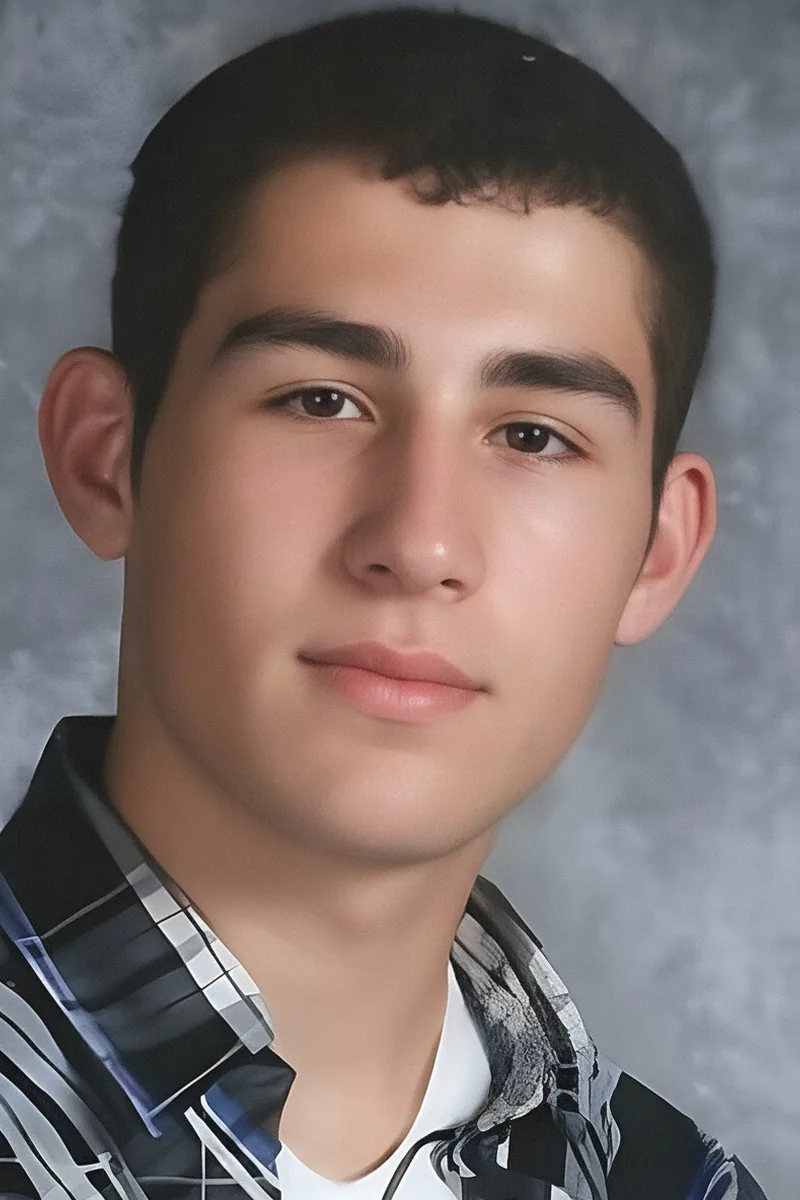
Having tutored Spanish formally throughout high school and studied it through advanced levels, Christopher tackles everything from subjunctive mood conjugations to nuanced reading comprehension passages. He treats grammar as a logical system — similar to how he approaches engineering problems at Harvard — which makes verb tenses and pronoun placement click for students who struggle with rote memorization.

Studying Philosophy, Politics & Economics means Bina spends her days parsing arguments, dissecting texts, and building structured cases — skills she applies directly to Spanish grammar, where understanding *why* a rule works (say, the logic behind ser versus estar) matters more than memorizing charts. Her background in law adds another layer: she treats sentence construction like building a legal argument, where every word has to be in the right place for the meaning to hold. Rated 5.0 by students.
Conjugation tables are easy to memorize and easy to forget — Dalton instead teaches Spanish grammar through pattern recognition, showing students how verb tenses relate to each other so that irregular forms start making sense. He covers everything from foundational topics like ser vs. estar to more advanced concepts like the subjunctive mood. His approach builds reading and writing skills alongside speaking confidence.
Lucas teaches Spanish with an emphasis on building conversational confidence alongside grammatical structure — verb conjugations, pronoun placement, and sentence formation in real-world contexts. His experience with ESL learners gives him a sharp sense of how language acquisition actually works, which he applies in reverse when English speakers are tackling Spanish.
Lisa teaches Spanish with an emphasis on building grammar systematically — verb conjugations across tenses, pronoun placement, ser versus estar — so that students can construct sentences on their own rather than translating word-by-word from English. She covers Spanish 1 through Spanish 2 material and tailors sessions to whether a student needs help with classroom assignments, conversational fluency, or exam prep. Her background in anthropology also brings cultural context into language learning, which makes vocabulary and idiomatic expressions easier to retain.
Emily pairs structured grammar instruction — verb conjugations, pronoun usage, subjunctive triggers — with reading and listening practice that reinforces vocabulary in context. Her analytical mindset from the sciences translates well to language learning, where pattern recognition in tense structures and sentence construction can accelerate progress quickly.
Richard has studied Spanish through the SAT Subject Tests — including the Listening exam — and tutored high school students in the language before college. He tackles grammar structures like the subjunctive and preterite-vs-imperfect distinctions by connecting them to patterns rather than rote conjugation charts, making the rules easier to internalize.
Teaching high school students in Vietnam gave Alyssa firsthand experience communicating across language barriers and building comfort with imperfect fluency. She applies that same patience to Spanish, tackling verb conjugation patterns, pronoun usage, and sentence construction in ways that build real conversational and written confidence at the Spanish 2 level and beyond.
Samuel holds a TEFL certificate and studies linguistics at Harvard, which means he understands how languages are structured at a foundational level — verb conjugation patterns, pronoun systems, sentence-building rules. He applies that systematic approach to Spanish grammar and vocabulary, making concepts like ser vs. estar or preterite vs. imperfect click rather than feel like arbitrary memorization.
Mica teaches Spanish across four levels, from foundational conjugation and noun-adjective agreement through advanced grammar like the subjunctive mood and complex sentence structures. Her analytical background at Stanford carries over into how she breaks down tricky verb tenses — she treats grammar rules as logical systems rather than lists to memorize.
Earning a certificate of advanced language in Spanish at Yale means Maxwell doesn't just know the grammar rules — he uses the language daily in academic and social contexts. He breaks down tricky concepts like subjunctive mood triggers and ser vs. estar distinctions by connecting them to how native speakers actually think about meaning. Rated 5.0 by students.
Learning Spanish grammar isn't just about conjugation tables — it's understanding why the subjunctive appears after certain triggers, or how ser and estar change a sentence's entire meaning. Renee earned both a BA and a PhD centered on Spanish, giving her the kind of deep structural knowledge that lets her explain the 'why' behind tricky rules. She's taught Spanish at multiple levels, from private tutoring to formal academic settings.
From Spanish 1 verb conjugations through Spanish 4 literary analysis, Pinelopi has tutored every level of the language and knows exactly where students tend to stall — usually around the subjunctive mood and indirect object pronouns. She breaks these tricky structures down into patterns that stick, building real fluency rather than rote translation skills.
Living and running a nonprofit in Ecuador has given Vanessa the kind of everyday Spanish fluency that classroom instruction alone can't replicate. She uses that immersion experience to teach grammar, vocabulary, and verb conjugations through real-world context — ordering food, reading local news, navigating conversations — so the language sticks instead of feeling like an abstract exercise.
Jake has tutored Spanish across multiple levels and speaks the language well enough to teach everything from verb conjugation patterns in the preterite and imperfect to reading comprehension strategies for literary passages. His approach emphasizes understanding the logic behind grammar rules so students can apply them flexibly, not just memorize charts.
Though French is Daniel's primary language specialty, his experience with Romance language grammar gives him a practical framework for teaching Spanish fundamentals like ser vs. estar, preterite vs. imperfect, and pronoun placement. He approaches Spanish 1-level concepts by drawing parallels between the two languages, which accelerates pattern recognition for students.
Rather than drilling conjugation tables in isolation, Meghan teaches Spanish grammar in context — building sentences that students actually want to say. She minored in Spanish at Northwestern and then spent a semester at Madrid's top-ranked university taking upper-level courses entirely in Spanish alongside native speakers. That immersion experience means she understands the gap between textbook Spanish and how the language actually works.
Simon teaches Spanish across four levels, from foundational conjugation patterns in the present tense to navigating subjunctive mood and complex reading passages at the advanced level. His approach treats grammar as a logical system — once a student sees why irregular preterite verbs follow certain patterns, retention improves dramatically.
Having studied Spanish as part of her undergraduate degree, Elena brings both academic grammar knowledge and real conversational fluency to lessons. She digs into tricky areas like subjunctive mood triggers, ser versus estar distinctions, and preterite-imperfect contrasts — the concepts that separate intermediate learners from truly proficient speakers.
Medical school at Baylor means Sugi regularly encounters Spanish-speaking patients and medical terminology rooted in Latin — a context that sharpens her ear for vocabulary patterns and grammatical structures in ways a standard classroom can't replicate. Her cognitive science background from Rice also gives her a research-backed understanding of how the brain acquires new languages, so she tailors practice around the memorization and retrieval techniques that actually stick. Rated 5.0 by students.
Kate teaches Spanish at multiple levels, from verb conjugation fundamentals in Spanish 2 through the subjunctive mood and complex sentence structures in Spanish 4. Her engineering background gives her a systematic way of breaking down grammar rules that clicks for students who think analytically.
Years of living and working in Mexico and the Dominican Republic gave Julie the kind of Spanish fluency that textbooks alone can't provide — she knows the grammar rules and when native speakers bend them. She tackles everything from verb conjugation patterns to reading comprehension, weaving in regional vocabulary and real-world usage that make the language feel less like a school subject and more like a tool.
Jane tutors Spanish 1 and 2 students on the grammar fundamentals that trip most English speakers up — ser versus estar, preterite versus imperfect, and pronoun placement in different sentence structures. Her analytical approach to language, sharpened by studying English at Princeton, gives her a knack for explaining why Spanish grammar rules work the way they do rather than just listing them.
Vivian's background is in music performance and standardized test prep, not Spanish — but her Juilliard training means she's wired to hear and reproduce precise patterns, a skill that transfers directly to mastering pronunciation, accent marks, and the rhythmic flow of spoken Spanish. She applies the same disciplined, repetition-based practice she uses in the practice room to lock in conjugation patterns and vocabulary retention.
Studying Latin American history at Duke meant Jean spent years reading Spanish-language primary sources — colonial documents, political speeches, literary texts — and building fluency that goes well beyond classroom drills. She teaches grammar and vocabulary in context, connecting verb tenses and sentence structures to how Spanish is actually used in writing and conversation.
Having taught across four levels of Spanish, Ivan knows exactly where students tend to stall — usually around the subjunctive mood and the difference between preterite and imperfect tense. He breaks down verb conjugation patterns systematically and builds reading comprehension through context rather than word-for-word translation.
Four years living in Viña del Mar, Chile, gave Anna the kind of Spanish fluency you can't get from a textbook — she taught at a Chilean university, navigated daily life in Spanish, and absorbed the idiomatic rhythms of real conversation. She brings that immersion experience into lessons on verb conjugation, subjunctive mood, and reading comprehension, connecting grammar rules to how Spanish is actually spoken.
Studying both German and Spanish at Carleton while majoring in psychology gives Amanda a multilingual perspective that sharpens how she teaches language — she understands firsthand where English speakers get tripped up by gendered nouns or unfamiliar verb forms because she's wrestling with those same structures across two foreign languages simultaneously. Her conversational Spanish background means sessions stay practical, connecting grammar concepts like ser versus estar to real dialogue instead of isolated worksheets.
Samantha teaches Spanish across multiple levels, from foundational verb conjugations and noun-adjective agreement through advanced grammar like the subjunctive mood and complex sentence structures. Her analytical approach — honed through a Duke science education — treats language acquisition as a system to decode rather than a list to memorize.
Matt minored in Spanish during his undergraduate studies and has carried the language through multiple levels of coursework, from foundational grammar to advanced composition. He tackles tricky areas like subjunctive mood, ser versus estar distinctions, and preterite-imperfect contrasts by linking each rule to real usage patterns rather than rote conjugation charts. Rated 5.0 by students.
Diana's TESOL training gave her deep expertise in how languages are structured and acquired, which she applies directly to Spanish instruction. She breaks down verb conjugation patterns, pronoun placement, and sentence-building in ways that make the grammar feel logical rather than arbitrary. Students in Spanish 1 or 2 especially benefit from her ability to explain why the language works the way it does.
Teaching Spanish through all four levels — from introductory grammar through advanced conversation — gives Charles a clear picture of where students typically get stuck, whether it's ser versus estar, subjunctive mood triggers, or building spoken fluency. He keeps lessons practical, connecting conjugation drills and vocabulary to real conversational scenarios so the language feels usable, not abstract.
Having studied Spanish formally at Columbia University and earned a degree in the subject, Molly approaches the language through both grammar mechanics and real-world usage. Whether a student is working through verb conjugation patterns, navigating subjunctive mood, or building reading comprehension skills, she connects each concept to practical communication so the rules actually stick.
Alessia approaches Spanish with the structural mindset of someone trained across multiple Romance languages, including Italian, French, and Latin. That cross-linguistic perspective is especially useful for breaking down tricky concepts like ser vs. estar, subjunctive mood triggers, and preterite-imperfect distinctions — areas where English speakers tend to stall.
Cassandra teaches Spanish at the introductory and intermediate levels, covering verb conjugation, pronoun usage, and sentence construction. Her background in comparative literature and Latin gives her a structural understanding of how Romance languages work, which makes explaining concepts like the subjunctive or ser-versus-estar distinctions more intuitive for students.
Tony earned his bachelor's degree in Spanish and continued using the language throughout his Latin American Studies master's program, so his command of the language spans academic writing, literary analysis, and everyday conversation. He tackles tricky grammar concepts like the subjunctive mood and ser-versus-estar distinctions by grounding them in real usage patterns rather than rote conjugation charts. Rated 5.0 by students.
Natalie minors in Spanish at Penn and has studied through advanced-level coursework, giving her a strong command of grammar, verb tenses, and conversational fluency. She tackles tricky concepts like the subjunctive mood and ser-versus-estar distinctions by connecting them to patterns students already recognize in English. Her approach keeps vocabulary and grammar practice grounded in real usage rather than rote conjugation charts.
Most Spanish classes teach grammar rules in isolation — here's the preterite, here's the subjunctive — without showing how they connect in real conversation or writing. Sarah double-majored in Spanish and approaches the language as a system, linking verb tenses to the communicative situations where they actually matter so that conjugation charts start making intuitive sense.
Earning a Spanish degree from Northwestern means Jack didn't just study grammar tables — he read García Márquez, analyzed film, and engaged with the language across literary and cultural contexts. He connects verb conjugations and subjunctive mood to real usage so that concepts like ser versus estar or por versus para feel intuitive rather than arbitrary.
Seven years of formal Spanish study plus a year living in Spain gave Matthew the kind of fluency that covers both grammar rules and the intuitive feel for how the language actually works. He tackles everything from subjunctive mood and preterite-vs-imperfect distinctions to building conversational confidence. Students get someone who learned Spanish as a second language and remembers exactly where the sticking points are.
Testimonials
Because the right Spanish tutor makes all the difference.
Average Session Rating – Based on 3.4M Learner Ratings
Top 20 Languages Subjects


Top 20 Subjects
Frequently Asked Questions
One of the biggest advantages of personalized 1-on-1 instruction is dedicated speaking practice. In a traditional classroom, students often get limited opportunities to have real conversations in Spanish. With a tutor, every session focuses on your speaking goals—whether that's improving pronunciation, building confidence with native speakers, or mastering natural dialogue patterns that go beyond textbook Spanish.
Tutors can tailor conversations to your interests and real-life scenarios you care about, making the practice feel relevant and engaging. This consistent, personalized feedback on your speech patterns accelerates fluency development far more than solo study.
Verb conjugation is one of the most challenging aspects of Spanish grammar, and memorizing conjugation tables rarely sticks. Great tutors teach conjugation in context—through actual sentences, conversations, and patterns you'll use in real communication. They help you see why certain forms matter and when you'd actually use them.
The most effective approach combines understanding the underlying patterns with repeated exposure through speaking and writing practice. A tutor can identify your specific trouble spots (perhaps subjunctive mood or preterite vs. imperfect) and create targeted practice that makes the rules click.
Learning isolated vocabulary lists rarely leads to retention or natural usage. Expert tutors teach words in thematic groups and in the context of actual conversations and writing. They also help you understand nuance—like the difference between similar words (ser vs. estar, por vs. para) and when Spanish speakers would naturally choose one over another.
Effective strategies include spaced repetition through varied practice, teaching word families and roots, and encouraging you to use new vocabulary in speaking and writing immediately. This contextual, active approach leads to vocabulary that sticks and feels natural when you use it.
Yes—and this is another area where personalized instruction shines. A tutor can model correct pronunciation, identify which specific sounds you're struggling with, and give you immediate feedback on your speech. They can also explain the mechanics of Spanish pronunciation (like the distinción vs. seseo, or how to properly produce the Spanish 'r') so you understand what you're aiming for.
Regular practice with corrective feedback, combined with listening to native speakers and understanding mouth position for tricky sounds, builds natural, clear pronunciation over time. The key is consistent practice with expert guidance rather than trying to self-correct from recordings.
Language and culture are deeply connected. Understanding cultural context—from how Spanish varies across Spain and Latin America to social norms around politeness and formality—makes your Spanish feel more authentic and helps you communicate more effectively in real situations.
Many tutors incorporate cultural elements into lessons, whether that's explaining why certain expressions are used, discussing current Spanish-speaking media, or exploring regional differences in vocabulary and accent. This cultural immersion builds not just language skills, but genuine understanding that makes your Spanish more nuanced and respectful.
The best Spanish tutors combine strong language expertise with teaching skill. Look for someone who has real fluency (ideally native or heritage speaker level), understands your specific goals, and can explain grammar concepts clearly rather than just drilling rules. They should be able to adapt their teaching style to how you learn best.
Consider whether you want a native Spanish speaker, a fluent non-native speaker, or someone with specific expertise (like test prep or business Spanish). A great tutor will focus on your weakest skills, keep you engaged, and help you see steady progress toward your goals.
This depends on your starting point and how much you practice, but research suggests reaching professional-level proficiency in Spanish typically requires around 600-750 hours of study for English speakers. Conversational fluency—where you can have meaningful conversations and handle real-world situations—usually comes sooner, typically within a few hundred hours of consistent practice.
With regular personalized tutoring combined with your own practice outside lessons, you can accelerate this timeline significantly. Focused, goal-oriented study with expert guidance gets you speaking confidently much faster than self-study alone.
Let’s find your perfect tutor
Answer a few quick questions. We’ll recommend the right plan and match you with a top 5% tutor.