Award-Winning Pre-Calculus
Tutors
Pre-Calculus
Tutors
Private 1-on-1 tutoring, weekly live classes for academic support, test prep & enrichment, practice tests and diagnostics, and more to elevate grades and test scores.
Based on 3.4M Learner Ratings
UniversitiesSchools & Universities
DeliveredHours Delivered
ProficiencyGrowth in Proficiency
Who needs tutoring?
No obligation. Takes ~1 minute.
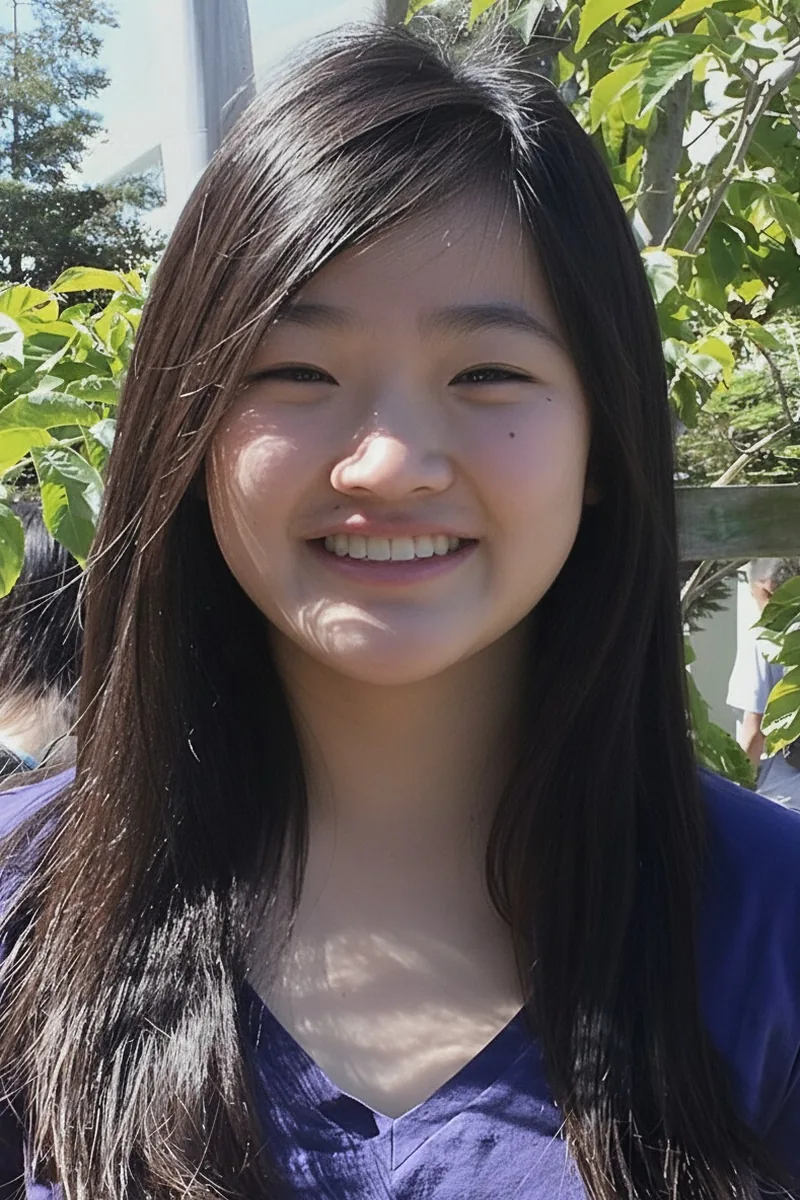
A philosophy major at Princeton with a certificate in Statistics and Machine Learning, Julie approaches pre-calculus proofs and function analysis with the logical rigor her coursework demands — she's especially sharp at breaking down the 'why' behind trigonometric identities and limit intuition before students hit calculus. She teaches across the full math ladder from elementary through Calculus II, so she knows exactly which algebraic instincts need to be solid and which conceptual leaps trip students up at the pre-calc stage. Rated 4.9 with a 1570 SAT.

Doing research in Spectral Graph Theory at MIT means Enrico encounters the full toolkit of pre-calculus — eigenvalue behavior, polynomial roots, matrix transformations — at a level where shaky fundamentals would be immediately exposed. He teaches the course by making definitions click intuitively, so that concepts like composite functions or rational expressions feel like natural extensions of algebra rather than arbitrary new rules. His 36 ACT, 1570 SAT, and 5.0 rating confirm the depth behind that intuition.
A math degree from Penn means Ben didn't just pass through pre-calculus — he built everything that came after on top of it, from linear algebra to multivariable calculus. That depth lets him teach topics like rational functions and trigonometric identities by revealing the structural logic underneath, so students carry real understanding into calculus instead of a fragile set of memorized steps. Holds a 5.0 rating.
A PhD in statistics and a biomedical engineering degree mean Sam has spent years where pre-calculus isn't a course — it's the scaffolding holding together regression models, signal processing, and experimental design. He digs into the transition points that trip students up most, like moving from polynomial arithmetic to analyzing rational function behavior or connecting trig identities to their geometric origins. Rated 4.9 by students.
Biomedical engineering at Northwestern throws Ingrid into differential equations and signal processing that all trace back to pre-calculus fundamentals — so she knows exactly which skills in trigonometric manipulation, function composition, and exponential modeling need to be rock-solid before calculus arrives. She zeroes in on the conceptual gaps that trip students up, particularly around graph transformations and the behavior of rational and piecewise functions, building each idea from the algebra underneath it. Her 1540 SAT and 33 ACT reflect the quantitative grounding she brings to every session.
A dual BS in physics and math plus a PhD in economics at Yale means Anthony has moved through pre-calculus material from every possible direction — trigonometric reasoning in mechanics, function composition in mathematical proofs, exponential and logarithmic models in econometric analysis. He teaches the course as someone who knows exactly which skills carry forward and which shortcuts collapse under pressure in later coursework. Holds a 5.0 rating and a 1560 SAT.
Environmental engineering coursework — modeling pollutant dispersion, watershed flow rates, decay of contaminants — runs on exactly the exponential, logarithmic, and trigonometric functions that pre-calculus introduces. Kate teaches these topics with the instinct of someone who's built real models around them through both her bachelor's and master's work, connecting each function family to the physical behavior it describes. Her 1580 SAT and 4.9 rating confirm the precision she brings to every session.
Researching cosmic ray acceleration at Princeton's astrophysics department meant Dennis had to model particle behavior using the exact toolkit pre-calculus teaches — parametric equations, vector components, and the interplay between exponential and trigonometric functions. He brings that research intuition to sessions, breaking down how and why transformations reshape a graph or how polar and rectangular forms connect, so the material clicks as a coherent system rather than a checklist. A 36 ACT and 4.7 rating back up the depth of understanding he brings.
The moment pre-calculus shifts from familiar algebra into rational functions, sequences, and trigonometric identities, many students lose their footing — Vansh tackles that transition by making each new concept feel like a natural extension of what came before. His finance background at WashU means he thinks in terms of models and projections built on the same exponential and logarithmic frameworks students are learning to navigate. A 1550 SAT and 4.8 rating confirm he delivers on that approach.
The leap from trig identities to limits can feel abrupt if the underlying logic of functions isn't solid. Pranav tackles Pre-Calculus by connecting topics like rational functions, polar coordinates, and sequences back to the graphical intuition students already have. As a Biomedical Engineering student at Johns Hopkins, he uses these tools daily and can show students why each concept matters beyond the textbook.
I am a current undergraduate student at Cornell University. I began tutoring in 2022 because I am passionate about helping students become confident in their academic skills and reach their academic goals. Each session with a student consists of consistent, guided instruction that fosters independence and confidence in their skills. While I can instruct in many subjects, I love to tutor in math and English.
Competition math throughout high school taught Tracy to see pre-calculus topics like sequences, series, and trigonometric manipulations as puzzles with elegant internal logic — not just procedural hurdles before calculus. Her triple economics degree means she also knows how these tools land in practice, since exponential models and rate-of-change reasoning show up constantly in economic analysis. A 36 ACT and 4.9 rating confirm she delivers on both the conceptual and practical sides.
A year as a course assistant in Harvard's math department teaching introductory calculus gave Richard a sharp sense of exactly which pre-calculus skills — polynomial end behavior, composite functions, rate-of-change intuition — students need locked down before day one of calc. He teaches those topics with that forward view, connecting each piece to where it's actually headed so nothing feels like busywork. His 36 ACT and 1600 SAT confirm the quantitative range behind that perspective.
The jump into pre-calculus — trigonometric identities, limits intuition, complex rational functions — is where many students realize they can't rely on memorized shortcuts anymore. Benjamin's economics coursework at the University of Chicago keeps him immersed in the kind of rigorous mathematical thinking that pre-calc demands. He connects each new concept back to its underlying logic so students actually retain it.
Kevin's competition math background gives him an unusual edge in Pre-Calculus — he's used to attacking problems involving sequences, series, and trigonometric manipulations from angles most textbooks never cover. That depth, combined with a 35 ACT and Stanford CS coursework heavy in mathematical foundations, means he can explain why a parametric equation behaves the way it does, not just how to graph it.
Second-year medical school at Baylor means Michelle is neck-deep in the quantitative reasoning that pre-calculus builds — rate-of-change intuition for physiology, logarithmic models for acid-base chemistry, and exponential functions for everything from bacterial growth to drug clearance. Her biochemistry degree from Rice cemented the algebraic and trigonometric groundwork she now draws on daily, so she teaches these topics as someone who genuinely needed them to stick. A 1570 SAT confirms the mathematical precision behind her approach.
Mechanical engineering at Harvard means Christopher spends most of his time in calculus and differential equations — but he knows exactly which pre-calculus skills hold that work together, especially fluency with trigonometric graphs, composite functions, and the algebraic manipulation that makes limits possible later. He teaches each topic by gradually removing scaffolding until a student can tackle problems independently, flagging the specific mistakes that tend to snowball in calculus. His 35 ACT and 4.8 rating reflect a tutor who's recently built the same bridge his students are crossing now.
Andrew's PhD in biomedical engineering means he's pushed well past calculus into differential equations and multivariable territory — so he teaches pre-calculus with a clear map of where every topic is headed and why it matters. He's particularly sharp on the transition points that trip students up, like moving from memorizing trig ratios to actually understanding the unit circle as a geometric argument. Rated 4.9 by students.
I've been working with students for over seven years, from middle school all the way through college, across subjects like math, calculus, statistics, linear algebra, chemistry, and physics, with a lot of SAT and ACT prep mixed in. My background is perhaps a little unconventional. I have two bachelor's degrees, one in Engineering and one in Communication Studies, plus a Master's in Design. That combination means I can guide you through challenging technical material and communicate it in a way that is easy to grasp. What I care most about is helping students get to a place where they don't need me anymore. I know that sounds like a strange thing for a tutor to say, but I think it's the right goal. I'm not here to walk you through steps to copy down. I want you to understand why something works, because that's what holds up under pressure, on a test you haven't seen before. If you're ready to ace that test or prove that theorem that's been bugging you, reach out and let's work together
After studying economics and computer science at Caltech, Brian developed a habit of thinking about functions as machines — inputs transform into outputs through a chain of operations, and pre-calculus is where that mechanical intuition gets built. He digs into the transition points that trip students up most, like moving from polynomial behavior to rational functions where asymptotes and holes suddenly matter. His 1580 SAT reflects the kind of precision he brings to breaking down each concept.
Mechanical and aerospace engineering at Princeton means Matthew is constantly applying the trigonometric relationships, parametric equations, and function transformations that pre-calculus introduces — they're the building blocks of orbital mechanics and fluid dynamics problems he tackles in coursework. His teaching style is deliberately hands-on: he walks through a concept step by step, then puts students in the driver's seat with progressively harder problems, catching misunderstandings in real time. A 34 ACT confirms the quantitative instincts behind that approach.
The University of Chicago's core curriculum put Valerie through rigorous math coursework alongside her Classics and Theatre studies, giving her a working command of the function families, transformations, and trigonometric reasoning that define pre-calculus. She's particularly sharp at demystifying sequences and series — breaking the pattern logic down step by step until the formulas feel inevitable rather than arbitrary. Her 1540 SAT confirms the quantitative skill behind her approach.
The jump to pre-calculus often trips students up at trigonometric identities and the shift from algebraic to function-based thinking. Ellie's biomedical engineering coursework at Yale runs on these exact tools — polar coordinates, parametric equations, and limits all show up in her daily problem sets. Rated 5.0 by students, she connects each pre-calc concept to the bigger mathematical picture so the material actually sticks.
Jeffrey's mechanical engineering PhD work at Rice means he's spent years relying on the exact toolkit pre-calculus introduces — function composition, trigonometric modeling, and exponential behavior all show up constantly in dynamics and thermodynamics problems. He teaches these topics by walking through the engineering contexts where they actually matter, which gives students a concrete reason to care about each concept. His 34 ACT and 4.9 rating speak to the clarity he brings to quantitative subjects.
Chemical engineering at Georgia Tech means Aimee has been solving problems built on pre-calculus concepts — rational functions in reactor design, trigonometric models in thermodynamic cycles, logarithmic relationships in kinetics — since her first semester. She teaches the course by showing how each topic threads into the next, so the jump from polynomial behavior to limits feels like a natural step rather than a cliff. Her 33 ACT and 4.9 rating reflect the kind of structured, patient approach that makes that transition stick.
I am an alumna of the Florida Agricultural and Mechanical University and of Rice University. I completed my doctorate in Mechanical Engineering focusing on the applications of vibrations for mental health. I received my Bachelors of Science in Mechanical Engineering with a specification in dynamics from the FAMU-FSU College of Engineering. I have tutored and taught all ranges of age groups, from Kindergarten to Graduate School students, and have primarily focused on test prep and STEM subjects. My focus is to ensure that students have the confidence to continue to strive for knowledge even when the subject may be difficult for them. In my spare time, I enjoy visual arts such as drawing and painting, as well as socializing with friends.
Until age 16, Viktor saw math as mindless formula memorization — then a series of great teachers revealed the deeper logic underneath, and he ended up majoring in mathematics at UChicago. That conversion story shapes how he teaches pre-calculus: he digs into *why* the unit circle works or what a logarithm actually means, so students build real understanding instead of a formula sheet they'll forget by finals. His 1600 SAT and 35 ACT confirm the mathematical fluency behind that approach.
Differential equations, calculus, and physics all live on Bidyut's teaching roster — which means he knows exactly which pre-calculus skills (and which specific weak spots) will matter most once students move forward. His biomedical engineering training at Johns Hopkins keeps him fluent in the trigonometric, exponential, and composite function reasoning that pre-calc demands, and he teaches those topics by connecting them to the applied problems where sloppy understanding actually costs you. A 36 ACT and 5.0 rating back up the depth he brings.
Fred's aerospace engineering degree from Princeton meant living inside the math that pre-calculus students are just meeting — parametric equations describing flight paths, trigonometric models for oscillating systems, and the limit-adjacent thinking that bridges algebra to calculus. He teaches the course knowing exactly which concepts will matter most once students cross into derivatives and integrals, and he builds that forward-looking intuition into every session. His 1550 SAT confirms the quantitative depth behind the approach.
As a Course Assistant for Harvard's introductory calculus sequence, Sanjana sees exactly where pre-calculus gaps — shaky grasp of limits intuition, weak trigonometric identities, or incomplete understanding of function transformations — trip students up once the pace accelerates. She teaches those topics with that forward view, building each concept so it holds weight in the calculus course that's coming next. Holds a 5.0 rating and a 1560 SAT.
Tim's computational neuroscience work at MIT sits right at the intersection where pre-calculus stops being abstract — he uses trigonometric models for neural oscillations, exponential decay for signal processing, and function composition to build the simulations his research depends on. That daily fluency means he can trace a topic like polar coordinates or logarithmic properties back to the intuition underneath it, not just the procedure on the page. His 34 ACT and 4.9 rating reflect the precision he brings to each session.
Everything in Pre-Calculus — trigonometric identities, rational functions, limits intuition — exists to set students up for calculus, but most courses don't make that connection explicit. Annie does, because she's already on the other side of it: her engineering program at Cornell showed her exactly which Pre-Calc skills matter most and where gaps tend to cause trouble later.
The jump into limits, trigonometric identities, and composite functions can feel overwhelming without someone who knows how to sequence the ideas clearly. Pinelopi has tutored math from pre-algebra through calculus, which means she can pinpoint exactly which earlier concept a student is missing when pre-calc material stops making sense. Rated 5.0 by students.
Having scored 5s on both AP Calculus BC and AP Physics C while at a Harvard-track pace of 16 AP courses, Derek built the kind of deep pre-calculus fluency — limits of rational expressions, trigonometric manipulation, composite function analysis — that only comes from leaning on those tools constantly across multiple disciplines. His computer science major adds a distinctive angle: he teaches sequences, recursive definitions, and function behavior through the algorithmic thinking that makes those concepts precise rather than fuzzy. A 1550 SAT and 4.9 rating round out the picture.
A mechanical engineering degree from WashU (magna cum laude) means Caroline spent years where pre-calculus wasn't a course — it was the baseline language for everything from thermodynamic cycles to stress analysis, with polar coordinates, parametric equations, and trig identities showing up in nearly every problem set. She zeroes in on the conceptual leap from manipulating expressions to thinking in terms of function behavior, which is exactly where most students stall before calculus. Holds a 5.0 rating and a 1560 SAT.
The jump into pre-calculus — trigonometric identities, limits, and complex functions — trips up even strong math students who breezed through earlier courses. Julia breaks these topics into logical building blocks, connecting each new idea back to the algebra and geometry students already know. Her Stanford coursework in economics and quantitative methods keeps her sharp on exactly the kind of function analysis pre-calc demands.
Materials science relies heavily on the mathematics pre-calculus teaches — modeling crystal lattice structures with trigonometry, describing diffusion rates through exponential functions, analyzing stress-strain curves as polynomial behavior. Jennifer brings that applied perspective to her tutoring, connecting abstract function families to the physical phenomena they actually describe. Her 1550 SAT and 5.0 rating confirm the quantitative depth behind her explanations.
The jump into pre-calculus — limits, trigonometric identities, polar coordinates — demands comfort with abstraction that many students haven't needed before. Zach's intensive science degree at Yale required fluency in exactly these tools, and he teaches them by connecting each concept to the calculus ideas they're setting up. That forward-looking approach keeps the material from feeling like disconnected formulas.
Holding degrees in both mechanical and electrical engineering, Steve has spent years in the territory where pre-calculus stops being coursework and starts being the toolkit — trigonometric analysis for signal processing, polynomial modeling for system dynamics, vectors and complex numbers for circuit design. He teaches the course knowing exactly which skills will matter most when students hit calculus and engineering-track courses, and builds each lesson around that forward view. Rated 4.9 by students.
The jump into pre-calculus is really about learning to think in terms of functions — how they behave, transform, and connect to each other across trigonometric, polynomial, and rational families. Dane's engineering coursework at Duke means he uses these tools daily and can show students how concepts like limits, composite functions, and unit circle values actually build toward calculus rather than existing as isolated topics.
Testimonials
Because the right Pre-Calculus tutor makes all the difference.
Average Session Rating – Based on 3.4M Learner Ratings
Practice Pre-Calculus
Free practice tests, flashcards, and AI tutoring for Pre-Calculus
Top 20 Math Subjects


Top 20 Subjects
Frequently Asked Questions
While Algebra 2 focuses heavily on solving equations and manipulating expressions, Pre-Calculus emphasizes understanding why mathematical relationships work and how different functions behave. Pre-Calculus introduces trigonometry, advanced function analysis, sequences, and series—all foundational concepts needed for Calculus. The shift is from procedural ("how do I solve this?") to conceptual ("what does this mean and how does it connect to other ideas?"). Many students struggle with this transition because it requires deeper pattern recognition and the ability to visualize abstract relationships.
Personalized 1-on-1 instruction allows tutors to slow down and unpack the concepts behind formulas rather than rushing through procedures. Instead of just showing you how to apply a formula, expert tutors help you see why it works by connecting it to graphs, real-world examples, and previously learned ideas. They can identify where your understanding breaks down—whether it's function transformations, angle relationships, or connecting algebraic and graphical representations—and rebuild that foundation. This approach transforms Pre-Calculus from a collection of disconnected rules into an interconnected system of ideas.
Students often struggle with three key areas: (1) Function transformations and composition—understanding how changing a function's equation affects its graph; (2) Trigonometry—especially the unit circle, angle relationships, and when to use specific trig identities; and (3) Word problems and real-world applications—translating English into mathematical equations and knowing which tools to use. Many students also find logarithms unintuitive at first and struggle with understanding sequences and series conceptually rather than mechanically. Personalized tutoring addresses these specific gaps before they snowball into Calculus struggles.
Different textbooks emphasize different approaches—some are more graphical and visual, others more algebraic, and some integrate technology heavily. The AP Pre-Calculus curriculum, for example, has its own specific focus on modeling and applications, while traditional Pre-Calculus courses may emphasize pure conceptual understanding. What matters most is that your tutor understands your specific curriculum and expectations so they can teach to those standards rather than introducing conflicting notation or methods. Varsity Tutors connects you with tutors who are flexible and can adapt to your textbook, your teacher's approach, and your school's pacing.
Math anxiety often stems from feeling lost or struggling silently—and Pre-Calculus can amplify this because it's more abstract than earlier math. Personalized tutoring breaks this cycle by creating a judgment-free space to ask questions, work through mistakes, and build understanding step-by-step. When you see patterns emerge and problems start to make sense, confidence naturally follows. Tutors also help you develop problem-solving strategies—like sketching graphs to visualize problems or breaking word problems into smaller parts—that give you concrete tools and agency. Building competence, understanding why methods work, and having a supportive guide all contribute to reduced anxiety and genuine confidence.
The best Pre-Calculus tutors do more than solve problems for you—they ask questions that help you think through concepts, encourage you to show your work and explain your reasoning, and identify the specific gaps holding you back. They should be comfortable with both the conceptual big picture and the procedural details, and able to explain ideas in multiple ways (algebraically, graphically, numerically, verbally). They also track your progress toward specific goals—whether that's mastering trigonometry, improving your grade, or preparing for AP Pre-Calculus. Look for tutors who adapt their teaching to how you learn best, not just follow a one-size-fits-all approach.
This depends on your starting point and goals, but many students see noticeable improvement—better understanding of specific topics, more confidence tackling problems, or grade improvement—within 4-6 weeks of consistent tutoring. Deeper, more lasting understanding usually develops over a longer period as patterns and connections solidify. The key is consistency: regular 1-on-1 sessions combined with practice between sessions are far more effective than cramming before tests. If you're working toward a specific benchmark like an upcoming exam or AP test, your tutor can create a targeted timeline and track progress toward that goal.
Let’s find your perfect tutor
Answer a few quick questions. We’ll recommend the right plan and match you with a top 5% tutor.