Award-Winning Accounting
Tutors
Award-Winning
Accounting
Tutors
Private 1-on-1 tutoring, weekly live classes for academic support, test prep & enrichment, practice tests and diagnostics, and more to elevate grades and test scores.
Based on 3.4M Learner Ratings
UniversitiesSchools & Universities
DeliveredHours Delivered
ProficiencyGrowth in Proficiency
Who needs tutoring?
No obligation. Takes ~1 minute.
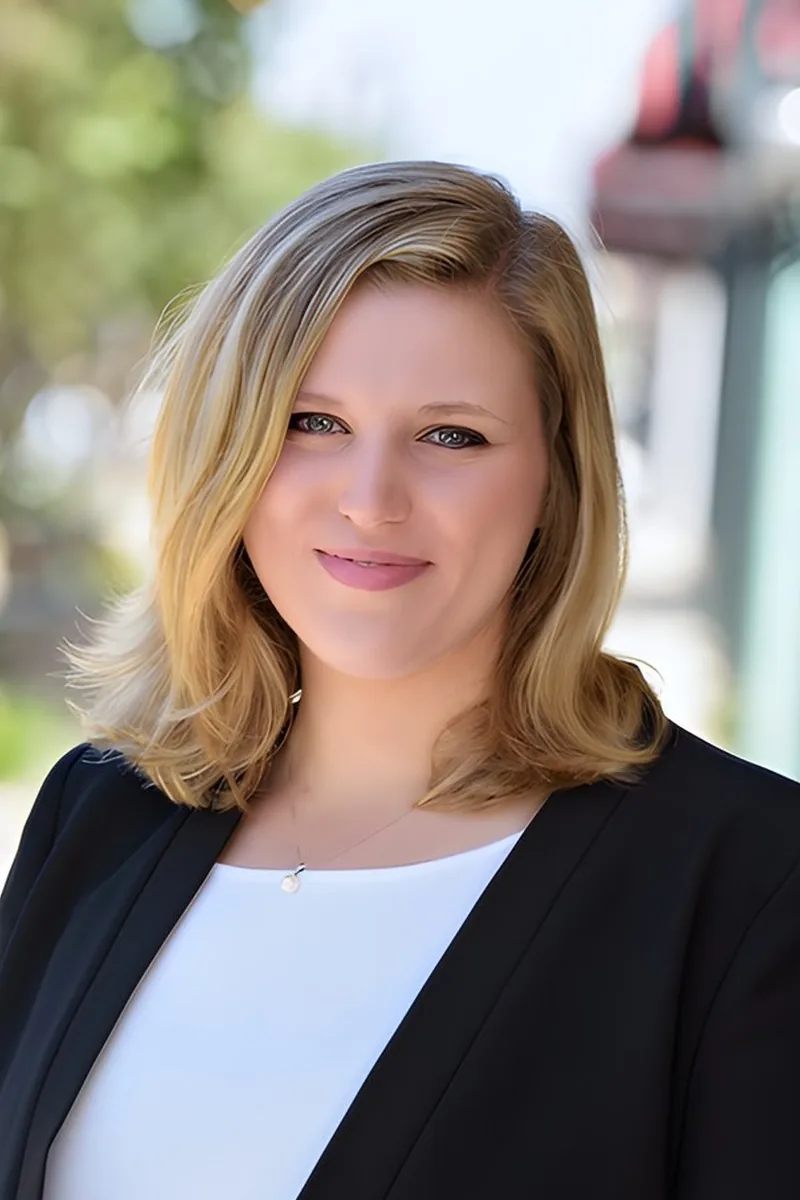
Debits, credits, and T-accounts click faster when a student understands the logic behind double-entry bookkeeping instead of just memorizing rules. Rae's economics degree gave her a strong quantitative foundation, and she applies that analytical approach to topics like adjusting entries, financial statement preparation, and the accounting cycle.

Debits, credits, and journal entries click faster when you understand what they actually represent about a business. Max's finance degree from Ohio State included rigorous accounting coursework, and his incoming investment banking role means he uses financial statements as everyday working tools — not abstract exercises.
Debits and credits follow a logic that, once internalized, makes every journal entry and T-account feel intuitive rather than arbitrary. Matt studied finance at the university level and applies that background to teach accounting as a coherent framework — from the balance sheet equation through adjusting entries and financial statement preparation.
Jonathan is a CPA and CFA Level III candidate who has lived the full arc of accounting — from introductory journal entries through complex consolidations and SEC reporting standards. He breaks down topics like accrual adjustments, depreciation methods, and statement analysis by connecting each entry to its real-world business impact. Rated 4.9 by students.
Most people treat accounting as a set of rules to follow, but Clark's MBA in Accounting and Financial Management taught him it's really the language every business decision gets filtered through. He digs into topics like accrual vs. cash-basis reporting, closing entries, and variance analysis by tying each concept back to the managerial choices it informs — so the ledger work feels like storytelling, not busywork.
Logan's physics degree required rigorous quantitative problem-solving — tracking units, balancing equations, and maintaining systematic precision — skills that transfer directly to working through the accounting cycle. He approaches journal entries and financial statement preparation as logical puzzles, breaking each transaction into its component parts so the mechanics of double-entry bookkeeping feel structured rather than arbitrary.
Holding a Master of Science in Accounting, Sam digs into the logic behind debits and credits, journal entries, and financial statement preparation rather than treating them as rules to memorize. He walks through the full accounting cycle — from trial balance adjustments to closing entries — so students understand how each step feeds the next. That conceptual grounding makes advanced topics like depreciation methods and inventory valuation click faster.
Tiffany's undergraduate degree is in accounting, so she teaches from genuine fluency with debits and credits, journal entries, and the full accounting cycle. Whether a student is struggling with adjusting entries, bank reconciliations, or the relationship between the income statement and balance sheet, she connects each concept back to the underlying logic of double-entry bookkeeping.
Balance sheets and income statements are really just structured storytelling about where money went — but the debits-and-credits logic trips up most beginners. Idara's finance industry background means she's worked with these statements professionally, and she walks students through journal entries, T-accounts, and the accounting equation with concrete business scenarios rather than abstract rules.
Alan has lived accounting from both sides — teaching it as a college adjunct and practicing it as a controller and CFO for multiple midsized companies. He unpacks debits and credits, journal entries, and financial statement preparation by tying each concept back to what actually happens inside a business. Rated 4.9 by students.
NYU Stern's finance and management curriculum gave Mat a working fluency with financial statements, journal entries, and the accounting cycle that underpins every business decision. He walks students through debits and credits, balance sheet reconciliation, and income statement analysis by tying each concept back to what the numbers actually mean for a company's health.
Nearly twenty years as a licensed CPA — spanning public practice, manufacturing, banking, and nonprofit work — means Sharon has seen the full accounting cycle play out in wildly different contexts. She unpacks debits, credits, journal entries, and financial statement preparation by connecting textbook rules to how transactions actually move through a real organization. Rated 5.0 by students.
Peter's background is in education and journalism rather than finance, but his Masters in Education means he knows how to break down unfamiliar systems into learnable steps — and accounting is fundamentally a system of rules and logic. He approaches topics like the accounting equation and basic transaction recording the way a skilled teacher would: building each concept sequentially so students understand the structure before tackling the details.
Kyle's statistics degree at Penn State's Schreyer Honors College means he thinks in structured datasets and systematic logic — exactly the mindset that makes the accounting cycle click. He approaches debits, credits, and financial statements as a coherent numerical system rather than a set of rules to memorize, connecting each ledger entry back to the quantitative story it tells. Rated 4.9 by students.
Sami's economics degree from Duke and real-world experience at both a management consulting firm and a Fortune 500 company mean he understands how accounting concepts like accrual methods, journal entries, and financial statement analysis play out beyond the textbook. Now pursuing his MBA at Yale, he connects debits and credits to the bigger strategic picture that makes the material click.
Debits, credits, and journal entries click faster when you understand the logic behind double-entry bookkeeping instead of treating it as rote procedure. Benjamin earned his Finance and Economics degree from Notre Dame, where accounting coursework was central to his business training. He breaks down the balance sheet equation and walks through adjusting entries in a way that makes the full accounting cycle feel intuitive.
Gerard's MBA coursework covered the financial reporting and analysis side of business, giving him a practical lens on topics like income statements, cost behavior, and managerial accounting decisions. He teaches accounting as a decision-making tool — connecting ledger work back to the business questions it's designed to answer, which keeps the material from feeling like rote number-shuffling.
Debits and credits follow a logic that, once internalized, makes everything from journal entries to financial statement preparation feel systematic rather than arbitrary. Hari teaches across financial, managerial, and cost accounting, and his finance MBA means he connects each ledger entry to the bigger picture of how businesses actually use accounting data to make decisions.
Debits, credits, and journal entries follow strict logical rules, but most introductory courses move too fast for students to internalize the why behind each entry. Rahi approaches accounting the way an engineer approaches a system — tracing how every transaction flows through the balance sheet, income statement, and cash flow statement so the structure clicks.
Jack's economics degree from Northwestern means he understands how financial data drives business decisions — accounting is the system that produces that data. He teaches the mechanics of the accounting cycle by anchoring each journal entry and ledger posting to the economic reality it represents, so the process feels purposeful rather than procedural. Rated 5.0 by students.
Lulu spent an entire career in accounting after completing her master's in the field at UT Arlington, so she teaches debits, credits, journal entries, and financial statements from real-world experience rather than textbook theory alone. Whether the challenge is managerial accounting, cost allocation, or preparing for an intermediate exam, she connects each concept back to how businesses actually use the numbers.
Debits and credits click once you stop memorizing rules and start understanding what each account type actually represents on a balance sheet. Eric earned his Business Administration degree with accounting coursework and breaks down the accounting equation, journal entries, and T-accounts in a way that builds intuition rather than rote recall.
Most of Emina's teaching load sits in math, writing, and SAT prep — but her state teaching certification and business coursework mean she can break down the accounting cycle with the structured, step-by-step clarity of someone trained to teach systematically. She connects each ledger entry and financial statement line item back to the quantitative reasoning her students already use in algebra and statistics, which makes the logic of double-entry bookkeeping feel less foreign.
Debits, credits, and journal entries click faster when the underlying logic is clear — Professor Florence teaches accounting by connecting each transaction to the financial statements it ultimately affects. Her MBA from USC and years teaching at multiple universities mean she can bridge the gap between textbook exercises and how real businesses track their money.
Decades as a CFO — in both for-profit and nonprofit organizations — means Bill has lived accounting rather than just studied it. He breaks down debits and credits, journal entries, and the full accounting cycle by connecting textbook rules to how real companies actually track and report their finances. He's currently finishing CPA certification requirements himself, so the material is fresh.
Alexandra's accounting expertise spans financial, corporate, intermediate, and tax accounting, giving her unusual depth across the discipline. She unpacks the logic behind journal entries, T-accounts, and financial statement preparation so that debits and credits stop feeling like arbitrary rules and start making intuitive sense.
As an adjunct finance professor who also teaches intermediate and cost accounting, Andrew sees the full picture of how debits, credits, and financial statements connect to real business decisions. He digs into journal entries, T-accounts, and adjusting entries with enough patience to make the logic click, not just the procedures.
Debits and credits confuse almost everyone at first because the logic feels backward until the balance sheet clicks as a complete system. Shih, a finance major and state-certified teacher from UGA, unpacks the accounting equation by building each journal entry from the transaction's economic reality — making adjusting entries, depreciation schedules, and financial statement preparation far more intuitive.
Debits and credits finally make sense when someone explains the underlying logic instead of just handing you T-account templates. Mustafa approaches accounting by grounding each journal entry in the accounting equation, so students understand why an asset increase pairs with a liability or equity change. His analytical rigor from NYU Law carries over well to the detail-oriented nature of balance sheets and income statements.
Irene treats accounting as applied math — because that's exactly what it is. Her PhD in mathematics gives her a precise way of explaining debits and credits, journal entries, and the logic behind the accounting equation that clicks for students who need more than "just follow the rules."
Currently in his second semester at UGA's Tull School of Accounting and planning to pursue a Master of Accountancy, Ian is deep in the material that introductory accounting students are just encountering. He tackles the concepts that tend to confuse beginners — journal entries, T-accounts, adjusting entries, and the logic behind debits and credits — with the perspective of someone who recently learned to think like an accountant.
Debits and credits make intuitive sense once someone explains the logic behind the accounting equation instead of just drilling T-account rules. Shivam is earning his BBA in Accounting at UGA, which means he's currently immersed in the same material — journal entries, adjusting entries, financial statement preparation — and can explain it in the language students actually use. That proximity to the coursework keeps his explanations grounded and current.
Studying finance and statistics at NYU means Eric encounters accounting principles from the other side — as the language businesses use to communicate financial health. That perspective lets him teach concepts like the accounting equation, income statements, and balance sheets by showing what the numbers mean in practice, not just how to record them. Rated 5.0 by students.
As a paid accounting tutor at Babson College, Bradley spends his weeks untangling the journal entries, T-accounts, and financial statement relationships that trip students up in introductory and intermediate courses. He's especially sharp at explaining the logic behind debits and credits so that the rules stop feeling arbitrary. Students who need help connecting the accounting cycle from trial balance through closing entries will find he knows the material cold.
Between serving as a supplemental instruction leader and a tutor at the University of North Florida, Daniel has spent years walking students through accounting coursework at every level — from high school basics to upper-division topics like cost accounting and managerial accounting. His dual degree in accounting and finance means he doesn't just know how to post entries; he understands how those numbers feed into the financial decisions that give them purpose. Rated 4.9 by students.
Asher earned his Bachelor of Accountancy from Penn State with all 150 CPA-track credits completed in four years, plus two professional internships. He digs into the concepts that trip students up most — journal entries, adjusting entries, the full accounting cycle, and financial statement preparation — making the logic behind debits and credits click rather than feel like arbitrary rules.
Maria's Applied Mathematics and Business Economics degree at UCLA means she approaches accounting problems the way they're designed to be solved — quantitatively, with the math driving the logic of each ledger entry. She tackles topics like cost behavior, break-even analysis, and managerial accounting by tying the numbers back to the economic decisions businesses actually face.
Jake teaches accounting across multiple levels — from introductory debits and credits through corporate accounting, tax accounting, and intermediate topics like bond amortization and lease classifications. His engineering background means he approaches journal entries and financial statements with the same precision he'd apply to circuit analysis. Rated 5.0 by students, he's especially effective at breaking down the logic behind accrual-basis adjustments.
I am a recent graduate of the University of South Carolina with degrees in International Business and Accounting with a minor in German.
Two master's degrees in accountancy — one with a taxation concentration from Notre Dame — give Steven a depth in this subject that few tutors can match. He digs into journal entries, financial statement preparation, and the logic behind GAAP principles so that students understand the "why" driving each debit and credit. Rated 4.8 by students.
Testimonials
Because the right Accounting tutor makes all the difference.
Average Session Rating – Based on 3.4M Learner Ratings
Practice Accounting
Free practice tests, flashcards, and AI tutoring for Accounting
Top 20 Business Subjects


Top 20 Subjects
Frequently Asked Questions
Students typically find the most difficulty with balance sheet construction and the fundamental accounting equation (Assets = Liabilities + Equity), especially when transactions affect multiple accounts simultaneously. Journal entries and the debit/credit system also present challenges because they require understanding the logic behind why certain accounts increase or decrease, rather than just memorizing rules. Additionally, many students struggle with reconciling theoretical GAAP principles to real-world financial statements, and connecting individual transactions to their impact on all three financial statements.
Expert tutors focus on building conceptual understanding by working backward from financial statements—showing students why a specific journal entry is needed rather than just how to record it. They use real company examples (like analyzing Apple's or Nike's actual balance sheets) to demonstrate how accounting principles apply in practice, and they emphasize the interconnected nature of accounts so students see that every transaction tells a story. This approach helps students develop the analytical skills needed for higher-level courses and professional certifications like the CPA exam, where understanding the 'why' is essential.
Introductory accounting focuses on mastering the fundamentals—the accounting cycle, basic journal entries, and reading financial statements. Intermediate accounting dives deeper into valuation methods, complex transactions (like consolidations and investments), and deeper GAAP applications, requiring stronger analytical skills. Advanced courses or CPA exam prep involve specialized topics like tax accounting, auditing standards, and detailed financial analysis. Tutors tailor their approach based on the level, moving from foundational concept-building to problem-solving strategies and exam-specific techniques.
Students often memorize ratio formulas without understanding what they actually reveal about a company's financial health—for example, knowing that a high current ratio suggests liquidity but not recognizing when it might signal inefficient asset management. Tutors help by teaching ratio analysis as a storytelling tool: they guide students through calculating ratios from real financial statements, interpreting the results, and comparing across companies and time periods to draw meaningful conclusions. This approach transforms ratios from abstract calculations into practical tools for investment analysis and business decision-making.
CPA exam success requires mastery of not just accounting principles but also auditing standards, tax regulations, and business law—areas where tutors provide targeted preparation by identifying knowledge gaps and reinforcing weak areas before they become problems on the exam. Tutors help students develop efficient study strategies, practice with exam-style questions under time pressure, and build the analytical reasoning skills needed to tackle complex, multi-part scenarios. Additionally, tutors can help students understand how college-level accounting courses connect to professional practice, giving them context for why certain concepts matter in the real world.
Tutors bridge theory and practice by using case studies and real financial data—analyzing why a company chose one accounting method over another, how different depreciation methods affect reported income, or how working capital management impacts cash flow. They help students understand opportunity cost in accounting contexts (like the cost of inventory holding), time value of money in investment decisions, and how financial ratios inform lending and investment choices. This practical grounding helps students see accounting not as a set of rules to memorize, but as a language for understanding and evaluating business performance.
Beyond deep knowledge of GAAP principles and accounting standards, strong tutors possess the ability to explain complex transactions in simple terms and to identify exactly where a student's understanding breaks down. They should be comfortable with financial analysis tools, able to work with real financial statements, and skilled at translating accounting concepts into business context so students understand practical applications. Equally important is the ability to build problem-solving strategies—teaching students how to approach unfamiliar scenarios rather than just solving textbook problems, which is critical for success in advanced courses and professional exams.
Common mistakes include reversing debits and credits, failing to recognize when transactions affect multiple financial statements simultaneously, misunderstanding the purpose of contra-accounts, and confusing cash-basis with accrual accounting. Students also often struggle with the timing of revenue and expense recognition under GAAP, which directly impacts reported income. Tutors address these errors by having students work through the logic of each transaction step-by-step, using T-accounts or other visual tools to track account changes, and practicing with varied scenarios until the underlying principles become intuitive rather than memorized.
Let’s find your perfect tutor
Answer a few quick questions. We’ll recommend the right plan and match you with a top 5% tutor.