Award-Winning Economics Tutors
serving Austin, TX
Economics
Tutors in Austin
Private 1-on-1 tutoring, weekly live classes for academic support, test prep & enrichment, practice tests and diagnostics, and more to elevate grades and test scores.
Based on 3.4M Learner Ratings
UniversitiesSchools & Universities
DeliveredHours Delivered
ProficiencyGrowth in Proficiency
Who needs tutoring?
No obligation. Takes ~1 minute.

Carter earned his economics degree at Brown and then taught game theory to advanced middle school students at a Johns Hopkins CTY program in Hong Kong — so he knows how to make concepts like Nash equilibria, marginal analysis, and market structures click for learners at very different levels. He connects economic models to real decisions rather than leaving them as abstract graphs. His approach digs into the intuition behind supply-and-demand shifts, elasticity, and welfare analysis so the math and the logic reinforce each other.
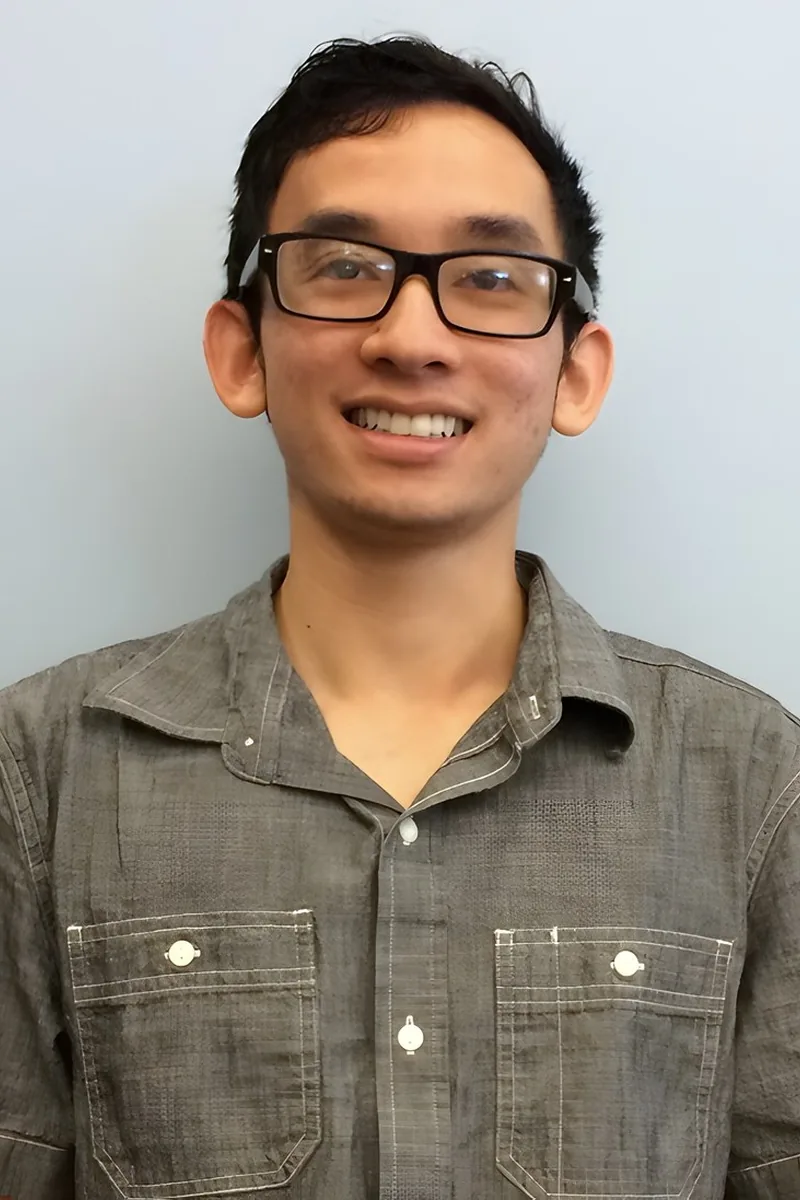
Duy's economics degree means he doesn't just teach supply-and-demand curves in isolation — he connects them to real policy debates like minimum wage laws, trade tariffs, and Federal Reserve decisions. Whether a student is tackling GDP calculations or parsing the difference between fiscal and monetary policy, Duy walks through the underlying logic so the graphs and models actually make sense.
International trade and financial valuation are areas where Mahan has done direct research, giving him depth that goes well beyond intro-level supply and demand. He teaches economics by connecting abstract models — elasticity, market equilibrium, comparative advantage — to real-world scenarios so students can reason through unfamiliar problems on exams rather than relying on memorized graphs.
I am a graduate of Barnard College, Columbia University where I received my Bachelor of Arts in Mathematics and Economics. My academic interests while at Barnard were focused on microeconomics and statistical research. I am a believer that a strong education can propel you to achieve your goals. I think that anyone can learn math and logical thinking with a little help. I have experience tutoring high school students in Algebra I and was always helping my fellow classmates with their economics problem sets in college. While working professionally, my job demanded strong technical skills in data programming. Each year, I taught my coworkers the necessary programming skills both through classroom setting lectures and through one-on-one tutoring. In my free time I love going to spin class, learning how to cook, and watching MSNBC!
I am an experienced Instructor holding 2 masters degree and finalizing my PhD dissertation. I'm experienced with more than 11 years of teaching all levels from K to university students. You learn with excitement and achieving great results. I'm always committed to my students and follow up committed closely and I care a lot of them. My experience with teaching enabled me to utilise many teaching techniques and strategies that allows students to learn easily and effectively. My academic studies enables me to have great self confidence while teaching since I have many years of instructing experience to many levels. To add more, I have taught in 3 different countries with diversity and knowledge experience.
Studying economics at Dartmouth with a computational emphasis, Eric digs into both the theoretical models and the real-world data that test them. He's particularly effective at unpacking concepts like elasticity, comparative advantage, and market equilibrium — translating the math into plain-language reasoning that sticks.
Supply-and-demand curves are just stories told in graphs — and Logan reads both fluently. His triple liberal arts background gives him the interdisciplinary lens to connect economic models to the historical and political contexts that make concepts like comparative advantage or market failure actually make sense.
An electrical and computer engineering student, Alfonso tackles economics through a quantitative lens — the kind that makes GDP calculations, marginal analysis, and cost curves feel like structured problem-solving rather than fuzzy social science. His STEM training means he's especially sharp at the graphical and mathematical reasoning that trips up students in both micro and macro courses.
Adi studied political science and economics together as an undergraduate, which means he learned economic concepts not as isolated models but as tools embedded in policy debates — how minimum wage laws reshape labor markets, or why central banks face political pressure when setting interest rates. That dual lens is particularly useful for students who need to connect micro and macro theory to the messy real-world decisions that drive headlines.
Studying political science and Latin American studies at Rice means Lila spends her coursework analyzing how governments shape economies — trade agreements, regulatory frameworks, immigration policy's labor market effects — which gives her a policy-first angle on economic concepts. She's especially useful for students who need to connect ideas like market intervention or fiscal policy to the political forces that actually drive them. Rated 4.9 by her students.
Scott holds a Masters of Management Studies alongside a science background, giving him a dual lens on economics — he understands both the mathematical models and the real-world business decisions they're meant to explain. He breaks down concepts like elasticity, market equilibrium, and cost-benefit analysis by tying them to concrete scenarios rather than leaving them as abstract graphs.
Brody's neuroscience and biology training means he's spent years thinking about how people make decisions — reward pathways, cost-benefit trade-offs at the cellular level, risk evaluation — which maps surprisingly well onto microeconomic concepts like utility maximization and rational choice theory. His statistics background also lets him dig into the quantitative side when courses introduce data-driven models or basic econometric reasoning.
I am qualified to tutor many subjects, my favorite subject by far is math, specifically calculus. Math is a subject almost universally hated, and I believe that is mainly due to the narrow way in which it is taught. I have ADHD, and I often don't understand things the first time they are explained to me, meaning over the years I have had to figure out different ways of looking at information. Oftentimes, all a student needs is for something to be explained in a different way, and I love watching people finally understand a concept. Everyone learns differently, but everyone can learn.
A business administration degree means Richard learned economics from the applied side — supply and demand curves, market structures, and GDP calculations all tied to real company decisions. He unpacks graphs and models by connecting them to everyday examples like gas prices or smartphone markets, which makes abstract theory far more intuitive.
Miguel's quantitative training in computer science gives him a sharp handle on the graphical and mathematical side of economics — supply-demand modeling, elasticity calculations, and interpreting shifts in equilibrium. He approaches econ concepts by tying them to real data and logical frameworks, which tends to click for students who struggle with the hand-wavy textbook explanations.
Supply and demand sounds simple until students hit elasticity calculations, price ceilings, or the difference between accounting and economic profit. Katherine unpacks each concept with concrete examples — like why surge pricing exists or how minimum wage affects different labor markets — making the underlying logic feel less theoretical and more like common sense.
Double-majoring in Economics and Natural Science at Johns Hopkins meant Chikaneme spent his undergraduate years toggling between economic modeling and scientific reasoning — a combination that sharpens how he teaches microeconomic concepts like elasticity and market efficiency, where the logic mirrors the hypothesis-testing mindset of a science lab. His psychology minor also gives him a useful edge when unpacking behavioral economics ideas, connecting standard rational-agent models to how people actually make decisions. Rated 5.0 by his students.
Environmental science at Rice required Alex to work heavily with statistical modeling and data analysis — skills that translate directly to economics when students need to interpret supply-and-demand graphs, calculate elasticity, or reason through cost-benefit tradeoffs. His geography background also adds a spatial dimension to topics like trade flows and regional economic development that most tutors can't offer.
As a current business major, Ankit grounds economics concepts like supply and demand, opportunity cost, and market structures in the business context where they actually matter — showing how textbook models connect to real company and consumer decisions. His 32 ACT and strong quantitative instincts mean he's comfortable walking through the graphs and equations that often trip students up in introductory econ courses. Rated 4.9 by his students.
Supply and demand curves are intuitive enough, but economics gets tricky when students hit elasticity calculations, game theory matrices, or the nuances of market failure. Muhammad's quantitative background in electrical engineering means he's comfortable walking through the math behind economic models while keeping the real-world logic front and center.
Jennifer's English and literature background might seem like an unusual fit for economics, but her master's in Curriculum and Instruction means she's trained to break down unfamiliar material into structured, digestible pieces — exactly what students need when grappling with concepts like elasticity curves or GDP calculations. She also teaches math and history, giving her the cross-disciplinary fluency to connect economic models to both the quantitative reasoning and real-world context behind them.
Engineering students don't just take economics — they use it, calculating cost-benefit tradeoffs, modeling supply constraints, and thinking in systems. Ana brings that applied mindset to economics tutoring, breaking down concepts like elasticity, market equilibrium, and comparative advantage into logical steps rather than abstract theory. She creates a low-pressure environment where no question feels too basic to ask.
Alexandra's broad tutoring experience across math, reading, and writing means she can tackle the specific skills that trip students up in introductory economics — interpreting graphs, setting up word problems involving supply and demand, and writing clear analytical responses about market behavior. Her creative writing background at UNT also sharpens her ability to break down dense textbook language into explanations that actually make sense on first read. Rated 4.9 by her students.
Computer science at Columbia might seem like an odd path into economics, but Jeremy's coursework demands the same kind of formal modeling — optimization problems, game-theoretic reasoning, and data-driven analysis — that underpins topics like market equilibrium and consumer choice. That quantitative comfort lets him break down the graphs and equations in micro and macro that often stall students who came in expecting a reading-heavy social science.
Holding a Bachelor's in Economics from UT Austin with additional training in econometrics and data science, Sam digs into both the theoretical and quantitative sides of the discipline. Whether it's deriving supply-and-demand equilibria, running regression models, or unpacking game theory, he connects abstract economic reasoning to real-world data and policy questions.
As a Dixon Global Policy Scholar and parliamentary debater at Clemson, David regularly argues both sides of economic questions — tariff impacts, fiscal stimulus trade-offs, regulatory costs — which sharpens his ability to explain why models like supply and demand or comparative advantage actually matter in policy debates. His honors economics coursework and a 34 ACT give him the analytical chops, while his debate background means he's practiced at making abstract concepts click through clear, structured reasoning. Rated 4.8 by his students.
Supply and demand curves are straightforward until you layer in elasticity, market failures, and government intervention — then economics becomes a subject that rewards careful reasoning over memorization. Karen's health sciences background gives her a practical lens for topics like healthcare economics and cost-benefit analysis, making abstract models feel grounded in real decisions.
Supply and demand curves, elasticity, market equilibrium — economics runs on the same quantitative reasoning that drives engineering. Siddharth connects micro and macro concepts to real-world scenarios, making abstract models like GDP accounting or comparative advantage click for students who struggle with theory-heavy textbooks.
Supply and demand curves are the easy part; economics gets harder when students need to think about elasticity, opportunity cost, or market failures in unfamiliar scenarios. William approaches these concepts through real policy debates and historical examples, leveraging his broad background in government and history to make abstract models feel grounded. He's rated 4.9 and emphasizes working through problems step by step rather than jumping to formulas.
Studying finance and mathematics at UT Austin's McCombs School of Business means Neel lives economics daily — from modeling supply and demand curves to analyzing market equilibria with real data. He breaks down concepts like elasticity, opportunity cost, and GDP measurement by tying them to current events students actually recognize.
Supply and demand curves are deceptively simple until you have to apply them to price ceilings, tax incidence, or international trade scenarios. Vibha approaches economics by connecting each model to a real-world example — something her business studies at UT Austin provide in abundance. She makes the logic behind shifts and equilibria intuitive rather than abstract.
Three startup ventures give Tanner a founder's perspective on economics — he's lived the demand curves, pricing strategies, and opportunity costs that most students only sketch on a whiteboard. His BBA in Entrepreneurial Management and minor in Spanish also let him pull in examples from international markets and trade dynamics, making macro concepts feel tangible. Rated 5.0 by his students.
Supply and demand curves are intuitive enough, but students often stall when economics shifts to abstract models — GDP calculations, monetary policy mechanics, or the difference between fiscal multipliers in Keynesian vs. classical frameworks. Sarah's social science training grounds these concepts in real political and historical context, which makes the logic behind the models easier to retain.
Supply and demand curves are just the beginning — the real challenge in economics is applying models like elasticity, comparative advantage, and market equilibrium to messy real-world scenarios. Maftuna's finance background means she naturally ties microeconomic and macroeconomic theory back to how markets, firms, and consumers actually behave.
Pursuing a double major in Finance and Economics at UT Dallas means Jason is actively working through the models and frameworks — demand curves, market structures, fiscal multipliers — that his economics students are encountering for the first time. That real-time immersion lets him speak to the material as someone still close to the learning curve, breaking down where concepts like elasticity or GDP accounting tend to get confusing and why the math behind them actually matters.
I am a avid sports fans: Go Cowboys!
I'm a computer and social scientist. I hold graduate degrees from Columbia University and the University of Chicago and earned my bachelor's at the University of Texas at Austin. In addition to teaching at the undergraduate level, I research ways the natural sciences can be used to advance the study of anthropology and history. I am currently completing my PhD.
Hello, students! My name is Pranav, and I'm so excited to be tutoring with Varsity Tutors. I have vast experience tutoring both personally and professionally; I've held officer positions in several nonprofit organizations, including STEMpals and The Do Re Mi Project, teaching courses ranging from biology to music theory. I took 16 AP courses throughout high school with all 5s, and I earned a 1570 on my SAT, so I'm pretty familiar with the majority of academic subjects! I have experience tutoring any and all skill levels, and I'm always open to expanding my horizons, so please don't hesitate to book your first lesson. I'm looking forward to meeting with you!
Hi y'all! I hold my Master of Science in Psychology of Sport and my Bachelor of Science in both Psychology and Applied Human and Sport Physiology. I have many years of tutoring under my belt, working with people of all levels from elementary school through college in hard science subjects (Biology, Chemistry, and Mathematics), a few social sciences (History, Psychology, Economics), and language arts. When not tutoring, I love playing soccer and I even coach a youth team. I love encouraging students to learn, grow, and think critically for themselves.
I am involved in the preparation of students for university/higher education entrance and for prospective employees applying to enter the world of work. I offer best-practice rsum preparation and interview experience.
Testimonials
Because the right Economics tutor makes all the difference.
Average Session Rating – Based on 3.4M Learner Ratings
Nearby Economics Tutors
Other Austin Tutors
Related Business Tutors in Austin
Frequently Asked Questions
Economics requires students to think abstractly about systems, incentives, and cause-and-effect relationships—skills that don't always come naturally in a traditional classroom setting. Many students struggle with supply and demand curves, understanding macroeconomic concepts like inflation and GDP, or applying economic principles to real-world scenarios. With an average student-teacher ratio of 14.9:1 in Austin schools, it's easy for these conceptual gaps to go unaddressed until they compound into deeper misunderstandings.
In a classroom, Economics teachers must move at a pace that works for 25+ students, which means struggling learners often get left behind on foundational concepts. Personalized 1-on-1 instruction allows tutors to slow down on challenging topics like elasticity or monetary policy, use real-world Austin examples to illustrate abstract concepts, and adjust explanations based on how you learn best. This targeted approach helps you build genuine understanding rather than just memorizing definitions for the test.
Varsity Tutors connects you with tutors who understand Texas Economics standards and the specific courses offered across Austin's 24 school districts—whether you're in AP Economics, IB Economics, or a standard high school or college-level course. Tutors are familiar with the scope and sequence of your curriculum and can target instruction toward the concepts and skills your teacher emphasizes, ensuring support that directly impacts your classroom performance.
Your first session is focused on understanding where you are and where you need to go. The tutor will assess your current grasp of Economics fundamentals, identify specific topics causing confusion (whether it's microeconomics, macroeconomics, or data interpretation), and learn your learning style. From there, you'll develop a personalized plan that targets your biggest challenges and builds toward measurable improvement on tests, assignments, or overall understanding.
Many students notice clearer understanding of difficult concepts within 2-3 sessions, especially when tutoring is consistent and focused on specific problem areas. Measurable improvements in test scores or assignment grades typically follow within 4-6 weeks of regular sessions, depending on how much ground needs to be covered and how frequently you meet. The key is addressing gaps early—the longer misconceptions persist, the harder they are to correct.
Yes. Tutors can help you master both microeconomics and macroeconomics content, practice free-response and multiple-choice questions in AP format, and develop test-taking strategies specific to Economics exams. Whether you're preparing for AP Exams, IB Economics, college placement tests, or final exams, personalized instruction focuses on the exact skills and content knowledge that will be assessed, giving you targeted practice rather than generic review.
Varsity Tutors connects you with tutors who have strong backgrounds in Economics—many hold degrees in Economics, Business, Finance, or related fields, and many have teaching experience or advanced credentials. All tutors are vetted for expertise in their subject and are experienced at explaining complex economic concepts clearly to students at various levels, from introductory high school Economics to advanced AP and college courses.
Pricing varies based on the tutor's experience, your course level, and how frequently you meet. Varsity Tutors works with you to find a tutoring plan that fits your budget and schedule—whether that's weekly sessions, intensive test prep, or targeted help on specific units. Contact us for a personalized quote and to get matched with a tutor for students in Austin.
Let’s find your perfect tutor
Answer a few quick questions. We’ll recommend the right plan and match you with a top 5% tutor.