Award-Winning SAT Math Tutors
serving Austin, TX
SAT Math
Tutors in Austin
Private 1-on-1 tutoring, weekly live classes for academic support, test prep & enrichment, practice tests and diagnostics, and more to elevate grades and test scores.
Based on 3.4M Learner Ratings
UniversitiesSchools & Universities
DeliveredHours Delivered
ProficiencyGrowth in Proficiency
Who will be getting tutoring?
No obligation. Takes ~1 minute.
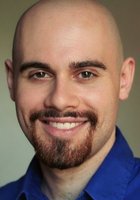
John's approach to SAT Math zeroes in on the difference between knowing algebra and knowing how the SAT tests algebra — things like rewriting equations to match answer choices or catching unit conversion traps in word problems. With a 1420 SAT and deep experience across calculus, geometry, and college algebra, he connects each practice problem to the specific concept being tested so students build real recognition, not just test-day luck.

Biology majors don't always get credit for their math chops, but Harsh's coursework in biostatistics and quantitative analysis at UT Austin means he's drilled the same algebra, function modeling, and data-interpretation skills the SAT Math section leans on hardest. His 1520 SAT backs that up with a score in the top percentile, and he zeroes in on the geometry and advanced-math questions where students who 'know the material' still lose points by misreading what the problem actually wants.
Game theory for advanced middle schoolers at Johns Hopkins CTY required Carter to break down probability, strategic reasoning, and algebraic modeling for students who were sharp but impatient with slow explanations — a skill set that maps neatly onto SAT Math's demand for quick, clean problem-solving under time pressure. His 1570 SAT and economics training at Brown mean he's especially fluent in the data-analysis and linear modeling questions where students need to interpret real-world scenarios rather than just compute. Rated 5.0 by students.
Scoring 1550 on the SAT, Howard developed a systematic approach to the Math section that emphasizes recognizing problem types quickly — knowing when a question is really about ratios disguised as geometry, or when plugging in values beats setting up an equation. He teaches the specific shortcuts and pattern-recognition tricks that turn a 700 into a 780+.
A perfect 1600 SAT means Sandra didn't just survive the math section — she cleared it without dropping a single point, and her computer science degree means the algebraic logic and function behavior that dominate the test are things she works with daily, not just at test time. She teaches students to treat the no-calculator questions as puzzles in efficient reasoning rather than raw computation, building the kind of strategic speed that turns a good score into a great one. Rated 5.0 by students.
I'm starting my junior year at Northwestern University in Evanston, IL. I'm currently getting my degree in biology with a concentration in health and human disease, global health, and a minor in French. I love reading, traveling, learning and helping others learn! I have experience tutoring high school and elementary school students in math, science, and English and I love tutoring in each subject equally. Eventually, I see myself going to medical school and researching topics related to viral diseases which I've been interested in since a very young age. I'm very passionate about the subjects I teach and hope to pass my passion on to the individuals I tutor!
Rakhi scored a 1550 on the SAT and holds a degree in applied math, so the quantitative reasoning behind every SAT Math question — from systems of inequalities to quadratic modeling — is second nature to her. She zeroes in on the specific algebra and data-analysis patterns the College Board recycles, teaching students to recognize problem types before they even finish reading the prompt. That pattern-recognition approach is what turns a good math student into a confident test-taker.
Scoring a 1550 on the SAT gave Alex firsthand insight into how the Math section tests familiar concepts in unfamiliar ways — a quadratic might show up as a word problem about projectile motion, or a ratio question might be buried in a data table. He drills students on translating tricky phrasing into straightforward algebra so the test feels predictable rather than surprising.
Most education majors don't score a 1550 on the SAT — but Jennifer's comfort with math through calculus means she can break down the algebra and problem-solving questions that dominate the test while also leveraging something rarer: she knows how to teach the way kids actually learn. Her Education and Child Studies training at Smith gives her concrete strategies for building a student's confidence on timed sections, not just their content knowledge. Rated 4.9 by students.
Law school admissions hinge partly on undergraduate GPA and LSAT scores, but Paul's 1520 SAT reflects the quantitative reasoning habits he built long before — particularly the algebraic fluency and data-interpretation instincts that carry through every standardized test. His economics background means he's spent years modeling relationships between variables, which maps neatly onto the SAT's problem-solving questions involving linear and nonlinear functions. He teaches students to treat each problem like a small economic model: define the variables, set up the relationship, then solve efficiently.
I am a graduate of Hamilton College in Clinton, New York, where I received my Bachelor of Arts in anthropology and English Literature in 2014. Since graduation, I have served one year as a K-2 literacy tutor with A Community for Education, and this past year I worked as a kindergarten teacher at IDEA Public Schools. I will be beginning a Masters Program in Education this fall at the University of Texas at Austin with a certification in teaching 7-12th English. My goal as a professional is to unite my love of literature with my passion for social justice to become an inspirational and effective educator of underserved preteen and teenage students. My tutoring style is very positive and encouraging, and centered around teaching my students in a way that makes sense to them. In my spare time, I enjoy reading, running, travel, and cooking.
I'm a recent Cornell graduate who is passion about personalized education. I studied English and Film, with a lot of everything else thrown in!
I'm a recent graduate from Lewis and Clark College. I completed my BA in Anthropology with a Linguistics focus, and I hope to continue these interests into a Masters in a couple years. I grew up in Austin, TX swimming and hiking every chance I got, and I've since moved to San Marcos, TX. I love tutoring students, and seeing the progress we can make together. Learning is all about finding the right way to piece together concepts and practice to work with your unique brain. Feel free to ask me any questions!
Scoring a 1590 SAT composite means William knows the math section inside and out — from quadratic modeling and systems of equations in the calculator portion to the ratio and proportion traps in the no-calculator section. He teaches students to distinguish between problems that reward algebraic manipulation and those better solved by plugging in values, a decision-making skill that saves critical minutes on test day.
I am excited to work with all students, particularly those with special needs (including G/T). Please contact me with any questions you may have, and I look forward to working with you and/or your child!
Data science coursework at the University of Rochester means Lloyd spends his days manipulating equations, interpreting statistical outputs, and programming quantitative models — all of which sharpen the algebraic and data-analysis reasoning the SAT Math section demands. His 1550 SAT score came partly from treating the no-calculator questions as logic puzzles rather than computation exercises, a mindset he teaches by walking students through how to eliminate answer choices structurally before solving. He's especially effective on the exponential and polynomial questions where a coding-trained instinct for pattern recognition pays off.
I am a third-year Ph.D. student in UT Austin's American Studies department. I received my B.S. in Media, Culture and Communication from NYU and my M.A. in Literary and Cultural Studies from Carnegie Mellon. As a lifelong student, I love to help others enjoy the process of learning and to see their hard work pay off! I'm currently teaching a writing course at UT with the theme, "Americans Abroad." Last year, I taught discussion sections for a UT American literature course, and previously I worked as a teaching assistant for classes on introductory academic writing, U.S. history, and American culture. While I tutor a range of subjects, I especially love demystifying standardized tests and helping students improve their reading and writing skills. I also have expertise in the subject areas of American history and literature. I'm looking forward to working with you to achieve your goals!
I am a sophomore, English and Computer Science double major at Carleton College who is ecstatic about teaching and spreading my love of learning. I am also greatly interested in sociology and gender studies, and have yet to decide if I will minor in one of those fields, too. I love helping students discover a passion for reading and expressing themselves through writing. My favorite areas to tutor are those having to do with English; I enjoy everything from AP Literature to essay writing for class. When I'm not at school or tutoring, I spend my time reading, playing piano and guitar, and rock climbing.
I'm a graduate student at UT Austin's LBJ School of Public Affairs, currently pursuing my master's degree in global policy studies. I have a BA in political science from Southwestern University. After graduation, I studied Mandarin Chinese for a year in Taiwan and then went backpacking through China.
I'm a UH senior right now (majoring in political science), and I'm planning to go to law school next fall. I enjoy reading, puzzles, and musicals about Treasury Secretary Alexander Hamilton.
Sandra scored a 1520 on the SAT and tackles the math section by teaching students to spot the concept being tested before they start calculating. Many SAT math questions disguise straightforward algebra or geometry behind unfamiliar wording, and her engineering training makes her especially sharp at translating word-heavy problems into clean equations. She's rated 4.9 by the students she's worked with.
I am currently a student at the University of Texas at Austin studying Chemical Engineering on a Pre-Medicine track while minoring in Business in the Cockrell School of Engineering. For the past 8 years, I have tutored students in all levels of math ranging from toddlers to high school students studying AP Calculus. I have worked for other tutoring agencies and also tutored through my local school district itself as well. My favorite subject since I was little has always been math! Aside from math, I also teach other subjects such as english and Spanish and others. I have worked with all kinds of students, including those with special needs or no prior knowledge in the subject. In my free time I enjoy reading, running, dancing, and spending time with my friends and family.
I am multilingual. I love teaching Mathematics, Sciences, English, History, Writing...you name it. My philosophy is that the most effective teaching comes from knowing how my student learns, and meeting them where they are. I want to instill a love of learning, but that will not happen if I don't get to know my student.
I am currently a Sophomore Physics/Math student at the University of Texas at Austin.
I'm a sophomore undergraduate student at The University of Texas at Austin studying Biology! Though I am a science major and love to tutor high school biology and chemistry, I also enjoy teaching math topics, such as Algebra 1, Algebra 2, and Pre Calculus, and SAT (including PSAT) Prep topics, such as SAT Reading, SAT Writing, and SAT Essay. I would love to get to know you and your learning style to allow me to aid your learning as successfully as possible!
After earning a 1510 SAT composite, Nolan reverse-engineered the math section into repeatable patterns — Heart of Algebra questions that hinge on slope interpretation, Passport to Advanced Math problems built around quadratic structure, and data questions where reading the graph matters more than computing. He drills students on recognizing these patterns quickly so they spend their time solving, not deciphering. His 5.0 rating speaks to how well that system works in practice.
I am currently a Biology major at the University of Texas at Austin. I am Pre-med and also hoping to receive my teaching certificate for composite science in the fall.
I am a University of Texas student pursuing a BSA in Mathematics, I am passionate about being a leader and a mentor, I love working with people! I was an orientation advisor for two summers, where I gave students support and advice when it came to class preparation and registration. This allowed me to pass my knowledge of mathematics classes and the college class experience overall to new students. I also love mathematics because it allows me to do work using a problem-solving approach and develop a great sense of logic. I am really interested in applied mathematics, using math for real-world situations! Subjects I feel very strongly about are discrete mathematics, algebra, linear algebra. My tutoring philosophy is to help students help themselves, as this will boost their motivation and confidence, and to be a friend to them as well as a mentor.
Scoring 1480 on the SAT gave Atharva firsthand insight into how the Math section tests algebraic reasoning and data analysis in ways that feel different from classroom math. He teaches students to decode the College Board's phrasing on passport-to-advanced-math questions and to spot the fastest path through multi-step problems involving quadratics, systems, and nonlinear functions. He holds a 5.0 client rating.
I am “HQ” (Highly Qualified) certified to teach Social Studies for grades 7-12. I currently teach a sophomore level ethics class at St. Edwards University. I taught several classes at The University of Texas at Austin as a Doctoral Candidate, where I also earned my M.A. in Philosophy. At the University of Southern California, I earned my B.A. with Departmental Honors along with the Discovery Scholar’s award for excellence in independent research. I have been tutoring and teaching for eleven years, with a primary emphasis on developing my students’ writing and critical thinking skills.
Scoring 1450 on the SAT, Aayush knows firsthand how the math section tests algebraic reasoning and data interpretation under tight time constraints. He zeroes in on the question types that trip students up most — systems of equations disguised as word problems, quadratic modeling, and the no-calculator section's emphasis on mental math fluency. Each session targets specific weak spots rather than generic review.
Scoring a 1500 on the SAT gave Ramsey firsthand insight into the math section's mix of algebra, data analysis, and advanced problem-solving under time pressure. He teaches students to identify which tool a question is really testing — whether it's systems of equations disguised as a word problem or a quadratic hidden in a table — so they stop second-guessing and move faster.
Biology and anthropology coursework gave Anna constant practice with the quantitative reasoning the SAT Math section leans on — interpreting data tables, working through proportions, and translating real-world scenarios into algebraic setups. Her 1500 SAT means she's already proven she can execute under timed pressure, and she zeroes in on the ratio and percentage questions where science-minded students often have a hidden advantage they haven't learned to exploit yet.
I am a recent college graduate who loves teaching and helping students learn. I have experience teaching English in Argentina, as well as experience as a teaching assistant for various subjects at the Summer Institute for the Gifted.
Jake scored a 1440 on the SAT and tackles the Math section by teaching students to recognize question patterns before they start calculating. His engineering background means he's especially sharp on the advanced algebra and data interpretation problems that separate good scores from great ones. He holds a 5.0 tutoring rating.
I am an outgoing, organized, friendly and responsible person. I am fluent in Mandarin and English, and I'd love to help more people to know and learn about Mandarin. Most people think Mandarin is hard, but I will say it is super beautiful, interesting and worth learning. I hope you are interested in it and thank you for visiting my profile:)
Biochemistry coursework is essentially applied algebra — balancing equations, manipulating concentrations, interpreting experimental data — so Samir tackles SAT Math with the fluency of someone who uses these skills daily rather than someone who memorized them for a test. He's especially sharp on the geometry and trigonometry questions that many science-track students underestimate, breaking each one down to the specific relationship being tested before solving. Holds a 5.0 rating from students.
I am a second-year graduate student in the Steve Hicks School of Social Work program at the University of Texas at Austin pursing a Masters in Social Work. I also attended UT-Austin for my undergraduate years, where I majored in psychology, minored in sociology, and received a creative writing certificate. I have worked at the University Writing Center at UT for the past year, where I tutor undergraduates in writing skills. I review papers in all subjects and of all types, including research papers, lab reports, persuasive essays, creative writing, and post-undergraduate school applications. I also worked with Communities in Schools at a Title I elementary school on writing, grammar, reading, and comprehension. Writing and English are my favorite subjects to tutor because I love to see the satisfaction on a student's face when they can finally take all of the puzzle pieces of ideas floating around in their head and put them in a tangible form. Getting those thoughts on paper proves to a student that their words are worth being read and heard. My teaching philosophy is taking a collaborative, non-directive, and non-evaluative approach in helping my students cultivate writing skills and confidence that they will have for future writing endeavors. Outside of academia, I love movies, theater, playwriting, basketball, and anything outside!
Scoring a 1530 on the SAT gave Derek firsthand knowledge of how the Math section tests familiar concepts in unfamiliar ways — especially with data analysis, passport-to-advanced-math questions, and tricky word problems under time pressure. He teaches students to recognize question patterns quickly so they spend their limited minutes on execution, not figuring out what's being asked.
I am from the Boulder, Colorado area, and graduated from the University of Colorado, where I studied English and business, while also completing a four-year study on ethical leadership. Additionally, I pursued Honors distinction through a study of James Joyce and interned with now U.S. Senator Mark Udall during his tenure in the House of Representatives. I worked with Crocs Footwear at their global headquarters as an account manager for five years in account management, before relocating to Austin, Texas, in 2011, when I began pursuing a career in education. I am currently certified as a teacher in Texas in six different subjects, including Language Arts, Social Studies, Math, Business, and Special Education. I enjoy all of these subjects, but am particularly passionate about language arts. My philosophy of education centers around the learner in all aspects, teaching to the whole student and embracing what makes that student unique.
Testimonials
Because the right SAT Math tutor makes all the difference.
Average Session Rating – Based on 3.4M Learner Ratings
Practice SAT Math
Free practice tests, flashcards, and AI tutoring for SAT Math
Nearby SAT Math Tutors
Other Austin Tutors
Related Test Prep Tutors in Austin
Frequently Asked Questions
Score improvement depends on your starting point and commitment level, but most students see meaningful gains within 8-12 weeks of consistent practice. Students typically improve by 50-100+ points when they work with a tutor to identify weak areas, master test-specific strategies, and practice with realistic problems. The key is focusing on your particular challenges—whether that's algebra, geometry, or time management—rather than trying to study everything at once.
Many students struggle with pacing—the test gives you about 1.4 minutes per question, which requires both speed and accuracy. Others find the problem-solving and data analysis sections tricky because they blend multiple concepts. A third common issue is recognizing which formulas or strategies to use when the question doesn't explicitly state what you need. Varsity Tutors connects you with tutors who specialize in diagnosing exactly where you're losing points and building targeted skills to address those gaps.
Pacing improves through deliberate practice with full-length sections under timed conditions. A tutor can help you learn which questions to tackle first (usually easier ones), which to skip strategically, and how to manage the pressure of the clock. Many students also benefit from learning calculator-efficient techniques and recognizing question patterns so they can solve problems faster without sacrificing accuracy.
Your tutor will start by understanding your current SAT Math level, reviewing your practice test results, and identifying which topics or question types are causing the most trouble. They'll also discuss your target score, timeline, and learning style so they can create a personalized study plan. By the end of the first session, you'll have a clear roadmap and likely work through one or two problems together to show you how they approach SAT-specific strategies.
Practice tests are essential—they're the best way to simulate test conditions, identify weak areas, and track progress over time. The College Board releases official practice tests, and your tutor can help you review them strategically, focusing on the questions you miss rather than just redoing everything. Most students benefit from taking a full practice test every 2-3 weeks, then spending time understanding why they got certain questions wrong.
Confidence comes from preparation and familiarity with the test format. When you work with a tutor, you practice problems repeatedly, learn proven strategies, and understand the reasoning behind answers—all of which reduce anxiety on test day. Tutors also help you develop a mindset for handling difficult questions (like skipping and returning later) so you don't panic when you encounter something unfamiliar.
Look for someone with strong math knowledge, proven experience helping students improve SAT scores, and familiarity with the current test format. It's also valuable if they understand your learning style and can explain concepts in ways that click for you. Varsity Tutors connects you with expert tutors who have demonstrated success with SAT Math and can tailor their approach to your specific needs and goals.
Most students benefit from 8-12 weeks of consistent tutoring, though your timeline depends on your starting score and target. If you're aiming for a significant improvement or have limited math background, you might start earlier. A tutor can assess where you stand and create a realistic timeline, typically meeting 1-2 times per week while you do independent practice in between sessions.
Let’s find your perfect tutor
Answer a few quick questions. We’ll recommend the right plan and match you with a top 5% tutor.