Award-Winning Economics Tutors
serving San Antonio, TX
Economics
Tutors in San Antonio
Private 1-on-1 tutoring, weekly live classes for academic support, test prep & enrichment, practice tests and diagnostics, and more to elevate grades and test scores.
Based on 3.4M Learner Ratings
UniversitiesSchools & Universities
DeliveredHours Delivered
ProficiencyGrowth in Proficiency
Who needs tutoring?
No obligation. Takes ~1 minute.
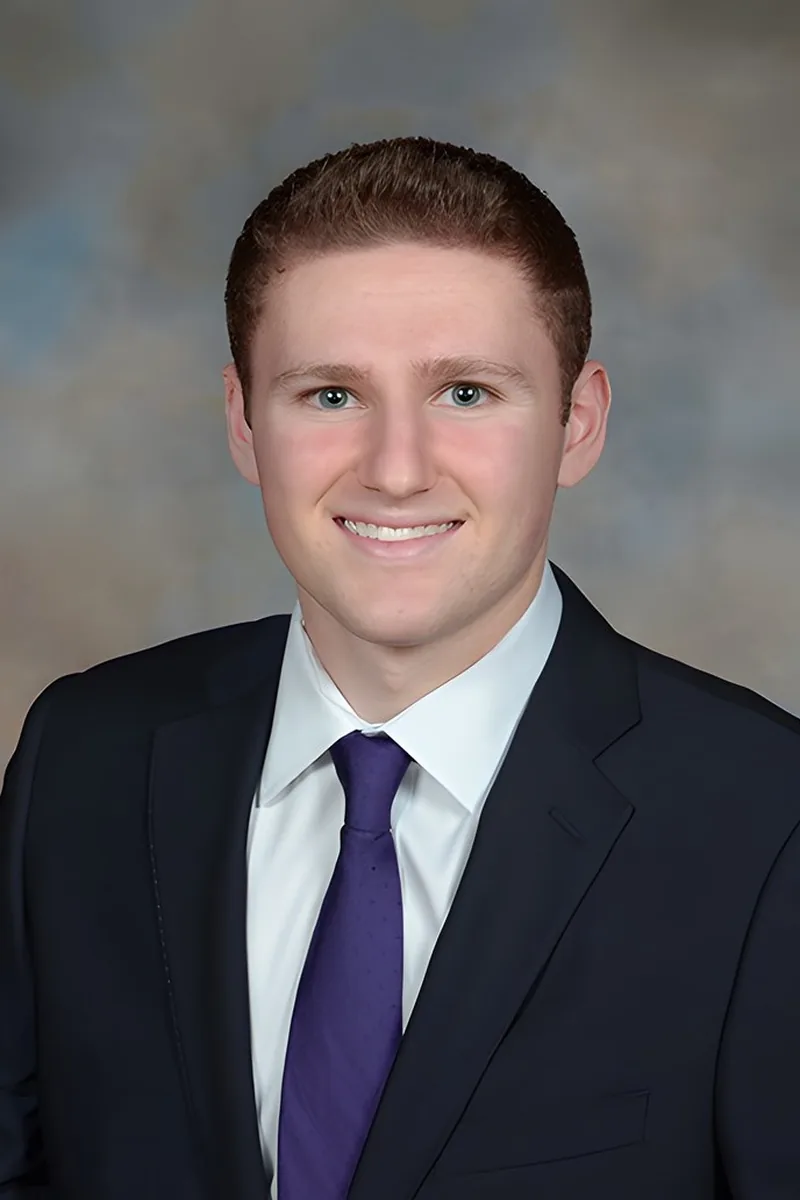
Matt's finance degree means he learned economics not as an isolated academic subject but as the engine behind investment decisions, corporate strategy, and market behavior — so when he teaches concepts like elasticity or market structures, he can show students where the theory actually lands. His SAT score of 1530 also signals the kind of sharp analytical reading that economics coursework demands, especially when students need to interpret dense graphs or parse tricky problem setups.

Three economics degrees deep, Simon lives in supply-and-demand curves, GDP models, and game theory the way most people live in their native language. He unpacks concepts like elasticity, monetary policy, and market equilibrium by tying them to real headlines — tariff debates, Federal Reserve decisions, housing markets — so the math and the intuition reinforce each other.
Kevin's Philosophy, Politics, and Economics major at the University of Pennsylvania means he studies economics not as an isolated discipline but as something deeply entangled with policy decisions and ethical trade-offs. He breaks down concepts like market equilibrium, elasticity, and game theory by connecting them to real political and social questions that make the logic behind the models click.
Caltech's economics program is heavily quantitative — Brian's coursework there meant building economic models with real calculus and statistical tools, not just sketching supply-and-demand curves. His computer science double major adds a computational edge that's particularly useful for students tackling game theory, optimization problems, or any econ course where the math suddenly gets serious. His 1580 SAT reflects the kind of analytical precision he brings to breaking down dense material.
As an economics major at Duke, Eric tackles everything from supply-and-demand fundamentals to more advanced topics like game theory, market structures, and macroeconomic policy. He connects abstract models to real-world examples that make concepts like elasticity or comparative advantage intuitive rather than formulaic. Rated 5.0 by students.
Supply and demand diagrams are just the entry point — JF digs into the reasoning behind elasticity, comparative advantage, and market equilibrium so that students can tackle unfamiliar problems without relying on memorized setups. His dual math and computer science training at Stanford gives him a quantitative edge when explaining concepts like marginal analysis and cost curves.
Harvard's Public Policy curriculum gave Alyssa a rigorous grounding in micro and macroeconomic theory — supply and demand modeling, market failures, fiscal policy analysis — that she now breaks down for students tackling college-level econ. She connects abstract concepts like elasticity and comparative advantage to real policy debates, making the material click rather than just survive on a formula sheet.
Studying economics at the University of Chicago — where the discipline's most influential modern ideas were developed — means Benjamin is immersed in microeconomic reasoning and market theory at a school that takes the subject unusually seriously. His 35 ACT and strong math background let him move comfortably between the graphical intuition of supply-and-demand analysis and the algebraic problem-solving that trips up students when courses start introducing equations. Rated 4.8 by his students.
Monetary policy, banking systems, and market behavior aren't abstractions to Cole — they were the focus of his cum laude master's thesis at the University of Amsterdam. He teaches economics by grounding theory in current events, so students see how supply-and-demand diagrams or GDP calculations connect to headlines they've actually read. Rated 5.0 by students.
Supply and demand curves are simple enough on the surface, but economics gets tricky fast once students hit elasticity, market structures, or macroeconomic models. Emma minored in economics at Harvard, so she can unpack concepts like comparative advantage or fiscal policy with real-world examples that make the math and the theory click together. She holds a 5.0 client rating.
Studying both History and Economics at Harvard, Finley tackles economics the way it actually works — as a discipline shaped by real-world policy decisions and historical context. He breaks down concepts like supply-and-demand elasticity, market structures, and game theory by grounding them in concrete examples rather than abstract graphs alone. Rated 5.0 by students.
A PhD candidate in economics at Yale with undergraduate degrees in physics and math from the same institution, Anthony brings serious quantitative firepower to the subject — the kind that matters when courses pivot from intuitive ideas about markets into optimization problems, game theory, or econometric proofs. He also teaches AP Micro, AP Macro, and econometrics, so he can connect introductory concepts to the formal models students will encounter as the material deepens. Rated 5.0 by his students.
Noah's political science background at Penn gave him serious exposure to economic policy — trade theory, fiscal policy debates, and how markets interact with government institutions. He teaches economics as a way of thinking about tradeoffs and incentives, connecting supply-and-demand models to real policy questions students actually care about.
Supply and demand curves seem simple until you have to use them to predict what happens after a tax, a price ceiling, or a shift in consumer expectations. Dana approaches economics as applied logic rather than memorization, connecting each concept to real-world policy questions she studied extensively during her public policy coursework. Her 36 ACT reflects the same analytical precision she brings to economic reasoning.
Supply and demand curves are simple enough on the surface, but the real challenge is applying them — shifting curves correctly, interpreting elasticity, or reasoning through market failures. Benjamin's Economics degree from Notre Dame gave him deep fluency with both micro and macro frameworks, and he teaches students to think through cause-and-effect chains rather than memorize graph shapes.
An MBA from the University of Chicago and an undergraduate economics degree mean David has encountered the full spectrum of economic reasoning — from microeconomic models of firm behavior to the macroeconomic policy debates that shape real markets. Running a startup gives him a founder's perspective on how concepts like pricing strategy, marginal cost, and competitive dynamics actually play out when you're the one making the decisions.
Studying economics at Penn means Alessia encounters supply-and-demand models, game theory, and macroeconomic policy debates in her own coursework every week. That real-time engagement with the material makes her especially effective at unpacking concepts like elasticity, comparative advantage, and IS-LM analysis — she explains them the way she just learned to think about them, not from distant memory.
An MBA in Finance and Management gives Hari the kind of fluency with economic reasoning that comes from applying it — building financial models, analyzing market conditions, weighing strategic trade-offs in real business contexts. He teaches micro and macro concepts like elasticity, monetary policy, and market structures by connecting them to the finance and accounting decisions where those ideas actually matter. Rated 5.0 by his students.
Natalie's Health Care Management minor at Penn exposed her to microeconomic principles like supply and demand, cost-benefit analysis, and market structures — all through the lens of real industries. She breaks down economic models by connecting them to concrete examples students can actually picture, whether it's pricing decisions or how incentives shape behavior.
Clive is currently studying economics at Brown, where he's immersed in everything from microeconomic theory and market structures to macroeconomic policy and econometric modeling. That active coursework means he knows exactly which concepts — opportunity cost, elasticity, game theory, aggregate demand — tend to trip students up and how current professors frame them.
Supply and demand curves are straightforward until you layer in elasticity, market failures, and government intervention — then economics gets interesting. Eliza earned her economics degree from Penn and tackles concepts like comparative advantage and marginal analysis by tying them to real-world examples students actually recognize, from streaming service pricing to minimum wage debates.
Joshua earned his bachelor's in Economics and International Studies, which means he learned economic concepts — trade theory, exchange rates, development policy — through the lens of how they actually shape relationships between countries. That global perspective is especially useful for students who need to connect microeconomic and macroeconomic models to the messy reality of international markets and policy decisions.
As a Cornell economics major, Tameem is still immersed in the coursework — working through the same models, problem sets, and exam formats that students are currently facing. That proximity to the material makes him particularly sharp on the foundational concepts that drive intro and high school economics, like how shifts in aggregate demand connect to unemployment and inflation or why price elasticity changes a firm's revenue strategy.
With an economics degree and a 5.0 client rating, Ryan brings both academic grounding and clear communication to topics like elasticity, market failures, and the mechanics of supply-and-demand shifts. He also teaches finance and accounting, which means he can show students how microeconomic reasoning actually translates into business decisions — making abstract models feel like practical tools rather than exam fodder.
Studying Politics, Philosophy, and Economics at Penn means Esther encounters economic concepts not in isolation but tangled up with the political incentives and philosophical arguments that shape them — why a carbon tax gets framed as market efficiency in one class and as an ethical obligation in another. That interdisciplinary wiring is especially useful for students who need to understand the reasoning behind economic models, not just the graphs themselves. Rated 5.0 by her students.
Public policy analysis at the University of Chicago meant Noel spent his undergraduate years dissecting how economic principles — budget trade-offs, incentive design, cost-benefit frameworks — actually drive government decisions. That training makes him especially sharp on the macro side of economics, where fiscal policy and public spending aren't abstract textbook topics but the real-world problems he studied daily. Rated 4.9 by his students.
Studying both engineering and economics at Duke gave Natalie a quantitative lens on economic reasoning — she's comfortable moving between supply-and-demand intuition and the math behind elasticity, optimization, and equilibrium. She digs into the "why" behind each model so students can apply concepts to unfamiliar problems, not just textbook examples.
As an economics major at Northwestern, Sarah digs into the same core principles — scarcity, opportunity cost, market equilibrium, elasticity — that introductory students encounter for the first time. She translates abstract models into concrete examples, making supply-and-demand curves and production possibilities frontiers feel intuitive rather than mechanical.
Studying economics at Penn while simultaneously completing a music degree meant Katherine had to internalize models quickly — there wasn't time to passively reread chapters on elasticity or game theory when rehearsals and problem sets competed for the same hours. That efficiency now shows up in her tutoring, where she zeroes in on the specific graph, equation, or intuition a student is missing and builds understanding from there. Her 1550 SAT speaks to the analytical sharpness she brings to quantitative econ topics.
Carter earned his economics degree at Brown and then taught game theory to advanced middle school students at a Johns Hopkins CTY program in Hong Kong — so he knows how to make concepts like Nash equilibria, marginal analysis, and market structures click for learners at very different levels. He connects economic models to real decisions rather than leaving them as abstract graphs. His approach digs into the intuition behind supply-and-demand shifts, elasticity, and welfare analysis so the math and the logic reinforce each other.
Studying economics and finance at Wharton means Samica encounters micro and macroeconomic theory daily — supply and demand curves, market structures, GDP modeling — and can translate those concepts into clear, intuitive explanations. She connects abstract ideas like elasticity or comparative advantage to real-world business cases, which makes the material stick far better than rote definition review.
Cornell's Labor and Industrial Relations program is essentially applied economics — Andrew has spent semesters working through supply and demand modeling, labor market analysis, and cost-benefit frameworks. He breaks down concepts like elasticity and market equilibrium by tying them to real workforce data, making abstract theory tangible.
Three engineering degrees — including one in applied mathematics — mean Rahi is fluent in the quantitative side of economics that often catches students off guard: optimization problems, marginal analysis, and the calculus lurking behind supply and demand curves. He also tutors macroeconomics and accounting, so he can connect microeconomic theory to the bigger fiscal picture and the financial statements where these forces show up in practice.
Physics training builds a specific habit that transfers directly to economics: modeling complex systems with graphs, equations, and simplifying assumptions. Avram's three physics degrees mean he's deeply practiced at translating real-world behavior into formal models — exactly the skill students need when working through supply-and-demand curves, elasticity calculations, or equilibrium analysis.
Studying sociology at the University of Chicago means Zo is constantly analyzing how institutions, incentives, and inequality shape human behavior — which is essentially what economics does through a quantitative lens. That social-science fluency makes her especially sharp on topics like market failures, externalities, and the distributional questions that come up in both micro and macro courses. Rated 5.0 by her students.
Dylan's undergraduate degree in Policy Analysis and Management required working through the economic frameworks that underpin real policy decisions — microeconomic reasoning about incentives, cost-benefit trade-offs, and how markets respond to regulation. His additional coursework in econometrics and AP Microeconomics means he can move fluidly between the intuitive side of economics and the quantitative tools students need to actually model outcomes.
Co-authoring a published policy article for US News and World Report required Gary to translate economic data into clear, defensible arguments — exactly the skill economics courses demand. He tackles supply-and-demand analysis, market structures, and cost-benefit reasoning by grounding each concept in the political and policy contexts where these ideas actually get applied.
I am highly proficient in other areas in economics, high school mathematics, calculus I and European history.
Rithi's quantitative backbone — a neuroscience degree, a master's in biotechnology, and deep coursework in statistics and calculus — means she can tackle the math-heavy side of economics that often catches students off guard, like working through elasticity calculations, interpreting cost curves, or setting up optimization problems. Her 4.9 rating speaks to an ability to make that quantitative reasoning feel approachable even for students who came in expecting a purely conceptual course.
Environmental Science and Public Policy intersects constantly with economics — cost-benefit analysis, externalities, market failures, trade policy. Ethan brings that applied perspective to economics tutoring, connecting abstract models like supply-and-demand curves or GDP accounting to tangible policy questions students can reason through. His strong quantitative background (36 ACT, AP Statistics and Calculus) means the math side of econ never becomes a bottleneck.
Testimonials
Because the right Economics tutor makes all the difference.
Average Session Rating – Based on 3.4M Learner Ratings
Nearby Economics Tutors
Other San Antonio Tutors
Related Business Tutors in San Antonio
Frequently Asked Questions
Economics requires students to think abstractly about systems, incentives, and trade-offs—concepts that don't always connect to everyday experience at first. Many students struggle with graphing supply and demand curves, understanding opportunity cost, or applying microeconomic principles to real-world scenarios. Personalized tutoring helps break down these abstract ideas into concrete examples relevant to a student's interests, making the material click faster than in a classroom setting where one explanation must work for 30 different learners.
Middle school economics typically introduces basic concepts like scarcity, supply and demand, and personal finance. High school economics (often required for graduation in Texas) covers microeconomics, macroeconomics, and consumer skills in greater depth. AP Economics splits into AP Microeconomics and AP Macroeconomics, requiring mastery of complex models, mathematical analysis, and real-world application at a college level. Tutors experienced with San Antonio's school curriculum can target instruction to your specific grade level and exam requirements, whether you're building foundational understanding or preparing for AP exams.
In a classroom with San Antonio's average student-teacher ratio of 14.5:1, teachers must move at one pace for the whole group, which means some students fall behind on key concepts while others get bored. Personalized tutoring lets a tutor focus entirely on your learning style, identify exactly where confusion starts, and adjust explanations or practice problems in real time. This targeted approach means you spend less time on concepts you've mastered and more time on the specific areas holding you back—leading to faster progress and deeper understanding.
In your first session, a tutor will assess your current understanding of economics concepts, identify specific areas of struggle (like graphing, word problems, or conceptual gaps), and learn about your learning style and goals. They'll ask about your course level, upcoming exams or assignments, and what you want to improve most. This foundation lets the tutor create a personalized plan for your next sessions, whether you need to catch up on foundational skills or push toward AP-level mastery.
Many students see noticeable improvement in understanding and confidence within 3-4 sessions, especially when tutoring is focused on specific problem areas like supply-demand graphs or macroeconomic models. More significant gains—like moving from a C to an A, or building AP-level proficiency—typically take 8-12 weeks of consistent tutoring depending on starting point and frequency. The key is consistent practice between sessions; tutors can assign targeted homework that reinforces what you've learned and builds momentum.
Look for tutors with a strong background in economics (degree or significant coursework), experience teaching at your specific level (high school, AP, or college), and familiarity with Texas economics standards and exams. It's also valuable if they've helped other students improve test scores or grades, and can explain complex concepts in multiple ways. Varsity Tutors connects you with tutors who meet these standards and can provide references from other students they've worked with in the San Antonio area.
Economics is fundamentally about understanding how people, businesses, and governments make decisions under constraints. Good tutors use current events, local examples, and scenarios relevant to your life—like job market trends in San Antonio, inflation's effect on your family's budget, or how competition affects local businesses—to make abstract concepts tangible. This approach not only makes learning more engaging but also helps you retain concepts better because you can connect them to things you actually care about.
Yes. AP Economics exams (both Micro and Macro) require mastery of specific models, the ability to interpret graphs quickly, and strong multiple-choice and free-response writing skills. Tutors can help you learn the exact content framework tested, practice with real AP exam questions, build speed and accuracy, and develop strategies for the essay portions. Whether you're aiming for a 3 to pass or a 5 for college credit, personalized tutoring focuses your preparation on your weak spots rather than reviewing material you already know.
Let’s find your perfect tutor
Answer a few quick questions. We’ll recommend the right plan and match you with a top 5% tutor.