Award-Winning CLEP Chemistry
Tutors
CLEP Chemistry
Tutors
Private 1-on-1 tutoring, weekly live classes for academic support, test prep & enrichment, practice tests and diagnostics, and more to elevate grades and test scores.
Based on 3.4M Learner Ratings
UniversitiesSchools & Universities
DeliveredHours Delivered
ProficiencyGrowth in Proficiency
Who needs tutoring?
No obligation. Takes ~1 minute.

Rithi's chemistry knowledge runs from general stoichiometry and equilibrium through organic mechanisms and biochemical pathways — exactly the range the CLEP Chemistry exam demands. She tutors both AP Chemistry and IB Chemistry and earned her master's in biotechnology, so topics like thermodynamics, kinetics, and atomic structure are territory she covers regularly. She zeroes in on the conceptual traps the CLEP exam sets around unit conversions and reaction predictions.
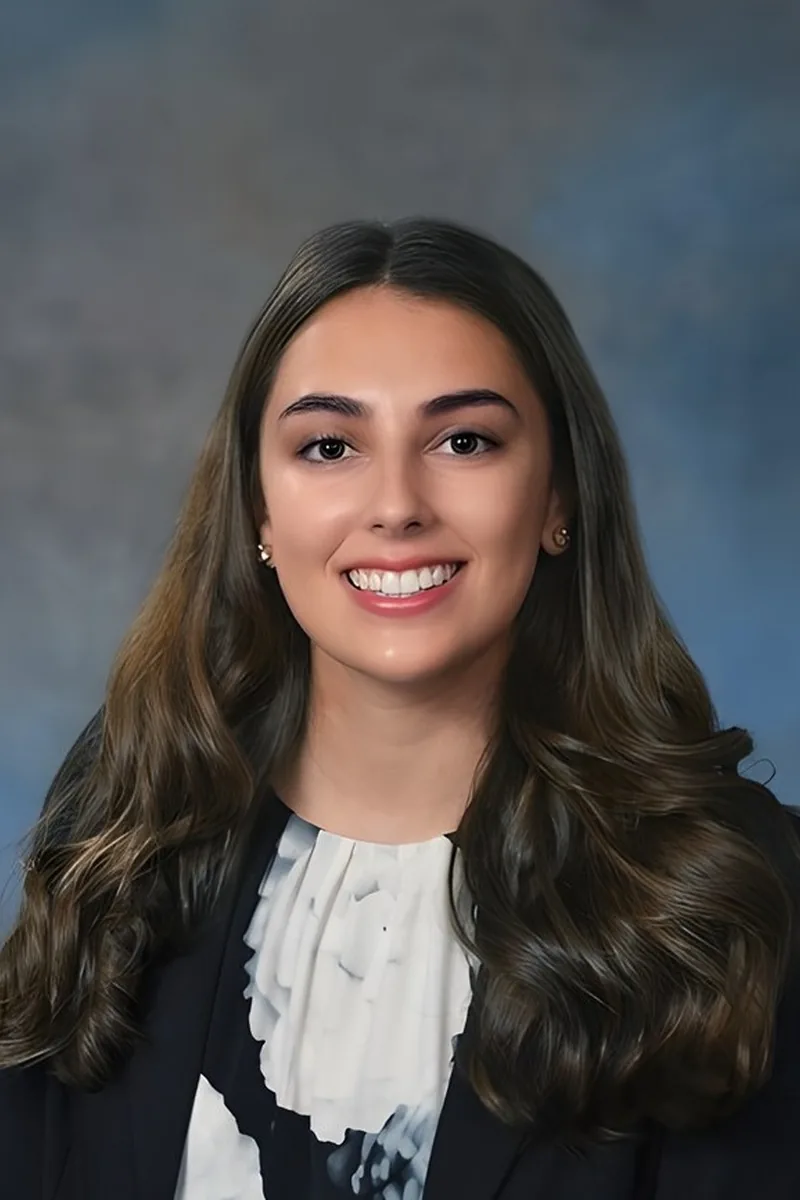
Amanda's chemistry background spans general, organic, and biochemistry across both her biology degree and medical school curriculum. For the CLEP Chemistry exam, she zeroes in on stoichiometry, equilibrium, thermodynamics, and atomic structure — unpacking each topic with the kind of molecular-level intuition that turns confusing reactions into logical sequences.
As a biomedical engineering student at UCLA, Chris has worked through the full general chemistry sequence that maps directly onto the CLEP exam — bonding, kinetics, acid-base chemistry, and electrochemistry included. He tackles prep by diagnosing which conceptual gaps are costing the most points and building understanding from there, rather than grinding through every chapter equally. Rated 4.8 by students.
The CLEP Chemistry exam covers a full year of general chemistry in 90 minutes, so efficient review matters more than exhaustive re-teaching. Steven's PhD-level chemistry background lets him quickly identify which areas — equilibrium, thermodynamics, atomic structure, kinetics — a student actually needs to shore up and which they can confidently skip past. His approach of re-explaining each concept from multiple angles is especially useful for exam-speed recall.
Seven years of tutoring chemistry at every level from middle school through college means Cassandra has seen the same conceptual stumbling blocks hundreds of times — the mole concept clicking too late, equilibrium expressions getting tangled with kinetics, gas law problems falling apart on unit conversions. She uses that pattern recognition to build CLEP prep around the specific gaps each student actually has, rather than marching through the entire general chemistry syllabus. Her 4.9 rating speaks to how well that targeted approach works under the exam's time pressure.
Because the CLEP Chemistry exam mirrors a full year of general chemistry, it tests everything from stoichiometry and equilibrium to thermodynamics and electrochemistry in one sitting. Madhura holds a master's in chemistry and teaches the subject at both the high school and university level, so she can explain why Le Chatelier's principle works rather than just how to apply it. That deeper understanding is what turns borderline scores into passing ones.
Shawn holds a Master of Science in Chemistry, which means the CLEP Chemistry syllabus — stoichiometry, equilibrium, thermodynamics, atomic structure — is territory he's covered at a graduate level. He breaks the exam into concept clusters so students can see how a question about Le Chatelier's principle connects to one about reaction kinetics, making the material easier to retain under timed conditions.
Between her AP Chemistry background and her science coursework at Princeton, Samantha knows the general chemistry topics the CLEP exam emphasizes: stoichiometry, equilibrium, thermodynamics, and atomic structure. She tackles each section by connecting the math to the underlying chemical logic, so students aren't just memorizing formulas but understanding why a reaction proceeds the way it does.
The CLEP Chemistry exam covers a full year of general chemistry in one sitting — atomic structure, bonding, kinetics, equilibrium, thermodynamics, and more. Leah's Johns Hopkins biology curriculum required deep fluency in all of these areas, and her PA training added clinical applications that make abstract concepts easier to remember. She teaches students to identify which question types reward conceptual understanding versus which ones demand calculation speed.
As an incoming medical student with a science-heavy academic background, Jasmine understands the core chemistry concepts — stoichiometry, equilibrium, thermodynamics, and atomic structure — that the CLEP Chemistry exam tests. She breaks down reaction problems step by step and teaches the reasoning behind each principle so answers come from understanding, not guesswork. Rated 5.0 by students.
Chemical engineering at the University of Kentucky meant Sarah spent years immersed in stoichiometry, thermodynamics, reaction kinetics, and atomic structure — exactly the content the CLEP Chemistry exam tests. She walks students through the trickiest conceptual areas, like equilibrium and electrochemistry, using concrete examples that make abstract ideas click.
Having studied chemistry at both the honors and college level alongside molecular biology and physical science, Arianna brings real lab-informed understanding to CLEP Chemistry topics like stoichiometry, equilibrium, and thermodynamics. She teaches students to connect atomic-level behavior to macroscopic observations, which is exactly the kind of reasoning the exam's application questions reward.
Between biomedical engineering coursework at Texas A&M and undergraduate research, Whitney has applied general chemistry concepts — reaction kinetics, thermodynamics, acid-base equilibria — in contexts where getting the science wrong has real consequences. That applied fluency translates well to CLEP prep, where she teaches students to reason through problems instead of hunting for a matching formula. Rated 5.0 by students.
Engineering coursework at Columbia put Shin through the full gauntlet of general chemistry — bonding, reaction kinetics, thermodynamics, electrochemistry — all of which map directly onto what the CLEP covers. His environmental engineering focus means he's especially sharp on topics like solution chemistry and energy transfer, where he can ground abstract exam questions in real physical systems. Rated 5.0 by students.
Between her biology degree and her IB Chemistry tutoring experience, Kaitlyn has spent years working through stoichiometry, equilibrium, and thermodynamics problems — the exact content the CLEP Chemistry exam tests most heavily. She teaches students to connect molecular-level reasoning to calculation steps so they can handle both conceptual and quantitative questions under time pressure.
Preparing for CLEP Chemistry means mastering everything from stoichiometry and equilibrium to atomic structure and thermodynamics in a single sitting. Katie's college chemistry coursework at BU, paired with her science-heavy neuroscience curriculum, gives her a practical grip on these topics that translates well to the exam's mix of conceptual and calculation-based questions.
Passing the CLEP Chemistry exam means being fluent in stoichiometry, atomic structure, thermodynamics, and equilibrium without the luxury of a semester's pacing. Brody tackles each topic area by identifying the handful of problem types the exam actually tests, then walks through the reasoning behind each one. His science background across biology and chemistry keeps explanations grounded in how these principles connect rather than treating them as isolated formulas.
Studying biology at Wofford means Daiven lives in chemistry — organic reaction mechanisms, stoichiometry, and equilibrium are part of his daily coursework. He applies that firsthand knowledge to CLEP Chemistry prep, unpacking topics like electron configuration, bonding theory, and thermochemistry in ways that emphasize understanding over rote memorization. Students get a tutor who genuinely uses this material, not just teaches it.
Matthew's mechanical engineering coursework at WPI included the thermodynamics, kinetics, and materials chemistry that make up a significant chunk of the CLEP Chemistry exam. He teaches those topics by grounding abstract ideas — like enthalpy changes or reaction rates — in the physical systems he's already built and analyzed in his engineering labs. Rated 5.0 by students.
Passing the CLEP Chemistry exam means covering a full year of general chemistry — atomic structure, bonding, kinetics, thermodynamics, equilibrium — in a single test. Taylor currently teaches general chemistry at the University of Tennessee as a TA, which means he knows the depth and breadth of a college-level curriculum inside and out. He pinpoints each student's weak spots and targets them with the specific practice problems that mirror CLEP-style questions.
The CLEP Chemistry exam covers a full year of general chemistry in one sitting — stoichiometry, equilibrium, thermodynamics, kinetics, and atomic structure all compressed into 90 minutes. Don's biochemistry degree from UT Austin means he's internalized these concepts well beyond the introductory level, and he teaches students to recognize the exam's recurring problem patterns so they can move through calculations efficiently. Rated 5.0 by students.
Earning a B.S. in Biological Sciences at Cornell meant Jared spent serious time in chemistry — from stoichiometry and equilibrium to thermodynamics and electrochemistry. He breaks CLEP Chemistry prep into the high-yield topic clusters that dominate the exam, so students spend their study hours where it actually counts.
The CLEP Chemistry exam packs a full year of general chemistry into 75 minutes — atomic structure, bonding, equilibrium, electrochemistry, and thermodynamics all show up. Daniel earned his B.S. in Chemistry from the U.S. Naval Academy and has been tutoring the subject since 2017, so he knows which concepts the exam hits hardest and where self-study students tend to have gaps. He builds review plans around timed practice so test-day pacing doesn't become its own obstacle.
Between his PhD coursework in molecular biology and years teaching AP Chemistry and college-level biochemistry, Patrick has an unusually deep command of the chemistry the CLEP exam covers — atomic structure, equilibrium, thermodynamics, and organic functional groups. He connects each topic to concrete examples from his lab research, which makes abstract concepts like electron orbitals and reaction kinetics far more intuitive.
The CLEP Chemistry exam covers a full year of general chemistry in one sitting, from stoichiometry and thermodynamics to equilibrium and electrochemistry. Katharine's college chemistry coursework and pre-med preparation give her a clear sense of which concepts the exam weights most heavily and where students tend to lose easy points — especially on dimensional analysis and acid-base calculations.
Between her biology degree and her experience teaching college chemistry, Michelle knows the CLEP Chemistry content inside and out — stoichiometry, equilibrium, thermodynamics, atomic structure, and bonding. She targets the quantitative problem types that trip students up most, like limiting reagent calculations and pH problems, and teaches a systematic approach to each one.
I am a law student, but I took an unusual route to get there. I used to attend medical school but had a change of heart in my career path. Part of this was due to my political science major (double major with biology) in college as well as a number of Spanish and other courses that I took. Tutoring is something, I feel, that has come naturally to me, even back to my high school days. My goal is to help you learn as much as you can and reach your true potential. I will work hard to make sure that this happens, as long as you put in the work, too! We will work together to tailor your learning experience to your needs.
The CLEP Chemistry exam covers a full year of general chemistry in a single sitting, from atomic structure and bonding through kinetics, equilibrium, and electrochemistry. Kasey's depth as a Purdue chemistry major makes her especially effective at identifying which concepts a student already owns and which need targeted review before test day. She's rated 5.0 by her students.
Susan's biochemistry degree makes her a natural fit for CLEP Chemistry — she's deeply familiar with stoichiometry, equilibrium, acid-base reactions, and thermodynamics from both classroom study and lab work. She teaches students to connect molecular-level concepts to the quantitative problem-solving the exam demands, rather than treating them as separate topics.
As a second-year medical student with a strong foundation in science and a passion for education, I specialize in making tough subjects easier to understand. I excel in math, biology, physics, and other challenging topics that often intimidate students and I genuinely enjoy helping others master them. My approach combines patience, clarity, and high-level understanding to break down complex ideas into manageable, confidence-boosting lessons. Whether it's reviewing homework or prepping for exams, I'm here to support and motivate students at any level below mine to reach their full academic potential. My interests include: Weightlifting and fitness training (especially strength and hypertrophy programs) Morning cardio and physical conditioning Studying medicine with a focus on anatomy, physiology, and clinical problem-solving Teaching and tutoring tough academic subjects like math, biology, and physics Watching anime as a way to relax and recharge (especially after a long day) Cooking (with a focus on high-protein, keto/carnivore meals)
The CLEP Chemistry exam covers a wide sweep — stoichiometry, thermodynamics, equilibrium, atomic structure — and rewards efficient studying over exhaustive review. Emyli's biomedical sciences coursework included significant chemistry training, and she teaches students to identify the highest-yield topics and practice the calculation formats the exam actually uses.
Testimonials
Because the right CLEP Chemistry tutor makes all the difference.
Average Session Rating – Based on 3.4M Learner Ratings
Top 20 Test Prep Subjects


Top 20 Subjects
Frequently Asked Questions
Students preparing for CLEP Chemistry most commonly struggle with equilibrium concepts, thermodynamics, and acid-base chemistry. Many find it challenging to visualize molecular-level processes and connect them to macroscopic observations—for example, understanding why Le Chatelier's principle works the way it does or predicting how temperature and pressure changes affect equilibrium. Additionally, stoichiometry and limiting reactant problems trip up students who haven't solidified their foundational math skills, while organic chemistry nomenclature and reaction mechanisms often feel overwhelming due to the sheer volume of information to memorize.
An effective CLEP Chemistry tutor needs to excel at breaking down abstract concepts like molecular orbital theory and reaction kinetics into concrete, understandable pieces. They should be comfortable working through complex multi-step problems, diagnosing whether a student's mistakes stem from conceptual gaps or calculation errors, and knowing the specific topics and question formats emphasized on the CLEP exam. Strong tutors also help students develop problem-solving strategies—like identifying what information is relevant in a word problem or recognizing reaction types quickly—rather than just walking through solutions.
Tutors often start by building intuition through qualitative reasoning before diving into calculations—helping you predict what happens to a system when conditions change, then verifying predictions with the math. They use analogies (like a seesaw or bathtub water level) to make the concept tangible, then work through CLEP-style problems that test your ability to apply Le Chatelier's principle to real scenarios. This approach helps you move beyond memorizing rules to genuinely understanding why systems shift the way they do, which is crucial for the exam's higher-order thinking questions.
A tutor will help you build a systematic approach: converting grams to moles using molar mass, comparing mole ratios to identify the limiting reactant, and calculating the desired product. Many students struggle because they skip steps or lose track of units, so tutors emphasize the importance of showing work and checking reasonableness of answers. By working through dozens of CLEP-style stoichiometry problems with feedback, you'll develop the confidence and speed needed to handle these questions accurately under exam conditions.
Since CLEP Chemistry includes only a modest amount of organic content compared to a full organic chemistry course, the focus is on recognizing functional groups, understanding basic reaction types (like substitution and elimination), and predicting products rather than memorizing every mechanism. A tutor can help you identify the most testable organic topics and create a prioritized study plan, then teach you pattern-recognition shortcuts—like how to quickly identify nucleophiles and electrophiles—so you can answer questions efficiently. Practice with actual CLEP questions is essential here, since the exam emphasizes conceptual understanding over synthesis or detailed mechanism writing.
A tutor can help you use practice tests strategically: take full-length tests under timed conditions to build exam stamina, then analyze your results to identify patterns in what you're missing (weak topics, careless errors, pacing issues). Rather than just reviewing wrong answers, a good approach is to categorize mistakes—Did I misunderstand the concept? Did I miscalculate? Did I misread the question?—so you know exactly what to focus on next. Spacing out practice tests throughout your study timeline, rather than cramming them at the end, helps you track improvement and adjust your study plan based on real data.
You'll need solid algebra skills—solving for unknowns, working with exponents and logarithms, and manipulating equations—since chemistry problems rely heavily on these. Scientific notation, significant figures, and unit conversion are also critical and often trip up students who haven't practiced them recently. If your math foundations are shaky, a tutor can help you brush up on these skills in the context of chemistry problems, so you're not just learning math in isolation but seeing how it applies to equilibrium calculations, pH problems, and gas law equations.
Tutors help build confidence through repeated, successful problem-solving—the more you practice under realistic conditions, the less anxiety you'll feel on test day. They also teach pacing strategies, like quickly scanning all questions first to identify easier ones you can tackle quickly, which builds momentum and reduces panic. Additionally, tutors can help you develop a mental checklist for common mistakes (Did I balance the equation? Did I convert units? Did I use the right formula?) so you catch errors before submitting answers, turning anxiety into a structured, manageable process.
Let’s find your perfect tutor
Answer a few quick questions. We’ll recommend the right plan and match you with a top 5% tutor.