Award-Winning Abstract Algebra
Tutors
Abstract Algebra
Tutors
Private 1-on-1 tutoring, weekly live classes for academic support, test prep & enrichment, practice tests and diagnostics, and more to elevate grades and test scores.
Based on 3.4M Learner Ratings
UniversitiesSchools & Universities
DeliveredHours Delivered
ProficiencyGrowth in Proficiency
Who needs tutoring?
No obligation. Takes ~1 minute.
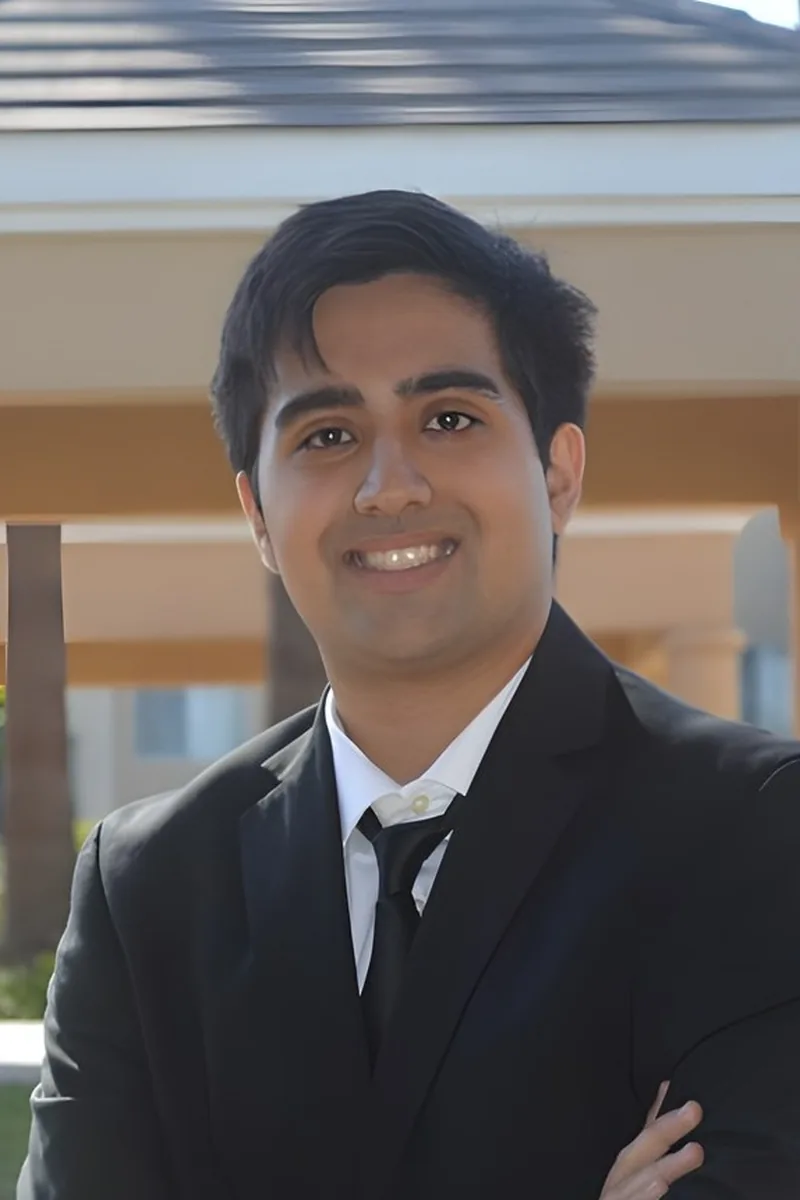
Medical school at the Medical College of Wisconsin might seem far from groups and rings, but Abrahim's biology degree from UCLA required enough upper-division math to build real comfort with proof-based reasoning and algebraic structures. He teaches abstract algebra by zeroing in on where a student's logic breaks down — whether that's misunderstanding what an identity element actually guarantees or losing track of the argument inside an isomorphism proof — and drilling that specific gap until the reasoning holds. Rated 5.0 by students.
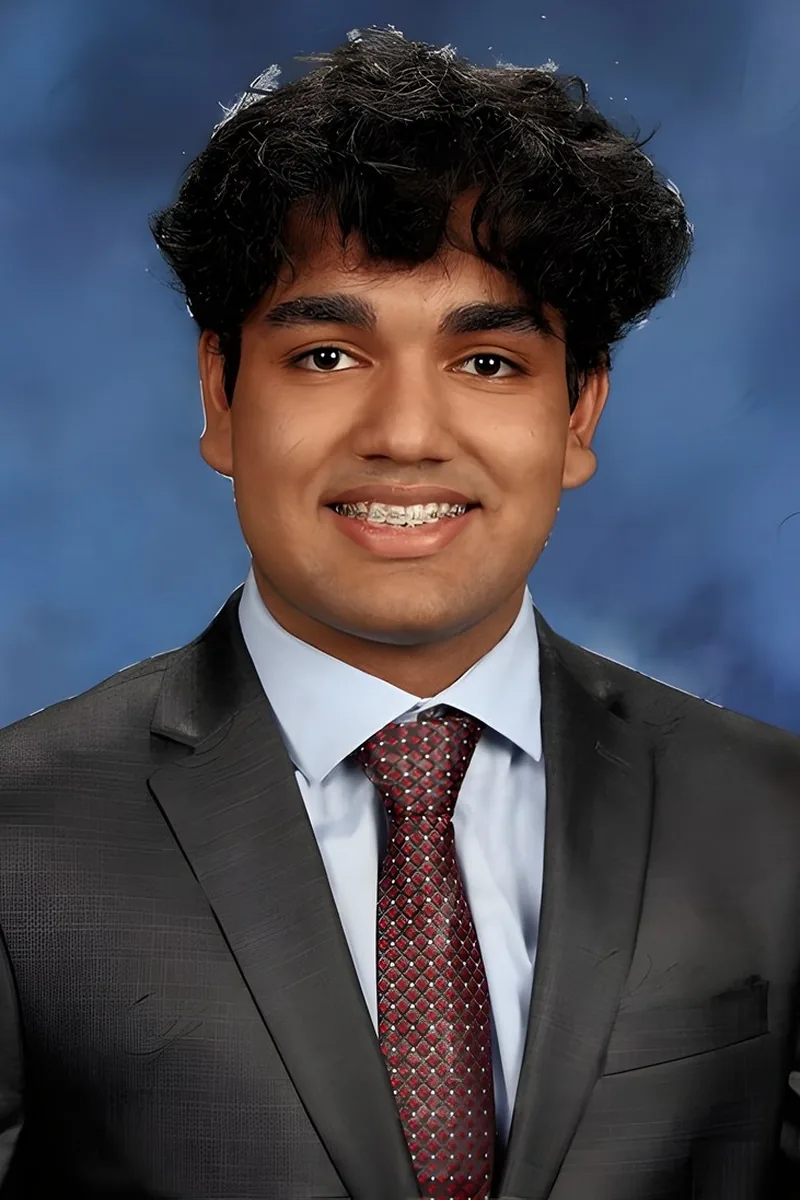
Ravnoor's computer science degree at Cornell means he works with algebraic structures where they actually get used — group theory in cryptographic algorithms, finite fields in error-correcting codes, ring operations underlying modern computing. That gives him a programmer's instinct for abstract algebra: test the axioms on small, concrete cases first, then generalize into the proof. Rated 5.0 by students.
Philosophy PhD work builds exactly the kind of rigorous logical thinking that abstract algebra demands — constructing arguments from axioms, testing definitions against counterexamples, and knowing when a proof is actually complete. CJ brings that precision to algebraic structures like groups and rings, treating each new definition the way a philosopher treats a formal argument: break it apart, examine every assumption, then build it back up. Rated 5.0 by students.
Groups, rings, and fields can feel disconnected from every other math course a student has taken — until someone shows how the structures unify ideas from linear algebra, number theory, and symmetry. Firas brings a computer scientist's perspective to abstract algebra, connecting concepts like homomorphisms and quotient groups to applications in cryptography and coding theory. That applied angle often makes proofs and definitions click in a way pure abstraction doesn't.
Behavioral biology might seem far from groups and rings, but Emmanuel's training at Johns Hopkins built the exact skill abstract algebra demands: reasoning carefully from definitions to conclusions, then pressure-testing every assumption. He grounds new structures in small, hands-on examples — like mapping symmetries of a molecule from his lab work — before translating that intuition into formal proofs about subgroups, cosets, and isomorphisms.
Groups, rings, and fields demand a shift from computation to structural thinking that trips up even strong math students. Sungae tackles abstract algebra by grounding new definitions in concrete examples — symmetry groups of physical objects, polynomial rings, and permutation cycles — before pushing into the formal proof work that the course requires.
A natural sciences degree from Notre Dame means Mark has worked through the mathematical formalism that underpins physical and chemical systems — the same structural reasoning abstract algebra demands when you're proving closure or testing whether a mapping is a homomorphism. He teaches proof strategy by starting with the specific question each definition is trying to answer, so students know what they're building before they pick up the pen.
Jacob holds both a math degree and a master's in computer science — a combination that makes him especially sharp on the algebraic structures that sit at the intersection of both fields, like group actions in cryptography or ring theory in coding. He teaches proof techniques by dissecting each definition into checkable pieces, so students learn to verify group axioms or construct homomorphisms with confidence rather than staring at a blank page. Rated 5.0 by students.
Groups, rings, and fields demand a level of abstraction that catches even strong math students off guard — suddenly you're proving properties instead of computing answers. Maggie's engineering and doctoral background gives her a concrete anchor for these structures, connecting group symmetry to molecular modeling and ring theory to polynomial operations that show up in signal processing. She walks through proofs step by step, making sure the logic is airtight before moving on.
Majoring in both psychology and mathematics at UGA — where she's earned awards for her math coursework — Hailey has the unusual combination of formal proof training and the patience that comes from studying how people actually learn. She breaks down group axioms and homomorphism proofs by isolating exactly where a student's reasoning stalls, then rebuilds the argument from that point using small, hands-on examples like symmetry operations or integer arithmetic mod n.
A finance degree might not scream abstract algebra, but Jacob's 34 ACT and deep comfort across math subjects — from pre-algebra through calculus — mean he's no stranger to building rigorous arguments from definitions. He tackles group axioms and ring properties by working through small, hands-on examples (think: why do integers mod n behave the way they do?) until the abstraction earns its place. Rated 5.0 by students.
A biology-to-biotechnology pipeline doesn't scream abstract algebra, but Theodora's graduate training at Johns Hopkins demanded rigorous formal reasoning — the same muscle that powers proofs about group axioms, ring homomorphisms, and quotient structures. She teaches the subject by isolating exactly where a student's logic breaks down in a proof attempt, then rebuilding that step with a concrete example before returning to the abstraction. Rated 5.0 by students.
Groups, rings, and fields demand a completely different kind of mathematical thinking — suddenly proofs matter more than calculations, and definitions carry real weight. Sr tackles abstract algebra by grounding each new structure in concrete examples first, then building toward the formal proof techniques that the course requires.
Groups, rings, and fields can feel impossibly abstract until someone shows you the concrete symmetries and structures hiding inside them. Cory approaches abstract algebra by grounding each definition in specific examples — permutation groups, modular arithmetic, matrix groups — so that theorems like Lagrange's or the First Isomorphism Theorem become statements about objects students can actually visualize.
Groups, rings, and fields feel impossibly abstract until someone shows you how the definitions actually work on concrete examples. Irene earned her PhD in Mathematics with a deep grounding in formal proof, and she unpacks concepts like homomorphisms and quotient structures by building intuition alongside rigor.
Groups, rings, and fields require a fundamentally different way of thinking about math — suddenly, familiar operations become objects of study themselves. Stephen approaches abstract algebra by grounding new definitions in concrete examples first, like symmetry groups or modular arithmetic, before building toward formal proofs and homomorphisms.
Neuroscience research at Johns Hopkins required Caleigh to think in terms of formal structures and systematic reasoning — skills that map directly onto proving properties of groups, rings, and homomorphisms. She zeroes in on the definitional precision that trips students up, like distinguishing between a subgroup test and a full isomorphism argument, and builds each proof step from the specific condition being checked. Rated 5.0 by students.
Accounting might seem worlds away from groups and rings, but Ian's deep immersion in algebra coursework — spanning linear systems through advanced and honors algebra — means he's built the algebraic intuition that proof-based math demands. He breaks down unfamiliar structures by anchoring them in the arithmetic and polynomial patterns students already know, so axioms like closure and associativity feel like natural extensions rather than alien formalism.
Having worked as an Undergraduate Teaching Assistant in calculus-based physics, Brennon is used to translating dense mathematical formalism into something students can actually reason through — a skill that transfers directly to proof-heavy courses like abstract algebra. He tackles group axioms and ring properties by building from specific, small examples (like symmetry operations or integer arithmetic) before asking students to generalize, so the abstraction feels motivated rather than arbitrary. Rated 4.9 by students.
A neuroscience major might seem like an unlikely fit for abstract algebra, but Meghana's BS/MD program at Texas A&M requires the kind of precise logical reasoning that translates directly to constructing proofs about groups and rings — breaking a claim into its axioms, testing edge cases, and building the argument step by step. She zeroes in on the specific definitions students are misreading, whether that's confusing coset equality with element equality or misapplying the subgroup test, and works through targeted examples until the logic clicks.
A biopsychology degree from Tufts doesn't obviously lead to abstract algebra, but Elizabeth's medical school training at Hofstra sharpened the precise logical reasoning that proof-based math demands — dissecting a claim into its component conditions and verifying each one systematically. She walks students through unfamiliar structures like groups and rings by grounding every axiom in concrete arithmetic they already understand, then building toward the formal argument. Holds a 5.0 rating.
Groups, rings, and fields require a fundamentally different mindset than computational math — suddenly students need to prove general properties instead of calculating answers. Aparna's science and technology background gives her practice with formal logical structures, and she walks through proofs step by step, making sure each definition is concrete before moving to the next theorem.
Groups, rings, and fields can feel disconnected from every math class that came before — suddenly proofs matter more than calculations, and intuition needs rebuilding from scratch. Griffin digs into the logic behind structures like cyclic groups and quotient rings by tying them back to the concrete linear algebra and matrix operations that most students already know. His engineering background means he's comfortable bridging applied and theoretical math.
Groups, rings, and fields require a completely different way of thinking compared to earlier algebra courses — suddenly you're proving properties rather than solving for x. Madeleine's applied mathematics background at Barrett Honors College included this kind of abstract structural reasoning, and she's skilled at connecting new definitions back to familiar examples like modular arithmetic and symmetry groups. She walks through proofs step by step until the underlying logic clicks.
The jump from solving equations to proving things about groups, rings, and homomorphisms trips up a lot of students who were strong in earlier math courses. Samuel's PhD work in applied mathematics gave him deep fluency with algebraic structures, and he teaches abstract algebra by building each proof technique from scratch — starting with why the definitions exist before diving into cosets or quotient groups.
A political science major at Reed College might not seem like obvious preparation for groups and rings, but Reed's conference-style curriculum demands exactly the kind of rigorous argument construction that abstract algebra proofs require — building claims from axioms, defending each logical step, and stress-testing definitions against counterexamples. Aiden applies that training to algebraic structures by forcing precision at every stage, making sure a student can articulate why an operation satisfies closure before ever attempting a full isomorphism argument.
Jake's electrical engineering degree means he's worked extensively with the algebraic structures that underpin signal processing and error-correcting codes — so when a student struggles to see why a quotient group matters, he can ground it in systems where that abstraction does real work. He teaches proof construction by having students first nail down exactly what each definition demands, then build the argument one logical step at a time. Rated 5.0 by students.
Bioinformatics sits at the intersection of computation and biology, and the discrete mathematical structures Faraz studied — permutation groups, modular arithmetic, mappings between algebraic objects — are the same ones that show up in sequence analysis and cryptographic algorithms underlying genomic databases. He uses that applied context to demystify proof techniques, walking through why a particular set and operation form a group by tying each axiom back to something computationally concrete. Rated 4.8 by students.
Groups, rings, and fields feel impossibly abstract until someone walks you through the intuition behind why these structures were defined in the first place. Julie's mathematics degree at Tufts gives her direct experience with abstract algebra's proof-heavy landscape — from demonstrating that a set satisfies group axioms to working through homomorphisms and quotient structures. She teaches students to read and construct proofs methodically rather than staring at definitions hoping they'll absorb.
I am a recent BS. Civil Engineering Graduate from RPI, and working as a Bridge Engineer! Since HS I enjoyed all things math and science (hence Engineering aha) and have a passion for teaching/tutoring other students! Throughout HS and college, being tutored myself helped me a lot and taught me the value of learning and sharing knowledge. I strongly believe that sparking curiosity and being a life-long learner is very important, and the skills and concepts learned in school can have many applications in any/every aspiration possible. I've tutored other students for about 3-4 years and look forward to tutoring you!
A math minor alongside his geology and environmental science degrees means Matthew built comfort with proof-based reasoning and algebraic structures well before pivoting to field research on Ice Age mammalian paleobiology. He teaches groups and rings by leaning on that mathematical training — walking through how to verify axioms, construct subgroup arguments, and build homomorphism proofs with the same systematic rigor he applied to quantitative research methods. Rated 5.0 by students.
I am very interested in a career in the medical field, so I am apart of some pre-medical organizations. I really enjoy playing all different sports, from soccer to volleyball to tennis.
Proof-based math clicks differently when the tutor teaching it has spent years thinking in terms of biological systems — where structure, classification, and precise definitions already matter. Ritu's biology background trained her to reason about hierarchies and categorical relationships, which she now channels into breaking down group axioms, subgroup tests, and homomorphism arguments into their logical components. Rated 5.0 by students.
Proof-writing in abstract algebra often clicks once a student sees why the axioms matter physically — and Jack's physics background lets him pull examples from symmetry operations and conservation laws where group structure isn't abstract at all. He builds from those concrete cases to formal arguments about homomorphisms and quotient groups, making sure each logical step is airtight before moving on. Rated 4.6 by students.
Jumping from solving equations to proving theorems about groups, rings, and fields is one of the hardest transitions in a math student's career. Samantha unpacks abstract algebra by grounding each new structure — cyclic groups, homomorphisms, cosets — in familiar number systems before pushing into the general case. That concrete-to-abstract bridge is what makes proof-writing click.
A Doctor of Engineering in Engineering and Industrial Management means Arun has spent years working with optimization models, linear systems, and structural frameworks that rely on algebraic reasoning at their core — the kind of mathematical maturity that makes navigating groups, rings, and proof-based arguments feel like a natural extension of his training. He teaches abstract algebra by connecting formal definitions back to the concrete structures students already understand from earlier math courses, then tightening the logic until the proof stands on its own.
A math degree from UIC means Anthony didn't just pass an abstract algebra course — he lived in proof-based mathematics long enough for groups, rings, and homomorphisms to become second nature. He teaches the subject by building each proof from the specific axiom being tested, using concrete structures like cyclic groups and permutation sets to make the abstraction feel earned rather than handed down.
Proof-writing in abstract algebra often stalls not because students lack mathematical ability, but because they haven't learned to read definitions as checklists — each axiom is a specific condition to verify, not a vague concept to memorize. Jiban's mathematics degree means he's spent years inside the world of groups, rings, and homomorphisms, and he teaches by walking through small, concrete structures like symmetry groups of triangles or integers mod n before asking students to generalize. Rated 4.8 by students.
I am listening to and learning about him or her as an individual. I can also discover what motivates the student during this conversation and plan for how to frame future tutoring sessions in terms of what the student already knows and enjoys.
Most math students cruise through computation-heavy courses and then hit a wall when abstract algebra asks them to prove that a set and operation satisfy group axioms — it's a fundamentally different kind of thinking. Joseph's mathematics degree at the University of Chicago, where proof-based courses start early and move fast, means he's worked through the exact transition from concrete algebra to structures like quotient groups and ring homomorphisms. He unpacks each definition piece by piece, making sure the logic clicks before moving to the next step.
Testimonials
Because the right Abstract Algebra tutor makes all the difference.
Average Session Rating – Based on 3.4M Learner Ratings
Practice Abstract Algebra
Free practice tests, flashcards, and AI tutoring for Abstract Algebra
Top 20 Math Subjects


Top 20 Subjects
Frequently Asked Questions
Students often find the transition from concrete arithmetic to abstract structures most challenging—particularly understanding group theory, where the focus shifts from "what numbers do" to "what properties structures have." Ring theory and field theory compound this difficulty because they layer multiple operations and axioms simultaneously. Many students also struggle with proofs involving group homomorphisms and isomorphisms, since these require visualizing structural relationships rather than computing answers. Tutors experienced with Abstract Algebra help students build intuition by connecting these abstract concepts to concrete examples (like symmetry groups or modular arithmetic) before tackling formal proofs.
Abstract Algebra requires a fundamental mindset shift—moving from "solve for x" to "understand why this structure behaves this way." A skilled tutor breaks this transition into manageable steps by starting with concrete examples (permutations, integer modular arithmetic) that students can manipulate, then gradually revealing the underlying abstract patterns. For instance, before diving into group axioms, a tutor might have you explore why the symmetries of a square form a closed system under composition, making the formal definition of closure feel like a natural observation rather than an arbitrary rule. This scaffolding builds the conceptual foundation needed to write rigorous proofs with confidence.
Many students freeze when facing Abstract Algebra proofs because they're unsure where to start with abstract objects like arbitrary elements and undefined operations. Effective tutoring teaches proof strategies specific to Abstract Algebra: working backward from the conclusion, identifying which axioms or properties are relevant, and using "element chasing" to verify structural properties. For example, proving a subset is a subgroup requires showing closure, identity, and inverses—a tutor helps you recognize this pattern and apply it systematically rather than reinventing the approach each time. Breaking proofs into smaller logical steps and learning when to invoke specific theorems (like Lagrange's theorem or the First Isomorphism Theorem) transforms abstract proofs from intimidating to manageable.
Visualization is crucial in Abstract Algebra, even though the objects are abstract. Tutors use Cayley diagrams and multiplication tables to make group behavior visible, lattice diagrams to show subgroup relationships, and cycle notation to clarify permutation structure. These tools transform invisible relationships into tangible patterns you can study and reason about. For instance, seeing that every element in a finite group returns to the identity after some number of operations becomes obvious when you trace a Cayley diagram, making the concept of order concrete. This visual grounding helps students develop intuition that carries over to formal proofs and more complex structures.
Abstract Algebra courses vary significantly in pacing and emphasis—some textbooks (like Dummit & Foote) prioritize breadth across groups, rings, and fields, while others (like Herstein) focus deeply on groups before expanding. Some courses emphasize applications to cryptography or coding theory early, while others stay purely theoretical. A tutor familiar with your specific textbook understands its notation, theorem sequence, and proof style, which matters because the same concept might be introduced differently across books. They can also bridge gaps if your course skips sections or reorders topics, ensuring you understand the logical flow rather than memorizing isolated facts.
Abstract Algebra anxiety is real—the jump in abstraction and rigor shakes even strong math students. A tutor helps by celebrating small wins (understanding a definition, completing one step of a proof) and showing you that struggling with abstraction is normal, not a sign you're "not a math person." They create a low-pressure space to ask "why" repeatedly until concepts click, rather than moving forward when understanding is shaky. Regular practice with increasingly complex problems builds genuine competence, which naturally erodes anxiety. Working through a difficult proof together, seeing where you got stuck, and understanding the fix reinforces that these challenges are solvable—a confidence boost that carries into exams and future coursework.
An effective Abstract Algebra tutor should have deep knowledge of group, ring, and field theory—not just familiarity with definitions, but genuine understanding of how these structures relate and why theorems matter. They should be comfortable with multiple proof techniques and able to explain abstract concepts in multiple ways, since what clicks for one student might need a different angle for another. Experience teaching or tutoring Abstract Algebra specifically is valuable because it reveals which misconceptions are most common and which explanations work best. Additionally, a tutor should understand your course's specific requirements and expectations, whether that's mastering computational skills, writing formal proofs, or applying theory to concrete problems.
Tutoring for Abstract Algebra must meet students where they are. A student just beginning group theory needs concrete examples and careful axiom introduction, while an advanced student working on Galois theory needs help connecting deep theory and navigating intricate proofs. A tutor assesses your current understanding—can you verify a group axiom? Write a simple subgroup proof? Apply the isomorphism theorems?—then builds from there. Early sessions might focus on solidifying foundational concepts like closure and homomorphisms, while later sessions tackle more sophisticated topics like quotient groups or field extensions. This personalized pacing ensures you're always challenged but not lost, progressing steadily toward mastery.
Let’s find your perfect tutor
Answer a few quick questions. We’ll recommend the right plan and match you with a top 5% tutor.