Award-Winning Statistics Tutors
serving Salem, OR
Statistics
Tutors in Salem
Private 1-on-1 tutoring, weekly live classes for academic support, test prep & enrichment, practice tests and diagnostics, and more to elevate grades and test scores.
Based on 3.4M Learner Ratings
UniversitiesSchools & Universities
DeliveredHours Delivered
ProficiencyGrowth in Proficiency
Who needs tutoring?
No obligation. Takes ~1 minute.
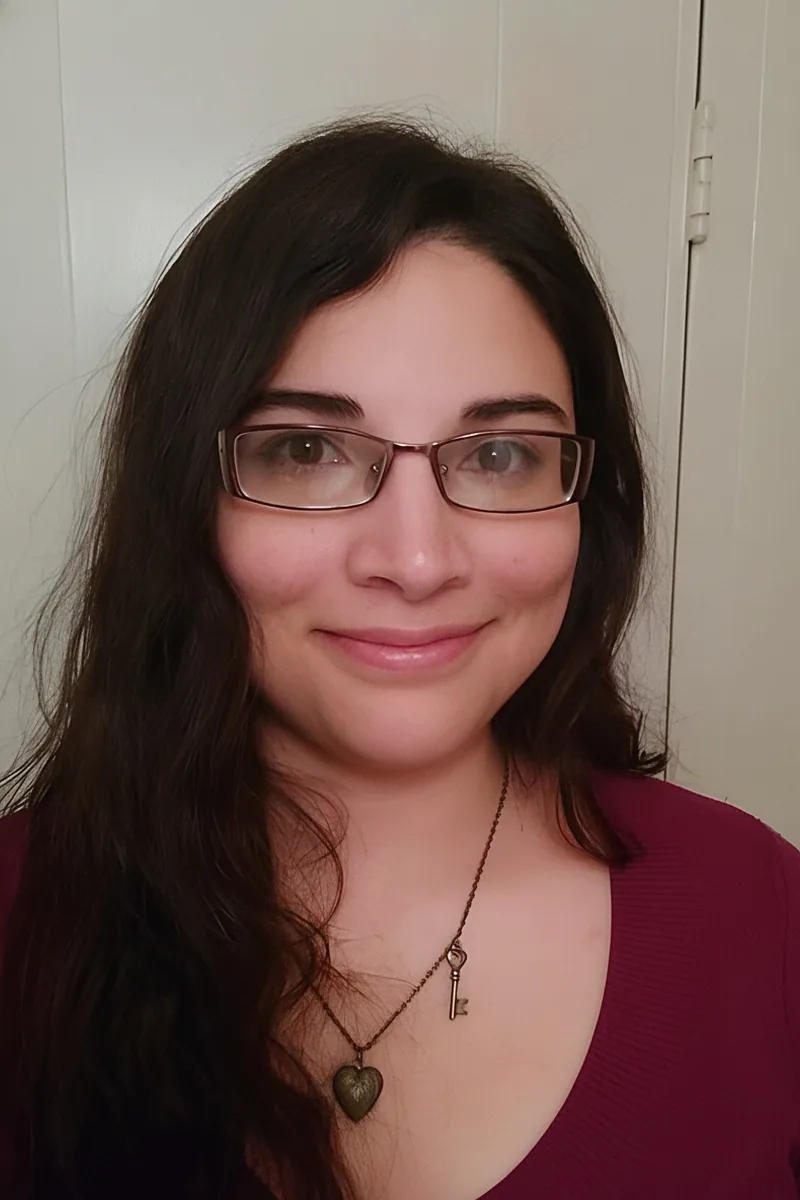
Understanding statistics means learning to think critically about variability, probability, and what data can actually tell you. Tashina applies statistical methods daily in her PhD research in brain sciences — hypothesis testing, confidence intervals, regression — and she unpacks each concept by connecting it to the kind of real analysis questions that make the material stick.
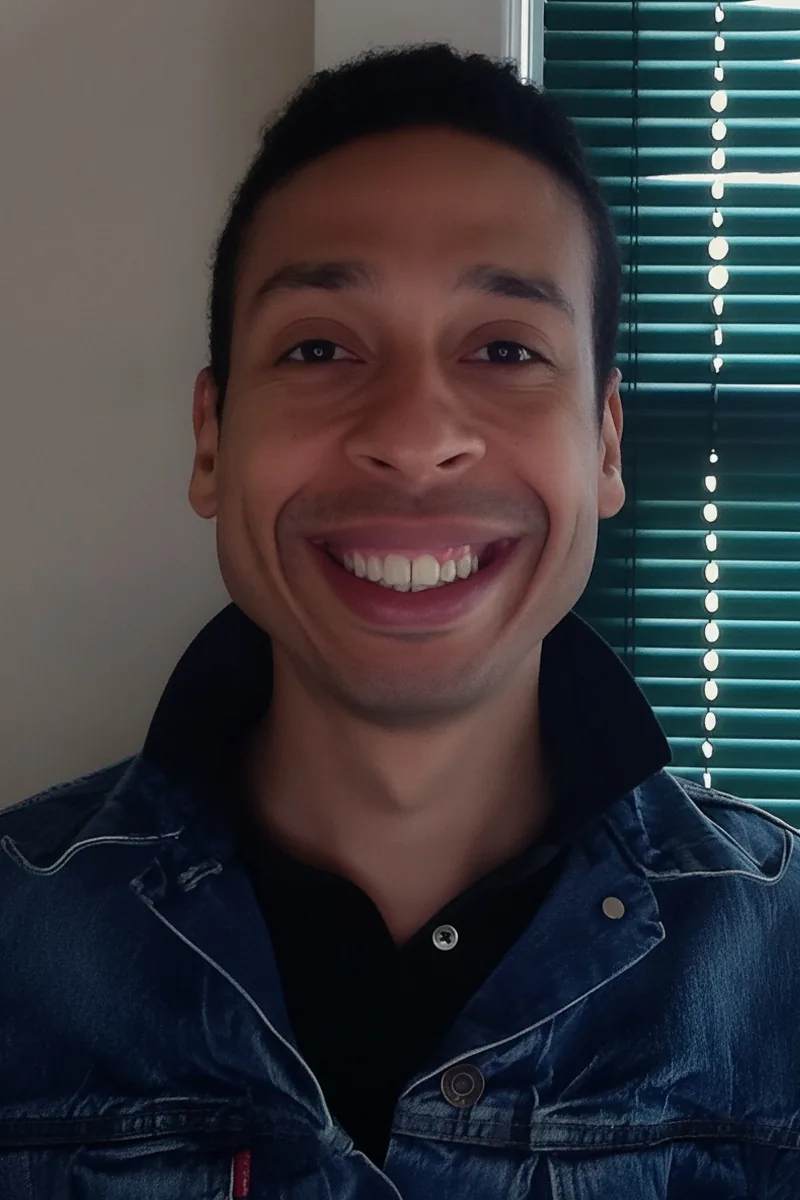
Danny is pursuing his MS in Statistics at Portland State, which means he's immersed daily in hypothesis testing, regression modeling, and probability theory at an advanced level. That depth lets him explain introductory concepts — p-values, confidence intervals, distributions — with the kind of clarity that only comes from genuinely understanding what's underneath the formulas. He's been teaching statistics since 2013 and calls it his favorite subject because of how directly it connects to real-world decision-making.
I am applying to medical schools to attend Fall 2016 and I like to play basketball, go backpacking and volunteer with youth in my free time.
Probability distributions, hypothesis testing, and regression analysis all clicked differently for Malaika after years as a working actuary, where statistical reasoning was the entire job. She brings that applied lens to statistics tutoring, connecting abstract formulas to the kind of data questions students will actually encounter. Rated 5.0 by students.
As a statistics major at Oregon State, Connor doesn't just know the formulas for hypothesis testing and regression — he understands the reasoning behind choosing a t-test over a z-test, or why a particular sampling method introduces bias. He unpacks the logic of statistical inference so that interpreting p-values and constructing confidence intervals becomes intuitive rather than mechanical.
Studying Human Biology at the University of Oregon meant Ben couldn't avoid statistics — from interpreting regression output to designing controlled experiments, statistical reasoning was woven into his coursework. He teaches concepts like standard deviation, probability distributions, and significance testing by connecting them to tangible data sets, making sure students can explain *why* a method works, not just execute it.
I am passionate about helping students when they are feeling stuck or frustrated, especially in math classes. For 2 years, I have tutored Algebra, Geometry, and Pre-Calculus. I have found it is most helpful to reteach concepts in a setting where students can ask questions along the way. When students feel comfortable asking for help and can work through adversity, they are better able to succeed in the classroom and learn valuable problem-solving skills they can use in the future.
I'm currently majoring in bioengineering/pre-med at Rice University. I graduated as the valedictorian of my high school class. My interests include biology, math, and violin performance. I've done neuroscience research at the Jungers Center for Neuroscience Reseach and the Oregon National Primate Research Center. I've also done molecular biology research at the Oregon Stem Cell Center.
I'm a fourth year medical student who will graduate from Georgetown University School of Medicine in May 2025. I have been tutoring since high school in a wide variety of subjects at all levels of education from elementary school to the graduate level. My tutoring philosophy is to identify where and how students are struggling and to use each student's learning style to break down concepts and learn in smaller steps. While I have a wide breadth of subjects in I am comfortable tutoring, I am most experience in the maths and sciences
I primarily tutor a lot of math classes. Anything from elementary school through undergrad. High school Geometry? Yep! Real Analysis? Absolutely! Python? Not quite math, you tricky person, but sign right up. I tutor a bit of physics and computer programming as well. Test prep, too. But who am I? I am a math music philosophy nerd. I love Gauss almost as much as I love Bach and I love Bach almost as much as I like Hegel. So chat to me about that stuff if you are so inclined. But you want to just chill and have homework help? That's quite all right, too!
Probability distributions, hypothesis testing, and regression analysis each require a different kind of thinking — and statistics courses often blur the boundaries between them. Channing teaches each concept by anchoring it to a concrete question: what are we estimating, what assumptions are we making, and why does this test answer that question? His range across biostatistics and graduate-level work means he can adjust depth to match any intro or intermediate course.
Most students can plug numbers into a standard deviation formula — the harder part is interpreting what the result actually means in context. Joshitha approaches statistics by connecting every calculation to real-world reasoning: why a confidence interval narrows, what a p-value does and doesn't tell you. Her engineering background at Johns Hopkins means she uses statistical thinking constantly and can show students where these ideas live outside the textbook.
Kaylah's graduate work in Computational Social Science at the University of Chicago is built almost entirely on statistical methods — probability distributions, hypothesis testing, regression modeling, and data interpretation. She teaches statistics the way she actually uses it: starting with what question you're trying to answer, then selecting and applying the right tool. Her background in cognitive neuroscience research means every example she pulls from is grounded in real data.
Probability distributions, hypothesis testing, and regression can feel like a foreign language the first time through. Nina breaks these concepts down by connecting them to real datasets and research questions drawn from her biostatistics training at Columbia and NYU. Rated 5.0 by students, she's especially effective at making the jump from formulas to interpretation feel intuitive.
A PhD in economics at Yale means Anthony doesn't just teach statistics — he relies on it daily, from econometric modeling to designing empirical studies that require careful handling of inference, sampling, and regression. His dual undergraduate background in physics and math gives him an unusual ability to trace statistical methods back to their mathematical roots, making concepts like maximum likelihood estimation or the central limit theorem genuinely intuitive. Rated 5.0 by students.
Between her sociology research in undergrad and her MBA coursework, Krupa has run enough regressions, hypothesis tests, and probability models to know exactly where students get tripped up. She tackles the conceptual side — why you'd choose a t-test over a z-test, what a p-value actually means — so the formulas stop feeling arbitrary. Her 4.9 rating speaks to how clearly she communicates these ideas.
An economics degree means Maggie didn't just study statistics in a textbook — she applied distributions, hypothesis testing, and regression analysis to real datasets. She teaches students to interpret what a p-value actually tells them and how to choose the right test for a given scenario, building the kind of statistical intuition that carries through exams and research projects alike.
Understanding probability distributions or interpreting a confidence interval requires a different kind of thinking than most math classes demand. Dillon spent years applying statistics in engineering contexts — quality control, data analysis, experimental design — and he brings that applied lens to topics like standard deviation, z-scores, and regression so students see what the numbers actually tell them.
Probability distributions, hypothesis testing, and regression analysis all click faster when you've actually used them to make decisions. Hari's finance background means he's applied statistical methods to real datasets — forecasting, risk analysis, variance modeling — and he teaches the logic behind each test so students can choose the right approach on their own.
Probability distributions, hypothesis testing, and confidence intervals make a lot more sense when you've actually used them to analyze real data. Emma applied statistical methods throughout her biology research at Duke — including fieldwork on Hawaiian monk seals — so she teaches stats as a practical tool rather than an abstract formula sheet. Rated 4.9 by students.
Designing and optimizing light filters for optical multiplexers at Norfolk State required Dennis to apply statistical methods to real engineering data — fitting distributions, quantifying uncertainty, and interpreting experimental results. He teaches statistics with that practitioner's perspective, making topics like standard deviation, probability, and regression feel like problem-solving tools rather than abstract formulas.
Understanding when to use a standard deviation versus an interquartile range — or why a skewed distribution changes your entire analysis — requires more than formula memorization. Vinson approaches statistics through data interpretation first, walking through probability distributions, hypothesis testing, and regression with an emphasis on what the numbers actually tell you. He's studying computational math at Rice, where statistical reasoning is woven into his daily coursework.
Yi's graduate training in research and experimental psychology required heavy use of statistical methods — from hypothesis testing and ANOVA to regression modeling and interpreting p-values in published studies. That hands-on experience with real data analysis means she teaches statistics as a tool for answering questions, not just a set of formulas to memorize.
Testimonials
Because the right Statistics tutor makes all the difference.
Average Session Rating – Based on 3.4M Learner Ratings
Practice Statistics
Free practice tests, flashcards, and AI tutoring for Statistics
Nearby Statistics Tutors
Other Salem Tutors
Related Math Tutors in Salem
Frequently Asked Questions
Varsity Tutors matches Salem students with expert Statistics tutors for 1-on-1 instruction. We pair each student with a tutor based on their specific needs, learning style, and goals.
Whether you need homework help, exam prep, or want to get ahead, our Statistics tutors are ready to help.
Common challenges include gaps from earlier material, difficulty with specific concepts, and trouble applying learning to new problems. These issues can snowball quickly in Statistics.
A tutor identifies where you're stuck, fills in gaps, and provides targeted practice. The 1-on-1 format means you get help exactly where you need it.
Tutors work with your student's actual coursework—homework assignments, class notes, and upcoming tests. This keeps tutoring directly relevant to what's happening in the classroom.
When you share information about your student's school and curriculum, we can match you with a tutor who has relevant experience.
All tutors complete background checks, credential verification, and teaching evaluation. Many of our Statistics tutors hold advanced degrees or have years of teaching experience.
You can review tutor profiles to find someone with the right background for your student's level and needs.
Many students see improved grades within a few weeks, along with better understanding of Statistics concepts and more confidence tackling challenging material.
Tutors track progress and adjust their approach to ensure continued improvement.
Most students benefit from 1-2 sessions per week. More frequent sessions help if your student is significantly behind or has an important exam coming up.
Your tutor can recommend a schedule based on your student's specific situation and goals.
Tutoring is purchased in packages of hours, with rates varying by tutor experience. Varsity Tutors offers several options to fit different budgets and needs.
You can discuss pricing during your consultation to find what works best.
Your tutor will assess where your student is, discuss goals, and start working on priority areas. Most students bring current homework or upcoming test material to focus on.
By the end, you'll have a clear sense of how the tutor can help and a plan for moving forward.
Let’s find your perfect tutor
Answer a few quick questions. We’ll recommend the right plan and match you with a top 5% tutor.