Award-Winning High School Chemistry Tutors
serving Salem, OR
High School Chemistry
Tutors in Salem
Private 1-on-1 tutoring, weekly live classes for academic support, test prep & enrichment, practice tests and diagnostics, and more to elevate grades and test scores.
Based on 3.4M Learner Ratings
UniversitiesSchools & Universities
DeliveredHours Delivered
ProficiencyGrowth in Proficiency
Who needs tutoring?
No obligation. Takes ~1 minute.
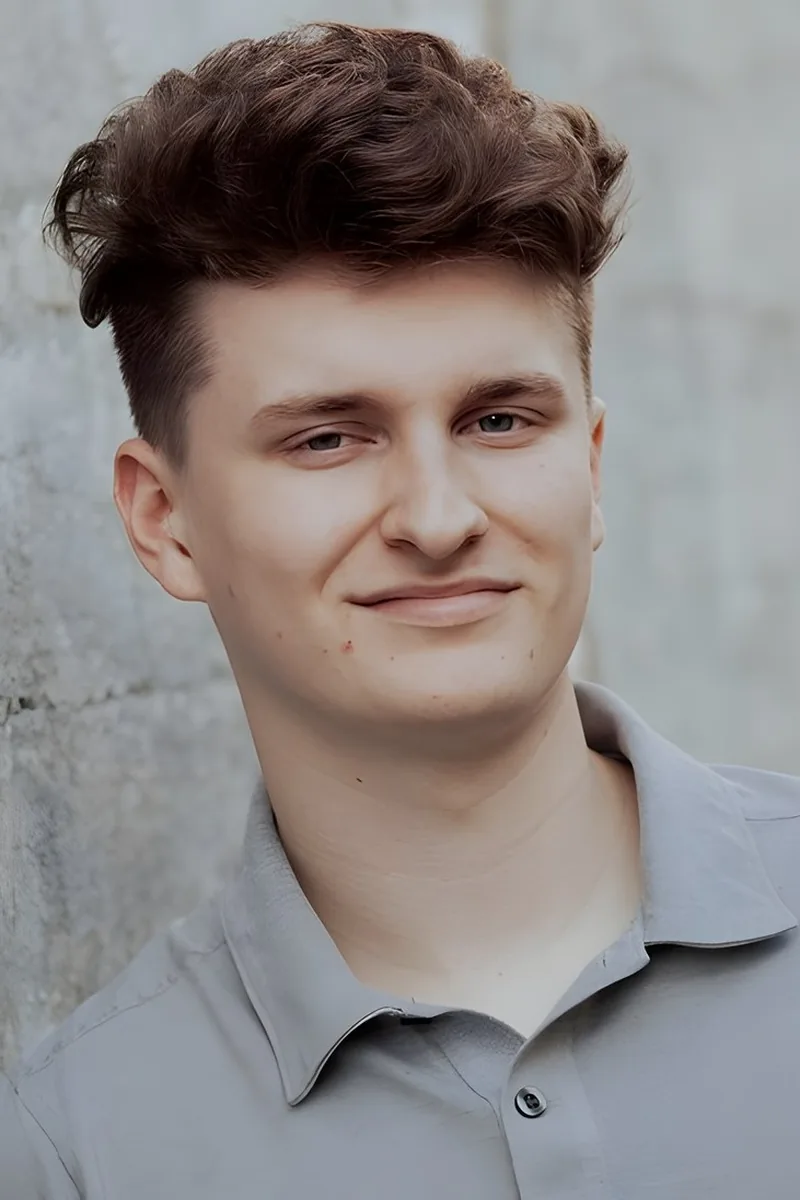
Neuroscience at Brown means Owen didn't just take chemistry — he had to internalize concepts like electrochemistry, equilibrium, and acid-base reactions to understand how neurons actually fire and communicate. That gives him a concrete hook for teaching topics like oxidation-reduction and solution chemistry, because he can show students exactly where the chemistry stops being abstract and starts running a brain. He scored a 33 on the ACT, which speaks to his comfort working across scientific and quantitative reasoning.

Balancing equations and stoichiometry problems are really just unit-conversion puzzles — and Tammy's engineering background means she's spent years solving exactly those kinds of puzzles under pressure. She breaks down topics like mole ratios, gas laws, and reaction types using the same structured problem-solving approach that carried her through two mechanical engineering degrees.
I am applying to medical schools to attend Fall 2016 and I like to play basketball, go backpacking and volunteer with youth in my free time.
Stoichiometry and gas laws tend to unravel when students skip the conceptual step and jump straight to plugging numbers into formulas — June catches that habit early and rewinds to the underlying logic of mole relationships and conservation principles. Her biology degree and four years of medical school at Georgetown mean she's never far from chemistry, since biochemical pathways and pharmacology keep concepts like equilibrium, reaction energetics, and acid-base behavior in constant rotation. Rated 5.0 by students.
Geoscience coursework is chemistry-heavy, and Mariela spent years applying stoichiometry, mineral equilibria, and thermochemistry to real-world rock and water systems. She brings that applied perspective to high school chemistry topics like balancing equations, periodic trends, and reaction energetics — connecting what can feel like abstract rules to tangible processes. Students get someone who's used chemistry as a working tool, not just studied it in isolation.
Stoichiometry, electron configurations, equilibrium — high school chemistry is full of concepts that seem unrelated until someone shows you the thread connecting them. Sam's engineering and science training at Purdue gave her a deep comfort with these fundamentals, and she's skilled at turning intimidating formulas into manageable, logical steps.
A chemistry minor on top of a biology degree means Rohan didn't just pass chemistry — he kept using it. He's especially sharp on stoichiometry, equilibrium, and acid-base reactions, and he teaches students quick problem-solving strategies that cut through the clutter of unit conversions and ICE tables. His approach turns intimidating multi-step problems into repeatable processes.
As a former chemistry TA at CU Boulder, Niki has already spent semesters explaining mole conversions, reaction balancing, and acid-base equilibria to students seeing these ideas for the first time. Her engineering background adds a practical layer — she can show why Le Chatelier's principle or enthalpy calculations matter beyond the textbook.
The jump from memorizing element names to actually understanding mole conversions, electron configurations, and reaction kinetics is where most high school chemistry students get stuck. Karl tackles these sticking points by tying abstract ideas back to tangible examples — his vaccine research, for instance, required precise solution preparation and an intuitive grasp of concentration and dilution that he now brings to tutoring sessions.
When mole conversions and equilibrium expressions start piling up, high school chemistry can feel more like a math class nobody prepared you for. Channing leans into that overlap deliberately, walking students through the quantitative reasoning behind reaction stoichiometry and gas laws so the calculations make chemical sense. His math fluency means he spots exactly where a student's algebra gaps are creating chemistry confusion.
Enabling children to grasp the foundational knowledge and skills that they will use for the rest of their lives is a wonderful gift. Good education is, in my belief, the single most important thing we can impart to the younger generation. I am very motivated to equip young minds to learn more about the academic world, introducing them to mathematics, English and other subjects such as the physical sciences, arts, and history.
As a passionate educator with a Doctorate in Biochemistry, Biophysics, and Structural Biology from the University of California, Berkeley, I bring over 25 years of dedicated tutoring and classroom experience to the table. My expertise spans subjects such as Algebra, Chemistry (including Organic and General Chemistry), and Statistics. I believe in fostering a supportive learning environment where students feel empowered to engage with complex concepts. By employing a hands-on approach, I connect theoretical ideas to real-world applications, making learning not only relevant but also enjoyable. My commitment to academic success drives me to inspire students to embrace their studies with confidence. Outside of teaching, I enjoy exploring scientific advancements and innovative educational methodologies, continually seeking ways to integrate my business acumen in biotech and education. - Charles Olea, MBA, PhD
I am passionate to help people learn about science, and have 35 years of real world experience and a Ph.D in physical chemistry, which seeks to explain physically observable phenomena in terms of atomic/molecular behavior.
Whether it's naming ionic compounds, predicting products of a reaction, or working through gas law calculations, Ravnoor zeroes in on the specific concept causing trouble and drills it with targeted practice problems. His 5.0 rating comes from a hands-on style that keeps sessions focused on doing chemistry, not just reading about it.
Running a middle school science department in Philadelphia meant John taught chemistry fundamentals daily — building up from atomic structure and the periodic table to chemical reactions and basic stoichiometry — and his role as curriculum chair forced him to think carefully about the sequence in which those ideas need to land. That classroom experience shows when he explains topics like balancing equations or classifying reaction types, because he's already mapped out where students typically get lost. Rated 5.0 by students.
Stoichiometry, equilibrium, and acid-base reactions make more sense when a student can see where they lead. Bidyut ties high school chemistry concepts to biomedical applications he's encountered at Johns Hopkins, turning mole calculations and reaction balancing into something more tangible than textbook exercises.
Starting chemistry for the first time can feel like learning a new language — moles, electron configurations, Lewis structures — and Eric excels at translating that language into something intuitive. He holds a master's in chemistry and approaches introductory topics with patience and specificity, making sure students understand the 'why' behind each concept before moving to the next one.
Serving as an undergraduate teaching assistant for introductory biochemistry at Cornell gave Josef a clear picture of where students first lose the thread in chemistry — usually right around stoichiometry and the mole concept, when the math suddenly feels disconnected from what's happening at the molecular level. He bridges that gap by tying quantitative problems back to the reaction logic, so balancing equations and calculating yields feel like extensions of chemical reasoning rather than standalone arithmetic exercises. Holds a 5.0 rating.
Balancing equations, understanding molarity, and predicting reaction products all click faster when a student sees the logic underneath the formulas. Li's medical and science background means she can explain why a precipitation reaction happens at the molecular level, then walk through the math step by step.
Stoichiometry clicks differently when someone can trace it all the way up to organic reaction yields and MCAT-level biochemistry — and Rebecca's biology degree plus her deep run through both general and organic chemistry means she's done exactly that. She teaches mole relationships and balancing equations by anchoring them in the reaction logic rather than letting students treat them as standalone math exercises. Rated 5.0 by students.
Chemical engineering at Vanderbilt means Greg doesn't just know stoichiometry and equilibrium — he uses them daily in reactor design and thermodynamics coursework. That applied perspective lets him show students why balancing equations or calculating molarity actually matters beyond the textbook. Rated 5.0 by students.
Chemistry clicked for Christopher when he stopped treating it as memorization and started seeing it as a logic puzzle — balancing equations, predicting reaction products, and connecting periodic trends to real behavior. His engineering background at Harvard reinforces that analytical approach, especially when tackling stoichiometry and gas laws.
Balancing equations, mole conversions, and periodic trends are the building blocks of high school chemistry, and Camille tackles each one by teaching the underlying logic rather than handing students a formula sheet. Her pre-med background at Duke means she's fluent in the problem-solving style these courses demand. Rated 5.0 by students.
Czarina is a biophysics and premed student at Johns Hopkins who scored 770 on the SAT Chemistry subject test — meaning she's recently navigated the exact material high school chemistry students are working through, from periodic trends and bonding to thermodynamics and reaction kinetics. She zeroes in on the conceptual logic behind gas law calculations and equilibrium expressions so that problem-solving feels intuitive rather than formulaic. Rated 5.0 by her students.
Balancing equations and predicting reaction products can feel like learning a foreign language, but Eric breaks inorganic chemistry concepts down into logical steps that build on each other. His science training across biology and ecology gives him a knack for connecting chemical principles — like bonding and stoichiometry — to real-world processes students can actually picture.
Testimonials
Because the right High School Chemistry tutor makes all the difference.
Average Session Rating – Based on 3.4M Learner Ratings
Nearby High School Chemistry Tutors
Other Salem Tutors
Related Science Tutors in Salem
Frequently Asked Questions
Varsity Tutors matches Salem students with expert High School Chemistry tutors for 1-on-1 instruction. We pair each student with a tutor based on their specific needs, learning style, and goals.
Whether you need homework help, exam prep, or want to get ahead, our High School Chemistry tutors are ready to help.
Common challenges include gaps from earlier material, difficulty with specific concepts, and trouble applying learning to new problems. These issues can snowball quickly in High School Chemistry.
A tutor identifies where you're stuck, fills in gaps, and provides targeted practice. The 1-on-1 format means you get help exactly where you need it.
Tutors work with your student's actual coursework—homework assignments, class notes, and upcoming tests. This keeps tutoring directly relevant to what's happening in the classroom.
When you share information about your student's school and curriculum, we can match you with a tutor who has relevant experience.
All tutors complete background checks, credential verification, and teaching evaluation. Many of our High School Chemistry tutors hold advanced degrees or have years of teaching experience.
You can review tutor profiles to find someone with the right background for your student's level and needs.
Many students see improved grades within a few weeks, along with better understanding of High School Chemistry concepts and more confidence tackling challenging material.
Tutors track progress and adjust their approach to ensure continued improvement.
Most students benefit from 1-2 sessions per week. More frequent sessions help if your student is significantly behind or has an important exam coming up.
Your tutor can recommend a schedule based on your student's specific situation and goals.
Tutoring is purchased in packages of hours, with rates varying by tutor experience. Varsity Tutors offers several options to fit different budgets and needs.
You can discuss pricing during your consultation to find what works best.
Your tutor will assess where your student is, discuss goals, and start working on priority areas. Most students bring current homework or upcoming test material to focus on.
By the end, you'll have a clear sense of how the tutor can help and a plan for moving forward.
Let’s find your perfect tutor
Answer a few quick questions. We’ll recommend the right plan and match you with a top 5% tutor.