Award-Winning Japanese
Tutors
Japanese
Tutors
Private 1-on-1 tutoring, weekly live classes for academic support, test prep & enrichment, practice tests and diagnostics, and more to elevate grades and test scores.
Based on 3.4M Learner Ratings
UniversitiesSchools & Universities
DeliveredHours Delivered
ProficiencyGrowth in Proficiency
Who needs tutoring?
No obligation. Takes ~1 minute.
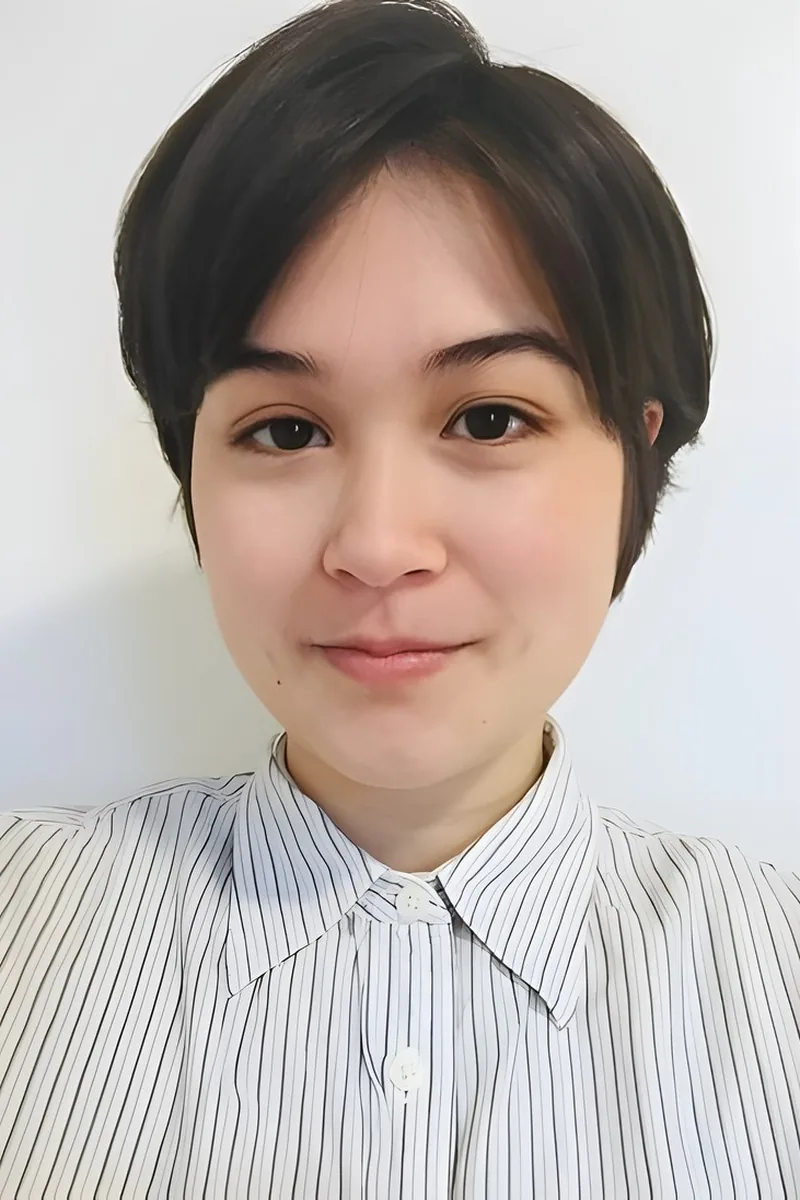
Few Japanese tutors can combine formal academic study with real teaching experience in Japan — Sophie has both. Her East Asian Studies work at Princeton included intensive Japanese language training, and she spent time teaching English in Japan, which gave her deep familiarity with how the two languages map onto (and diverge from) each other. She tackles everything from hiragana and katakana basics to particle usage and keigo politeness levels.

Learning Japanese means juggling three writing systems, honorific levels, and grammar that works nothing like English — and Karen tackles all of it from firsthand experience using the language abroad. Whether a student is memorizing their first hundred kanji or practicing particle usage in complex sentences, she builds each lesson around practical communication skills.
Studying Japanese as a minor at Columbia — with plans to eventually work in Japan's renewable energy sector — Shin uses the language as a living tool, not just a classroom exercise. He teaches everything from hiragana and katakana basics to intermediate grammar patterns like ~てしまう and ~ことにする, adjusting to each student's level and building real conversational confidence alongside written accuracy.
Zhaleh is actively studying Japanese at Carnegie Mellon University, which means she's navigating the same kanji memorization strategies, grammar particle distinctions, and reading comprehension challenges her students face. She breaks down tricky structures like て-form conjugations and は vs. が usage in ways that make the logic behind the language click.
During his final summer at NYU, William traveled to Japan to study the language alongside traditional music and wartime film, grounding his Japanese in real cultural context. That immersive experience means he connects vocabulary and grammar to the situations where they're actually used — from reading signs and menus to discussing historical texts. He's especially strong at bridging the gap between textbook Japanese and how the language sounds in practice.
Cori is pursuing a Japanese minor at MIT, which means she's actively working through the grammar structures, kanji readings, and particle usage that trip up most learners. That proximity to the learning process gives her a practical sense of what sticks and what needs extra repetition.
Though her degrees are in biology and science education, Sarah lists Japanese among her interests and brings a teacher's instinct for breaking complex systems into learnable parts — useful when students are wrestling with hiragana stroke order or the logic behind particle placement. Her 5.0 rating and four years of classroom teaching mean she knows how to pace a lesson and adjust when something isn't landing.
Learning Japanese means juggling three writing systems, unfamiliar sentence structures, and layers of politeness that don't exist in English. Aki breaks down hiragana, katakana, and basic kanji recognition alongside grammar patterns like particle usage and verb conjugation, building reading and conversational skills in parallel.
I would like to work with people who want to advance their Japanese knowledge and capabilities. I have lived for 18 years in Japan and can guide someone through the intricacies of the language. I have certified top level proficiency on the Japan Foundation Japanese Proficiency Test.
Crystal minored in Japanese Language and Culture at Northern Kentucky University, so she brings both formal study and genuine cultural curiosity to teaching everything from kana writing to grammar fundamentals. Her day job as a K-12 reading and ESL instructor means she's trained to break down unfamiliar language structures for learners at any level — a skill that pays off when explaining Japanese concepts like sentence-final particles or basic verb tenses that have no English equivalent. Rated 5.0 by students.
Having majored in Japanese at SUNY Albany, James doesn't just know the language — he understands the grammar architecturally, from particle usage and verb conjugation tiers to the nuances of honorific speech. He teaches reading and writing through cultural context, connecting kanji compounds to their historical roots so students retain them long-term rather than cramming and forgetting. Rated 4.9 by students.
Learning Japanese means juggling three writing systems, unfamiliar grammar structures, and a set of politeness registers that don't exist in English. Katharine brings a methodical, pattern-oriented mindset to breaking down concepts like particle usage, verb conjugation groups, and kanji radicals so that each lesson builds logically on the last.
A PhD in linguistics means Lewis doesn't just know languages — he understands how they work structurally, which is exactly what you need when Japanese throws you grammar that has zero English parallels. He applies that analytical framework to breaking down sentence-final particles, SOV word order, and the logic behind verb conjugation so the patterns become predictable rather than random. His experience teaching ESL/ELL also means he's practiced at bridging the gap between how English and non-European languages organize meaning.
Triple-majoring in Japanese, linguistics, and computer science at UMass Amherst, Connor brings both fluency and analytical rigor to teaching the language. He unpacks grammar patterns like particle usage and verb conjugation groups by connecting them to the underlying logic of how Japanese sentences are built — making new structures easier to internalize and recall.
Darin brings an analytical learner's perspective to Japanese, tackling the language's grammar patterns and writing systems with the same systematic approach he applied to his scientific training. For students working through hiragana, katakana, kanji recognition, or verb conjugation, he offers structured methods that make consistent progress feel achievable.
Brian prepared for and took the SAT Subject Test in Japanese with Listening, which means he's worked through the grammar structures, kanji recognition, and listening comprehension challenges that define intermediate Japanese study. He approaches language learning with the same systematic thinking he applied to economics and CS at Caltech — breaking down sentence patterns and verb conjugations into logical rules rather than pure memorization.
Having completed an Asian Languages minor at UCLA, Abrahim brings formal training in Japanese grammar, kanji acquisition, and reading comprehension to his tutoring. He approaches the language methodically — building from particle usage and verb conjugation patterns up to reading authentic texts — which works especially well for students who want structure rather than immersion-only learning.
Having prepared for and taken the SAT Subject Test in Japanese with Listening, Dylan brings practical fluency in grammar structures like particle usage, verb conjugation groups, and honorific registers. He tackles reading comprehension by teaching students to decode kanji compounds in context rather than relying purely on rote memorization. Rated 5.0 by students.
As an Asian Studies major at Duke, Caitlin engages with Japanese language in an academic context that goes beyond textbook dialogues — she understands how kanji, hiragana, and katakana each function within the writing system and why particles like は and が trip up English speakers. She walks through sentence structure and honorific levels with cultural context that makes the grammar patterns memorable.
Emily minored in Japanese at Texas A&M and continues to engage with the language through media and self-study. She teaches hiragana, katakana, and foundational grammar patterns like particle usage with the same structured approach she applies to her other languages, making the writing systems feel systematic rather than overwhelming.
Jacob's degree in East Asian Languages and Civilizations from the University of Chicago means his Japanese instruction is rooted in deep study of the culture, history, and linguistic traditions behind the language. He connects vocabulary and grammar to their cultural logic — explaining why certain verb endings carry social weight or how kanji compounds reflect Chinese origins — giving students a richer understanding than drills alone provide. Rated 5.0 by students.
Growing up attending the Japanese Weekend School of New Jersey while enrolled in American public schools, Hidefusa developed native-level fluency in both languages and a deep understanding of where English speakers stumble with Japanese. He teaches everything from hiragana and katakana basics to kanji recognition, particle usage, and keigo (formal speech) — drawing on the bilingual instincts of someone who has lived in both linguistic worlds.
A drama degree might not scream Japanese fluency, but John's literary work — he's a section editor for the Los Angeles Review of Books and literary manager for two theater companies — means he's deeply attuned to how language shapes meaning, tone, and register. That sensitivity to nuance transfers directly to navigating Japanese's layered politeness levels and context-dependent sentence endings. Rated 5.0 by students.
Rachel's International Relations coursework exposes her to multiple language systems and cross-cultural communication, which she channels into teaching Japanese fundamentals like hiragana recognition, basic particle usage, and everyday vocabulary. Her relaxed, adaptive style — reflected in a 5.0 rating — is especially useful for beginners who tense up when faced with an entirely new writing system and unfamiliar grammar order.
Between his East Asian Studies major at Harvard, his presidency of the Harvard College Japan Initiative, and his work in the Yenching Library's Japanese Collection, Shane lives and breathes Japanese. He reads novels and plays games in Japanese for fun, which means he teaches the language the way it's actually used — from kanji recognition and particle usage to the register shifts that textbooks barely cover.
Holding a degree in Japanese Studies, Andrew brings deep familiarity with not just hiragana, katakana, and kanji but also the cultural context that shapes how the language actually works — keigo politeness levels, sentence-ending particles, and the logic behind counter words. He connects grammar patterns to real conversation so students internalize structures instead of just drilling flashcards.
Damien studied Asian studies at Cornell, where Japanese language and culture were central to his coursework. He approaches the language by grounding grammar patterns — particles like は versus が, verb conjugation groups, and sentence-ending forms — in real context so they stick. Rated 5.0 by students, he makes the jump from textbook exercises to actual comprehension feel manageable.
Shona's semester abroad in Seville proved that immersion reshapes how you learn any language — a lesson she carries into teaching Japanese, where she emphasizes building comfort with sentence patterns and particles through active use rather than translation drills. Her AP Japanese Language and Culture tutoring draws on both her structured math-trained thinking and her own experience navigating a second language in real-world settings. Rated 4.9 by students.
Having taught himself Japanese alongside his formal studies in public policy and education, James knows firsthand where English speakers get tripped up — especially with particles, basic verb conjugation, and the leap from hiragana to katakana. His education background means he's trained to spot where understanding breaks down and adjust his explanations on the fly, which is exactly what beginners need when nothing about Japanese grammar maps onto what they already know.
Learning Japanese means juggling three writing systems, a grammar structure that's the reverse of English, and cultural nuances that change how you speak depending on who you're talking to. Natasha taught Japanese at the high school level and lived in Japan teaching in elementary schools, giving her the kind of practical fluency that makes hiragana drills, particle usage, and conversational practice feel grounded in real life. She's 5.0-rated and works with beginners through advanced learners.
As a dedicated language tutor with several years of experience, I bring both expertise and enthusiasm to every lesson. I specialize in Chinese, Japanese, and basic Arabic, and I have had the privilege of guiding students of diverse ages and backgrounds through their language-learning journeys.
Sho teaches Japanese with attention to the details that trip up English speakers most — particle usage, verb conjugation groups, and the shift between casual and polite registers. Whether a student is learning hiragana for the first time or working through intermediate kanji and grammar patterns, he brings structured practice to a language that rewards consistency.
Learning Japanese means juggling three writing systems, unfamiliar sentence structures, and particles that don't map neatly onto English — Rex tackles each layer separately so students can build real reading and conversational ability. His communication design background also gives him a unique perspective on how visual layout and typography work in Japanese media, which keeps lessons engaging and culturally grounded.
Briana minored in Japanese at Michigan State, giving her a grounded understanding of the language's grammar patterns, particle usage, and writing systems — hiragana, katakana, and introductory kanji. She approaches Japanese as someone who learned it systematically in an academic setting, which means she can explain the "why" behind structures that often confuse English speakers.
Most students stall in Japanese once they move past hiragana and katakana into kanji recognition and grammatical particles like は versus が. Wahala minors in Japanese at Indiana University Bloomington and treats the language as a system to decode — connecting sentence structure, verb conjugation patterns, and cultural context so that reading and conversation reinforce each other.
Mechanical engineering at the University of Dayton doesn't obviously connect to Japanese, but Nicholas's systematic problem-solving mindset lends itself well to breaking down kanji radicals, verb conjugation groups, and particle logic into repeatable patterns. He's also genuinely social and talkative — a trait that matters more than you'd think when practicing conversational Japanese, where comfort with speaking aloud is half the battle.
I am also fluent (reading/listening/writing) in Cantonese and mandarin Chinese because of my upbringing. Half of my childhood education was received in Hong Kong and the other half was in Australia.
Earning a full bachelor's degree in Japanese — not just a minor or a few semesters — means Jina can teach well beyond survival phrases into kanji readings, grammar particles like は vs. が, and the nuances of keigo (formal speech). She brings the same analytical rigor from her science training to breaking down sentence structure and verb conjugation patterns.
Most students learning Japanese hit a wall somewhere between mastering hiragana and actually constructing sentences with particles, verb conjugations, and counters. Kai has been teaching Japanese through the student organization meetings on campus, building lessons that move learners from basic self-introductions to reading short passages and holding simple conversations.
An Asian Studies degree gave Andrew sustained exposure to Japanese language and culture throughout his undergraduate work, and he pairs that academic grounding with fluency in Mandarin Chinese to bring a comparative lens to East Asian language learning. He's particularly good at creating a low-pressure environment for speaking and reading practice — the kind of space where students actually start producing sentences instead of freezing up over perfect particle placement.
Testimonials
Because the right Japanese tutor makes all the difference.
Average Session Rating – Based on 3.4M Learner Ratings
Top 20 Languages Subjects


Top 20 Subjects
Frequently Asked Questions
Learning kanji is one of the biggest challenges for Japanese students—there are thousands of characters to master, each with multiple readings and meanings. A tutor can teach you strategic approaches like learning kanji by radical (the building blocks of characters), grouping characters by similar meanings, and using spaced repetition to lock them into memory. Rather than memorizing in isolation, tutors help you see patterns and connect kanji to vocabulary and real texts, making the learning stick faster than studying alone.
Japanese verbs conjugate based on tense, formality level, and whether they're positive or negative—and there are irregular verbs that break the rules entirely. This creates a system that feels overwhelming at first. A tutor breaks conjugation into logical patterns, shows you why certain forms exist (like the difference between casual and polite forms), and gives you targeted practice with verbs you actually use in conversation. With 1-on-1 instruction, you can ask questions immediately when something doesn't make sense, rather than getting stuck on confusing textbook explanations.
In a typical classroom, students get limited speaking time—maybe a few minutes per class. With personalized 1-on-1 instruction, you're speaking for most of the session, which means you build confidence and fluency much faster. A tutor can also tailor conversations to your interests and level, correct your pronunciation and grammar in real-time, and adjust the pace so you're challenged but not overwhelmed. This consistent speaking practice is essential for developing natural rhythm and accent in Japanese, which rarely happens in group settings.
Japanese native speakers speak quickly, drop particles, use casual contractions, and have regional accents—all of which make it much harder than textbook audio. Additionally, understanding context and politeness levels affects comprehension in ways that don't exist in English. A tutor exposes you to natural speech patterns, explains cultural context that affects meaning, and can slow down or repeat phrases as needed. They can also train your ear to recognize common listening patterns and help you develop strategies for understanding even when you don't catch every word.
Textbooks often teach grammar rules in isolation, but native speakers don't always follow textbook patterns—they use shortcuts, drop particles, and adapt based on context. A tutor teaches you the rules as a foundation, then shows you how real Japanese actually works through examples, conversation, and exposure to native content. This helps you understand when it's appropriate to use casual versus formal language, when particles can be omitted, and how to sound natural rather than robotic. You learn not just what's grammatically correct, but what native speakers actually say.
Japanese language is deeply tied to culture—politeness levels, honorifics, seasonal references, and indirect communication styles all carry cultural meaning that affects how you understand and speak the language. A tutor helps you grasp why certain phrases are used in specific situations, how to show respect appropriately, and what cultural references are embedded in everyday conversation. This context makes learning feel more connected and helps you communicate authentically rather than just translating words. Understanding culture also helps you remember vocabulary and grammar because it's tied to real, meaningful situations.
Japanese reading progresses through distinct stages: hiragana and katakana basics, simple kanji and grammar, newspaper and novel-level texts, and specialized materials. A tutor assesses your current level and creates a progression path tailored to your goals—whether you're aiming to read manga, news, literature, or business documents. They can introduce new kanji and grammar in context through actual texts you want to read, rather than isolated exercises, which makes learning more motivating and practical. This targeted approach helps you reach reading fluency much faster than working through generic textbooks.
Look for tutors who are either native Japanese speakers or have near-native fluency, ideally with formal teaching experience or certification. They should understand the specific challenges English speakers face (since your native language shapes how you learn), be able to explain grammar clearly, and have exposure to modern conversational Japanese—not just textbook language. A good tutor also understands different proficiency levels (from complete beginner through advanced), can teach all four skills (reading, writing, speaking, listening), and ideally has experience with Japanese cultural context. Varsity Tutors connects you with expert tutors who meet these standards and can work at your level and pace.
Let’s find your perfect tutor
Answer a few quick questions. We’ll recommend the right plan and match you with a top 5% tutor.