Award-Winning SAT Tutors
serving Paradise, NV
Award-Winning
SAT
Tutors in Paradise
Private 1-on-1 tutoring, weekly live classes for academic support, test prep & enrichment, practice tests and diagnostics, and more to elevate grades and test scores.
Based on 3.4M Learner Ratings
UniversitiesSchools & Universities
DeliveredHours Delivered
ProficiencyGrowth in Proficiency
Who will be getting tutoring?
No obligation. Takes ~1 minute.

Zachary's Dartmouth education and master's in political science built the exact skill set the SAT rewards — fast, precise reading of dense passages and tight analytical reasoning under time pressure. He scored a 1550 on the exam and uses that experience to teach concrete strategies for evidence-based reading questions and the algebra-heavy math section, with a step-by-step approach that makes each question type feel predictable rather than overwhelming.
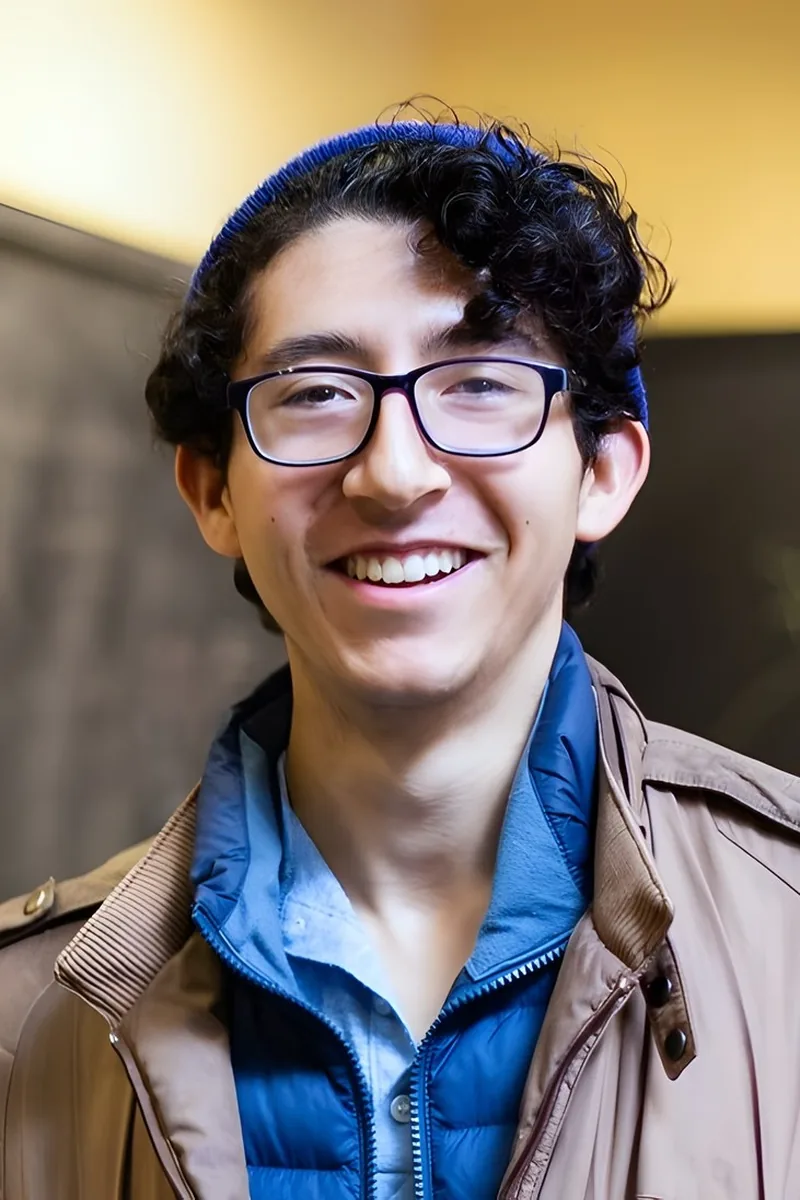
Studying computational neuroscience and philosophy at MIT means Tim lives at the intersection of quantitative reasoning and critical reading — exactly the skill split the SAT demands. He scored a 1560 and uses that experience to teach specific strategies for the trickiest question types, from no-calculator algebra to command-of-evidence pairs where both the answer and the supporting citation need to align. Rated 4.9 by students.
Biology and chemistry coursework at UNLV built Michael's comfort with the data interpretation and experimental design questions that show up throughout the SAT Math section — the ones that look like science but are really testing whether you can read a table and set up an equation. He scored a 1570 and uses that experience to coach students through both the math and verbal sides, with particular attention to pacing and the evidence-based reading pairs where strong science students often overthink the answer choices.
Deepal's approach to the SAT centers on efficiency — he's developed shortcut methods for the math section's algebra and data analysis questions that cut solving time significantly, freeing up minutes students can redirect to trickier problems. His 1570 SAT score backs up those strategies, and his biomedical engineering coursework at USC keeps his quantitative reasoning sharp. He also coaches students on the Writing and Language section's grammar patterns, drawing on the same principle he applies everywhere: if the standard method feels clunky, find a cleaner path to the answer.
Northwestern's engineering curriculum forced Dylan to master the exact quantitative reasoning the SAT Math section demands — algebra, data analysis, and multi-step problem solving under pressure — while his broad humanities coursework sharpens his approach to the Reading and Writing sections. He scored a 1500 on the SAT and uses that experience to teach students how to spot the structural patterns behind each question type rather than relying on brute-force practice. Rated 5.0 by students.
Scoring a 1530 on the SAT herself, Michelle built her test prep expertise further as a teaching assistant at an SAT prep center, where she drilled verbal, writing, and math strategies with students daily. She's particularly sharp on the Writing and Language section — breaking down sentence structure rules and grammar patterns so they become second nature rather than guesswork. Her Tufts International Relations background also gives her an edge on the reading-heavy passages that trip up so many test-takers.
Scoring a 1510 on the SAT herself, Serena knows the specific tricks that separate a good score from a great one — timing strategies on the Reading section, grammar rule patterns in Writing, and the algebra and data analysis concepts that dominate the Math portion. Her electrical engineering coursework at UNLV keeps her sharp on the quantitative side, while her love of English means she's equally comfortable breaking down evidence-based reading questions and rhetorical analysis passages.
What sets Kendra apart for SAT prep is that she's recently been through it — she scored a 1450 and knows exactly which pacing mistakes and second-guessing habits cost students points on test day. Her writing-heavy sociology coursework at Fordham keeps her sharp on the Evidence-Based Reading and Writing sections, where she teaches students to trace argument structure through paired passages. She also covers the math side, drawing on her comfort with algebra and data analysis across multiple math subjects.
Economics coursework at Ohio State's Honors College means Brian spends his weeks interpreting data sets and building quantitative arguments — exactly the skills the SAT Math section rewards, from algebraic modeling to data analysis. His 1470 SAT score and strength across both English and math subjects let him coach the full exam, connecting the grammar and evidence-based reasoning on the verbal side to the same logical patterns students already use in the quantitative sections.
Scoring a 1500 on the SAT gave Megan a sharp sense of where points are won and lost — particularly in the Evidence-Based Reading section, where pairing answer choices with specific line references trips up even strong readers. Her economics coursework at St. John's keeps her analytical reasoning sharp, and she breaks down both the math and verbal sections into repeatable strategies rather than relying on intuition.
Seven years of tutoring math and science across middle school through college means Cassandra knows the SAT Math section cold — from heart-of-algebra questions to passport-to-advanced-math problems that demand real fluency with functions and quadratics. Her biology training also sharpens the data-interpretation skills that show up in both the math and evidence-based reading sections, where students need to pull conclusions from graphs and tables quickly. She scored a 1480 on the SAT and holds a 4.9 rating.
Scoring a 1420 on the SAT herself, Carsen knows what it takes to perform across both the Evidence-Based Reading and Math sections on test day. Her chemistry background sharpens the analytical reasoning she brings to data interpretation and passage-based questions, while her experience as a college teaching assistant means she's practiced at breaking down tricky concepts until they actually make sense. Rated 5.0 by students.
SAT prep is where Yasmeen's two strongest skills converge — the analytical reading she honed studying political science and history at Penn, and the structured essay and grammar instincts she's built through years of writing instruction. She scored a 1480 and knows how to coach students through the pacing decisions and evidence-pairing logic that separate a good score from a great one. Rated 5.0 by students.
Chemistry grad students learn to read dense, data-heavy material under pressure — a skill Shawn now applies directly to SAT prep, where he teaches students to extract answers from evidence-based passages and interpret graphs quickly on the math side. His 1420 SAT score and deep comfort with algebra, trigonometry, and quantitative reasoning mean he covers both sections without skipping a beat. Rated 4.9 by students.
I love teaching patiently and accurately to achieve concrete goals. A National Merit scholar, a college student, and an aspiring writer, I encourage high achievement and creativity in all my students. With 2+ years of tutoring experience and 1+ years of teaching experience, both in-person and online, I will gladly adapt to your educational and personal needs! Primarily, I tutor the SAT and ACT. I have the most experience in tutoring English (up to 12th grade) and math (up to Algebra II/pre-calc). I can also tutor competitive Lincoln-Douglas and policy debate as well as Impromptu speech at a middle/high school level or general public speaking and argumentation. My favorite subjects are English, which I am pursuing at UNLV, and Speech & Debate, which I teach at a private school. I have an AP Honors Diploma and AP Scholar with Distinction Award from high school.
What makes John effective for SAT prep is that he teaches both halves of the exam with equal fluency — his English and drama training sharpens his approach to passage analysis and evidence-based reading, while his math and physics background means he handles the algebra, data interpretation, and problem-solving sections without switching gears. He scored a 1420 on the SAT himself and holds a perfect 36 ACT composite, so he knows how standardized tests are constructed and where they try to trip students up. Rated 4.9 by students, he builds pacing and elimination strategies tailored to each section's specific traps.
Nina's biostatistics training at Columbia and Northwestern means the SAT Math section — especially data analysis, scatterplot interpretation, and multi-step algebra — plays directly to her strengths. She scored a 1550 and knows how to teach the quantitative reasoning patterns that separate a good math score from a great one, while her experience with college essays and literature gives her practical tools for the Reading and Writing sections too.
A 1560 SAT scorer with a Master's in Education from Harvard, Mimi brings a structured yet creative approach to test prep — particularly the evidence-based reading passages, where her art history and literary analysis background makes dissecting complex texts second nature. She teaches students to identify argument structure and eliminate trap answers systematically across both the reading and writing sections.
Second-year medical school at Baylor means Michelle lives in the world of high-stakes, timed exams — and she applies that same strategic discipline to SAT prep, where she scored a 1570. Her biochemistry training at Rice sharpens the data-interpretation and graph-reading questions on the Math section, while her science-heavy reading background translates into efficient passage analysis on the Evidence-Based Reading side.
Scoring a 1550 on the SAT while juggling a dual PhD/MD track at Northwestern says something about efficiency under pressure — Chelain knows how to maximize points per minute on both the math and evidence-based reading sections. She breaks down SAT questions by what they're actually testing (inference vs. command of evidence, heart-of-algebra vs. passport-to-advanced-math) so students stop second-guessing and start recognizing patterns. Rated 5.0 by students.
Law school at the University of Chicago sharpened exactly the skills the SAT rewards — picking apart dense passages under time pressure, spotting logical gaps, and choosing precise language over vague alternatives. Elena pairs that training with a perfect 1600 SAT score and a tutoring approach built around listening to students reason through problems so she can pinpoint the specific assumptions or misreadings costing them points. Her government, Spanish, and legal background gives her unusually natural command of both the verbal and quantitative sides of the exam.
Northwestern's Honors Program in Medical Education accepted Anna straight out of high school, which meant she had to master the kind of disciplined, high-stakes test-taking that the SAT demands — and her 1590 score reflects that. She teaches students to treat the math section's word problems as logic puzzles and coaches a systematic elimination approach on the Reading and Writing passages that cuts through ambiguity under time pressure.
Elliot's neuroscience PhD trained him to parse dense research passages and interpret statistical figures quickly — exactly the skills that drive scores up on the SAT's evidence-based reading and data-heavy math questions. He scored a 1540 on the SAT himself and builds test strategy around recognizing how the exam reuses the same question logic across sections. Rated 5.0 by students.
Medical school demands the same skill the SAT rewards — extracting the right answer from dense, unfamiliar material under serious time pressure. Alex, who scored a 1590, teaches students to treat the Reading section like a data problem: find the claim, locate the evidence, eliminate what doesn't match. His chemical engineering training at Washington and Lee also means the math section's algebra and data analysis questions are territory he can break down cold.
Phillips Exeter's Harkness method trained Violet to pull apart complex problems collaboratively — a habit she now applies to SAT prep, where she teaches students specific tricks for pacing the math sections and spotting grammar patterns in Writing and Language. Her math degree from Brown and 1550 SAT score mean she's equally comfortable drilling no-calculator algebra strategies and coaching students through evidence-based reading questions. Rated 4.5 by students.
Georgetown's math program trained Peter to think in precise, logical steps — exactly the skill that turns the SAT Math section's multi-step word problems and data analysis questions into straightforward solves. His 1580 SAT score and years of tutoring both math and writing mean he covers the full exam without switching gears, connecting algebraic reasoning on one section to evidence-based reading strategy on the next. Rated 5.0 by students.
A 1400 SAT and a communication background give Logan a dual advantage: he knows the test's structure cold and can clearly articulate the reasoning behind every answer choice. His approach to the Reading and Writing sections leans heavily on argument analysis — identifying claims, evaluating evidence, and spotting the rhetorical moves that the College Board loves to test. Rated 5.0 by students, he also brings strong math fundamentals from his 36 ACT composite to shore up the quantitative side.
Most SAT prep treats the Reading and Math sections as completely separate skill sets, but Emily's science training at Yale — where she spent years parsing dense research literature and working with data — means she teaches both sides of the exam as exercises in precise interpretation. She scored a 1550 on the SAT and builds her coaching around the specific reasoning habits that earned it: identifying exactly what a question asks before touching the answer choices, and translating word problems into structures rather than guessing at operations. Rated 5.0 by students.
Medical school admissions forced Nishad to master every section of the SAT on his way to a 1580 composite — and that full-test perspective means he coaches the Reading, Writing, and Math sections as one integrated strategy rather than three separate prep tracks. His premed science training sharpens his approach to data interpretation and graph-based questions, while his literature and essay background keeps the evidence-based reading instruction equally rigorous.
What separates a 1500+ SAT score from a 1300 often isn't knowledge — it's knowing how the test tries to trick you. Joey scored a 1570 and built his prep approach around identifying those traps, particularly the algebra and data-analysis questions on the Math section where careful reading matters as much as calculation. His theater training at Columbia also sharpened the close-reading and rhetorical analysis skills that pay off on the Evidence-Based Reading and Writing sections.
Most SAT points aren't lost on the hardest questions — they're lost on medium-difficulty ones where rushing or misreading costs easy points. Eric, who scored a 1570, teaches a pacing and elimination strategy built around that insight, drilling students on when to slow down in the Reading section and when to move quickly through familiar algebra patterns in Math. His business background also sharpens his approach to the data interpretation and graph-reading questions that increasingly dominate the exam.
Studying both psychology and linguistics at the University of Chicago gave Sherry an unusual double lens for the SAT — the linguistics side sharpens her teaching of grammar rules, sentence structure, and rhetoric on the Writing & Language section, while the psychology side informs how she coaches students through test-day pacing and anxiety management. She scored a perfect 1600 and uses that familiarity with every section to pinpoint exactly where a student's points are slipping, whether it's evidence-based reading pairs or no-calculator algebra. Rated 5.0 by students.
Chemical engineering coursework at Michigan means Edward lives in the kind of multi-step quantitative reasoning that dominates the SAT Math section — translating word problems, manipulating algebraic expressions, and interpreting data under time pressure. He pairs that with a structured approach to the Reading and Writing sections, teaching students to identify evidence patterns and grammar rules rather than relying on instinct. His 1520 SAT and 4.8 rating speak to how well that approach transfers to test day.
Years of writing and peer-editing philosophy and religion papers at Pomona gave Miranda a precise feel for argument structure and rhetorical traps — exactly what the SAT's Reading and Writing sections test under time pressure. She pairs that verbal strength with a 1560 SAT score and hands-on experience mentoring high schoolers through standardized test strategy. Rated 5.0 by students.
Dennis's finance and statistics coursework at NYU means the SAT Math section plays to his strengths — he teaches students to spot the underlying algebra and data-analysis patterns that repeat across every practice test, turning unfamiliar-looking problems into familiar setups. His 1550 SAT score backs up a prep approach built on efficiency: knowing which questions to attack first, where to double-check, and how to manage the clock so careless errors don't eat into a strong performance.
Phillip's biomedical engineering coursework at Brown means the SAT Math section — algebra, data analysis, advanced problem-solving — plays to his strongest skills, and his 1560 composite score confirms he knows how to execute under test-day pressure. He also coaches students through the Reading and Writing sections by teaching them to identify passage structure and eliminate wrong answers systematically rather than relying on feel. Rated 5.0 by students.
Perry's dual science degrees from Rice University built the exact quantitative reasoning and data interpretation skills that dominate the SAT Math section, while his medical humanities minor sharpened the close-reading habits needed for Evidence-Based Reading and Writing. He scored a 1570 on the SAT and knows which algebra shortcuts and passage-analysis techniques make the biggest difference under time pressure. Rated 5.0 by students.
Classics and philosophy trained Austin to read dense, argument-heavy texts with precision — exactly the skill that separates good SAT Reading scores from great ones. He scored a 1570 and teaches students to trace an author's reasoning through evidence-based questions rather than relying on surface-level comprehension. His grammar and writing chops carry over to the Writing and Language section, where he unpacks the punctuation and syntax rules the test recycles in every form.
Scoring a 1550 on the SAT herself, Kiersten spent two semesters as a CollegeSpring Mentor preparing charter school juniors for test day — breaking down everything from evidence-based reading passages to no-calculator math strategies. Her screenwriting background at USC gives her a unique edge on the Reading and Writing sections, where she teaches students to dissect argument structure and pinpoint rhetorical choices under time pressure.
Dennis's physics research at Princeton — modeling turbulent plasmas and cosmic ray acceleration — required exactly the kind of precise quantitative reasoning and data interpretation that dominates the SAT Math section. He scored a 1530 on the SAT himself and pairs that firsthand experience with a methodical, science-trained approach to the Reading section, where he teaches students to treat passages like data sets and extract evidence systematically.
Testimonials
Because the right SAT tutor makes all the difference.
Average Session Rating – Based on 3.4M Learner Ratings
Practice SAT
Free practice tests, flashcards, and AI tutoring for SAT
Other Paradise Tutors
Related Test Prep Tutors in Paradise
Frequently Asked Questions
Varsity Tutors matches Paradise students with expert SAT tutors for 1-on-1 instruction. We pair each student with a tutor based on their specific needs, learning style, and goals.
Whether you need homework help, exam prep, or want to get ahead, our SAT tutors are ready to help.
Common challenges include gaps from earlier material, difficulty with specific concepts, and trouble applying learning to new problems. These issues can snowball quickly in SAT.
A tutor identifies where you're stuck, fills in gaps, and provides targeted practice. The 1-on-1 format means you get help exactly where you need it.
Tutors work with your student's actual coursework—homework assignments, class notes, and upcoming tests. This keeps tutoring directly relevant to what's happening in the classroom.
When you share information about your student's school and curriculum, we can match you with a tutor who has relevant experience.
All tutors complete background checks, credential verification, and teaching evaluation. Many of our SAT tutors hold advanced degrees or have years of teaching experience.
You can review tutor profiles to find someone with the right background for your student's level and needs.
Many students see improved grades within a few weeks, along with better understanding of SAT concepts and more confidence tackling challenging material.
Tutors track progress and adjust their approach to ensure continued improvement.
Most students benefit from 1-2 sessions per week. More frequent sessions help if your student is significantly behind or has an important exam coming up.
Your tutor can recommend a schedule based on your student's specific situation and goals.
Tutoring is purchased in packages of hours, with rates varying by tutor experience. Varsity Tutors offers several options to fit different budgets and needs.
You can discuss pricing during your consultation to find what works best.
Your tutor will assess where your student is, discuss goals, and start working on priority areas. Most students bring current homework or upcoming test material to focus on.
By the end, you'll have a clear sense of how the tutor can help and a plan for moving forward.
Let’s find your perfect tutor
Answer a few quick questions. We’ll recommend the right plan and match you with a top 5% tutor.