Award-Winning SAT
Tutors
SAT
Tutors
Private 1-on-1 tutoring, weekly live classes for academic support, test prep & enrichment, practice tests and diagnostics, and more to elevate grades and test scores.
Based on 3.4M Learner Ratings
UniversitiesSchools & Universities
DeliveredHours Delivered
ProficiencyGrowth in Proficiency
Who will be getting tutoring?
No obligation. Takes ~1 minute.
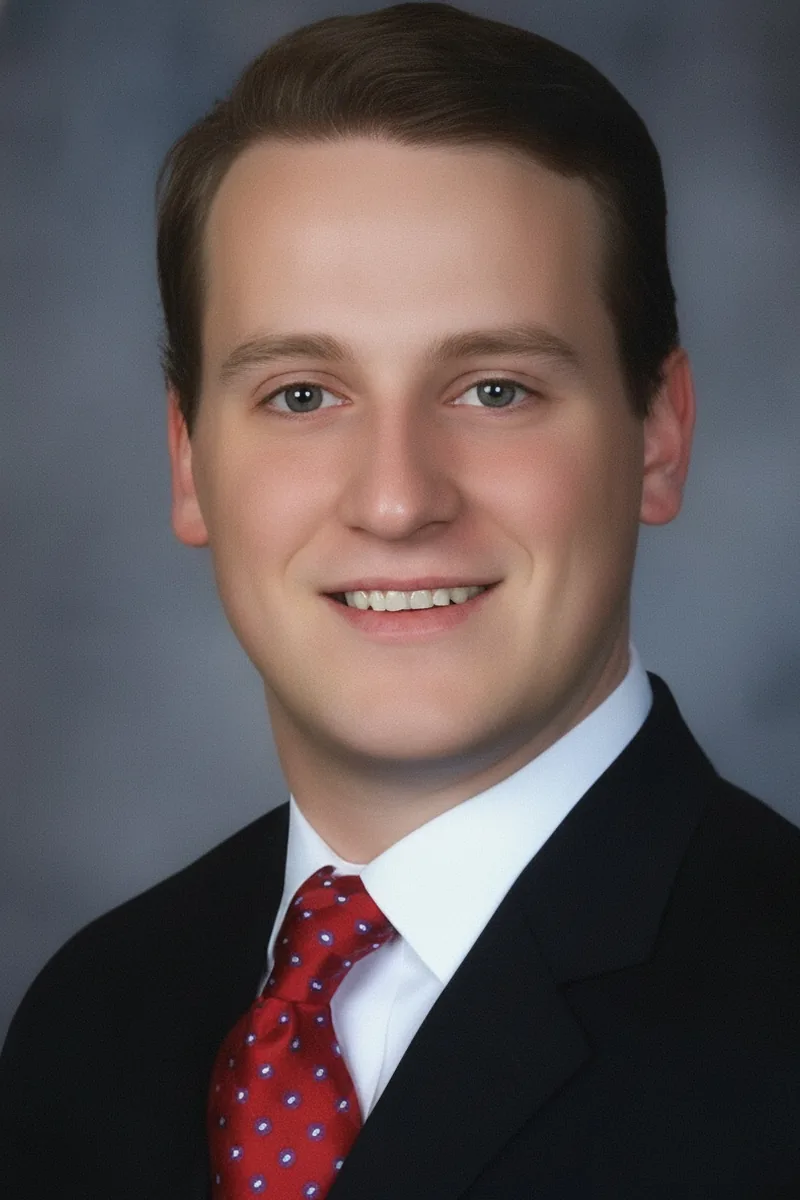
Georgetown's math program trained Peter to think in precise, logical steps — exactly the skill that turns the SAT Math section's multi-step word problems and data analysis questions into straightforward solves. His 1580 SAT score and years of tutoring both math and writing mean he covers the full exam without switching gears, connecting algebraic reasoning on one section to evidence-based reading strategy on the next. Rated 5.0 by students.

Medical school demands the same skill the SAT rewards — extracting the right answer from dense, unfamiliar material under serious time pressure. Alex, who scored a 1590, teaches students to treat the Reading section like a data problem: find the claim, locate the evidence, eliminate what doesn't match. His chemical engineering training at Washington and Lee also means the math section's algebra and data analysis questions are territory he can break down cold.
As a passionate tutor working on a Bachelor's degree in Economics, Mathematics, and Philosophy from the University of Toronto, I have over two years of tutoring experience that spans various subjects, including Writing, English, and advanced math topics. My approach centers on creating engaging, tailored lessons that resonate with students' individual goals and interests. I believe in fostering a supportive learning environment where trial and error can lead to discovery and growth. My experience includes working with elementary and high school students, helping them navigate their homework, prepare for tests like the SAT, and cultivate a deeper appreciation for math and writing. I am deeply motivated to inspire students and help them achieve their academic aspirations while nurturing their curiosity and confidence. I enjoy: Writing, Reading, Piano, Fencing, Archery, Math, Economics, Philosophy, Law.
I'm a Chemical Engineering major at the University of Texas at Austin with a strong passion for teaching. I enjoy helping students in biology, algebra, and chemistry, focusing on building meaningful relationships that make learning engaging and approachable. Teaching not only strengthens my own understanding but also allows me to see the impact of confidence and curiosity in others. Outside of academics, I love staying active through hiking and playing sports like basketball. I also enjoy exploring new food spots, which gives me a chance to connect with different cultures and experiences.
Elliot's neuroscience PhD trained him to parse dense research passages and interpret statistical figures quickly — exactly the skills that drive scores up on the SAT's evidence-based reading and data-heavy math questions. He scored a 1540 on the SAT himself and builds test strategy around recognizing how the exam reuses the same question logic across sections. Rated 5.0 by students.
Zachary's Dartmouth education and master's in political science built the exact skill set the SAT rewards — fast, precise reading of dense passages and tight analytical reasoning under time pressure. He scored a 1550 on the exam and uses that experience to teach concrete strategies for evidence-based reading questions and the algebra-heavy math section, with a step-by-step approach that makes each question type feel predictable rather than overwhelming.
Hi! I'm Eben, a student tutor who genuinely enjoys helping others understand concepts that once felt confusing or overwhelming. I believe learning works best when explanations are clear, supportive, and tailored to how you think not rushed or one-size-fits-all. I have a strong background in math, science, and English, and I've spent time tutoring peers through structured programs like Math Senior Scholars. From that experience, I've learned that the best tutoring sessions feel more like conversations than lectures. I focus on breaking problems down step by step, using examples and analogies, and checking in often to make sure things actually make sense. I'm patient, encouraging, and big on building confidence. If you've ever felt nervous asking questions or worried about "getting it wrong," you're not alone and my goal is to make tutoring a space where mistakes are part of learning, not something to fear. We'll work at your pace and adjust strategies until it clicks.
Scoring a 1550 on the SAT herself, Kiersten spent two semesters as a CollegeSpring Mentor preparing charter school juniors for test day — breaking down everything from evidence-based reading passages to no-calculator math strategies. Her screenwriting background at USC gives her a unique edge on the Reading and Writing sections, where she teaches students to dissect argument structure and pinpoint rhetorical choices under time pressure.
Preparing for the SAT means juggling two very different skill sets — mathematical problem-solving and evidence-based reading and writing — and Anya covers both. Her background teaching math at every level anchors the quantitative side, while her experience as a Spanish teaching assistant sharpened the close-reading and grammar instincts that carry over to the verbal sections.
I hold a Bachelor's degree in Applied Mathematics and Statistics and Economics from Johns Hopkins University and a Master's degree in Biostatistics from Boston University. My academic background has given me a strong foundation in both quantitative reasoning and analytical thinking, which I bring into every tutoring session. I'm passionate about helping students build confidence in their abilities and enjoy guiding them through challenging material by breaking down complex concepts into clear, understandable steps. With over five years of tutoring and teaching experience, I've worked with students across a wide range of subjects, including middle school math, Algebra I & II, Geometry, Precalculus, AP Calculus AB/BC, AP Statistics, and college-level courses like Calculus IIII, Linear Algebra, Differential Equations, and Statistics. I also specialize in standardized test preparation, offering targeted support for the SAT, ACT, and GRE math sections. Beyond math, I tutor economics at both introductory and advanced levels, including Introductory Microeconomics and Macroeconomics, Microeconomic and Macroeconomic Theory, Monetary Analysis, and similar courses. I enjoy helping students connect theoretical models with real-world applications and develop a strong understanding of core economic principles. My tutoring style is patient, supportive, and highly personalized. I focus on fostering deep understanding and critical thinking, tailoring my approach to fit each student's individual learning style and academic goals. Outside of tutoring, I enjoy reading, staying active, and exploring emerging technologies.
Studying both psychology and linguistics at the University of Chicago gave Sherry an unusual double lens for the SAT — the linguistics side sharpens her teaching of grammar rules, sentence structure, and rhetoric on the Writing & Language section, while the psychology side informs how she coaches students through test-day pacing and anxiety management. She scored a perfect 1600 and uses that familiarity with every section to pinpoint exactly where a student's points are slipping, whether it's evidence-based reading pairs or no-calculator algebra. Rated 5.0 by students.
Dennis's finance and statistics coursework at NYU means the SAT Math section plays to his strengths — he teaches students to spot the underlying algebra and data-analysis patterns that repeat across every practice test, turning unfamiliar-looking problems into familiar setups. His 1550 SAT score backs up a prep approach built on efficiency: knowing which questions to attack first, where to double-check, and how to manage the clock so careless errors don't eat into a strong performance.
Every SAT math question pulls from the same core toolkit — linear equations, quadratic reasoning, ratios, and data interpretation — and Oscar's math degree from St. Olaf means he can teach the underlying concepts rather than just test-taking tricks. He currently tutors algebra and algebra 2 students full-time, so the content that dominates the SAT math section is material he works through daily. His low-pressure style is especially useful for test-anxious students who need to build confidence alongside skill.
Nina's biostatistics training at Columbia and Northwestern means the SAT Math section — especially data analysis, scatterplot interpretation, and multi-step algebra — plays directly to her strengths. She scored a 1550 and knows how to teach the quantitative reasoning patterns that separate a good math score from a great one, while her experience with college essays and literature gives her practical tools for the Reading and Writing sections too.
Second-year medical school at Baylor means Michelle lives in the world of high-stakes, timed exams — and she applies that same strategic discipline to SAT prep, where she scored a 1570. Her biochemistry training at Rice sharpens the data-interpretation and graph-reading questions on the Math section, while her science-heavy reading background translates into efficient passage analysis on the Evidence-Based Reading side.
I am passionate about helping students with math, science, test prep, and more! As sophomore undergraduate at Brown University studying Mathematics and Biophysics, I am well experienced with many topics. I received a perfect 36 on my ACT, so I am very confident with test taking.
What makes John effective for SAT prep is that he teaches both halves of the exam with equal fluency — his English and drama training sharpens his approach to passage analysis and evidence-based reading, while his math and physics background means he handles the algebra, data interpretation, and problem-solving sections without switching gears. He scored a 1420 on the SAT himself and holds a perfect 36 ACT composite, so he knows how standardized tests are constructed and where they try to trip students up. Rated 4.9 by students, he builds pacing and elimination strategies tailored to each section's specific traps.
I'm currently pursuing a degree in Neuroscience! My passion lies in empowering students to conquer challenging subjects like AP Biology, Chemistry, and standardized test preparation, including the SAT and PSAT. With over 3 years of tutoring experience, I have honed my ability to adapt my teaching methods to accommodate diverse learning styles, ensuring each student feels supported and confident. I believe in creating interactive sessions that transform learning into an engaging experience, where students not only grasp complex concepts but also develop the skills to tackle challenges independently. As a National Merit Scholar, I offer valuable insights into effective test strategies, helping students navigate the nuances of SAT math and reading. My goal is to inspire students to embrace their academic journey with enthusiasm and resilience.
A 1560 SAT scorer with a Master's in Education from Harvard, Mimi brings a structured yet creative approach to test prep — particularly the evidence-based reading passages, where her art history and literary analysis background makes dissecting complex texts second nature. She teaches students to identify argument structure and eliminate trap answers systematically across both the reading and writing sections.
Most SAT prep treats math and verbal as two separate worlds, but Aarav — a computer science student at Purdue who scored a 1590 — approaches the entire exam as a logic problem, teaching students to spot the underlying structure in both algebraic reasoning and evidence-based reading questions. His coding background makes him especially effective at drilling the systematic elimination and pattern-matching strategies that shave time off the math section. He also covers the reading and writing side, where his AP coursework in humanities keeps his verbal strategies sharp.
What sets Michael apart for SAT prep is genuine fluency across both halves of the exam — his Fine Arts and Global Studies background built the close-reading and analytical writing skills that drive the verbal sections, while a 1590 SAT score confirms he's equally sharp on the math side. He teaches students to spot the recurring grammar traps in Writing & Language and to translate word problems into clean algebraic setups, connecting both skills into a unified test-day strategy.
Northwestern's Honors Program in Medical Education accepted Anna straight out of high school, which meant she had to master the kind of disciplined, high-stakes test-taking that the SAT demands — and her 1590 score reflects that. She teaches students to treat the math section's word problems as logic puzzles and coaches a systematic elimination approach on the Reading and Writing passages that cuts through ambiguity under time pressure.
Scoring a 1550 on the SAT while juggling a dual PhD/MD track at Northwestern says something about efficiency under pressure — Chelain knows how to maximize points per minute on both the math and evidence-based reading sections. She breaks down SAT questions by what they're actually testing (inference vs. command of evidence, heart-of-algebra vs. passport-to-advanced-math) so students stop second-guessing and start recognizing patterns. Rated 5.0 by students.
Law school at the University of Chicago sharpened exactly the skills the SAT rewards — picking apart dense passages under time pressure, spotting logical gaps, and choosing precise language over vague alternatives. Elena pairs that training with a perfect 1600 SAT score and a tutoring approach built around listening to students reason through problems so she can pinpoint the specific assumptions or misreadings costing them points. Her government, Spanish, and legal background gives her unusually natural command of both the verbal and quantitative sides of the exam.
I've been working with students for over seven years, from middle school all the way through college, across subjects like math, calculus, statistics, linear algebra, chemistry, and physics, with a lot of SAT and ACT prep mixed in. My background is perhaps a little unconventional. I have two bachelor's degrees, one in Engineering and one in Communication Studies, plus a Master's in Design. That combination means I can guide you through challenging technical material and communicate it in a way that is easy to grasp. What I care most about is helping students get to a place where they don't need me anymore. I know that sounds like a strange thing for a tutor to say, but I think it's the right goal. I'm not here to walk you through steps to copy down. I want you to understand why something works, because that's what holds up under pressure, on a test you haven't seen before. If you're ready to ace that test or prove that theorem that's been bugging you, reach out and let's work together
Chemical engineering coursework at Michigan means Edward lives in the kind of multi-step quantitative reasoning that dominates the SAT Math section — translating word problems, manipulating algebraic expressions, and interpreting data under time pressure. He pairs that with a structured approach to the Reading and Writing sections, teaching students to identify evidence patterns and grammar rules rather than relying on instinct. His 1520 SAT and 4.8 rating speak to how well that approach transfers to test day.
Preparing for the SAT means building a game plan across both the reading-writing and math sections, not just reviewing content. Harry approaches each section with targeted strategies — annotation techniques for evidence-based reading passages, grammar rules that cover the majority of writing questions, and efficient problem-solving methods for math. His disciplined study habits from NJIT's demanding honors pre-med track translate directly into structured, results-oriented SAT prep.
I am currently a junior at the University of Wisconsin - Eau Claire, pursuing a Bachelor of Science in Biochemistry and Molecular Biology, complemented by minors in Pre-Professional Health Sciences and Spanish for the Health Professions. With five years of tutoring experience, I specialize in high school chemistry, math, and writing, however I am willing to tutor in a wide variety of subjects. My approach to tutoring is centered on fostering confidence and understanding in my students. I believe in creating a supportive environment where students feel comfortable expressing their struggles, as I guide them through concepts using tailored questions and varied explanations. This method allows me to identify their needs and adapt my teaching accordingly. My background in the International Baccalaureate Diploma Program, where I excelled in subjects such as HL Chemistry and HL Language and Literature, fuels my passion for the subject, and I enjoy helping students navigate challenging topics.
Most SAT points aren't lost on the hardest questions — they're lost on medium-difficulty ones where rushing or misreading costs easy points. Eric, who scored a 1570, teaches a pacing and elimination strategy built around that insight, drilling students on when to slow down in the Reading section and when to move quickly through familiar algebra patterns in Math. His business background also sharpens his approach to the data interpretation and graph-reading questions that increasingly dominate the exam.
Perry's dual science degrees from Rice University built the exact quantitative reasoning and data interpretation skills that dominate the SAT Math section, while his medical humanities minor sharpened the close-reading habits needed for Evidence-Based Reading and Writing. He scored a 1570 on the SAT and knows which algebra shortcuts and passage-analysis techniques make the biggest difference under time pressure. Rated 5.0 by students.
Phillips Exeter's Harkness method trained Violet to pull apart complex problems collaboratively — a habit she now applies to SAT prep, where she teaches students specific tricks for pacing the math sections and spotting grammar patterns in Writing and Language. Her math degree from Brown and 1550 SAT score mean she's equally comfortable drilling no-calculator algebra strategies and coaching students through evidence-based reading questions. Rated 4.5 by students.
Years of writing and peer-editing philosophy and religion papers at Pomona gave Miranda a precise feel for argument structure and rhetorical traps — exactly what the SAT's Reading and Writing sections test under time pressure. She pairs that verbal strength with a 1560 SAT score and hands-on experience mentoring high schoolers through standardized test strategy. Rated 5.0 by students.
Most SAT prep treats the Reading and Math sections as completely separate skill sets, but Emily's science training at Yale — where she spent years parsing dense research literature and working with data — means she teaches both sides of the exam as exercises in precise interpretation. She scored a 1550 on the SAT and builds her coaching around the specific reasoning habits that earned it: identifying exactly what a question asks before touching the answer choices, and translating word problems into structures rather than guessing at operations. Rated 5.0 by students.
Helping students has always felt deeply personal to me. I know what it's like to struggle with a subject and how much of a difference the right guidance can make. That's what drives me, not just to explain the material, but to meet students where they are, and help them build confidence along the way. My teaching philosophy is centered around a low-pressure, high-engagement environment where students feel comfortable asking questions and exploring ideas. I use real-world examples, visual breakdowns, and active recall to reinforce understanding and make learning stick. I'm currently in my 4th year of medical school, so I have a certain love for Biology and other life sciences. It can be complex, but when taught the right way, it becomes incredibly intuitive and logical. I also thoroughly enjoy teaching SAT/ACT prep, as it also can be tricky for students to see through its complexity, but becomes much easier to find the objective when taught the right way, with the right tools.
Classics and philosophy trained Austin to read dense, argument-heavy texts with precision — exactly the skill that separates good SAT Reading scores from great ones. He scored a 1570 and teaches students to trace an author's reasoning through evidence-based questions rather than relying on surface-level comprehension. His grammar and writing chops carry over to the Writing and Language section, where he unpacks the punctuation and syntax rules the test recycles in every form.
Medical school admissions forced Nishad to master every section of the SAT on his way to a 1580 composite — and that full-test perspective means he coaches the Reading, Writing, and Math sections as one integrated strategy rather than three separate prep tracks. His premed science training sharpens his approach to data interpretation and graph-based questions, while his literature and essay background keeps the evidence-based reading instruction equally rigorous.
What separates a 1500+ SAT score from a 1300 often isn't knowledge — it's knowing how the test tries to trick you. Joey scored a 1570 and built his prep approach around identifying those traps, particularly the algebra and data-analysis questions on the Math section where careful reading matters as much as calculation. His theater training at Columbia also sharpened the close-reading and rhetorical analysis skills that pay off on the Evidence-Based Reading and Writing sections.
A 1400 SAT and a communication background give Logan a dual advantage: he knows the test's structure cold and can clearly articulate the reasoning behind every answer choice. His approach to the Reading and Writing sections leans heavily on argument analysis — identifying claims, evaluating evidence, and spotting the rhetorical moves that the College Board loves to test. Rated 5.0 by students, he also brings strong math fundamentals from his 36 ACT composite to shore up the quantitative side.
Scoring well on the SAT requires different strategies for different sections, and Yoonseo covers all of them — from algebraic reasoning and advanced math to evidence-based reading and grammar conventions. She spent four years tutoring math and English throughout high school and continues at Johns Hopkins, where her pre-med coursework keeps her quantitative and analytical skills sharp. Students get a single tutor who can diagnose weaknesses across the entire exam rather than just one piece of it.
Phillip's biomedical engineering coursework at Brown means the SAT Math section — algebra, data analysis, advanced problem-solving — plays to his strongest skills, and his 1560 composite score confirms he knows how to execute under test-day pressure. He also coaches students through the Reading and Writing sections by teaching them to identify passage structure and eliminate wrong answers systematically rather than relying on feel. Rated 5.0 by students.
Testimonials
Because the right SAT tutor makes all the difference.
Average Session Rating – Based on 3.4M Learner Ratings
Practice SAT
Free practice tests, flashcards, and AI tutoring for SAT
Top 20 Test Prep Subjects


Top 20 Subjects
Frequently Asked Questions
Score improvement depends on your starting point and how actively you engage with tutoring and practice. Students typically see meaningful gains of 100-300+ points when they work consistently with a tutor over several months. The national average SAT score is around 1050, so if you're starting below that, there's often significant room for improvement, especially in specific sections. A tutor can help you identify which areas offer the biggest opportunities for growth and create a targeted study plan to maximize your score potential.
Varsity Tutors connects you with tutors who use a diagnostic approach—they typically start by having you complete practice tests or section diagnostics to pinpoint exactly where you're struggling. This might reveal patterns like timing issues on reading passages, difficulty with certain math concepts, or grammar rules that need reinforcement. Rather than studying everything broadly, a tutor helps you focus your effort on these specific weak areas, which is far more efficient than generic test prep and typically leads to faster score improvement.
Pacing is one of the most common challenges students face on the SAT, and it's highly learnable. Tutors teach test-taking strategies tailored to each section—like when to skip difficult questions, how to pace through reading passages without losing comprehension, and how to efficiently work through math problems. They also help you practice these strategies repeatedly with timed drills and full practice tests, so managing your time becomes automatic on test day rather than something you're thinking about for the first time.
Practice tests are essential—they're the best predictor of your actual test performance and help you get comfortable with the test format and timing. A tutor can recommend a practice test schedule (typically spacing them out as you prepare), review your results with you to identify patterns in your mistakes, and teach you strategies for the specific question types that trip you up. Taking practice tests alone is helpful, but analyzing them with a tutor to understand why you missed questions is what transforms that practice into real improvement.
Absolutely. Test anxiety often stems from feeling unprepared or unfamiliar with test formats and timing. By working with a tutor, you build genuine familiarity with the test structure, practice consistently, and develop a toolkit of strategies that help you feel more in control. As you see your practice test scores improve and understand the types of questions you're likely to encounter, your confidence naturally grows. Many students also benefit from their tutor's perspective and encouragement during the preparation process.
That depends on your starting scores and goals. Some students struggle more with SAT reading comprehension and grammar, while others find math more challenging. A tutor can help you assess where your biggest opportunities for improvement lie. Many students benefit from balancing both areas—working on reading comprehension and time management in one session, then tackling math problem-solving strategies in another. Your tutor will customize the balance based on your diagnostic results and your target score.
Great SAT tutors combine deep knowledge of the test format and question types with the ability to explain concepts clearly and identify why you're making mistakes. They're skilled at teaching test-taking strategies—not just content—and adapting their approach to your learning style. They also help you stay motivated and focused during what can be a long preparation process. When you connect with a tutor through Varsity Tutors, you're matched with someone who has demonstrated expertise in SAT preparation and experience helping students reach their goals.
Let’s find your perfect tutor
Answer a few quick questions. We’ll recommend the right plan and match you with a top 5% tutor.