Award-Winning Calculus
Tutors
Calculus
Tutors
Private 1-on-1 tutoring, weekly live classes for academic support, test prep & enrichment, practice tests and diagnostics, and more to elevate grades and test scores.
Based on 3.4M Learner Ratings
UniversitiesSchools & Universities
DeliveredHours Delivered
ProficiencyGrowth in Proficiency
Who needs tutoring?
No obligation. Takes ~1 minute.

Harvard's rigorous liberal arts curriculum gave Henry exposure to quantitative reasoning across disciplines, and his 1530 SAT confirms he can handle the math — but he's straightforward that calculus is a supporting subject rather than his wheelhouse. Where he adds value is in the conceptual scaffolding: unpacking what a derivative actually represents as a rate of change, or why the fundamental theorem ties two seemingly different operations together, using the same analytical precision he brought to his senior thesis work.
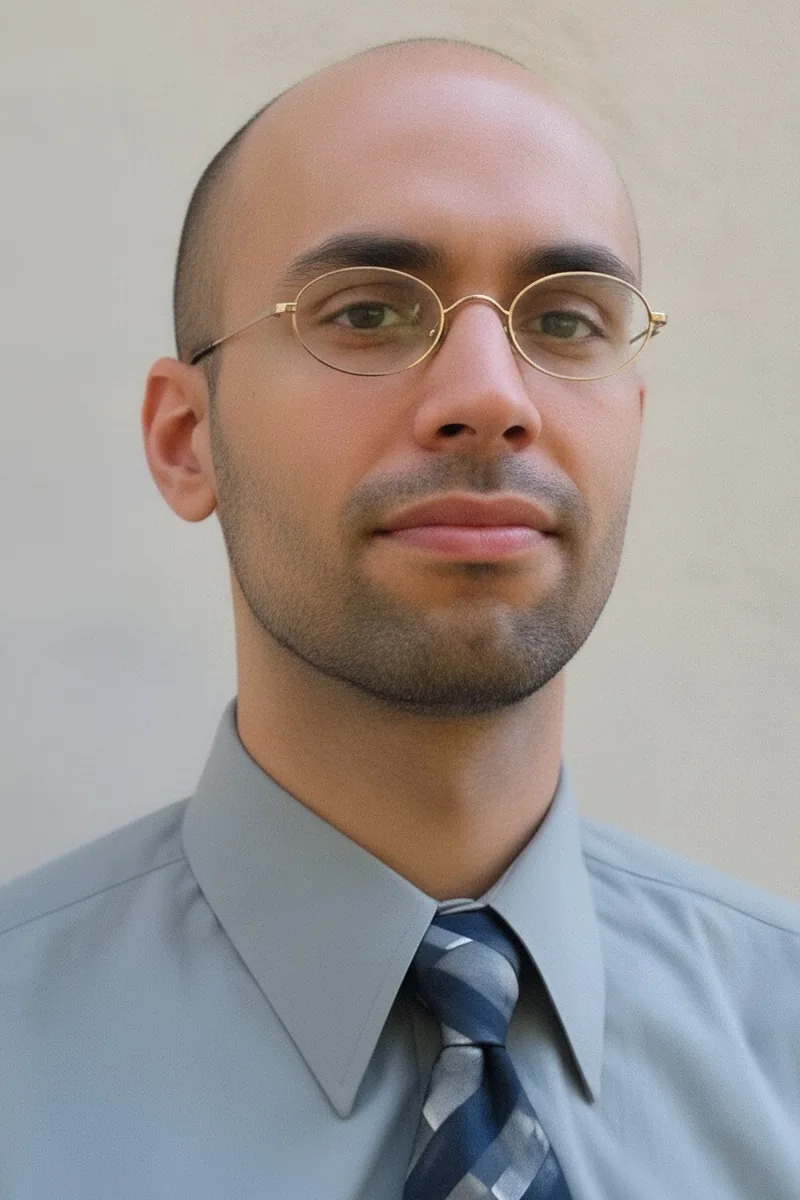
Between a biomedical engineering degree and a PhD in statistics, Sam has used calculus as a daily working tool — from modeling biological systems to deriving the probability distributions that underpin advanced statistical theory. That means he teaches integration techniques, series convergence, and multivariable concepts as tools with clear purpose, not just abstract exercises. Rated 4.9 by students.
Ben's math degree from Penn means he's gone well beyond the standard calculus sequence — through multivariable calculus, linear algebra, and the rigorous proofs that tie them together — so he teaches concepts like the chain rule or integration by parts with a clear sense of where they lead. That depth shows up in how he unpacks problems: connecting each technique back to the underlying logic instead of treating it as a standalone trick. Rated 5.0 by students.
Biomedical engineering at Northwestern means Ingrid has used calculus as a daily tool — computing integrals for drug delivery models, differentiating rate equations in biomaterials research, and applying differential equations in her work at the John Rogers Lab. That hands-on engineering context lets her teach concepts like the chain rule or integration by parts through problems where the math actually builds something, not just satisfies a homework prompt.
Scoring a 34 on the ACT means Solange has the quantitative chops to handle calculus, even though her Harvard degrees are in sociology and women's studies. Her eight years of tutoring math at multiple levels give her a clear read on where students get stuck — particularly the conceptual shift from algebraic manipulation to thinking about instantaneous rates of change and accumulation. She breaks down the logic behind each new idea before diving into computation, so the notation stops feeling like a foreign language.
As a biochemistry major at Rice, Michelle used calculus constantly — modeling reaction rates, analyzing enzyme kinetics, interpreting area-under-the-curve problems with real lab data. She teaches derivatives and integrals by connecting the mechanics of each rule to the reasoning behind it, so students understand when and why to apply techniques like chain rule or u-substitution.
Limits, derivatives, and integrals each demand a different kind of thinking, and students who try to memorize procedures without grasping the underlying logic tend to hit a wall at the chain rule or related rates. Asta unpacks each concept visually and algebraically so the reasoning behind techniques like u-substitution actually clicks. Her 35 ACT composite speaks to the quantitative rigor she brings.
Doctoral-level research in clinical psychology demands constant fluency with statistical modeling, derivatives, and rates of change — concepts that sit at the heart of calculus. Shelley breaks down problems like related rates and integration by connecting each step to a concrete, real-world scenario so the logic behind the math clicks. Rated 5.0 by students.
Whether a student is seeing derivatives for the first time or wrestling with integration by parts, Justin connects each calculus concept to a physical picture — velocity from position, area under a curve, rates of change in real systems. That instinct comes from studying both physics and mathematics at Washington University before pursuing a PhD in computational math at the University of Chicago.
Daniel's sociology degree isn't a math credential, but sociology's quantitative methods — analyzing rates of change in population data, modeling trends over time — sit surprisingly close to what early calculus actually asks students to do. His 1500 SAT confirms strong quantitative chops, and he brings a 5.0 tutoring rating to sessions where he breaks down derivatives and limits by connecting them to real patterns rather than abstract symbol-pushing.
Between a biology degree heavy on quantitative coursework and a perfect 36 ACT, Emily has the mathematical chops to teach calculus with real depth — not just procedure but the reasoning behind integration techniques and derivative applications. Her epidemiology training at Yale's School of Public Health meant working with rate-of-change models constantly, from disease transmission curves to survival analysis, so she can ground abstract calculus concepts in problems where the math actually drives decisions. Rated 5.0 by students.
Limits, derivatives, and integrals become far more intuitive when a tutor can point to what they mean in a physical system — velocity as a derivative of position, area under a curve as accumulated work. As a mechanical engineering major at Yale, Charles lives in calculus every day and brings that applied fluency to sessions, whether the topic is chain rule mechanics or setting up a Riemann sum.
Art history and education aren't the usual path to calculus, and Mimi is straightforward about that — but her 1560 SAT demonstrates real quantitative strength, and her Masters in Education from Harvard means she knows how to design a learning sequence that actually builds understanding. She brings that inquiry-based instinct to early calculus, walking through what a derivative means conceptually before jumping to computation, so the rules feel like they follow logically rather than appearing out of nowhere.
From epsilon-delta definitions of limits to integration techniques like substitution and parts, calculus demands both conceptual understanding and mechanical skill. James has tutored college students through calculus courses at Harvard for years, often connecting abstract ideas — like why the chain rule works — back to tangible applications in chemistry and the physical sciences. That dual perspective makes dense material more intuitive.
A PhD in Education means Reid thinks deeply about *how* people learn abstract concepts — and calculus, where students must shift from computing answers to reasoning about rates and accumulation, is exactly where that expertise pays off. His sociology and math tutoring background gives him a knack for translating the conceptual leap from algebra into limits and derivatives, breaking down the notation barrier that trips up so many students encountering calculus for the first time.
Mechanical engineering grad work is essentially applied calculus — Aaron uses derivatives to model thermal systems, integrals to analyze fluid flow, and differential equations to predict how structures respond to stress, every single day. That daily fluency means he can teach integration techniques or the chain rule by connecting them to problems where the math is doing real physical work. Rated 5.0 by students.
Biostatistics at the master's and doctoral level means Nina uses calculus constantly — integration for probability density functions, derivatives for maximum likelihood estimation, and multivariable chain rules that underpin regression models. That daily fluency lets her teach concepts like Riemann sums or related rates by connecting them to the statistical machinery they actually power. Rated 5.0 by students.
Teaching middle school math and special education for years means Liz has seen exactly where students' algebraic foundations crack under the weight of new calculus concepts — and she knows how to shore those gaps up before they snowball. Her 34 ACT composite confirms she can handle the quantitative side, and her special education training gives her a toolkit of strategies for breaking down intimidating ideas like limits and derivatives into steps that actually land for different types of learners.
Every week in his Harvard engineering courses, Christopher applies calculus to real systems — computing moments of inertia, modeling fluid flow, analyzing stress distributions. That constant use means he can unpack topics like the chain rule, improper integrals, and convergence tests with a fluency that goes well beyond textbook examples. He pinpoints the specific conceptual gaps holding a student back and addresses those directly rather than re-teaching entire chapters.
Dual-degree work in Applied Mathematics and Computer Science at Johns Hopkins means Sabira isn't just familiar with calculus — she uses it daily, from optimization algorithms to the linear algebra and multivariable calc that underpin machine learning models. That depth lets her trace a concept like the chain rule or integration by parts back to why it was invented in the first place, turning mechanical steps into intuition. Rated 5.0 by students.
Philosophy at the University of Chicago is built on formal logic — the same structural reasoning that underpins proofs about limits, continuity, and the behavior of functions at boundary cases. Justin applies that logical rigor to calculus, breaking down each rule into a chain of reasoning rather than a formula to memorize, which is especially useful when students hit the conceptual wall around the chain rule or related rates. His 34 ACT and 5.0 tutoring rating back up the quantitative chops behind that approach.
Curriculum development — Elena's day job — is essentially about sequencing ideas so each one builds logically on the last, which is exactly what early calculus demands when students move from limits to derivatives to integration. Her McGill and Edinburgh training is in the humanities, not math, so she's transparent about the boundaries of her calculus expertise, but her knack for making abstract concepts click through analogy and structured explanation (she was named Scotland's International Young Thinker of the Year for that skill) carries over well to unpacking the reasoning behind rules like the chain rule or the fundamental theorem.
An MIT math degree followed by PhD work in Operations Research at Georgia Tech means Isabella has used calculus as a daily tool — optimization problems, convergence proofs, and the kind of rigorous analysis where understanding integration techniques and multivariable derivatives isn't optional. She's TA'd college-level math courses and taught gifted middle and high school students, so she can adjust the depth from first encounters with limits all the way through series and differential equations. Rated 5.0 by students.
Between a physics bachelor's and a PhD in biomedical engineering, Andrew has used calculus as a daily working language — from modeling tissue mechanics to solving the differential equations that describe biological systems. That depth means he can teach derivatives, integrals, and multivariable concepts not as isolated procedures but as tools with clear physical meaning. Rated 4.9 by students.
Psychology and linguistics both lean heavily on statistical modeling — analyzing language acquisition curves, interpreting behavioral data over time — which gave Sherry real exposure to the calculus concepts underlying those methods during her University of Chicago coursework. Her 1600 SAT confirms she can handle rigorous quantitative reasoning, and she brings that same precision to unpacking limits and derivatives for students who need the 'why' explained clearly before the mechanics make sense. Rated 5.0 by students.
Biology at the pre-health level is surprisingly calculus-heavy — enzyme kinetics, membrane transport rates, and the pharmacology models Shayan encounters in his Penn coursework all depend on derivatives and integrals behaving predictably. That daily exposure to calculus as a tool for solving real biological problems gives him a concrete vocabulary for explaining chain rules, related rates, and integration techniques without leaning on pure abstraction. Rated 5.0 by students.
Four years of volunteering as an SAT tutor sharpened Renee's quantitative skills — her 1530 SAT confirms that — but her real strength is translating abstract notation into language that clicks, a skill she built as a Writing Consultant breaking down complex ideas for diverse learners. She applies that same clarity to early calculus concepts like limits and continuity, walking through the reasoning behind each step so the logic holds up long after the session ends.
Lauren's degrees are in social sciences and French, so she's straightforward that calculus isn't her primary area — but her tutoring roster includes algebra and math broadly, meaning she's built a working fluency with the foundational reasoning that calculus demands. She takes a deliberate, concept-first approach to topics like continuity and rate of change, leaning on the same structured study methods that earned her a 5.0 rating across subjects.
Three BS degrees including one in Finance means Matt has worked through the calculus that underpins financial modeling — present value derivations, marginal cost optimization, and the continuous compounding formulas that rely on limits and exponentials. His 1530 SAT confirms the quantitative chops to back that up, and he teaches the material by connecting each rule to the business logic that makes it worth learning.
Limits, derivatives, and integrals each introduce a fundamentally new way of thinking about change and accumulation — and rushing past the intuition behind them is the fastest way to hit a wall. Sung unpacks each concept by connecting it to concrete problems, like how rates of reaction in chemistry are really just applied derivatives. His chemistry degree gives him a natural fluency with the kind of quantitative reasoning calculus demands.
Keith's academic path runs through political science and law, not mathematics, so he's upfront that calculus is well outside his core expertise. His tutoring experience across multiple math levels means he can support students navigating early concepts like limits and basic derivatives, bringing the same structured, logical thinking that earned him a 1560 SAT and admission to Cornell Law.
Comparative literature at Princeton isn't a typical path to calculus, but the close-reading discipline Brittney developed there — pulling apart layered arguments piece by piece — maps surprisingly well onto unpacking limit definitions and derivative rules where every symbol carries specific meaning. Her 1440 SAT confirms solid quantitative reasoning, and she brings that same meticulous, notation-decoding approach to early calculus concepts. Rated 5.0 by students.
Electrical engineering at Stanford means Jai didn't just take calculus — he used it daily, from analyzing circuit behavior with differential equations to applying Fourier transforms in signal processing. That depth turns him into someone who can explain not just how to evaluate an integral but why it models the physical quantity it does. His 1590 SAT confirms the quantitative precision he brings to every problem.
Three science degrees — including one in chemistry — mean Zosia has actually used calculus the way it was designed to be used: modeling reaction rates, solving kinetics problems, and interpreting how systems change over time. That applied fluency lets her teach derivatives and integrals as tools with purpose, connecting the mechanics of differentiation to the physical and chemical processes where they originate. Rated 4.9 by students.
Philosophy, Politics, and Economics at Penn isn't a math degree, but the PPE program's quantitative economics track means Kevin has worked through optimization problems, marginal analysis, and the derivative-driven reasoning that underpins microeconomic theory. His 34 ACT composite backs up that quantitative ability, and he teaches calculus concepts by connecting them to the economic models where they actually do something — finding maximum profit, minimizing cost, interpreting what a rate of change means in context.
Computer science at Stanford means David didn't just take calculus — he relied on it, using derivatives for gradient descent in machine learning and integrals for probability distributions in algorithms courses. That ongoing dependence on calculus as a working tool gives him a practical fluency with the material, and his 1570 SAT confirms the quantitative chops to back it up.
Having completed AP Calculus BC and continued into college-level coursework at Princeton, Julie tackles everything from limit definitions and derivative rules through integration techniques and series convergence. She's especially sharp at explaining the conceptual "why" behind procedures like the chain rule or u-substitution, drawing on the same logical rigor her philosophy training demands.
Biomedical sciences coursework put Sam squarely in calculus territory — modeling physiological rates, interpreting concentration-over-time curves, and applying integration to problems like cardiac output and drug absorption. That background means he teaches derivatives and integrals as tools with a purpose, connecting each rule to the kind of real-system behavior students rarely see in a standard textbook. His 1530 SAT confirms the quantitative chops to back it up.
Between pharmacokinetics in medical school and the quantitative modeling baked into her MBA coursework at Kellogg, Anna has used calculus as a working tool — not just a classroom exercise. She teaches derivatives and integrals by connecting them to the rate-of-change problems she actually solves, like how drug concentrations shift over time or how marginal cost curves drive business decisions. A 36 ACT composite and 5.0 tutoring rating back up the quantitative chops.
Perry's biology training at Rice meant heavy exposure to applied calculus — modeling population growth with differential equations, analyzing rates of change in biochemical reactions. He brings that real-world grounding to limits, derivatives, and integrals, making abstract concepts feel purposeful rather than purely theoretical.
Testimonials
Because the right Calculus tutor makes all the difference.
Average Session Rating – Based on 3.4M Learner Ratings
Top 20 Math Subjects


Top 20 Subjects
Frequently Asked Questions
Students often find limits and continuity challenging because they require thinking about behavior rather than just computation. The transition from algebra to derivatives—understanding that a derivative represents an instantaneous rate of change—trips up many learners who've only worked with average rates. Integration is another major hurdle, especially recognizing when to use substitution, integration by parts, or other techniques. Word problems involving related rates and optimization also cause difficulty because they require translating real-world scenarios into mathematical models before solving.
A tutor helps you see why the power rule works, not just how to apply it—for example, understanding that the derivative measures the slope of the tangent line at any point on a curve. Through guided exploration, you'll connect the geometric meaning of derivatives to their algebraic representation, and see how integration reverses differentiation. Tutors also help you recognize patterns: understanding that all optimization problems follow a similar structure, or that related rates problems use the chain rule in a specific way. This conceptual foundation makes it easier to tackle unfamiliar problems because you understand the underlying principles.
In Calculus, the process matters as much as the answer because it reveals whether you understand the concept or just got lucky. A tutor helps you organize multi-step problems—like finding critical points, testing intervals, and justifying conclusions in an optimization problem—so your reasoning is clear and logical. They also teach you to communicate mathematically: explaining why you chose a particular integration technique, or how you set up a limit problem. This skill is essential for exams, free-response sections, and building genuine understanding rather than relying on pattern-matching.
Tutors teach a systematic approach: first identify what's changing (variables), what's constant, and what you're asked to find. For related rates problems, they help you write the relationship between variables, then differentiate with respect to time. For optimization, you'll learn to define the quantity to maximize or minimize, express it in terms of one variable using constraints, then apply Calculus to find extrema. The key is breaking the problem into stages rather than jumping to formulas—tutors help you see that every word problem follows a logical structure once you know what to look for.
Tutors use visual and numerical approaches alongside algebraic ones. You might explore how a function behaves as you zoom in on a point, or calculate slopes of secant lines with smaller and smaller intervals to see them approach the derivative. This hands-on exploration helps you internalize that a limit describes what a function approaches, and a derivative is the limit of a rate of change. Many tutors also use graphing to show you the connection between a function and its derivative—like how positive derivatives correspond to increasing sections of the graph. Once you see these relationships visually, the algebra makes much more sense.
Rather than memorizing a flowchart, tutors help you recognize patterns in the integrand itself. For example, if you see a composite function where the derivative of the inner function appears in the integral, substitution is likely the right choice. Integration by parts works well when you have a product of functions where one becomes simpler when differentiated. A tutor teaches you to ask diagnostic questions about the structure of the problem, then match it to a technique—this pattern recognition is much more reliable than memorization. They'll also show you how to verify your answer by differentiating, which builds confidence and catches errors.
Tutoring provides a judgment-free space to ask questions and work through confusion without pressure. A tutor can identify specific gaps—maybe you need to strengthen your algebra or trig skills, which are foundational to Calculus success—and address those directly rather than having you feel lost in a large class. Breaking Calculus into smaller, manageable concepts and celebrating progress on each one builds confidence. Many students discover that Calculus is logical and learnable once they understand the big ideas, rather than an overwhelming collection of rules. Regular tutoring also reduces test anxiety because you've practiced problems thoroughly and understand the reasoning behind your solutions.
Look for tutors with deep knowledge of Calculus concepts and how they connect—someone who can explain not just how to solve a problem, but why that method works. Strong Calculus tutors understand common misconceptions (like thinking a derivative is always the slope of a line, rather than the instantaneous rate of change) and can address them directly. They should be skilled at multiple representations: algebraic, graphical, numerical, and verbal. Experience with different textbooks and curricula is valuable since Calculus is taught with varying emphasis on rigor versus applications. Most importantly, they should be able to adapt their explanations to your learning style and help you build genuine understanding rather than procedural fluency alone.
Let’s find your perfect tutor
Answer a few quick questions. We’ll recommend the right plan and match you with a top 5% tutor.