Award-Winning Spanish Tutors
serving Milwaukee, WI
Spanish
Tutors in Milwaukee
Private 1-on-1 tutoring, weekly live classes for academic support, test prep & enrichment, practice tests and diagnostics, and more to elevate grades and test scores.
Based on 3.4M Learner Ratings
UniversitiesSchools & Universities
DeliveredHours Delivered
ProficiencyGrowth in Proficiency
Who needs tutoring?
No obligation. Takes ~1 minute.

As a bilingual speech-language pathologist who works daily with Spanish-speaking families in Milwaukee, Mary uses the language professionally — not just academically. She teaches verb conjugations, pronoun usage, and sentence construction by connecting grammar rules to how Spanish is actually spoken, which makes concepts like the subjunctive mood and ser versus estar click faster.
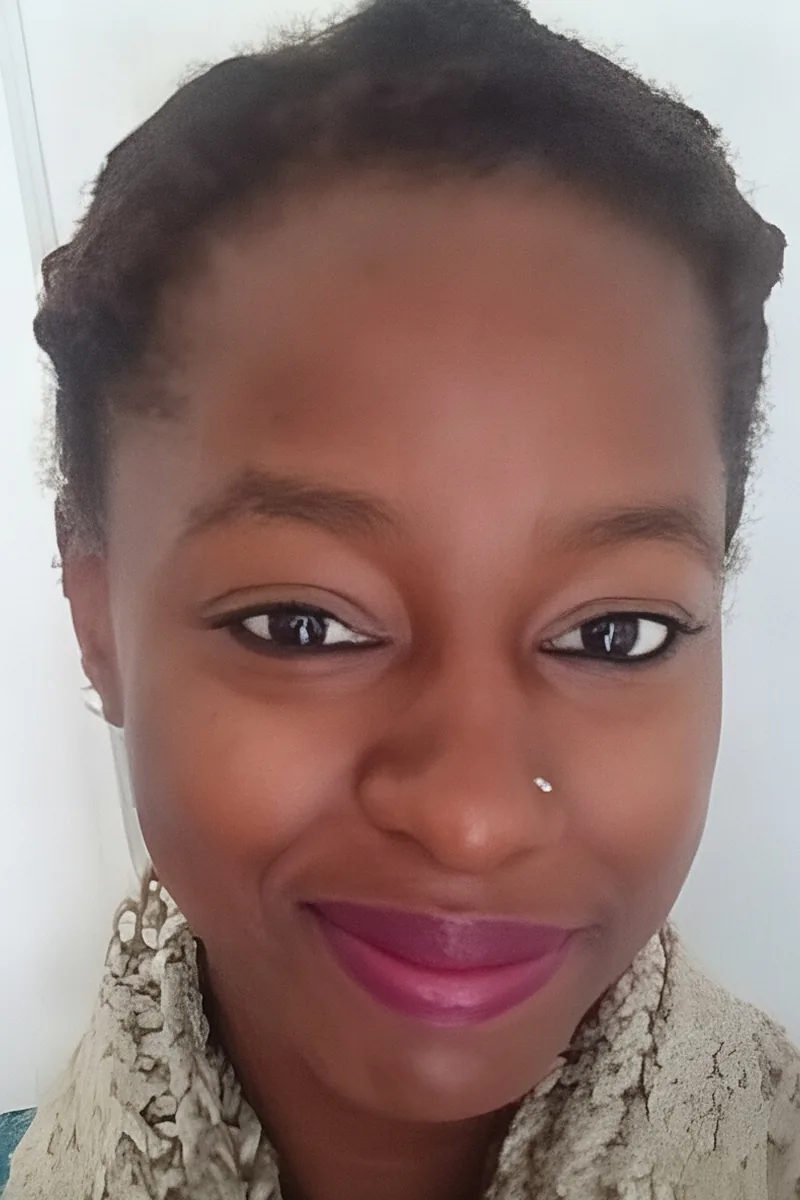
Blaque has tutored Spanish across multiple levels, from beginners learning verb conjugations to advanced students tackling subjunctive mood and complex reading passages. She's consistently moved students up one to two grade levels by connecting grammar rules to real usage patterns instead of treating them as isolated drills. Whether the challenge is vocabulary retention or sentence construction, she adapts her approach to what each student actually needs.
Verb tenses like the subjunctive and preterite-vs-imperfect distinction trip up nearly every Spanish student at some point. Ian tackles grammar systematically but always ties it back to actual usage, so students understand not just that "fuera" is subjunctive but why a native speaker would choose it in context. He teaches across reading, writing, and speaking to reinforce each concept from multiple angles.
Studying at Brown alongside native speakers and in multilingual community settings gave Sophie practical fluency she brings to Spanish tutoring. She breaks down verb conjugation patterns and sentence structure using the same logical frameworks from her math background — turning grammar rules into systems students can actually internalize.
Growing up bilingual in Spanish and English, Richard doesn't just know the grammar rules — he thinks in the language. He's also TA'd college-level Spanish courses, so he's comfortable walking students through everything from subjunctive mood usage to reading comprehension of authentic texts.
I am excited about the opportunity to apply my skills and experience for Varsity Tutors. In addition to my Bachelor of Arts in Spanish, I also have six years of experience teaching Spanish to middle school students.
Living in Seville for a semester gave Shona the kind of immersive Spanish fluency that textbooks can't replicate — she picked up regional idioms, subjunctive triggers in everyday conversation, and the rhythm of natural speech. She brings that real-world context into lessons on everything from verb conjugation patterns to reading comprehension, making grammar rules feel less abstract.
Learning Spanish grammar often feels like memorizing endless conjugation tables, but Nicole approaches it differently — she connects verb tenses and sentence structures to patterns students already recognize from English. Her experience with Spanish 1 and Spanish 2 curricula means she knows exactly where students tend to stumble, whether it's ser versus estar or the subjunctive mood.
While German is Adam's primary language focus, he also tutors introductory Spanish and understands the particular challenge of keeping two foreign languages straight in your head. He brings structured study techniques to vocabulary acquisition and verb conjugation patterns, making early Spanish coursework feel more manageable.
Breanna's background is in education and counseling, not Spanish specifically — but her master's in education means she knows how to break down unfamiliar material into structured, repeatable steps, which is exactly what language learning demands. She applies that instructional scaffolding to vocabulary acquisition and grammar concepts like verb conjugation, building each lesson on what a student already has down before adding complexity.
Halle is a double major in Spanish and Biology at UW–Madison, which means she uses Spanish daily in academic contexts — reading research papers, writing essays, and holding conversations that go well beyond classroom drills. She breaks down tricky concepts like subjunctive mood triggers and ser vs. estar distinctions by connecting grammar rules to how native speakers actually think about them. Rated 5.0 by students.
Julia earned her bachelor's degree in Spanish summa cum laude, which means she didn't just study the language — she mastered its grammar, literature, and regional variations at an advanced academic level. She unpacks tricky concepts like the subjunctive mood and ser-versus-estar distinctions by connecting grammar rules to how native speakers actually think and communicate.
Rameen isn't just taking Spanish classes on the side — she's pursuing it as a full major at Loyola Chicago, which means daily immersion in grammar, composition, and literary analysis conducted entirely in the language. She walks students through everything from mastering the subjunctive mood to building reading comprehension skills for complex texts. Rated 5.0 by students.
I am enthusiastic about finding what motivates my students! I am eager to build strong relationships with open communication, trust, and friendship. I believe that successful teaching and learning is best granted through a conversation: what excites you about this topic? How can you relate this topic to your own life? As an eccentric traveler, learner, and collector of oddities I am proud of the experience I bring to the table with my students.
My name is Mika and I recently graduated from Case Western Reserve University in Cleveland where I studied Economics, Math, and Spanish. I want to help you get the best grades, knowledge, and love of learning possible!
From Spanish 1 verb conjugations through Spanish 4 literary analysis, Pinelopi has tutored every level of the language and knows exactly where students tend to stall — usually around the subjunctive mood and indirect object pronouns. She breaks these tricky structures down into patterns that stick, building real fluency rather than rote translation skills.
Matt minored in Spanish during his undergraduate studies and has carried the language through multiple levels of coursework, from foundational grammar to advanced composition. He tackles tricky areas like subjunctive mood, ser versus estar distinctions, and preterite-imperfect contrasts by linking each rule to real usage patterns rather than rote conjugation charts. Rated 5.0 by students.
Studying Latin American history at Duke meant Jean spent years reading Spanish-language primary sources — colonial documents, political speeches, literary texts — and building fluency that goes well beyond classroom drills. She teaches grammar and vocabulary in context, connecting verb tenses and sentence structures to how Spanish is actually used in writing and conversation.
Vivian's background is in music performance and standardized test prep, not Spanish — but her Juilliard training means she's wired to hear and reproduce precise patterns, a skill that transfers directly to mastering pronunciation, accent marks, and the rhythmic flow of spoken Spanish. She applies the same disciplined, repetition-based practice she uses in the practice room to lock in conjugation patterns and vocabulary retention.
Rather than drilling conjugation tables in isolation, Meghan teaches Spanish grammar in context — building sentences that students actually want to say. She minored in Spanish at Northwestern and then spent a semester at Madrid's top-ranked university taking upper-level courses entirely in Spanish alongside native speakers. That immersion experience means she understands the gap between textbook Spanish and how the language actually works.
Jane tutors Spanish 1 and 2 students on the grammar fundamentals that trip most English speakers up — ser versus estar, preterite versus imperfect, and pronoun placement in different sentence structures. Her analytical approach to language, sharpened by studying English at Princeton, gives her a knack for explaining why Spanish grammar rules work the way they do rather than just listing them.
Medical school at Baylor means Sugi regularly encounters Spanish-speaking patients and medical terminology rooted in Latin — a context that sharpens her ear for vocabulary patterns and grammatical structures in ways a standard classroom can't replicate. Her cognitive science background from Rice also gives her a research-backed understanding of how the brain acquires new languages, so she tailors practice around the memorization and retrieval techniques that actually stick. Rated 5.0 by students.
Learning Spanish as a cognitive science student gave Adam an unusual advantage: he understands how the brain acquires a second language and uses that knowledge to make vocabulary and grammar stick faster. His Spanish minor at Rice covered everything from verb conjugation patterns to conversational fluency. Whether a student is wrestling with the subjunctive mood or building everyday speaking confidence, Adam tailors the approach to how they learn best.
Cassandra teaches Spanish at the introductory and intermediate levels, covering verb conjugation, pronoun usage, and sentence construction. Her background in comparative literature and Latin gives her a structural understanding of how Romance languages work, which makes explaining concepts like the subjunctive or ser-versus-estar distinctions more intuitive for students.
Samantha teaches Spanish across multiple levels, from foundational verb conjugations and noun-adjective agreement through advanced grammar like the subjunctive mood and complex sentence structures. Her analytical approach — honed through a Duke science education — treats language acquisition as a system to decode rather than a list to memorize.
Teaching Spanish through all four levels — from introductory grammar through advanced conversation — gives Charles a clear picture of where students typically get stuck, whether it's ser versus estar, subjunctive mood triggers, or building spoken fluency. He keeps lessons practical, connecting conjugation drills and vocabulary to real conversational scenarios so the language feels usable, not abstract.
Four years living in Viña del Mar, Chile, gave Anna the kind of Spanish fluency you can't get from a textbook — she taught at a Chilean university, navigated daily life in Spanish, and absorbed the idiomatic rhythms of real conversation. She brings that immersion experience into lessons on verb conjugation, subjunctive mood, and reading comprehension, connecting grammar rules to how Spanish is actually spoken.
Testimonials
Because the right Spanish tutor makes all the difference.
Average Session Rating – Based on 3.4M Learner Ratings
Nearby Spanish Tutors
Other Milwaukee Tutors
Related Languages Tutors in Milwaukee
Frequently Asked Questions
Speaking fluency develops through consistent, real-time conversation practice—something that's difficult to get in a traditional classroom setting with a 20.5:1 student-teacher ratio. Personalized 1-on-1 instruction allows you to practice speaking without worrying about making mistakes in front of classmates, and tutors can provide immediate feedback on pronunciation, accent, and natural phrasing. Regular conversation practice combined with targeted grammar work helps you build confidence and develop the ability to think and respond in Spanish.
Spanish verb conjugation is difficult because there are multiple tenses (present, preterite, imperfect, conditional, subjunctive, and more), each with different endings that change based on the subject pronoun. Unlike English, which relies heavily on helping verbs, Spanish embeds tense and mood directly into the verb form itself. A tutor can break down conjugation patterns into manageable chunks, show you the logic behind the rules, and give you targeted practice so the patterns become automatic rather than something you have to think through every time.
Vocabulary sticks when you encounter words in context and use them repeatedly over time—a principle called spaced repetition. Rather than memorizing isolated word lists, effective learning involves seeing words in sentences, using them in conversation, and revisiting them across multiple sessions. Tutors can help you learn vocabulary thematically (by topic or situation) and incorporate new words into speaking practice, which makes them far more memorable than flashcard drilling alone.
Both matter, but they serve different purposes. Grammar rules give you the structure and logic behind the language, while natural usage—how native speakers actually speak—teaches you what sounds right and helps you develop intuition. The best approach combines explicit grammar instruction with plenty of exposure to authentic Spanish through conversation, media, and real-world examples. A tutor can help you understand the rules while also teaching you the natural, conversational way native speakers use the language.
Language is deeply tied to culture—understanding the context, customs, and perspectives of Spanish-speaking communities helps you use language appropriately and makes learning more meaningful. For example, knowing cultural differences in formality levels (tú vs. usted) or regional variations in vocabulary helps you communicate authentically. Tutors can incorporate cultural elements into lessons, helping you understand not just what to say, but when and how to say it in different contexts.
Yes, accent and pronunciation improve significantly with guided practice and feedback. Common challenges for English speakers include rolling the 'r', distinguishing between similar vowel sounds, and getting the rhythm and intonation right. In personalized tutoring, a tutor can model correct pronunciation, listen to you speak, and give you specific feedback on problem areas. Consistent practice with immediate correction helps you retrain your ear and mouth to produce Spanish sounds more naturally.
Most Milwaukee schools follow a communicative approach, focusing on the four language skills: reading, writing, listening, and speaking. However, with classroom sizes and time constraints, students often get limited speaking practice and personalized feedback. A tutor can complement classroom learning by providing the extra conversation practice and one-on-one attention that helps you move from understanding Spanish to actually using it confidently—which is especially valuable if you're preparing for AP Spanish, standardized tests, or real-world communication.
Look for tutors with strong fluency in Spanish (ideally native or near-native proficiency), teaching experience, and familiarity with the specific challenges students face. Whether you need help with conversational Spanish, grammar, test prep, or cultural understanding, the right tutor should be able to diagnose your specific weaknesses and create a personalized learning plan. Varsity Tutors connects you with expert tutors who have proven experience helping students in Milwaukee develop real Spanish proficiency.
Let’s find your perfect tutor
Answer a few quick questions. We’ll recommend the right plan and match you with a top 5% tutor.