Award-Winning AP Calculus AB Tutors
serving Milwaukee, WI
AP Calculus AB
Tutors in Milwaukee
Private 1-on-1 tutoring, weekly live classes for academic support, test prep & enrichment, practice tests and diagnostics, and more to elevate grades and test scores.
Based on 3.4M Learner Ratings
UniversitiesSchools & Universities
DeliveredHours Delivered
ProficiencyGrowth in Proficiency
Who needs tutoring?
No obligation. Takes ~1 minute.
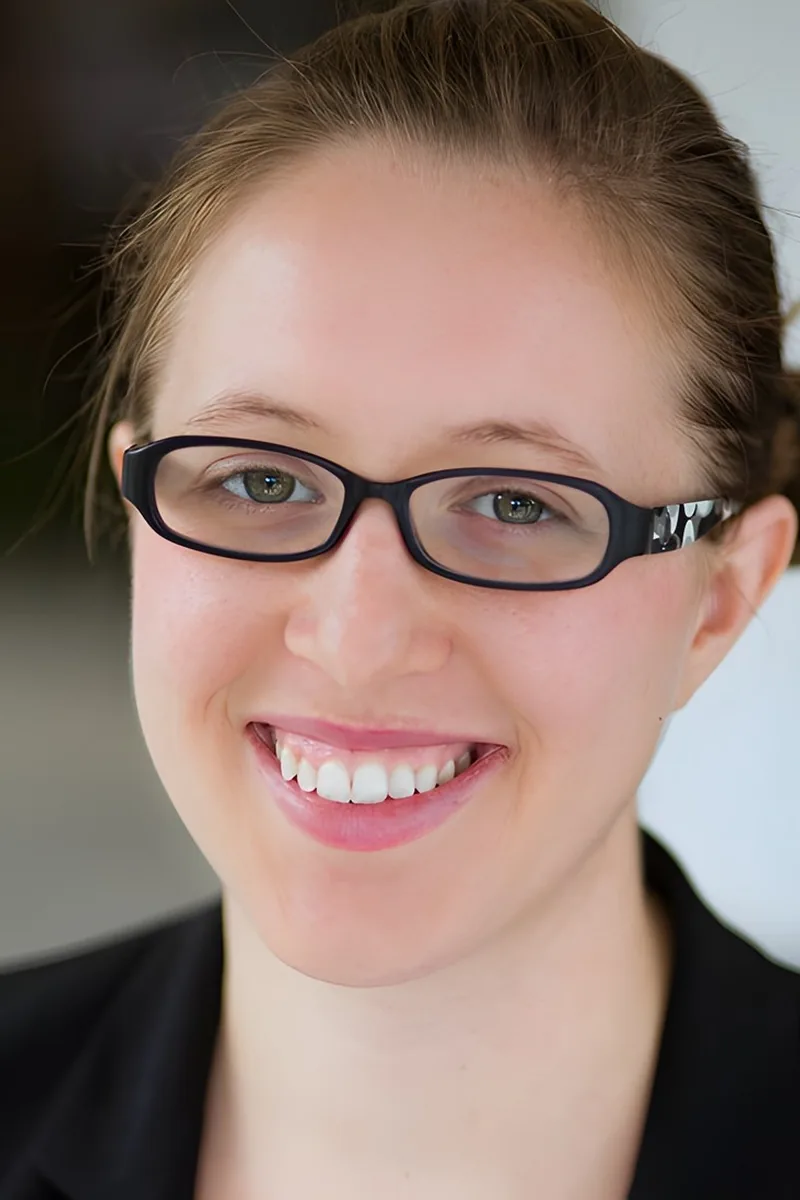
Scoring a 1570 SAT and 35 ACT takes the kind of disciplined problem-solving that translates directly into teaching limits, derivatives, and integration techniques at the AB level. Amber zeroes in on the moment students go from mechanically applying the power rule to actually understanding why the Fundamental Theorem ties differentiation and integration together — a shift that unlocks the entire second half of the course. Rated 5.0 by students.
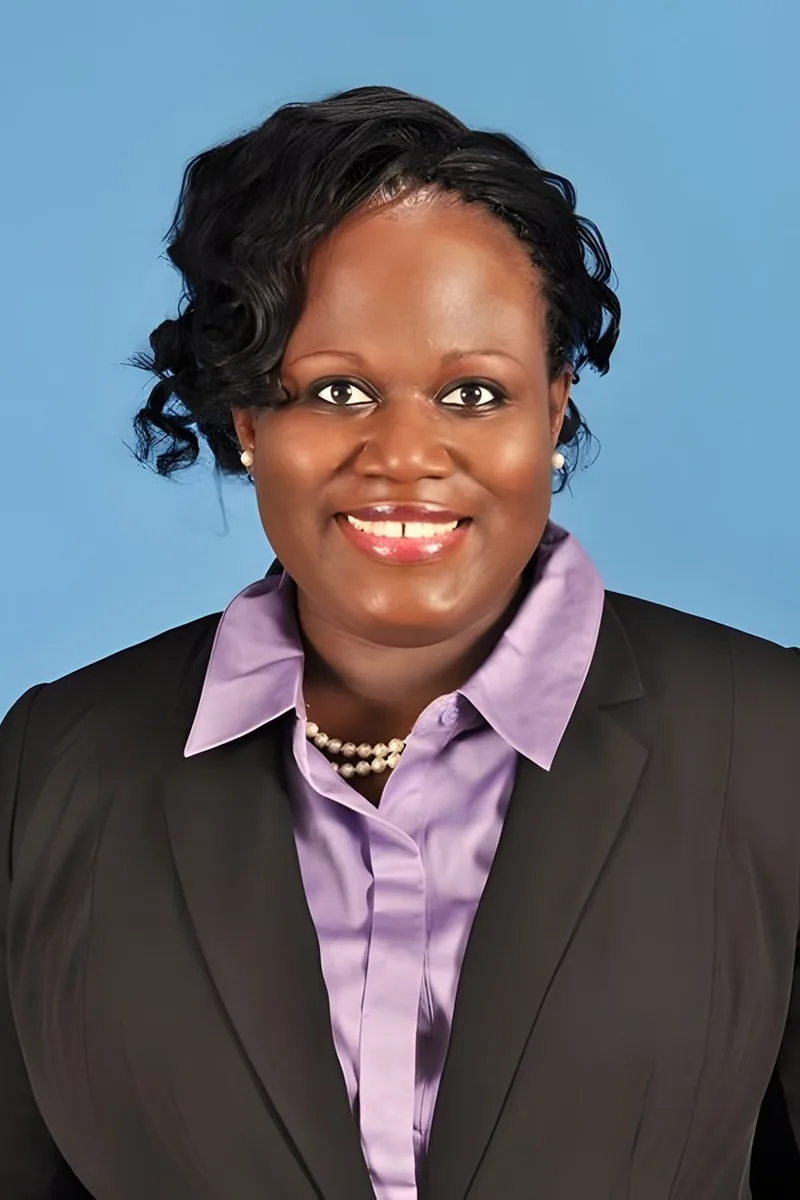
Seven years teaching high school math in San Francisco — plus a Johns Hopkins mathematics degree and medical school training — means Elizabeth has walked hundreds of students through the exact moment where limits, derivatives, and the Fundamental Theorem either click or collapse. She's especially sharp at diagnosing why a student's related rates setup goes wrong, because she's seen every common misstep enough times to spot the pattern before frustration sets in. Her medical background also gives her a unique angle on applied problems, connecting rate-of-change concepts to biological contexts that make the abstraction tangible.
Scoring a 36 ACT while pursuing a math/stats degree at Carleton means Thomas has both the formal training and the test-taking instinct to know exactly where AB students lose points — particularly on limit definitions, continuity arguments, and the conceptual leaps the exam demands in its free-response section. He teaches the 'why' behind each differentiation and integration technique so that unfamiliar problem setups feel approachable rather than paralyzing. Rated 5.0 by students.
Limits, derivatives, and integrals each build on the last, so a shaky grasp of one concept tends to snowball through the entire AP Calculus AB curriculum. Aaron treats each new idea as a chance to revisit and strengthen what came before — his approach to the chain rule, for instance, starts by reconnecting students to composition of functions until the derivative feels inevitable. His PhD in math and 5.0 rating speak to how well this works in practice.
Computer science with a math emphasis at UW-Madison means Sarah writes code that depends on calculus concepts daily — recursive functions mirror summation, algorithm analysis relies on limits, and optimization problems are literally what derivatives were built for. That crossover makes her especially effective at teaching the AB curriculum's limit definitions and optimization units, where she can show students the logic underneath the formulas instead of just the mechanics. Rated 4.9 by students.
When limits, derivatives, and integrals are taught as disconnected procedures, the AB exam's free-response section can feel like a minefield — Halle tackles that by building each new concept directly on top of the previous one so students see calculus as a single connected story. Her biology coursework at UW-Madison means she's comfortable using rate-of-change problems grounded in growth models and population dynamics to make abstract differentiation feel tangible. Rated 5.0 by students.
Working as a systems design engineer and automation technician after earning his EE degree from UIUC, Wei has spent years applying derivatives and integrals to real control systems — tuning feedback loops, modeling signal behavior, analyzing rate-of-change problems that mirror exactly what shows up on the AB exam. That engineering instinct is especially valuable when students hit the AB curriculum's differential equations and accumulation problems, where knowing how to frame the math matters more than grinding through algebra. Rated 5.0 by students.
Mechanical engineering coursework at Marquette means Brendan uses AP Calculus AB concepts daily — from computing integrals for area and volume to applying the chain rule in kinematics problems. He breaks down the reasoning behind each differentiation and integration technique so students can tackle free-response questions with confidence. Rated 5.0 by students.
Where many tutors teaching AP Calculus AB come from engineering or science backgrounds, India approaches the subject from the math-emphasis track of her liberal arts program — meaning she learned limits, derivatives, and integration as ideas worth understanding on their own terms, not just as tools for another field. That perspective is especially useful for students who need to build genuine comfort with concepts like continuity and the Fundamental Theorem before tackling free-response applications. Rated 4.8 by students.
One of the most important things in tutoring math is to make sure students understand why a mathematical procedure works, not just how to do it. When student know how to do the procedure, but don't understand why it works, they will forget the procedure or misapply it, or worse, they may begin to hate math, not because they can't do it, but because they don't understand its relevance.
Something clicked for Steven when calculus stopped being about memorizing formulas and started being about understanding why things change — and that shift from frustration to genuine enthusiasm for math is exactly what he brings to teaching limits, derivatives, and integrals in the AB curriculum. He's especially good at walking students through the conceptual buildup from pre-calculus into calculus territory, since he also teaches trig, pre-calc, and physics, giving him a clear picture of where the gaps usually hide. Rated 5.0 by students.
I am currently studying at Northwestern University, on the track to a Bachelor of Arts in Statistics with a double major in Mathematical Methods in the Social Sciences, which is just a fancy way of saying math-based economics, and a minor in Legal Studies as well as Marketing. After my undergraduate studies, I plan on working in consulting for a few years before attending law school. Finally, I hope to combine my law studies with my consulting work to become a well-rounded corporate lawyer. At Northwestern, I provide SAT tutoring to Chicago-area juniors and seniors. In high school, I tutored third through fifth graders in basic reading and writing skills and developed their interpersonal skills through group crafts and teamwork activities. While I am open to tutoring a broad range of subjects and tests, I am most passionate about Math, Statistics, Economics, and US History. In my experience helping students prepare for the SAT, I have found that interactive activities and group work really help! I am a firm believer in the work-hard-play-hard mindset and find it to be absolutely necessary for a balanced lifestyle, and I try to impart this appreciation to all of my students. While I encourage my students to keep up with their studies and work hard, I also believe that studying needs to be balanced out with interests and fun.
Rachel treats AP Calculus AB as a course built on a handful of core ideas — limits, the derivative as a rate of change, and accumulation through integrals — and teaches students to see every problem as a variation on those themes. Her economics and strategy studies at Washington University mean she's applying derivatives and optimization regularly outside the classroom. That real-world fluency makes related rates and curve sketching click faster for students.
Mechanical engineering at Yale means Charles builds things using calculus every week — computing moments of inertia, modeling fluid pressures, sizing structural loads — so when an AB student asks 'when will I ever use this,' he has actual answers. He's especially strong on optimization and related rates because those are engineering bread-and-butter problems where setting up the equation from a physical scenario is the whole challenge. His 34 ACT and varsity-athlete discipline keep his teaching sharp and structured.
The jump from memorizing derivative rules to applying them on AP free-response questions is where most Calc AB students lose points. Adam breaks down each problem type — related rates, accumulation functions, slope fields — by teaching the reasoning behind setups so students can handle unfamiliar prompts on exam day.
Limits, derivatives, and integrals each build on the last — and AP Calculus AB punishes students who memorize procedures without understanding why the chain rule or Fundamental Theorem actually works. Abismael's chemical engineering background means he's applied every one of these concepts to real modeling problems, and he pushes students with the kind of tough, unexpected questions that mirror what the AP exam actually throws at them.
A PhD in statistics built on a biomedical engineering foundation means Sam has spent years where calculus isn't a course — it's the machinery underneath everything, from deriving probability distributions to modeling biological systems. That depth shows when teaching limits and the Fundamental Theorem, where he can trace each concept forward into the math students will actually use in college. Rated 4.9 by students.
Studying Applied and Computational Mathematics at Caltech, Samuel lives in the world of calculus daily — limits, derivatives, integrals, and the Fundamental Theorem aren't abstract ideas to him but tools he actively uses. He breaks down AP Calculus AB concepts like related rates and Riemann sums by connecting them to the intuition behind why each technique works, not just the mechanical steps.
Kate breaks AB Calculus into two core skills: understanding what derivatives and integrals actually represent, and learning the mechanical techniques to compute them quickly. Her environmental engineering training required heavy use of related rates, optimization, and area-under-the-curve problems, so she can show students exactly how these concepts connect to real applications.
Pre-med biology and chemistry at Northwestern means Kade is constantly using calculus to make sense of other disciplines — enzyme kinetics, population growth models, dose-response curves — which keeps the AB material grounded in something tangible. He's especially good at walking through limit definitions and continuity arguments, the early-course concepts that quietly determine whether the rest of the year clicks or collapses. His 1550 SAT reflects the kind of precise, methodical thinking that pays off on AP free-response questions.
The jump from memorizing derivative rules to actually understanding limits, the chain rule, and the Fundamental Theorem is where most AB students struggle. Anthony approaches calculus the way he learned it as a Yale physics and math major: every rule has a reason, and once students see that reason, problem-solving becomes intuitive rather than mechanical. He holds a 5.0 client rating.
Cognitive science at Penn might not scream calculus, but Samantha's coursework required enough mathematical modeling — derivatives for rate-of-change problems, integrals for cumulative distributions — that she teaches AP Calculus AB with real fluency. She's especially effective at walking through optimization and curve-sketching problems, where translating a word problem into the right function is half the battle. Her 1460 SAT reflects the quantitative precision she brings to exam prep.
IB Diploma graduates know what it's like to hit calculus from multiple directions at once — Dalton's experience completing that program means he learned early how to manage the conceptual load of limits, derivatives, and integrals alongside heavy coursework in other subjects. He's especially good at teaching students how to pace themselves through the AB curriculum and build the kind of problem-setup instincts that free-response graders reward. His 35 ACT and 4.9 rating back up an approach built on disciplined preparation rather than shortcuts.
Studying chemical engineering and math at Vanderbilt means Greg lives in calculus — using derivatives to model reaction rates and integrals to balance mass and energy flows — so the AB curriculum's toughest concepts have a concrete anchor in his everyday coursework. His 1550 SAT and 5.0 tutoring rating back up an approach that emphasizes building each problem's setup from the physics or chemistry it describes, which is exactly the skill that separates strong free-response scores from mediocre ones.
Testimonials
Because the right AP Calculus AB tutor makes all the difference.
Average Session Rating – Based on 3.4M Learner Ratings
Practice AP Calculus AB
Free practice tests, flashcards, and AI tutoring for AP Calculus AB
Nearby AP Calculus AB Tutors
Other Milwaukee Tutors
Related Math Tutors in Milwaukee
Frequently Asked Questions
AP Calculus AB covers limits, continuity, derivatives, applications of derivatives, and integration. The exam tests your understanding of these core concepts through multiple-choice and free-response questions, with about 50% of the test focused on derivatives and 25% on integration. For students in Milwaukee preparing for the exam, mastering the relationship between these topics and practicing with realistic exam questions is essential for success.
Score improvement depends on your starting point and how consistently you engage with tutoring. Students who work with tutors on targeted practice, problem-solving strategies, and conceptual gaps typically see meaningful progress—often 1-2 score points on the 1-5 scale. The key is identifying your specific weak areas early (like related rates, optimization, or integration techniques) and building a focused study plan around them.
Many students struggle with understanding the conceptual foundation of derivatives and integrals—knowing not just how to compute them, but why they matter. Pacing during the exam is another frequent challenge, especially on free-response questions that require multi-step solutions. Additionally, connecting calculus concepts to real-world applications and interpreting graphs can trip up even strong math students.
Ideally, starting tutoring several months before the exam (around January for the May test) gives you time to review foundational concepts, work through challenging topics, and complete multiple practice exams. If you're starting closer to the exam date, consistent weekly sessions focused on your weakest areas can still make a real difference. The exact timeline depends on your current understanding and how much material you need to review.
Practice tests are crucial—they help you understand the exam format, identify timing issues, and pinpoint specific topics that need more work. Taking full-length practice exams under timed conditions reveals whether you're struggling with conceptual understanding or just need to work faster. Tutors can review your practice test results with you to create a targeted study plan for the areas where you're losing points.
Look for tutors with strong calculus expertise and experience preparing students for the AP exam specifically. They should be able to explain concepts clearly, help you develop problem-solving strategies, and guide you through realistic practice questions. Varsity Tutors connects you with expert tutors who understand both the content and the exam's expectations, so you can focus on building confidence and improving your score.
Test anxiety often stems from uncertainty about specific topics or unfamiliarity with the exam format. Working through multiple practice exams and building mastery in your weak areas reduces anxiety by increasing confidence. Tutors can also help you develop time-management strategies, teach you how to approach difficult questions without panicking, and build a study routine that reinforces your understanding before exam day.
Your first session is typically an assessment where a tutor learns about your current level, identifies your strongest and weakest topics, and understands your goals for the exam. You'll discuss your timeline, any specific challenges you're facing, and what a personalized study plan might look like. This foundation helps ensure your tutoring is focused on the areas that will have the biggest impact on your AP score.
Let’s find your perfect tutor
Answer a few quick questions. We’ll recommend the right plan and match you with a top 5% tutor.