Award-Winning College Chemistry Tutors
serving Milwaukee, WI
College Chemistry
Tutors in Milwaukee
Private 1-on-1 tutoring, weekly live classes for academic support, test prep & enrichment, practice tests and diagnostics, and more to elevate grades and test scores.
Based on 3.4M Learner Ratings
UniversitiesSchools & Universities
DeliveredHours Delivered
ProficiencyGrowth in Proficiency
Who needs tutoring?
No obligation. Takes ~1 minute.

Between equilibrium expressions, thermodynamic calculations, and orbital theory, college chemistry demands a level of abstraction that introductory courses don't always prepare students for. Amber digs into the quantitative backbone of these topics, connecting the math to the molecular-level reasoning so that concepts like Gibbs free energy or rate law derivations make sense rather than just get memorized. Her breadth across chemistry and advanced math gives her a rare versatility in tackling problem sets.
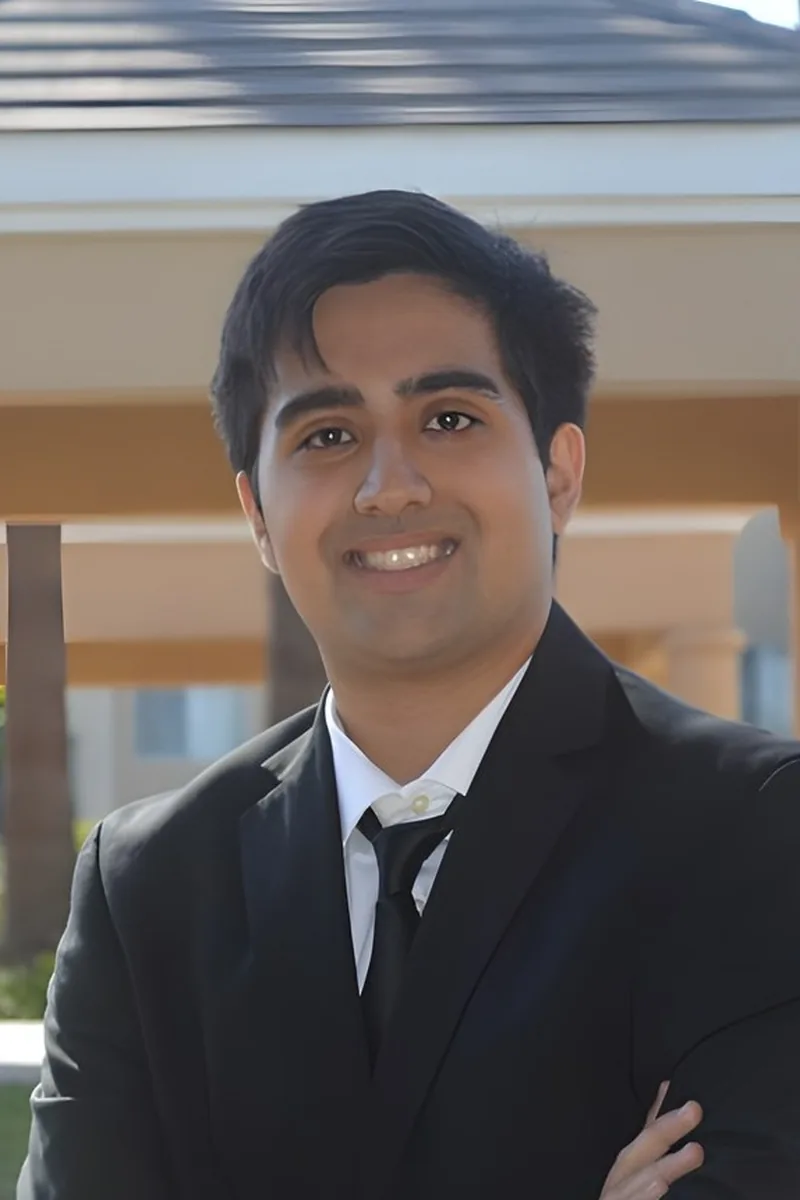
Medical school demands fluency in chemistry that goes well beyond introductory courses, and Abrahim brings that depth to college-level topics like thermodynamics, kinetics, and electrochemistry. He diagnoses conceptual gaps fast — if a student can balance an equation but can't explain why a reaction is spontaneous, that's exactly where the session will dig in.
Between a biology major and a writing center role at UW-Madison, Miriam has an unusual skill set for college chemistry: she can break down quantitative problems like stoichiometry and gas law calculations with scientific fluency, then help students articulate their reasoning clearly on lab reports and written explanations. That combination matters in gen chem, where knowing how to solve a problem and knowing how to explain your logic are often graded as two different things. Rated 4.9 by students.
Zoology coursework meant Eitan had to internalize gen chem concepts like molecular polarity, solution chemistry, and reaction energetics before he could make sense of anything in biochemistry or ecology — so he teaches college chemistry as someone who's personally felt the consequences of shaky foundations in later courses. He digs into topics like Lewis structures and acid-base behavior by connecting them to the biological systems where they become unavoidable. Rated 5.0 by students.
Thermodynamics, kinetics, and equilibrium problems at the college level require more than plugging into equations — they demand conceptual fluency with what's happening at the molecular scale. Samantha's daily lab work in microbiology and genetics keeps her actively using general and organic chemistry principles, which means she explains reaction mechanisms and energy diagrams from experience rather than from a textbook alone.
Having already completed intro chemistry and organic chemistry at UW-Madison, Zach knows exactly where college-level courses ramp up in difficulty — reaction mechanisms, thermodynamics, and equilibrium calculations tend to be the sticking points. He unpacks these topics by tying abstract principles to concrete molecular behavior students can visualize.
Having taken the full gen chem sequence at Cornell alongside organic chemistry and upper-level biology coursework, Jonathan knows exactly where college chemistry concepts like electron configuration, VSEPR theory, and solution stoichiometry start causing problems — usually when the course shifts from memorizable rules to applied reasoning. His human biology background means he naturally ties chemical principles back to biological systems, which tends to click for the pre-med and life science students who make up most of his college chemistry sessions. Rated 4.9 by students.
Having scored a 36 on the ACT and taught honors chemistry alongside AP-level math and statistics, Ethan brings a quantitative sharpness to college chemistry that's especially useful when students hit the calculation-dense stretches — gas law problems, enthalpy calculations, solution stoichiometry. His environmental science background also means he can ground abstract topics like chemical kinetics and equilibrium in real-world systems where those principles visibly play out. Rated 5.0 by students.
Samantha studied Chemistry & Chemical Biology at Cornell with a food science concentration, so she's tackled everything from organic reaction mechanisms to thermodynamics and spectroscopy at the college level. She teaches tricky concepts like equilibrium constants, electrochemistry, and molecular orbital theory by building visual models that connect the math to what's physically happening at the molecular scale.
MIT's general chemistry sequence is notoriously fast — Vania not only survived it but tutored other students through it via the university's Seminar XL and Tutorial Services Room programs, where she got fluent in the exact places students stall out on topics like thermochemistry, equilibrium, and electron configuration. Her mechanical engineering training means she thinks about chemistry problems quantitatively, tracing how molecular-level behavior connects to the math rather than treating equations and concepts as separate tasks. Rated 5.0 by students.
Thermodynamics, quantum numbers, and reaction kinetics all demand the kind of mathematical fluency that comes naturally to Nima as a Duke physics student. He unpacks college chemistry problems by grounding each calculation in the underlying physical principles, which makes topics like enthalpy, molecular orbital theory, and electrochemistry far more intuitive.
Between his physics training and years of hands-on biochemistry research, Matthew tackles college chemistry from both the theoretical and applied sides. He's especially effective with thermodynamics, molecular orbital theory, and kinetics — topics where students often struggle to bridge lecture material and problem sets. His lab experience at Columbia gives him concrete examples that make abstract concepts like enthalpy and entropy click.
Studying biochemistry at Boston College means Kellie is taking college chemistry right now — she knows which exam questions are tricky, which textbook explanations fall flat, and which shortcuts actually hold up under pressure. She breaks down topics like electron configurations, VSEPR geometry, and solution stoichiometry with the clarity of someone who just wrestled with them herself and figured out what finally made them click.
Thermodynamics, equilibrium constants, and reaction kinetics demand more than memorizing formulas — they require thinking about why a reaction proceeds the way it does. Garrett's coursework in physical chemistry and organic chemistry means he can unpack the energy landscapes and molecular interactions behind each concept. He connects general chemistry principles to their applications in biochemistry and physiology, which makes abstract ideas click faster.
Pre-med bio-psychology coursework at UCSB means Aaron has pushed through college chemistry the same way his students are — as a high-stakes prerequisite where every gap in stoichiometry or equilibrium shows up again in upper-division science courses. He talks through problems conversationally, pressing students to explain the reasoning back to him, which exposes shaky understanding far faster than just re-solving practice sets. Holds a 5.0 rating.
Working in Duke's Bilbo lab on neuroimmune interactions means Lauren applies gen chem principles — reaction kinetics, molecular polarity, acid-base behavior — in a research setting where getting the chemistry wrong has real consequences for experimental design. That hands-on context, paired with her neuroscience and chemistry coursework, gives her a practical read on which concepts students need to truly internalize versus which ones they're just memorizing long enough to pass the exam. Rated 4.8 by students.
Four years of chemical engineering coursework at Pitt meant Olivia didn't just take gen chem — she leaned on it daily through material balances, reaction engineering, and process thermodynamics, so concepts like enthalpy, equilibrium constants, and stoichiometry are second nature rather than distant memories from freshman year. She's especially sharp at bridging the gap when students can set up a problem conceptually but lose the thread during multi-step calculations involving unit conversions or gas law algebra. Rated 4.9 by students.
A chemistry minor at Duke alongside her biology major, Lenique spent years working through thermodynamics, equilibrium, and reaction kinetics at a level that prepared her for the rigors of medical school at Yale. She breaks down tough concepts like molecular orbital theory and acid-base chemistry by connecting them to real biological systems, which makes abstract ideas click faster.
Testimonials
Because the right College Chemistry tutor makes all the difference.
Average Session Rating – Based on 3.4M Learner Ratings
Nearby College Chemistry Tutors
Other Milwaukee Tutors
Related Science Tutors in Milwaukee
Frequently Asked Questions
College chemistry requires both conceptual understanding and problem-solving skills, and many students struggle with the transition from high school to college-level rigor. Common challenges include balancing chemical equations, mastering unit conversions and stoichiometry, visualizing molecular structures and bonding, and connecting theoretical concepts to lab work. Personalized tutoring helps you build a strong foundation in these areas rather than just memorizing formulas, which is essential for success in subsequent chemistry courses and STEM majors.
Yes—tutors can help you grasp both the theory behind experiments and the practical scientific method. They can explain why you're performing specific procedures, how to interpret results, and how to connect lab observations to lecture concepts. This deeper understanding improves your lab reports, helps you troubleshoot when experiments don't go as expected, and strengthens your overall chemistry reasoning skills.
During your first session, a tutor will assess your current understanding of chemistry concepts, identify specific areas where you're struggling (whether it's equilibrium, thermodynamics, or acid-base chemistry), and learn about your learning style and goals. They'll then create a personalized plan to address your needs, which might include working through problem sets, reviewing lecture material, or preparing for exams. This foundation ensures every future session is targeted and productive.
No—while chemistry does require learning key reactions and concepts, college-level chemistry is fundamentally about understanding *why* reactions occur and how to apply that understanding to new problems. Tutors focus on building your conceptual framework so you can reason through unfamiliar problems rather than relying on memorization. This approach not only improves your exam performance but also prepares you for advanced chemistry courses and real-world applications in research or industry.
Many students struggle to visualize molecular structures, bonding, and reaction mechanisms—concepts that are invisible to the naked eye. Tutors use diagrams, molecular models, animations, and step-by-step explanations to make these abstract ideas concrete and easier to understand. By developing strong visualization skills, you'll find it much easier to predict reaction outcomes, understand spectroscopy, and tackle complex organic chemistry problems.
Tutors help you review course material systematically, identify weak spots before the exam, and practice problem-solving under timed conditions. They can explain concepts you found confusing in lecture, work through practice problems similar to those on past exams, and teach you test-taking strategies specific to chemistry (like dimensional analysis shortcuts or how to approach multi-step problems). This targeted preparation typically leads to significant score improvements.
Tutors working with Varsity Tutors for college chemistry have strong backgrounds in chemistry—many hold degrees in chemistry, chemical engineering, or related STEM fields, and many have teaching experience or advanced coursework in chemistry. They're selected for their ability to explain complex concepts clearly and adapt their teaching to different learning styles. When you connect with a tutor, you can review their qualifications and experience to ensure they're the right fit for your needs.
The best time to start is as soon as you feel stuck—whether that's early in the semester when foundational concepts are being introduced or closer to an exam. Starting early gives you time to build a solid understanding and address gaps before they compound. However, tutoring can help at any point in the course, whether you need help catching up, preparing for midterms or finals, or getting ready for the next chemistry course in your sequence.
Let’s find your perfect tutor
Answer a few quick questions. We’ll recommend the right plan and match you with a top 5% tutor.