Award-Winning PSAT Mathematics
Tutors
PSAT Mathematics
Tutors
Private 1-on-1 tutoring, weekly live classes for academic support, test prep & enrichment, practice tests and diagnostics, and more to elevate grades and test scores.
Based on 3.4M Learner Ratings
UniversitiesSchools & Universities
DeliveredHours Delivered
ProficiencyGrowth in Proficiency
Who needs tutoring?
No obligation. Takes ~1 minute.
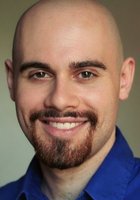
PSAT math covers the same algebra, problem-solving, and data-analysis framework as the SAT, which makes it the perfect low-stakes opportunity to build real test strategy before junior year. John walks through each question type — linear equations, ratios, percentages, quadratic behavior — and teaches students to spot what the question is actually asking beneath the wording. With a 36 ACT and 1420 SAT on his own record, he understands standardized math testing from the inside out.
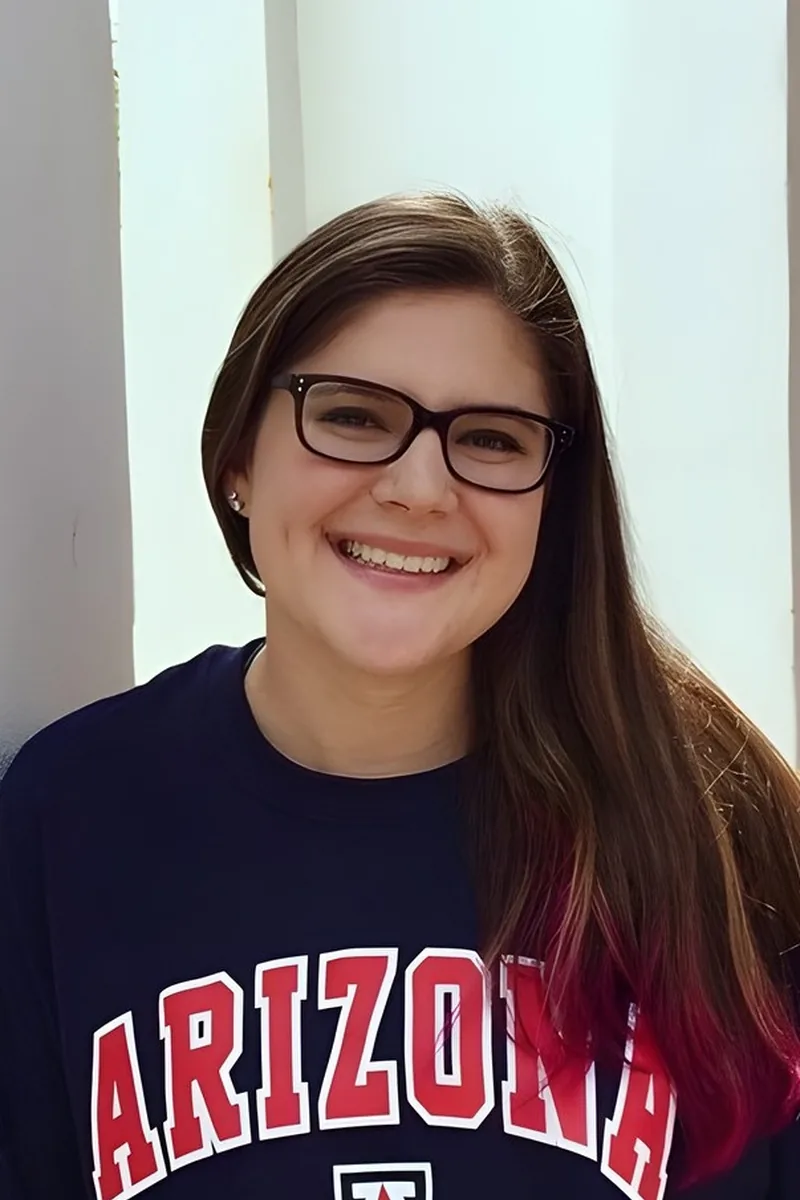
Scoring a 1590 on the SAT means Alex knows exactly which algebra, data analysis, and problem-solving concepts the PSAT recycles in slightly different packaging. He breaks down Passport to Advanced Math questions — manipulating quadratics, interpreting nonlinear graphs — so students build the speed and confidence that translate directly into National Merit qualifying scores.
I am an interdisciplinary educator with an Ed.M. from the Harvard Graduate School of Education and a B.A. from Dartmouth College. My background is primarily in integrated arts learning and museum education and I specialize in visual arts, history and art history, and object-based learning. In all subjects, I take a creative, inquiry-based and learner-centered approach, designing opportunities for each unique individual to meet their learning goals.
I'm Anna! I'm currently a student in the MD/MBA program between Northwestern University's Feinberg School of Medicine and the Kellogg School of Management, and graduated from Northwestern University as part of the Honors Program in Medical Education. I attended the Bergen County Academies in New Jersey, a selective, application-based magnet school, for high school.
PSAT Math trips up many students not because the concepts are hard but because the phrasing is unfamiliar — a straightforward ratio problem can look alien when buried in a word problem about survey data. Elliot, who scored a 36 ACT and 1540 SAT, teaches students to translate each question into the underlying math before solving, which cuts down on careless errors and speeds up pacing.
I am a recent graduate from a masters program in biostatistics at Columbia University. I received my Bachelor of Arts in biological sciences, with a focus in neurobiology at Northwestern University. In August, I will be starting a doctoral program in biostatistics at NYU. I was a teaching assistant at Columbia University in my department and also have tutored graduate students and undergraduates privately as well. My primary areas of tutoring are math and statistics coursework in addition to math sections on standardized tests such as the GRE and GMAT. I am very passionate about helping students feel more confident and excited about math. In my spare time, I enjoy running, playing piano, and spending time with friends and family.
I am proud to be a part of Varsity Tutors! I am originally from San Antonio, TX; I completed my undergraduate education at Rice University in Houston where I received a bachelor's degree in Biochemistry and Cell Biology. Currently, I am in my second year of medical school at Baylor College of Medicine.
I am a second year law student at the University of Chicago who hails from the San Francisco Bay Area! I tutor the SAT, ESL, and Spanish. I was an AVID tutor in high school, and after college I taught an ESL class and tutored a high school student in Spanish. In law school, I am involved with the Lawyers in the Classroom program. My tutoring philosophy is based on listening to students work through problems and helping them to spot their confusions or incorrect assumptions. I believe students learn much better when they aren't simply told the right answer or right reasoning; they need to get there on their own.
I am currently a resident physician at Northwestern Hospital.
I am a junior studying Writing for Screen and Television at the University of Southern California's School of Cinematic Arts. For the past two spring semesters I worked as a CollegeSpring Mentor, tutoring Green Dot Charter high school juniors for the SAT and teaching them predatory skills for college. In addition to my experience tutoring for the SAT, as a screenwriting major I most enjoy teaching my favorite subject, English. I love showing students the power language endows upon them to communicate their ideas and beliefs with others. I believe every student deserves the chance to succeed and to try to capitalize on their strengths while encouraging them to improve in areas they may traditionally find challenging. Endowing a student with confidence in themselves through patience and support is the best way not only to improve academic performance, but also transform them into lifelong learners. I try to share not only my passion for knowledge with students, but also my love of sports (football, baseball, and softball), action films, and global affairs. Seeing students not only improve academically but also show improved confidence and happiness is the most rewarding part of my job.
I am available to tutor a range of middle school and high school subjects, but I am most excited about tutoring test prep. I remember how stressful preparing for college can be and I am eager to do my part in helping students fulfill their college goals. I believe that learning is a collaborative process and I am committed to being as actively involved in the student's learning as I can. In my spare time, I enjoy reading, going to the movies (I try to see each Oscar nominee before the ceremony every year.), and am a huge Michigan sports fan.
I'm a rising junior at Brown University studying biomedical engineering. I have lots of experience in middle school through college level instruction in STEM and SAT/ACT prep. My goal is to provide a fun and productive learning environment by only teaching subjects that I am passionate about.
I am a member of the Brown Class of 2018, pursuing a bachelors degree in mathematics. I graduated from Phillips Exeter Academy in 2014. (I am able to help anyone with the boarding school admissions process.) Outside of academia, I pursue my passions in dance, travel, volunteering, reading and art. My tutoring subjects are mathematics (from elementary school to college level) and standardized testing (SAT, SAT subject tests, PSAT, and SSAT). I have tutored mainly high school students in the New York State Regents exams and AP Calculus, although I also have experience with students in middle and elementary school. Since I have been through many school systems, including public, private, studying abroad, and boarding school, I have learned many different techniques and can attack a problem from various angles. Ultimately, my teaching style is full of tips and tricks to break down complicated topics into simple, more understandable ideas.
I am currently studying chemical engineering at the University of Michigan. I have always helped out my fellow students with schoolwork, and I have tutored in the National Honor Society for three years. My tutoring strengths include my abilities to stay calm, be patient, and offer different perspectives on the learning process. I do not just help my students learn the material, but I also teach them how to learn it. I tutor math and test prep courses. Outside of school and tutoring, I play the piano. I have played classical piano for 13 years and jazz piano for 7.
I am a graduate of the University of Chicago, with a bachelor's degree in psychology and linguistics. Currently, I am pursuing a master's degree in speech-language pathology at Teachers College, Columbia University. In the past, I have worked as a teacher's aide in a public school classroom, a mentor to middle school girls, an instructor and tutor at the literacy education organization 826, and a summer camp counselor. I tutor a diverse range of subjects, and I find that I especially enjoy tutoring language arts, reading, and writing at all levels, from elementary school all the way up to college/grad school test prep. As a tutor, I am committed to helping students reach their full potential as learners. Throughout my years as an educator, I have seen firsthand the remarkable academic growth that can occur when tutors provide students with the individualized support that they need. In my spare time, I enjoy reading, journaling, and learning about other languages and cultures.
I am currently attending New York University where I am pursuing a degree in Finance and Statistics. I have previous experience tutoring individuals in math, a subject I have always excelled at academically. My knowledge and interest in mathematics, makes it easy for me to frame and deconstruct seemingly complicated concepts and theories in ways students will be able to understand and remember. Outside of academia I enjoy playing tennis, going to movies, and spending time with friends and family.
I am an incoming medical student at the University of Miami Miller School of Medicine. I graduated from Rice University in 2025 with a Bachelor of Science in Biology with minors in Medical Humanities and Business.
I am a Yale graduate with over 8 years experience tutoring students from a variety of backgrounds. I recently graduated from the Yale School of Public Health with a MPH concentrating in Epidemiology and Global Health. I also received my B.S. from Yale with a double major in Molecular, Cellular, and Developmental Biology and French. I have experience both leading group classes and working with students one on one. I will respond to a student's strengths, weaknesses, and learning style in order to help them succeed and make the most of our time together. I earned a perfect score of 36 on the ACT, 2280 on the SAT, and qualified as a National Merit Scholar on the PSAT. I look forward to working with you!
I am a graduate from Georgetown University, where I received a Bachelor of Arts degree in Mathematics with a minor in Music. I'm currently pursuing a Master's of Science in Business Analytics at Carnegie Mellon University. I've been tutoring since I started high school, focusing on mathematics and writing. Throughout my college career I was employed both privately and by Georgetown University to tutor peers and high school students in the Washington, D.C. area. I worked with students taking classes in all levels of mathematics falling under Algebra, Calculus, Combinatorics, and Problem Solving.
I am a graduate of Columbia University with a degree in Drama and Theatre Arts. I taught math and essay writing to my peers in high school and college, and have tutored a close friend in her mathematics courses since junior year of high school. I am most comfortable and passionate about tutoring SAT prep, particularly the Math section and subject tests. I believe in supporting and encouraging my students and making material as accessible as possible, breaking down what may be difficult subject matter into terms and concepts that they already understand. I firmly believe in the potential of every student to grasp material that they may think is out of reach, and aim to reduce the stress factor of studying as much as possible. Outside of tutoring, I am a professional actor and playwright, and in my free time (a rare, mystical thing these days) I enjoy playing guitar and mandolin, practicing yoga, and my PS4.
I am a first year medical student at the Sidney Kimmel Medical College at Thomas Jefferson University. I have been a private tutor in the past in subjects such as math, biology, chemistry, and the SATs and every single one of my more than twenty students have shown significant improvement. Most importantly, I have a passion for teaching, and your needs and preferences as the learner will always be paramount. I hope to help every one of my students reach every bit of their potential, and along the way, to utterly shatter any self-induced limitations that have been placed upon what they can accomplish.
I am a new graduate of Pomona College, in Claremont, CA, where I studied Religion and Philosophy. While there, I wrote many papers of a wide variety, working on strong arguments, organization, and phrasing. I peer edited as well as volunteering with groups that mentored high school students, focusing on college admissions work, continuing and expanding my experiences from high school of tutoring for standardized testing. Additionally, I taught beginning violin to younger children.
I'm eager to teach students how to make connections and understand any part of the world they need!
PSAT Math covers the same algebra, problem-solving, and data analysis concepts as the SAT but serves as many students' first real diagnostic for college readiness — and National Merit eligibility. Asta's 1530 SAT composite means she's deeply familiar with the College Board's question style, from interpreting scatterplots to manipulating quadratic expressions. She teaches students to identify what each problem is really asking before they start calculating.
I am especially passionate about reading, writing, and foreign languages. I hope to share my passion for knowledge with those around me.
I am a junior at Purdue University studying Aerospace Engineering and am part of the Air Force ROTC program. I have 6 years of tutoring experience at places including Kumon, Mathnasium, and Purdue University. I have worked with kids of all ages from kindergarten to sophomores in college, each with their own set of unique strengths, and tutored a variety of subjects, including calculus, trigonometry, geometry, thermodynamics, chemistry, and physics. Like many of my previous students, I struggled to understand concepts that I was being taught and was a terrible test taker. However, I found ways to overcome my obstacles and develop an better intuition for what I was learning. I believe that it is only this intuition and understanding that helps overcome these obstacles. My least favorite thing to see people be discouraged, so with a little bit of guidance and reassurance, I want to show people that they are capable of anything they put their mind to.
Because the PSAT math section mirrors the SAT's structure at a slightly lower difficulty ceiling, it's the perfect time to lock in strategies before the stakes get higher. Eileen walks students through the no-calculator section's algebra-heavy problems and the calculator section's data-analysis questions with an emphasis on pacing — knowing when to solve algebraically versus when to backsolve or plug in. Her own 1550 SAT score came from exactly this kind of strategic preparation.
I am currently a fourth year medical student in Indianapolis. I completed my undergraduate education at Indiana University Bloomington, where I majored in Biology and Spanish. I also completed two minors in Mathematics and Chemistry. While at IU, I worked for the Department of Mathematics and Department of Spanish. I also worked as a Peer Tutor for the IU Athletics Department, tutoring in several subjects including statistics, chemistry, physics, and Spanish. I graduated from college with a 4.0, and I entered medical school shortly thereafter. Since coming to medical school, I have excelled in all of my pre-clinical coursework, and I currently rank in the Top 20% of my class. I feel very comfortable and confident tutoring other students in a variety of subjects from math and science to Spanish. I like to think that the same techniques I have used to excel in all phases of my education can be easily adapted to other students and help you achieve your academic goals, just as I have!
I'm a hardworking, compassionate, and patient individual who has been tutoring since high school and helping my little sister with her homework long before. I'll work with every new student individually to recognize his or her strengths and weaknesses to make sure that material is actually being learned, not just memorized.
I'm not tutoring, I love walking through New York for design inspiration and taking carpentry, metalworking, and illustration classes.
Because the PSAT math section mirrors SAT math at a slightly earlier stage, Cassandra's perfect 1600 SAT means she knows the question types inside and out — Heart of Algebra, Passport to Advanced Math, and the data analysis problems that trip up students who rush. She walks through each category with a focus on recognizing what the question is really asking before picking up a pencil.
I am a rising sophomore at Cornell University, studying Human Biology, Health and Society. I am on the premed track and am pursuing a minor in South Asian Studies. I was born in India and grew up in Singapore and Buffalo, NY, where I currently live. This past semester, I tutored middle and high school students in math, biology, and chemistry in Ithaca. I also particularly enjoy tutoring for standardized tests such as the ACT, as I feel it is where students are able to make a lot of progress quickly, and it also tends to be the most rewarding for both the students and for me! As someone who loves making organized and detailed plans, I believe having a clear set of goals for one's future is the key to success, and this can be applied to anything, from a single test to one's entire career. I would love to help my students with setting goals and making plans in their high school and/or college careers, in addition to tutoring a specific subject! In college, I am most involved with Cornell's Hindu Student Council and SPICMACAY, an Indian classical music and dance organization. Outside of academia, I sing South Indian classical music and play many different genres of the piano.
I'm currently a student at Northeastern University. Originally from Tennessee, I attended an all-male boarding and day school for high school, and was given a lot of opportunities to pursue advanced coursework and opportunities that weren't available to 99% of students in the area. As a result, I've joined Varsity Tutors as an effort to give back and try to help students get excited about learning various subjects, employing many of the methods that allowed me to succeed. While I tutor a wide range of subjects, I am most passionate about standardized test prep, math (all levels), writing, and economics.
The PSAT Math section rewards efficiency as much as knowledge — knowing the algebra is only half the battle if you can't identify the fastest path to an answer. Ezra, who earned a 1600 SAT composite, walks students through strategic shortcuts for heart-rate problems like systems of equations and quadratic word problems that save critical minutes.
I am an aspiring applied mathematician, with particular interest in image processing and climate science. I graduated in May 2017 from Washington University in St. Louis with a bachelor's in physics and mathematics, and am beginning a PhD program in September 2017 at the University of Chicago in Computational and Applied Mathematics. I've tutored introductory physics students for three years and enjoyed it thoroughly, as a chance to help other students while revisiting fundamental concepts to enhance my own knowledge. I'm eager to continue reaching out and helping students of math and physics to succeed and, furthermore, to appreciate the beauty and power of these subjects.
I am a patient, intellectual, and calm college student at the University of Michigan passionate about tutoring others to improve their proficiency in a wide variety of subjects. I teach students by creating individualized plans that cater to the strengths and weaknesses of the student. I work hard and as long as it takes to ensure that the student derives maximum benefit. I love teaching a wide variety of subjects, and have a speciality in standardized tests.
I'm a first-year med student at Pitt Med. I graduated from Tufts University in Medford, Massachusetts with a BS in Biology this past May. As much as I love medicine and the hard sciences, most of my tutoring experience is in general ACT prep, in addition to academic and creative writing, middle school math and reading, and high school and college math. Some of my favorite all-time classes were medical sociology in college and AP US Government and Politics in high school. Through Tufts, I taught English as a second language (3 semesters) and citizenship exam prep (1 semester) to Hispanic immigrants and refugees, which taught me a lot about how to gauge students' understanding, teach tough subjects, plan activities, provide flashcards and the best possible study materials, and make the most of the students' time. I love tutoring because I know how much a tutor's patience one-on-one can make the difference. I love sharing my study tips and test-taking strategies so they can study efficiently and make the best use of their time to get that desired result. I want students to feel heard and supported and help them find methods best suited to them. I want to help students enjoy learning and find more confidence in themselves through mastering tough subject matter.
Testimonials
Because the right PSAT Mathematics tutor makes all the difference.
Average Session Rating – Based on 3.4M Learner Ratings
Top 20 Test Prep Subjects


Top 20 Subjects
Frequently Asked Questions
Score improvement depends on your starting point and how consistently you work with a tutor. Students typically see meaningful gains—often 50-100+ points—when they focus on identifying and addressing specific weak areas, whether that's algebra fundamentals, geometry concepts, or problem-solving strategies. The key is targeted practice: rather than reviewing everything, a tutor helps you pinpoint exactly which question types trip you up and builds confidence through repeated practice with similar problems.
Most students benefit from 4-8 weeks of consistent tutoring before the test, with sessions focused on both skill gaps and test-taking strategies that improve accuracy and pacing.
The biggest hurdles typically fall into three categories: pacing and time management (running out of time on harder problems), careless errors (mistakes on problems students actually know how to solve), and conceptual gaps (struggling with certain algebra, geometry, or word problem types). Many students also underestimate the importance of understanding why an answer is correct, not just getting it right once.
A strong tutor helps you slow down on tricky problems, develops a system for checking your work, and fills in foundational gaps so you approach each question type with confidence rather than guessing.
Effective strategies include: working backwards from answer choices on some problems, using process of elimination strategically, and knowing when to skip a question and come back to it. Many students waste time on one difficult problem when they could earn points on easier ones. A tutor helps you develop a pacing plan—typically 1-1.5 minutes per easier problem, 2-3 minutes for medium difficulty, and deciding whether harder problems are worth your time.
Beyond strategy, understanding how the PSAT formats questions (multiple choice vs. student-produced response) and practicing with real test sections helps you stay calm and focused on test day rather than being surprised by question formats.
Practice tests are most valuable when you treat them like the real thing: take full-length sections in one sitting without interruptions, time yourself strictly, and then analyze your mistakes carefully. Don't just count correct answers—track which types of problems you miss and whether mistakes came from careless errors, conceptual misunderstandings, or time pressure.
A tutor helps you interpret your practice test results and creates a targeted study plan around your actual weak areas rather than reviewing everything. Most students benefit from 3-4 full-section practice tests spaced throughout their preparation, with focused tutoring in between to address specific gaps identified in each test.
Start by categorizing the problems you miss: Which algebra concepts are shaky? Do geometry problems consistently trip you up? Are you struggling with word problems or calculator-free questions specifically? Beyond just marking answers wrong, track whether you didn't know how to solve it, made a careless error, or ran out of time.
A tutor accelerates this process by reviewing your practice tests and sometimes giving diagnostic assessments to pinpoint exactly where conceptual gaps exist—whether it's systems of equations, exponent rules, or data interpretation. Once you know your specific weak areas, tutoring becomes focused and efficient rather than general review.
Timing issues usually stem from two problems: spending too long on difficult problems early in the section, or not having a clear strategy for which problems to prioritize. A strong approach is to scan the entire section first, mark the easier problems you can solve quickly, tackle those first to build confidence and rack up points, then return to harder problems with remaining time.
Your tutor can help you develop a personal pacing plan based on how fast you naturally work, teach you to recognize when a problem is worth your time versus when to skip and come back, and give you tools to stay calm if you fall behind during practice tests.
Beyond strong math knowledge, excellent PSAT tutors understand the test's structure, know which concepts appear most frequently, and recognize the specific tricks and traps in how questions are worded. They can explain concepts in multiple ways since every student's brain works differently, and they focus on your individual weak spots rather than generic test prep.
Equally important: they help you build confidence and manage test anxiety. They teach you when to slow down and double-check versus when to trust your work, and they make you feel supported rather than stressed. Varsity Tutors connects you with tutors who combine deep PSAT expertise with the ability to adapt their teaching to how you learn best.
Let’s find your perfect tutor
Answer a few quick questions. We’ll recommend the right plan and match you with a top 5% tutor.