Award-Winning Korean Tutors
serving Milwaukee, WI
Korean
Tutors in Milwaukee
Private 1-on-1 tutoring, weekly live classes for academic support, test prep & enrichment, practice tests and diagnostics, and more to elevate grades and test scores.
Based on 3.4M Learner Ratings
UniversitiesSchools & Universities
DeliveredHours Delivered
ProficiencyGrowth in Proficiency
Who needs tutoring?
No obligation. Takes ~1 minute.
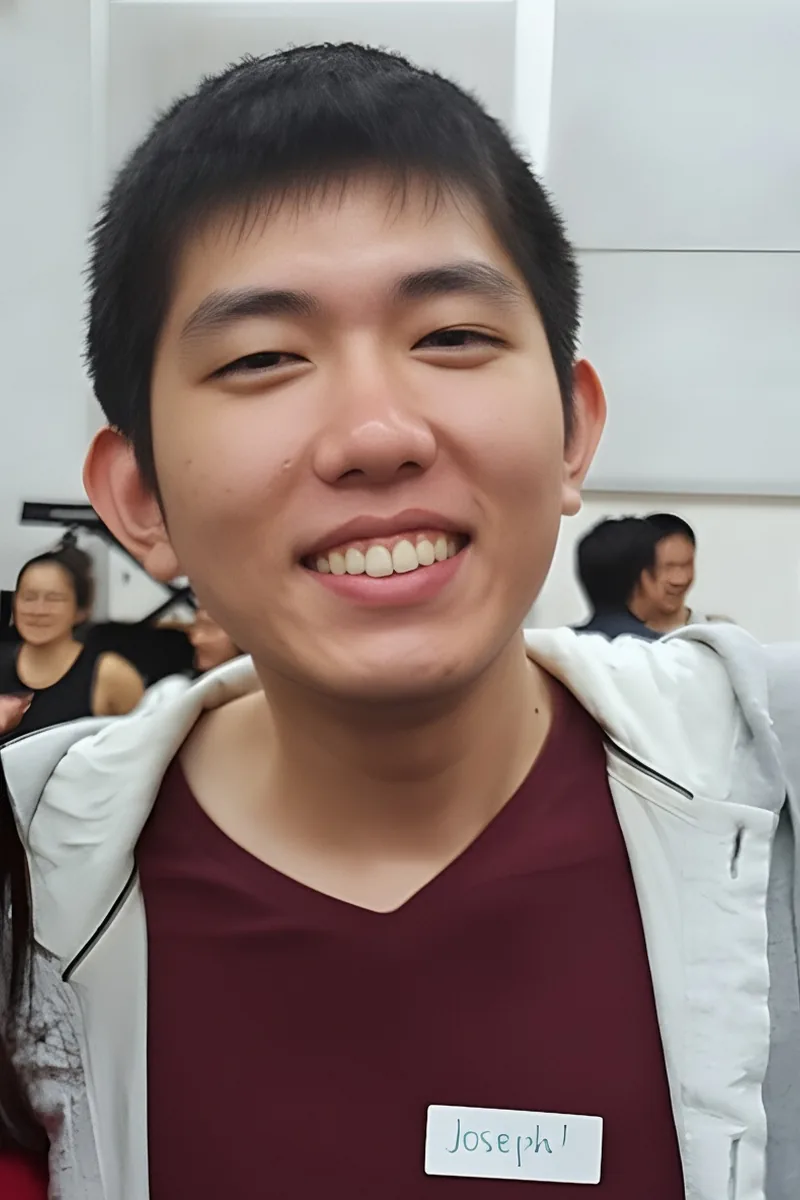
I am currently a first-year Master's student at the Yale School of Public Health. I received my Bachelor's in biology at UCLA. As a Californian, I enjoy sunny weather and eating avocados.
As a Korean speaker and language tutor, Eugene teaches everything from Hangul fundamentals and particle usage to the honorific system that trips up so many learners. His psychology background gives him a sharp sense of how language acquisition actually works, so he structures lessons around how the brain retains new vocabulary and grammar patterns.
Learning Korean means wrestling with an entirely different sentence structure — subject-object-verb order, honorific levels that change verb endings, and a writing system that looks intimidating but is actually remarkably logical. Suha teaches hangul as a phonetic puzzle students can crack in a few sessions, then builds from there into grammar patterns and everyday vocabulary. As a Korean speaker and trained educator, she bridges the gap between textbook Korean and how the language actually works.
Seong is a heritage Korean speaker who also prepared for the SAT Subject Test in Korean with Listening, giving her both native fluency and an understanding of how Korean grammar is formally tested. She digs into the particles, honorific levels, and sentence-ending structures that trip up learners at every stage. Whether a student is building conversational skills or preparing for a standardized exam, she can adjust the pace and complexity accordingly.
Learning Korean means tackling Hangul, sentence-ending particles, and an honorific system that changes depending on who you're talking to. Andrew's linguistics degree gives him a structural understanding of how Korean grammar works at a deep level, making it easier to explain why particles like 은/는 and 이/가 behave differently even though both can mark a subject.
Peace teaches Korean with attention to the specific hurdles English speakers face — from mastering Hangul's syllable blocks to internalizing subject-object-verb word order and the honorific speech levels that shape everyday conversation. Her approach connects grammar patterns to real usage so vocabulary and sentence structure stick beyond flashcard drills.
As a native-level Korean speaker with a philosophy background, Moon breaks down the language's hierarchical speech levels and grammatical particles in a way that actually makes structural sense to English speakers. Whether a student is tackling 존댓말 for the first time or working through reading comprehension of longer passages, the explanations stick because they're grounded in logic, not rote repetition.
Hi, I'm Soo Young Lee, your Korean teacher. I have been teaching Korean for over five years, and I currently teach Korean to children in the United States. I also teach Korean in English online to students from various countries. I believe it is very important to help students learn Korean in a way that is easy, enjoyable, and practical. That is why I use a variety of learning tools, such as Quizlet and mobile quizzes, to make learning more effective and engaging. See you in class!
I am a graduate of Emory University in Atlanta, GA, where I received my Bachelor of Sciences in Anthropology and Human Biology with a minor in Predictive Health. After I graduated, I worked as a laboratory assistant at a cardiology lab at Emory University School of Medicine. While I am interested in chemistry, math among others in STEM, I am very passionate about biotechnology and general biology including genetics, physiology, and cell biology. As an aspiring dentist, I am currently working towards getting a dental degree. During my undergraduate career, I had several experiences of helping other students with learning materials and quiz/exam preparation. I am excited to have another opportunity to help other students again through Varsity Tutors because I truly believe that education is absolutely imperative to a better quality of life and that everyone is fully capable of learning and making potentials to reality. As for tutoring, I put much emphasis on active participation and positive reinforcement. A learning environment should stay interactive, fun, but challenging. By encountering challenges, I believe a student's potential could rise. Besides my life in academia, I enjoy traveling, photography, and physical activities including hiking, running, and skiing during winter.
I was born in Seoul, Korea, and came to the US in 1994. I currently work as the Assistant Director of Simulation-Based Surgical Education and Training in the Division of Education of the American College of Surgeons (ACS) in Chicago, Illinois. I completed my undergraduate study in the Department of Biomedical Engineering at Yonsei University. I came to the US in 1994 to begin my graduate studies. I obtained a Ph.D. in Biomedical Engineering from Texas A&M University with my dissertation research in the biomechanical mechanism of secondary injury and became a Postdoctoral Research Associate in the Department of Kinesiology at Arizona State University. In a series of studies, I investigated the upper extremity control strategies employed by three discrete groups of subjects (young, elderly and Parkinson's patients). After my postdoctoral training, I joined the Department of Surgery at the University of Maryland School of Medicine. At the rank of Assistant Professor, I have served as Director of Surgical Ergonomics and Human Factors Research Program in the Maryland Advanced Simulation, Training, Research and Innovation (MASTRI) Center. Using biomechanical measurement systems, I identified ergonomic risk factors associated with the performance of laparoscopy and propose solutions for minimizing the ergonomic risks that laparoscopic surgeons encounter. Additionally I studied the characteristic patterns of upper-body movement and postural balance control exhibited by expert MIS surgeons. As a Faculty Instructor in the Department of Surgery at the Johns Hopkins University School of Medicine. I am serving as the Director of MIS and Robotic Training and Ergonomics Research in the Minimally Invasive Surgical Training and Innovation Center (MISTIC). The MISTIC research and education team, which I am leading, has developed the Johns Hopkins-MISTIC robotic surgery training curriculum for basic and intermediate level skill learning for trainees in various surgical specialties. Educational research focuses on the development of the more effective and efficient robotic surgery training program, objective and automated skill assessment, and ultimately robotic surgery skill teaching system. Additionally, surgical ergonomics research program in minimally invasive surgeries are taking place through collaboration with my research partners. As the Assistant Director of Simulation-Based Surgical Education and Training, I provide leadership for a broad range of innovative simulation-based education training and verification programs of the Division of Education. I am responsible for designing simulation-based programs, providing leadership for the simulation research and development activities, especially those of the Consortium of ACS Accredited Education Institutes, and building and strengthening collaborative relationships with national organizations and the federal government, including the Department of Defense. I would love to help any students who can use my skills and experience. Please feel free to reach out to me. Thanks.
As a Korean speaker, Eunice teaches the language with an emphasis on hangul structure, sentence-building patterns, and the honorific system that trips up so many beginners. She's especially effective at bridging the gap between textbook Korean and how the language is actually spoken, making conversational practice feel natural from early lessons.
I'm a rising sophomore at the University of Notre Dame currently studying Applied and Computational Mathematics and Statistics with a concentration in Biology. I personally enjoy teaching mathematics (algebra, calculus, geometry, SAT/ACT mathematics), chemistry, biology, and editing essays. Previously, I taught American history, European history, and mathematics for 2 years as a tutor at Turning Point Tutoring Company; I worked as a teacher's assistant at a Korean SAT Academy for around 2 months over the summer as well. As a teacher, I try to provide my students with numerous different methods for approaching a problem before giving them practice problems to work on. Most importantly, I strive to first understand my students' learning styles. After doing so, I shape my method of teaching to match their form of learning so that the students could better understand the topic at hand quickly.
Learning Korean means tackling Hangul, honorific speech levels, and a sentence structure that puts the verb at the end — all of which can feel disorienting for English speakers. Kevin walks students through these building blocks systematically, connecting grammar patterns to real conversational contexts so the language starts to feel logical rather than foreign.
Testimonials
Because the right Korean tutor makes all the difference.
Average Session Rating – Based on 3.4M Learner Ratings
Nearby Korean Tutors
Other Milwaukee Tutors
Related Languages Tutors in Milwaukee
Frequently Asked Questions
Korean involves unique linguistic structures—including three writing systems (Hangul, Hanja, and mixed text), formal/informal speech levels, and different grammar patterns from English—that benefit greatly from personalized instruction. In a typical classroom with a 20.5:1 student-teacher ratio, individual learners' pacing needs and pronunciation challenges can be overlooked. Personalized 1-on-1 instruction allows tutors to focus on your specific learning style, clarify confusing grammar concepts immediately, and provide targeted pronunciation feedback that accelerates progress.
Your first session is an assessment and planning meeting. A tutor will evaluate your current Korean level (whether you're starting from zero or building on existing knowledge), discuss your goals (conversational fluency, test preparation, cultural connection), and identify your biggest challenges—whether that's mastering Hangul, understanding grammar particles, or building listening comprehension. From there, the tutor creates a personalized learning plan tailored to your pace and objectives.
Students often struggle with three key areas: (1) pronunciation and tonal nuances, especially sounds that don't exist in English like the aspirated consonants; (2) grammar concepts like subject-object-verb word order and the particle system, which work differently than English; and (3) the transition from Hangul (the alphabet) to understanding and reading Hanja (Chinese characters used in Korean). Personalized tutoring addresses each challenge directly, providing repeated practice and immediate correction rather than moving through a fixed curriculum at classroom pace.
Varsity Tutors connects you with tutors who understand both standard Korean language progression (CEFR levels A1 through C2) and any specific curriculum your school follows. Whether you're in a Milwaukee public school offering Korean as a world language elective, or preparing for AP Korean Language and Culture, tutors can supplement classroom learning, fill knowledge gaps, and provide targeted test preparation. Tutors work alongside your school's expectations rather than replacing them.
Reaching basic conversational ability (CEFR A2 level—handling simple daily interactions) typically requires 300-400 hours of focused study and practice. Professional-level fluency takes significantly longer. The timeline depends on your starting point, study frequency, and immersion opportunities. Personalized tutoring accelerates progress by focusing practice on real-world communication patterns and giving you immediate feedback on pronunciation and grammar usage, rather than classroom-paced instruction where individual needs vary widely.
Tutors break down Hangul (the phonetic alphabet) systematically, teaching you to recognize and write each letter and understand pronunciation rules—most students grasp basic Hangul reading within a few sessions. For Hanja (Chinese characters), tutors focus on the most commonly used characters and teach you strategies for recognizing them in context, since modern Korean uses a mix of Hangul and Hanja. Rather than memorizing characters in isolation, personalized instruction embeds them in real vocabulary and sentences you'll actually use.
Yes. Tutors can prepare you for standardized assessments like the TOPIK (Test of Proficiency in Korean), AP Korean Language and Culture exam, or school-based Korean assessments. Preparation includes targeted vocabulary building for specific test sections, practice with listening comprehension and reading passages, essay writing feedback, and speaking practice. Personalized tutoring focuses on your weak areas rather than reviewing concepts you've already mastered, making test prep more efficient.
Look for tutors with native or near-native Korean proficiency, teaching experience (whether in formal classroom settings or private tutoring), and familiarity with how English speakers learn Korean specifically. Ideally, they understand both conversational Korean and formal/written Korean, can explain grammar clearly in English, and have experience with the proficiency level you're targeting. When you connect with Varsity Tutors, we match you with tutors who meet these standards and fit your learning goals.
Let’s find your perfect tutor
Answer a few quick questions. We’ll recommend the right plan and match you with a top 5% tutor.