Award-Winning College Physics Tutors
serving Seattle, WA
College Physics
Tutors in Seattle
Private 1-on-1 tutoring, weekly live classes for academic support, test prep & enrichment, practice tests and diagnostics, and more to elevate grades and test scores.
Based on 3.4M Learner Ratings
UniversitiesSchools & Universities
DeliveredHours Delivered
ProficiencyGrowth in Proficiency
Who needs tutoring?
No obligation. Takes ~1 minute.
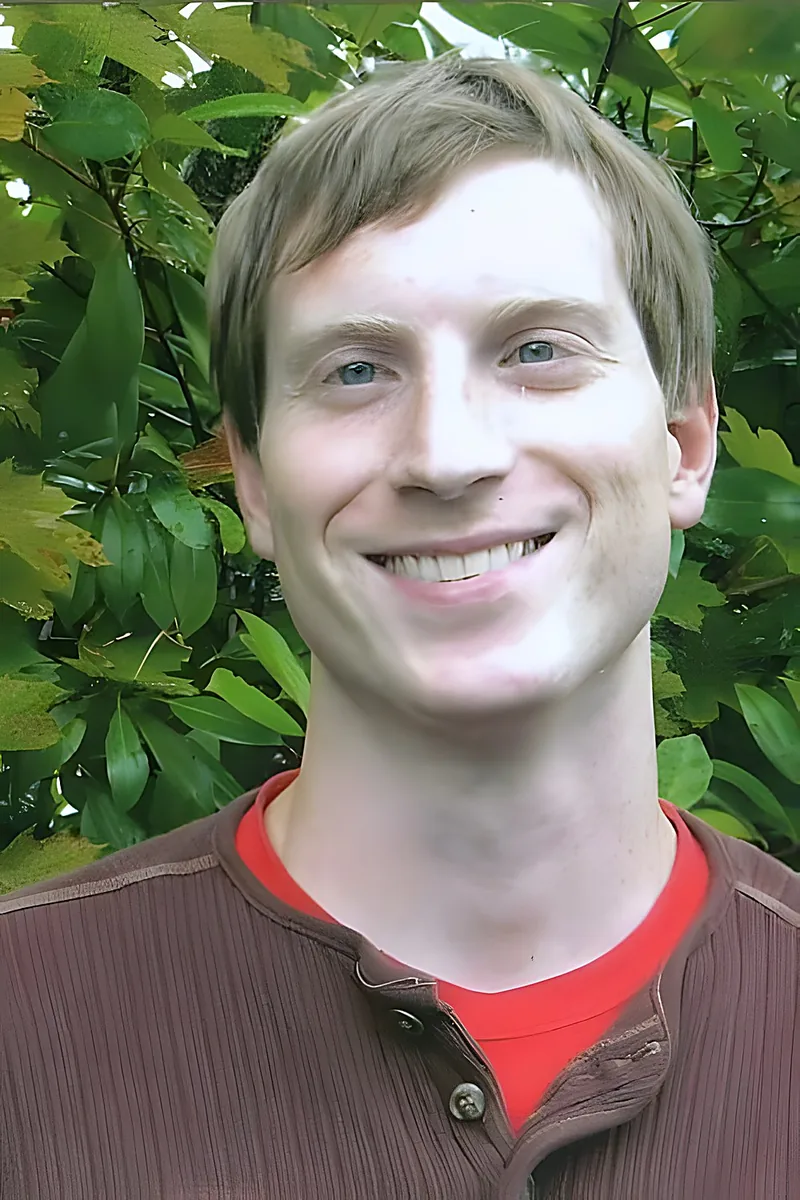
I am a Masters student in Physics at the University of Washington and have over 10 years of teaching and tutoring experience. Most recently, I worked as a teacher at the Yellow Wood Academy, a private high school that offers students a specialized one-on-one classroom environment. At YWA, I taught all high school science classes (including AP, Computer Programming, and Environmental Science) and all levels of high school math. In addition to my teaching and tutoring duties, I designed individualized lesson plans, curricula, homework assignments, and tests. Subjects I have successfully tutored Physics: all levels Chemistry: all levels high school, plus P-Chem, O-Chem Biology: all levels high school Math: all levels high school, plus Differential Equations, Statistics, some Group Theory. Standardized test preparation (incl. SAT, ACT, GRE, MCAT) Need help in another area? Just ask! While math and science are the subjects I am most passionate about, I am well-versed in many academic areas, and I may be able to help you.
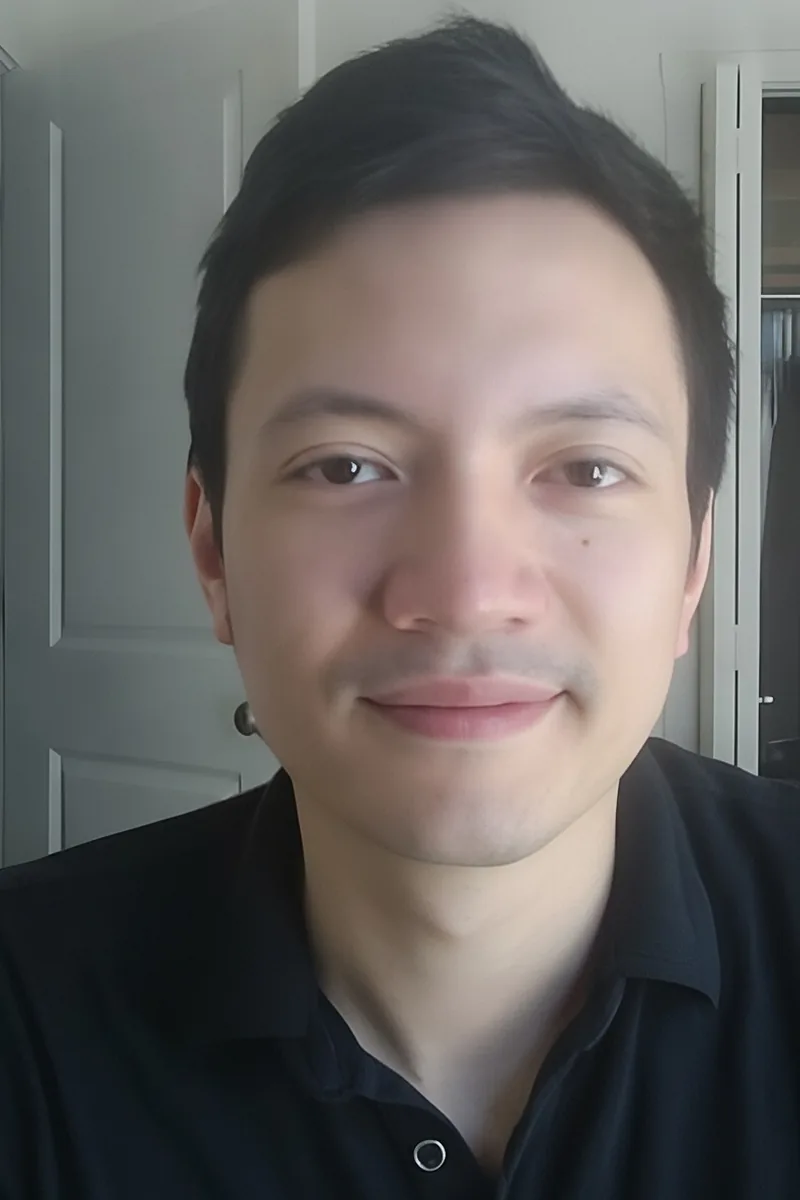
Mechanics is where Cory lights up — it's the moment students first have to fuse physical intuition with real mathematical reasoning, and his physics degree means he can walk through that transition from both sides. He takes a conversational approach, tying concepts like torque or conservation of momentum to situations students have actually encountered, so the equations feel like descriptions of something real rather than symbols to manipulate. Rated 4.9 by students.
When college physics courses hit circuits, capacitors, and electromagnetic induction, Daniel's electrical engineering training at Stevens kicks in — these aren't abstract textbook topics for him but the foundation of everything he's built and designed. He breaks intimidating multi-concept problems into smaller, logical steps, stripping away the fear factor that keeps students from seeing the physics clearly. His experience running calculus review sessions for 200+ students at a time means he's unusually good at finding the explanation that actually clicks.
Premed coursework and a computing degree at Notre Dame meant Aidan sat through the full sequence of calculus-based physics — mechanics, E&M, waves — while simultaneously learning to think algorithmically about complex problems. That combination is particularly useful when students hit the wall where physics stops being plug-and-chug and starts requiring multi-step reasoning, like connecting free-body diagrams to energy methods or translating a word problem into the right integral. His 35 ACT speaks to the quantitative fluency he brings to those tougher setups.
Ava's strength in college physics isn't a deep engineering background — it's her ability to teach students how to actually study the material. She breaks down problem-solving into structured steps, emphasizing how to read a force diagram or energy scenario before jumping to equations, and builds note-taking systems tailored to physics courses where lecture moves fast and notation piles up quickly.
College-level physics demands comfort with calculus-based reasoning — deriving equations of motion, integrating force over a path for work, or applying differential equations to oscillations. Kathleen's math degree from Washington University and her experience teaching through multivariable calculus mean she can unpack both the physics intuition and the mathematical machinery simultaneously.
Studying molecular biophysics at Brown means Srini lives at the intersection of physics and biology — applying thermodynamics, electromagnetism, and wave mechanics to understand how molecules actually behave in living systems. That dual perspective makes him especially effective at unpacking the conceptual reasoning behind problems in mechanics, circuits, and optics that trip up so many college students.
As a senior physics major at Yale, Ian tackles college-level topics like electromagnetism, rotational dynamics, and wave optics with the fluency of someone who uses them daily. He breaks intimidating derivations into logical steps, connecting the math to physical intuition so that concepts like Gauss's Law or Lagrangian mechanics actually make sense rather than feeling like symbol-pushing.
Biomedical engineering at VCU meant Waleed spent years applying physics to biological systems — modeling forces on prosthetic joints, analyzing fluid flow through vessels, understanding the electromagnetic principles behind imaging equipment like MRI and ultrasound. That gives him a concrete hook for the mechanics, thermodynamics, and E&M topics that fill college physics problem sets, since he can ground abstract equations in systems students can actually picture. Holds a 5.0 rating.
Studying computer science and applied math at Harvard means Derek uses physics constantly — from electromagnetism in circuit design to mechanics in computational modeling. He tackles college-level topics like Lagrangian dynamics and wave equations by connecting the math to physical intuition, making dense derivations feel less abstract.
Statics, dynamics, circuits, electromagnetics — Steve didn't just take these courses, he took them twice over, earning degrees in both mechanical and electrical engineering before working as a practicing engineer. That dual perspective is especially useful in college physics, where a problem about induced EMF or stress in a beam benefits from someone who's designed real systems around those principles. Rated 4.9 by students.
Molecular biology might seem like a different world from physics, but Agustin's coursework lives in the overlap — diffusion equations, fluid dynamics in cellular transport, and the thermodynamics behind protein folding all demand real physics fluency. He pairs that life-sciences perspective with strong quantitative chops (1560 SAT) to break down mechanics and energy problems in ways that click for students who think more naturally in biological terms than abstract force diagrams.
Princeton's mechanical and aerospace engineering program is essentially a four-year immersion in applied physics — Fred spent it solving problems in fluid dynamics, thermodynamics, structural mechanics, and orbital motion, which maps directly onto the topics that fill college physics syllabi. He breaks down force diagrams and energy methods by connecting them to the engineering contexts where those concepts actually get used, making abstract problem sets feel more concrete. His 1550 SAT reflects the quantitative precision he brings to calculus-heavy coursework.
A bio-organic chemistry degree means Alex spent semesters in calculus-based physics courses where thermodynamics, electromagnetism, and mechanics weren't electives — they were prerequisites for understanding molecular behavior. That chemistry-physics overlap gives him a knack for unpacking energy conservation and electric potential in ways that click for students who think in terms of atoms and reactions rather than pulleys and ramps.
A PhD in biomedical engineering means Andrew has spent years applying physics to biological systems — modeling forces on joints, analyzing fluid flow through tissues, understanding how electromagnetic fields interact with the body. That depth in mechanics, thermodynamics, and E&M carries directly into the calculus-based problem solving college physics courses demand. Rated 4.9 by students.
Testimonials
Because the right College Physics tutor makes all the difference.
Average Session Rating – Based on 3.4M Learner Ratings
Other Seattle Tutors
Related Science Tutors in Seattle
Frequently Asked Questions
College Physics generally covers mechanics (motion, forces, energy), thermodynamics, waves and sound, electricity and magnetism, and often includes an introduction to modern physics. The exact curriculum varies by institution, but most courses emphasize both theoretical understanding and practical problem-solving. If you're unsure which topics you need help with, tutors can review your course syllabus and focus on the areas where you're struggling most.
Physics relies heavily on visualizing invisible forces and abstract relationships—whether it's electromagnetic fields, quantum behavior, or energy transformations. Tutors use diagrams, real-world analogies, and step-by-step explanations to make these concepts concrete and memorable. Breaking down how theory connects to everyday applications (like how circuits power your phone or why objects fall) helps concepts stick better than memorization alone.
Yes—tutors can help you understand the physics principles behind your lab work, predict expected results, and troubleshoot when experiments don't go as planned. They can also help you analyze data, understand measurement uncertainty, and write clear lab reports that demonstrate your understanding of the scientific method. This preparation often improves both your lab performance and your grasp of the underlying concepts.
Effective physics problem-solving involves identifying what you know and what you're solving for, selecting the right equations or principles, and working through calculations carefully—but many students skip the conceptual foundation. Tutors teach you to visualize the problem first, understand why you're using a particular approach, and check whether your answer makes physical sense. This strategic thinking is just as important as getting the right number.
Unit conversions and dimensional analysis are fundamental skills that many students find tedious but essential for accurate physics work. Tutors can show you systematic methods for tracking units through calculations and help you develop the habit of checking your work before moving on. With practice and clear strategies, these skills become automatic, freeing you to focus on the physics concepts themselves.
Your first session typically starts with a conversation about your course, the specific topics you're studying, and where you're feeling stuck—whether that's conceptual understanding, problem-solving, or exam preparation. The tutor will likely work through a practice problem or concept with you to understand your learning style and identify gaps. This helps them create a personalized plan for your next sessions.
Varsity Tutors connects you with tutors who have strong backgrounds in physics and experience teaching college-level material. You can discuss your specific course (like introductory physics, calculus-based physics, or algebra-based physics) and any particular topics you need help with. Tutors can explain their teaching approach and help you understand how they'll support your learning goals.
That depends on your starting point and the exam scope, but most students benefit from starting 2-3 weeks before a major exam with regular sessions. For a cumulative final, you might need more time to review and connect concepts across units. A tutor can help you create a realistic study timeline, identify which topics need the most practice, and focus your preparation on areas where you'll gain the most points.
Let’s find your perfect tutor
Answer a few quick questions. We’ll recommend the right plan and match you with a top 5% tutor.