Award-Winning Algebra Tutors
serving Seattle, WA
Algebra
Tutors in Seattle
Private 1-on-1 tutoring, weekly live classes for academic support, test prep & enrichment, practice tests and diagnostics, and more to elevate grades and test scores.
Based on 3.4M Learner Ratings
UniversitiesSchools & Universities
DeliveredHours Delivered
ProficiencyGrowth in Proficiency
Who needs tutoring?
No obligation. Takes ~1 minute.
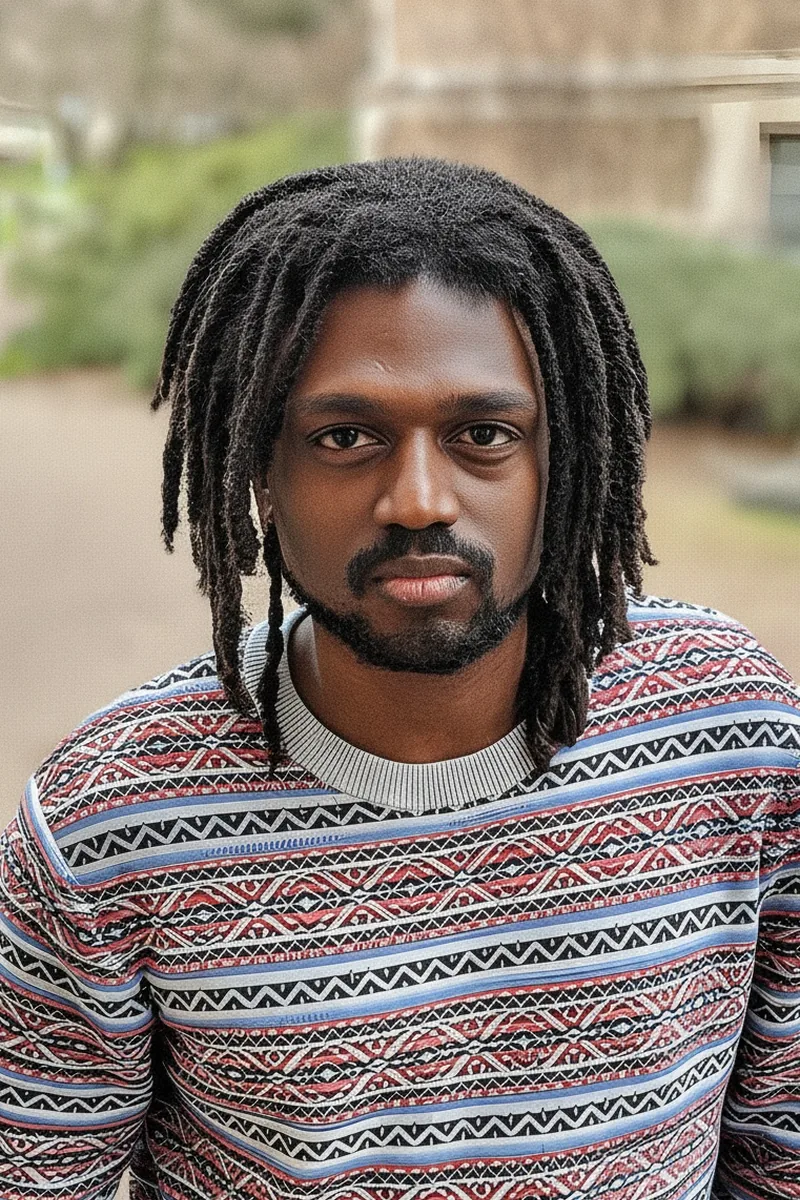
A Stanford math degree means Najja learned algebra at a level of rigor that most students never encounter — formal proofs, axiomatic structures, the deep logic underneath every rule about exponents or distributing terms. That perspective lets him unpack why algebraic rules work, so when a student gets stuck on something like solving systems or simplifying radical expressions, he can rebuild the reasoning from the ground up instead of just repeating the steps louder.
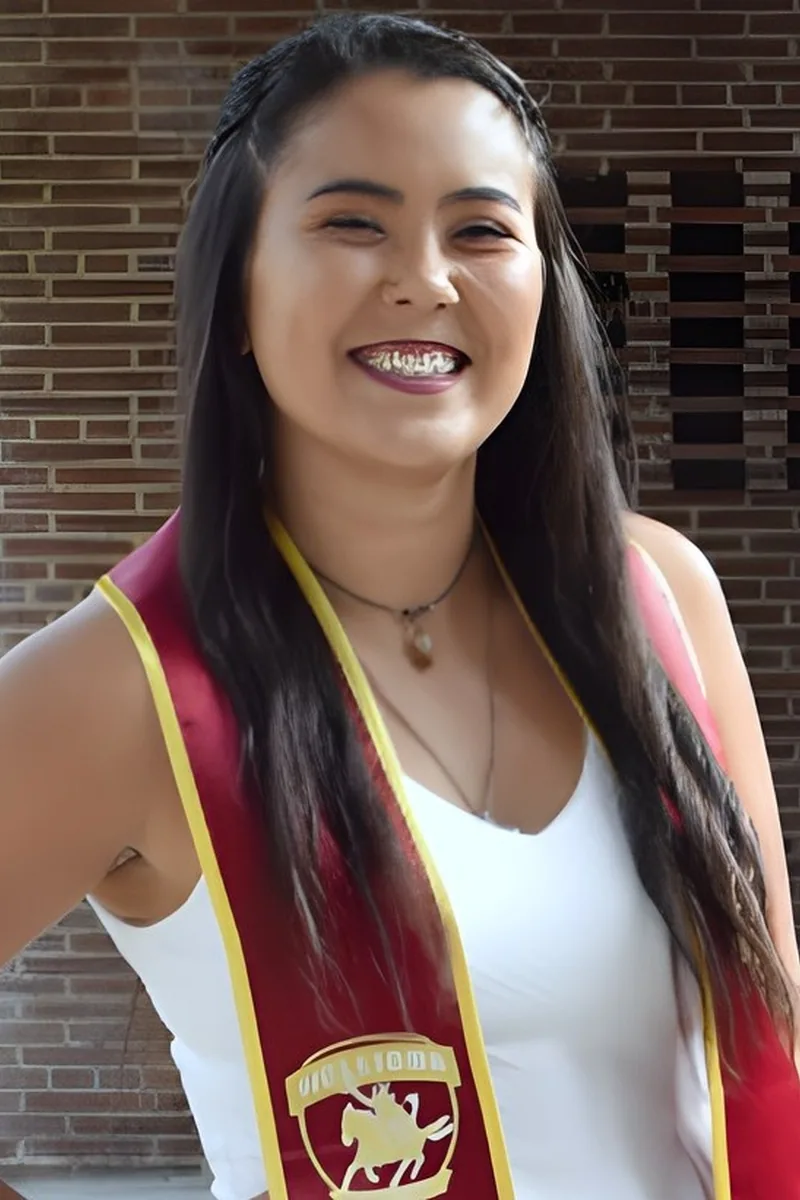
Solving for x is just the beginning — Algebra really demands that students think in relationships, whether they're graphing linear equations or factoring quadratics. Avalon's degree in Political Economy from USC required heavy quantitative coursework, and she brings that comfort with algebraic manipulation to sessions where she unpacks each problem type until the underlying pattern is clear.
The moment algebra shifts from arithmetic to abstract thinking — variables representing unknowns, equations modeling real situations — is where many students lose confidence. Grant tackles that transition head-on, walking through how to set up and solve systems of equations or factor quadratics by connecting each step to a concrete reason rather than a memorized rule.
I am an undergraduate earning my Bachelor's degree in Electrical Engineering from the University of Washington. I have already earned my Associate's of Arts with honors through the running start program, and graduated high school as a Valedictorian. I have worked with Disability Resource Services in taking notes for students, and have also offered assistance with homework to other students. As an engineering student, I am able to use my experience to offer assistance with math. I am also able to tutor in chemistry since I have already completed the general chemistry series. I believe that education is extremely important in life, not only for the purpose of knowledge, but also for the determination and ambition that learning teaches us. Understanding concepts not only takes time, but also dedication. As a student who has also attended many tutoring hours, I have come to understand that concepts sometimes require different approaches to finally have that idea click.
I am currently a 3rd year student at the University of Florida studying Computer Science, working toward an eventual master's degree. I have worked with students in a larger group setting through my volunteer work in my local community center's Youth Tutoring Program and one-on-one, tutoring a child with learning disabilities over zoom over the pandemic. I like to focus on providing a thorough explanation and making sure a student understands a question conceptually, rather than just how to do it, while also going over important test-taking strategies. I tutor both SAT Math and Reading/Writing. I believe that learning how to deal with high-pressure testing like the SAT helps students prepare for the kinds of difficult testing environments they will encounter more regularly during college.
Hi, I'm Laura! I graduated summa cum laude from Eastern Washington University with a bachelor's of science degree in mathematics and a minor in sociology. There, I earned the Frances B. Huston award, the most prestigious award given to graduating students, for excellence in academics, leadership, and community service. From there, I became a student at the University of Washington (UW), earning my Master of Science in Applied Mathematics and a position as a PhD student in the department. I was also awarded the Carl S. Pearson award for academic excellence in the Master's program. I have been working as a PhD student since then, with expertise in all types of math including algebra, calculus, linear algebra, and numerical analysis, among others. I also have years of experience coding in both python and matlab! I spent three years as an undergraduate teaching assistant, helping teach both high school and college level math classes. I also taught multiple sections of calculus at the University of Washington as a Master's student, and I have served as a teaching assistant throughout my time at UW. My favorite thing about these positions were the opportunities to work one-on-one with students, developing new approaches to help them understand difficult concepts. I love coming up with new examples or intuitive ways of thinking through math problems. I think everybody can learn math, and I love helping students of all ages and backgrounds achieve their mathematical goals! I have a number of resources to use in lesson planning, and I also welcome any resources or suggestions provided by students and parents to help tailor the experience to your needs. Please feel free to contact me with any questions or to schedule a session!
Helping students in their education is my passion. I understand how frustrating it is to keep trying on understanding a concept or master a skill without getting a satisfying result. I aim to help students enjoy learning and acquiring knowledge. Always remember that knowledge is power, and nobody can take it from you. I have sufficient tutoring and teaching experience in secondary and post-secondary settings. I worked as a tutor at the University of Wisconsin Oshkosh. I tutored college students different courses in mathematics, physics, biology, chemistry, and psychology. Also, l worked as a graduate teaching assistant at Marquette University. I taught the laboratory part of general chemistry, analytical chemistry, and organic chemistry. Furthermore, l worked as a science teacher at different secondary schools. I taught science for grades 4,5,6, and 8. Also, l taught chemistry for grade 9. When it comes to my education, l have a bachelor degree in biology healthcare science and chemistry biomolecular science (double major). In addition, l have a master's degree in chemistry. I received my undergraduate education at the University of Wisconsin Oshkosh and my graduate education at Marquette University. I tutor for numerous subjects such as algebra, trigonometry, calculus, physics, organic chemistry, analytical chemistry, human anatomy, developmental biology, ecology, and biochemistry. Also, l tutor for the GRE, DAT, TOEFL, and IELTS. My favorite subjects are the math, physics, biology, and chemistry subjects because l, simply, enjoy these fields. My teaching philosophy and tutoring style are based on practicing with various examples. When you are confronted with numerous problems to solve, you become more confident in that subject area. As a result, better performance in quizzes and exams. Outside of academia, learning about other cultures and countries around the world is my interest.
I developed a strong interest in mathematics after high school, when Algebra 1 showed me the value of learning concepts step by step. I graduated from the University of Washington with a BA in Music Education, a minor in Music, and a K-12 Teaching Certificate, while also completing college-level coursework in Algebra, Geometry, Trigonometry, and Pre-Calculus. Later, I returned to school for mathematics certification and went on to teach math from 4th through 12th grade during a twenty-three-year career in public education. I hold a current Washington Teaching Certificate in K-12 Choral Music and 4-12 Mathematics. For the past six years, I have focused exclusively on online math instruction, helping students with coursework, test preparation, and confidence-building through clear, logical explanations.
Sometimes the biggest obstacle in algebra isn't the math itself — it's translating a word problem into an equation or interpreting what a graph actually means. Alex's English PhD gives him an unusual edge here: he's deeply attuned to how language and abstraction interact, which makes him particularly effective at unpacking story problems and variable relationships.
Teaching algebra as university faculty — Moayad holds an adjunct position in Mathematics and Statistics at Washington State University Vancouver — means he knows exactly which gaps in understanding cause students to stumble when they hit topics like systems of equations or polynomial division. His two math degrees give him the depth to explain not just the procedure but the underlying logic, so each rule feels like a natural consequence rather than an arbitrary step to memorize.
Biomedical engineering at Johns Hopkins means Helen solves algebra problems before breakfast — rearranging equations for fluid dynamics, isolating variables in biomechanical models, working through systems that describe how forces act on tissue. She brings that hands-on comfort to teaching students how to translate word problems into equations and manipulate expressions with confidence, because she knows exactly where these skills lead.
Treating algebra problems like mini puzzles — where multiple strategies can lead to the same answer — Alice teaches students to recognize which approach fits which problem type, whether they're tackling systems of equations or simplifying radical expressions. Her biology-heavy premed coursework at Union College keeps her fluent in algebraic manipulation daily, and a 1550 SAT plus 5.0 tutoring rating suggest that puzzle-solving mindset translates well to her students.
Physics majors solve algebra problems dozens of times a day without calling it algebra — rearranging kinematic equations, isolating variables in force diagrams, substituting expressions across multi-step derivations. Cory brings that automatic fluency to teaching topics like systems of equations and rational expressions, where he can show students the underlying logic of each manipulation instead of just the procedure. Rated 4.9 by students.
Moses approaches algebra as a language — once students understand what an equation is actually saying, operations like factoring polynomials or solving systems of equations start to click. His Yale background instilled a habit of precise, step-by-step reasoning that he applies to everything from linear inequalities to quadratic functions.
Sometimes what trips students up in algebra isn't the math itself but the way it's explained. Marie's English teaching background makes her unusually good at rewording problems — translating word problems into equations, clarifying what a variable actually represents, and untangling the logic behind systems of equations. She's rated 5.0 by students.
Between applied math coursework and business economics modeling at UCLA, Maria works with algebraic structures constantly — but it's the range of students she's taught, from elementary readers to college-level math students, that sharpens her ability to diagnose exactly where someone's algebraic reasoning goes off track. She's particularly effective at bridging the gap between arithmetic confidence and abstract variable manipulation, breaking down how to translate a word problem into a solvable equation one decision at a time.
With degrees in both mathematics and philosophy, Clare approaches algebra as an exercise in logical reasoning — each step in solving an equation or simplifying an expression has to be justified, not just memorized. That training in rigorous argumentation makes her especially effective at teaching students to work through multi-step problems involving systems of equations or rational expressions, where sloppy reasoning compounds quickly. She also teaches competition math, so she's comfortable pushing students who want challenges beyond the standard curriculum.
Most algebra struggles come down to one thing: students learn to manipulate symbols without understanding what the symbols represent. Xiansheng tackles this by grounding every equation — whether it's solving systems or simplifying rational expressions — in a concrete scenario before moving to abstraction.
Elizabeth tackles algebra by connecting abstract expressions to concrete reasoning — whether that's translating a word problem into a system of equations or showing why factoring actually works instead of just drilling the steps. Her 1490 SAT score speaks to the kind of quantitative fluency she brings to every session.
A solid grip on algebraic manipulation — solving systems, working with inequalities, simplifying rational expressions — unlocks every quantitative subject that comes after it. Kourtney's background spans years of math tutoring starting in high school, and she's especially good at pinpointing the exact step where a student's reasoning goes off track. Rated 5.0 by students.
The jump from arithmetic to algebraic thinking trips up students who've never had to reason about unknowns before. Chica tackles that transition head-on, especially when it comes to setting up and solving word problems — a skill her quantitative economics training made second nature.
When a student stalls on algebra, it's usually one specific skill — distributing negatives, setting up equations from word problems, or graphing linear functions — that's creating a chain reaction of confusion. Tsering diagnoses that weak link quickly and rebuilds confidence from there. Her 5.0 rating comes from years of tutoring math across grade levels.
Solving multi-step equations and graphing linear systems become less intimidating when a student understands *why* each manipulation works, not just which steps to follow. Angela breaks down algebraic reasoning piece by piece, building from variable isolation through systems of equations with the patience she developed through over a year of substitute teaching across all grade levels.
Getting comfortable with variables, factoring, and linear equations is really about learning a new language for describing patterns. Jon teaches algebra by first making sure students understand what an equation is actually saying, then layering in techniques like distribution, combining like terms, and solving multi-step problems. He adapts his explanations to match how each student processes information.
Update: I completed a two-month full-time guest teacher assignment teaching World Languages Spanish to high school students (9th-12th) Spanish 1/2/3. By utilizing a student-centered learning approach, cultural competence, and equitable teaching, I support students with pedagogy rooted in inquiry, hypothesis, information gathering, problem-solving, and action. I encourage all students to adopt an open-minded approach, and provide support to gifted students, students with disabilities, English Language Learners, and Multilanguage Learners with equity. "Not everything that is faced can be changed, but nothing can be changed until it is faced." James Baldwin I am in my second year of grad school, pursuing a dual master's degree in K-8 Elementary Education and K-12 Special Education (Mild to Moderate Disabilities). With my education grad studies and BFA from the Rhode Island School of Design (RISD), I synthesize creativity and best practices in education to find creative ways of supporting learners. My pursuit and purpose is to guide with compassion and enthusiasm. I encourage students to take ownership of their learning. By promoting student agency, students empower themselves to achieve in academic, social, emotional, and behavioral development. As an ADHD adult, I enjoy working with ADHD students and adults experiencing anxiety + depression. What is effortful for our neurodivergent brains is also our superpower! In my career, I have lived and worked in NYC as an editorial photographer, actor, and dancer. I lived in Berlin and pursued performance art + music while honing my communications skills in digital art + copywriting in Marketing. In Los Angeles, I succeeded as a commercial and theatrical actor. My skill set is suited for collaboration with all students to support and develop their passion for learning, exploration, and critical thinking. I live in southeastern Washington State and teach in northeastern Oregon and southeastern Washington State public school districts. I support students in the following subjects: Elementary School Reading Elementary School Math AP English High School English Middle School English Middle School Math Digital Media & Graphic Design Fine Arts & Filmmaking Creative Writing Study Skills & Organization German 1/2 Spanish 1/2/3 Spanish Language Arts English Language Learners English Language Development Algebra 1/2 Special Education (all subjects) High School Math "We all have ability. The difference is how we use it." Stevie Wonder Thank you for reading! Ms. Anna C.
I am currently pursuing a Bachelor's degree in Computer Engineering with a minor in Mathematics at the University of Massachusetts Amherst. With over three years of tutoring experience, I specialize in subjects such as Algebra 1 & 2, AP Calculus AB/BC, and SAT Mathematics. My teaching philosophy centers on adaptability and emotional intelligence; I strive to understand each student's unique learning style, whether they are visual, auditory, or "trial by fire" and tailor my approach actively to accommodate. I am passionate about mathematics, particularly algebra and calculus, because I believe it forms the foundation for future academic success in any STEM-related field, and I am dedicated to helping students build that foundation and being a mentor.
When variables first replace numbers, a lot of students feel like they've lost their footing. Madyson tackles that transition head-on, walking through how to set up and solve equations by connecting each step to arithmetic students already understand. Her science training also means she's great at turning abstract algebra into concrete, solvable scenarios.
Reducing the intimidation factor is Daniel's whole approach to algebra — he finds that once students stop dreading a variable, concepts like solving systems of equations or simplifying rational expressions start to make sense naturally. His electrical engineering background at Stevens means he uses algebra constantly and can show students why these tools actually matter beyond the textbook.
As a dedicated tutor with over 2 years of experience, I am passionate about fostering a supportive learning environment where students can thrive in subjects like Algebra, Business Analytics, and Data Science. Currently pursuing my Bachelor's in Informatics at the University of Washington, I incorporate real-world applications into my teaching to engage students and enhance their understanding of complex concepts. My approach emphasizes personalized learning, encouraging students to ask questions and develop critical thinking skills. I find great joy in witnessing my students' growth and success, and I strive to instill a love for learning that extends beyond the classroom.
I'm a tutor who loves the moment when a concept finally clickswhether that's solving a calculus problem or debugging a first Python script. With experience teaching math from elementary to college level and professional training in full-stack development, I help students build confidence alongside competence in both math and programming. At Mathnasium, I worked with groups of 4-6 students at different levels, learning to adapt quickly to different learning styles. I bring that same flexibility to teaching HTML, CSS, JavaScript, Python, and other programming languages. I don't just give answersI guide students to discover solutions themselves because that's what sticks. Whether it's explaining why a for-loop isn't working, walking through derivatives, preparing for the SAT, or building a first web page, I focus on understanding over memorization. I'm patient but direct, and I adjust my approach based on what's actually working for each student. My goal is simple: make learning feel achievable, not intimidating, and give students tools they can use long after our sessions end.
Intensely curious, I am interested in STEM subjects and the liberal arts. I tutor to help you reach your educational goals and because it's immensely gratifying to see my students succeed.
I have a Bachelor's of Science and Master's of Science in chemical engineering from the University of Wyoming. While I was getting my Bachelor's degree, I tutored athletes in general chemistry, organic chemistry, college algebra, calculus I, physics, and thermodynamics. I love helping students gain confidence.
I am passionate about helping students because I love learning. There is nothing better than being part of a community where people are learning and growing. My style is that of guide, coach and fellow explorer not that of lecturer. I am a graduate of the University of Washington, where I received Bachelor of Arts degrees in music theory and in classical languages (Latin and Greek). I obtained my teaching credentials for secondary mathematics at Western Washington University. Recently I earned my TEFL at the International TEFL Academy in Barcelona. I have worked with a wide variety of students, including elementary and high school, college and adults. I have led large classes of over 30 people, small groups and individuals. I have helped students learn and improve in a variety of subjects, mathematics, language, physics, music and more. I love to travel, experience new cultures and learn new languages. Currently I am learning about the culture of the Czech Republic and their language.
Working with Varsity is flexible and fun. I worked for over 25 years as a civil engineer solving flooding problems and improving fish habitat. I changed careers to teaching math about five years ago. I have taught high school math from Algebra I to AP Calculus. I enjoy working with people to achieve their academic goals. When I am not doing math I like to sail, ski rock climb and cook. I look forward to meeting you!
A philosophy degree from Princeton means Jeff spent years breaking complex arguments into precise logical steps — the same skill that makes algebra click when students are wrestling with systems of equations or manipulating rational expressions. He teaches students to read an equation the way they'd read an argument: identify what's given, what's unknown, and what connects them.
Most algebra frustration comes not from the new material itself but from shaky pre-algebra skills underneath it — and Liz, having taught middle schoolers for years, can spot those gaps fast. She zeroes in on the specific operation or concept causing the breakdown, whether it's distributing negatives, solving multi-step equations, or graphing linear functions, and rebuilds from there.
Factoring, quadratic equations, and systems of linear equations all have an internal logic that most textbooks bury under procedure. Sung digs into that logic so students see why completing the square works or what a solution to a system actually represents on a graph. His 1500 SAT score reflects the kind of mathematical fluency he brings to every session.
Between a biomedical engineering degree and a PhD in statistics, Sam has spent years reducing messy real-world problems to clean algebraic expressions — isolating variables in biological models, rearranging formulas for experimental design, solving systems that describe physiological data. That habit of treating algebra as something you actually do, not just practice, comes through when he teaches topics like rational expressions and multi-step equation solving. Rated 4.9 by students.
Meghan approaches algebra the way she approaches a news story: break the problem into pieces, identify what you know, and solve for what you don't. She's especially effective at translating word problems into equations, a skill her journalism training made second nature. Rated 5.0 by students.
Factoring, systems of equations, and quadratic modeling all hinge on recognizing structure — seeing that a messy expression is really just a pattern in disguise. Valerie's analytical training at the University of Chicago sharpened her ability to teach students how to spot those patterns and translate word problems into solvable equations.
Testimonials
Because the right Algebra tutor makes all the difference.
Average Session Rating – Based on 3.4M Learner Ratings
Practice Algebra
Free practice tests, flashcards, and AI tutoring for Algebra
Other Seattle Tutors
Related Math Tutors in Seattle
Frequently Asked Questions
Many students in Seattle struggle with the transition from arithmetic to abstract thinking—understanding why algebraic rules work, not just how to apply them. Word problems, multi-step equations, and graphing are frequent pain points, especially when students haven't built a solid foundation in order of operations or variable concepts. Math anxiety can also intensify these challenges, making it harder to persist through complex problems. Personalized tutoring helps students move beyond memorization to genuine conceptual understanding.
During the first session, a tutor will assess your student's current algebra level, identify specific gaps (like trouble with fractions or negative numbers), and understand their learning style. They'll discuss what's causing frustration—whether it's showing work, problem-solving strategies, or confidence—and create a personalized plan. This foundation ensures every session builds exactly what your student needs.
Seattle's 9 school districts use different textbooks and teaching approaches, so Varsity Tutors connects you with tutors who understand your student's specific curriculum and can bridge gaps between how concepts are presented in class and how they're reinforced in tutoring. Whether your student's school emphasizes graphing-first, equation-solving, or conceptual modeling, tutors tailor their approach to align with classroom instruction while filling in understanding gaps.
Showing work isn't just about following rules—it's about thinking clearly and catching mistakes. Tutors teach students to organize their steps, explain their reasoning, and use algebra strategically rather than randomly trying operations. This builds both problem-solving skills and the communication skills teachers expect, which is especially important as algebra becomes more complex.
Word problems require students to translate real-world situations into equations—a skill that combines reading comprehension, mathematical reasoning, and pattern recognition. Tutors break this into manageable steps: identifying what's being asked, defining variables, building equations, and checking answers. With practice and guidance, students learn to see the patterns in different problem types and build confidence tackling unfamiliar scenarios.
Absolutely. Math anxiety often stems from past struggles or feeling lost in class, and personalized tutoring directly addresses both. When a tutor works at your student's pace, celebrates small wins, and explains concepts in a low-pressure setting, confidence naturally grows. Students who understand the 'why' behind algebra—and see themselves succeeding—are far more likely to approach problems with curiosity instead of fear.
Graphing connects abstract equations to visual patterns, which helps many students finally 'see' what algebra means. Tutors use multiple representations—tables, equations, and graphs—to show how they relate, and practice plotting points, understanding slope, and interpreting graphs in context. This visual-algebraic connection is especially powerful for students who struggle with pure symbol manipulation.
Varsity Tutors matches you with expert tutors experienced in algebra and familiar with Seattle-area schools. Share your student's current level, specific challenges (like word problems or graphing), and learning preferences, and you'll be connected with a tutor who's the right fit. Most students see improvement within a few sessions once personalized instruction begins.
Let’s find your perfect tutor
Answer a few quick questions. We’ll recommend the right plan and match you with a top 5% tutor.