Award-Winning Geometry Tutors
serving Seattle, WA
Geometry
Tutors in Seattle
Private 1-on-1 tutoring, weekly live classes for academic support, test prep & enrichment, practice tests and diagnostics, and more to elevate grades and test scores.
Based on 3.4M Learner Ratings
UniversitiesSchools & Universities
DeliveredHours Delivered
ProficiencyGrowth in Proficiency
Who needs tutoring?
No obligation. Takes ~1 minute.
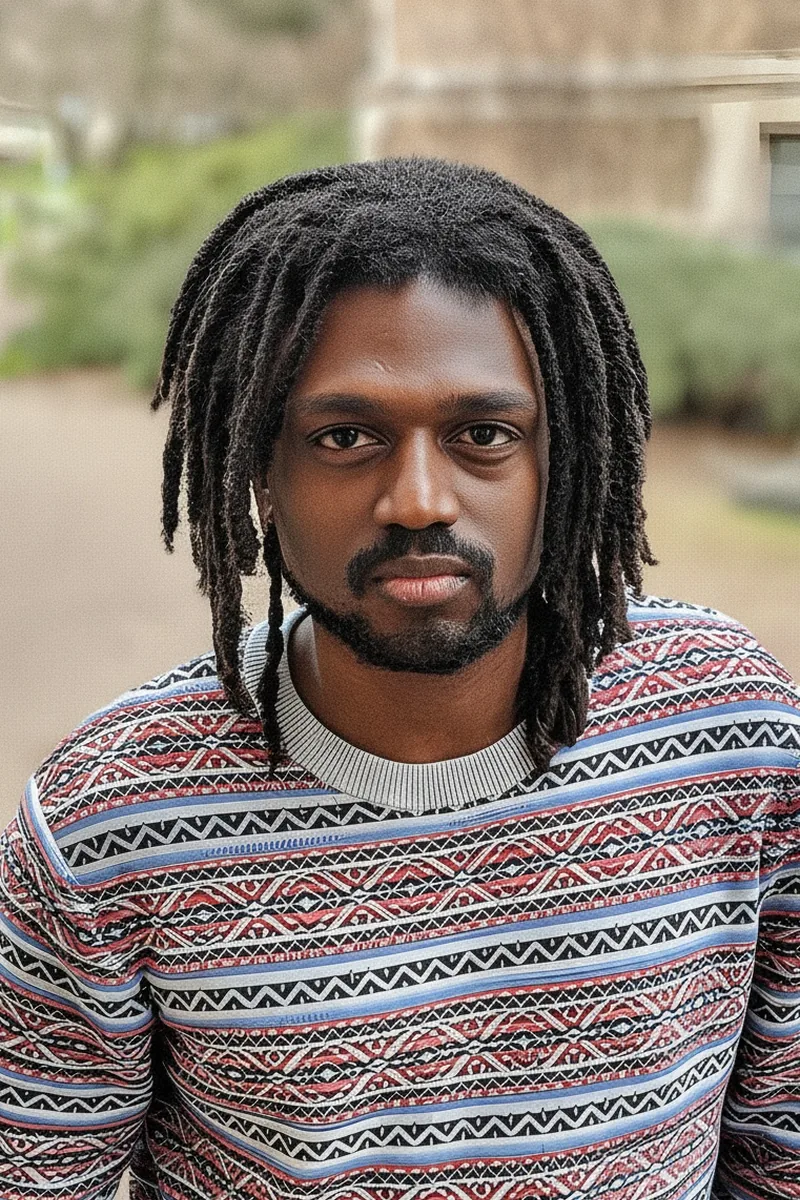
A Stanford math degree paired with a history PhD in progress means Najja toggles daily between formal mathematical reasoning and the kind of argumentative writing that underpins geometric proofs — making two-column and paragraph proofs feel less foreign to students who think of themselves as "not math people." He unpacks the logic behind circle theorems, triangle inequalities, and angle-side relationships by treating each theorem as a claim that needs evidence, much like a historical argument.

Proofs are usually where Geometry students panic, but the logic behind them is surprisingly close to building a written argument — something Avalon spent four years practicing in USC's honors reading and writing program. She applies that same structured reasoning to angle relationships, triangle congruence, and circle theorems, walking through each proof step by step.
I am an undergraduate earning my Bachelor's degree in Electrical Engineering from the University of Washington. I have already earned my Associate's of Arts with honors through the running start program, and graduated high school as a Valedictorian. I have worked with Disability Resource Services in taking notes for students, and have also offered assistance with homework to other students. As an engineering student, I am able to use my experience to offer assistance with math. I am also able to tutor in chemistry since I have already completed the general chemistry series. I believe that education is extremely important in life, not only for the purpose of knowledge, but also for the determination and ambition that learning teaches us. Understanding concepts not only takes time, but also dedication. As a student who has also attended many tutoring hours, I have come to understand that concepts sometimes require different approaches to finally have that idea click.
Teaching geometry as adjunct faculty at Washington State University gave Moayad a clear picture of which proof techniques and spatial reasoning skills trip students up most — particularly when problems layer angle relationships on top of triangle congruence or circle properties. His two math degrees mean he can unpack the formal logic behind each theorem while keeping the visual intuition front and center.
Proofs are usually the first place Geometry students feel lost — suddenly math requires written arguments, not just calculations. Alice teaches students to read diagrams like stories, identifying congruence relationships and angle properties that make each proof's logic visible. She treats every problem as a puzzle with a strategy to uncover, which turns Geometry's abstract side into something approachable.
Proofs are usually the first place geometry students feel lost, because suddenly math asks them to explain *why* something is true instead of just computing an answer. Cory tackles this by walking through the logic of congruence, similarity, and parallel-line theorems as a conversation — asking questions that lead a student to construct the argument themselves. That approach builds the deductive reasoning skills that carry well beyond the geometry classroom.
I am a professional scientist with multiple years of experience in the biopharmaceutical field. I have spent time in the classroom with elementary aged students and am comfortable with this age group. I am also familiar with AP classes and ACT/SAT preparation. I look forward to sharing my love of learning with students and helping them achieve academic goals!
An econometrics degree is built on modeling relationships between variables — and in geometry, that same instinct for structure kicks in when students need to see how angle relationships, congruence criteria, and parallel line properties connect inside a single diagram. Chica teaches students to read a geometric figure the way she'd read a dataset: identify what you know, figure out what's linked, and build toward the answer step by step. Rated 5.0 by students.
Flying airplanes requires constant mental geometry — calculating descent angles, visualizing approach paths in three dimensions, and reasoning about distances and bearings on navigation charts. Jon's commercial aviation training at the University of North Dakota means he can ground abstract concepts like angle relationships and triangle properties in real-world spatial problems that make the material feel less theoretical. He's especially comfortable with the measurement and application side of the subject, where precision actually matters.
Working with Varsity is flexible and fun. I worked for over 25 years as a civil engineer solving flooding problems and improving fish habitat. I changed careers to teaching math about five years ago. I have taught high school math from Algebra I to AP Calculus. I enjoy working with people to achieve their academic goals. When I am not doing math I like to sail, ski rock climb and cook. I look forward to meeting you!
I'm a tutor who loves the moment when a concept finally clickswhether that's solving a calculus problem or debugging a first Python script. With experience teaching math from elementary to college level and professional training in full-stack development, I help students build confidence alongside competence in both math and programming. At Mathnasium, I worked with groups of 4-6 students at different levels, learning to adapt quickly to different learning styles. I bring that same flexibility to teaching HTML, CSS, JavaScript, Python, and other programming languages. I don't just give answersI guide students to discover solutions themselves because that's what sticks. Whether it's explaining why a for-loop isn't working, walking through derivatives, preparing for the SAT, or building a first web page, I focus on understanding over memorization. I'm patient but direct, and I adjust my approach based on what's actually working for each student. My goal is simple: make learning feel achievable, not intimidating, and give students tools they can use long after our sessions end.
Proofs are where most geometry students start to struggle, because suddenly math requires building logical arguments instead of just computing answers. Margaret's background in both computer science and political science at Stanford means she thinks in structured logic all day — and she brings that same rigor to angle relationships, congruence, and circle theorems.
Proofs are usually where geometry students panic — the logic feels nothing like the computation they're used to. Rachel spent her Dartmouth engineering program constructing logical arguments from axioms and constraints, so she's comfortable walking students through how to set up two-column and paragraph proofs while also tackling area, volume, and triangle congruence.
Mechanical and aerospace engineering at Princeton means Matthew lives in a world of geometric constraints — fitting components into tight spaces, calculating load-bearing angles, reasoning about three-dimensional shapes on paper before they ever get built. He brings that same step-by-step precision to teaching triangle properties, angle relationships, and the logic behind constructions, typically demonstrating a technique and then handing students progressively harder problems until the reasoning becomes automatic.
Proofs are usually where geometry students panic, but they're really just structured arguments — and Dane approaches them that way. Studying engineering at Duke sharpened his spatial reasoning across topics like congruence, similarity, and coordinate geometry, and he teaches students to visualize relationships before translating them into formal logic.
A math major at Washington University with a 35 ACT, Kathleen has the kind of fluency across algebra, trigonometry, and spatial reasoning that lets her spot exactly which prerequisite skill is tripping a geometry student up — whether it's solving equations inside angle relationships or applying trig ratios to right triangles. She teaches the "why" behind each theorem so students can reconstruct steps on their own instead of memorizing proof templates.
Proofs are where most geometry students stall — the jump from calculating angles to constructing logical arguments feels like a completely different subject. Caroline's engineering training at WashU required rigorous spatial reasoning and formal proof techniques, so she teaches geometry as a system of logic rather than a collection of shape formulas. She unpacks each theorem step by step until the reasoning becomes second nature.
Proofs are usually the moment geometry stops feeling intuitive and starts feeling impossible. Noah approaches them as logical arguments rather than memorization exercises, drawing on the same analytical reasoning he sharpened through his political science training at Penn. He also tackles coordinate geometry and triangle congruence by emphasizing the visual logic behind each theorem.
A chemistry major at Harvard, James is used to thinking in three dimensions — molecular geometries, orbital shapes, bond angles — which gives him a natural fluency with the spatial reasoning geometry requires. He tackles circle theorems and polygon properties by encouraging students to sketch, label, and reason through diagrams before jumping to formulas, building the kind of geometric intuition that makes even multi-step problems feel manageable. Rated 4.9 by students.
Proofs are usually where geometry students start to struggle, because the logic feels completely different from arithmetic. Judah approaches each proof as a puzzle, teaching students to identify the given information, spot congruence or similarity relationships, and build an argument step by step. He's patient enough to let the reasoning click on its own.
Proofs are usually the first time a geometry student has to explain *why* something is true, not just calculate an answer. Vansh teaches proof-writing as a logical argument rather than a mysterious format, walking through triangle congruence, parallel-line theorems, and circle properties with enough patience to make the reasoning feel natural.
Proofs are usually the first place geometry students feel lost, because suddenly they're being asked to construct arguments instead of compute answers. Ben teaches proof-writing as a logical skill: identifying what's given, what's needed, and which theorems bridge the gap. His approach turns the frustration of "I don't know where to start" into a repeatable process.
Proofs are usually the make-or-break moment in geometry, and Brian teaches students to construct them by thinking like a detective — identifying what's given, what's needed, and which theorems bridge the gap. His Caltech training in analytical reasoning sharpens how he explains congruence, similarity, and circle theorems, turning proof-writing from intimidating to methodical.
Testimonials
Because the right Geometry tutor makes all the difference.
Average Session Rating – Based on 3.4M Learner Ratings
Practice Geometry
Free practice tests, flashcards, and AI tutoring for Geometry
Other Seattle Tutors
Related Math Tutors in Seattle
Frequently Asked Questions
Many students struggle with the shift from algebra's computational focus to geometry's emphasis on logical reasoning and proofs. Common pain points include visualizing 3D shapes, understanding why geometric theorems work (not just memorizing them), and applying concepts to word problems. Additionally, students often find it difficult to organize their thinking when writing formal proofs or justifying their answers—skills that require both mathematical understanding and clear communication.
Proofs require a different mindset than computation—you need to see the logical connections between given information and what you're trying to prove. Personalized 1-on-1 instruction helps you break down the proof-writing process step by step, understand why each statement follows from the previous one, and develop strategies for tackling unfamiliar proof types. A tutor can also help you recognize common proof patterns and build confidence in your reasoning, which is often the biggest barrier students face.
Absolutely. Spatial reasoning is a skill that improves with practice and the right guidance. Tutors can use diagrams, manipulatives, and step-by-step explanations to help you build mental models of 2D and 3D shapes. They'll also teach you strategies for translating word descriptions into accurate drawings, which is essential for solving geometry problems correctly. Many students find that once they develop stronger visualization skills, the rest of geometry becomes much more manageable.
Yes. Seattle's 9 school districts use different approaches and materials, from traditional textbooks to more discovery-based curricula. Varsity Tutors connects you with tutors who are familiar with various geometry programs and can adapt their instruction to match your specific curriculum. Whether your class emphasizes coordinate geometry, transformations, or classical Euclidean approaches, a tutor can align their support with what you're learning in school.
Word problems require you to translate language into geometric diagrams and equations—a skill that takes practice. Tutors help by teaching you to identify key information, sketch accurate diagrams, and connect the problem to relevant theorems or formulas. They'll also show you how to check whether your answer makes sense in the context of the problem. Breaking this process into manageable steps reduces anxiety and builds the confidence you need to tackle unfamiliar problems independently.
Math anxiety is real, and geometry can feel particularly intimidating because it requires both visual and logical thinking. Personalized instruction in a low-pressure environment helps you work through problems at your own pace, ask questions without judgment, and celebrate small wins. As you start seeing patterns, understanding why theorems work, and successfully solving problems, your confidence naturally grows. Many students find that one-on-one support transforms not just their grades but their entire relationship with math.
Your first session is about getting to know each other and understanding your specific needs. The tutor will ask about your current geometry topics, what's challenging you most, and your learning goals. They may review recent classwork or assessments to identify patterns in where you're struggling. This foundation helps them create a personalized plan for future sessions that targets your biggest gaps and builds on your strengths.
Showing work in geometry means clearly explaining your reasoning—stating what you know, what you're trying to find, and how each step follows logically. Tutors teach you to organize your thinking and communicate your process clearly, whether you're solving a calculation or writing a proof. They'll also help you understand that showing work isn't just about getting points; it's about developing mathematical thinking that helps you catch your own mistakes and understand concepts more deeply.
Let’s find your perfect tutor
Answer a few quick questions. We’ll recommend the right plan and match you with a top 5% tutor.