Award-Winning College Physics Tutors
serving Olympia, WA
College Physics
Tutors in Olympia
Private 1-on-1 tutoring, weekly live classes for academic support, test prep & enrichment, practice tests and diagnostics, and more to elevate grades and test scores.
Based on 3.4M Learner Ratings
UniversitiesSchools & Universities
DeliveredHours Delivered
ProficiencyGrowth in Proficiency
Who needs tutoring?
No obligation. Takes ~1 minute.
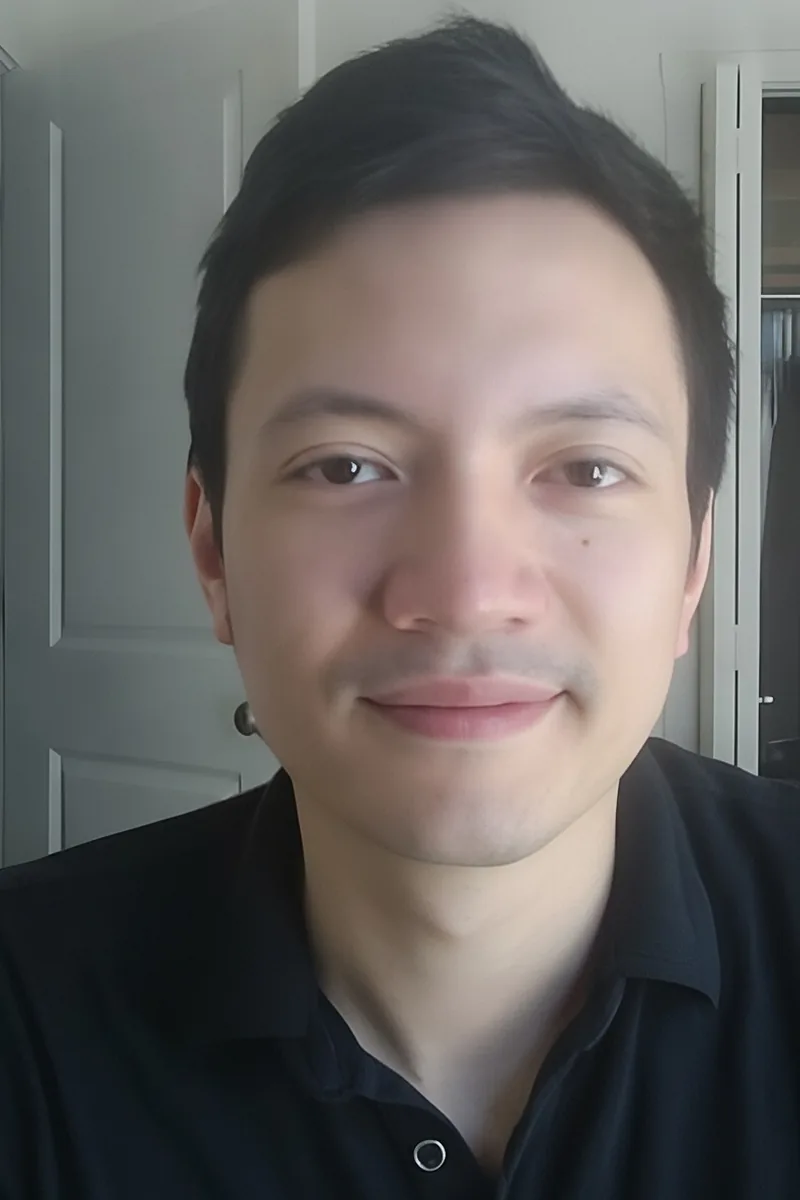
Mechanics is where Cory lights up — it's the moment students first have to fuse physical intuition with real mathematical reasoning, and his physics degree means he can walk through that transition from both sides. He takes a conversational approach, tying concepts like torque or conservation of momentum to situations students have actually encountered, so the equations feel like descriptions of something real rather than symbols to manipulate. Rated 4.9 by students.
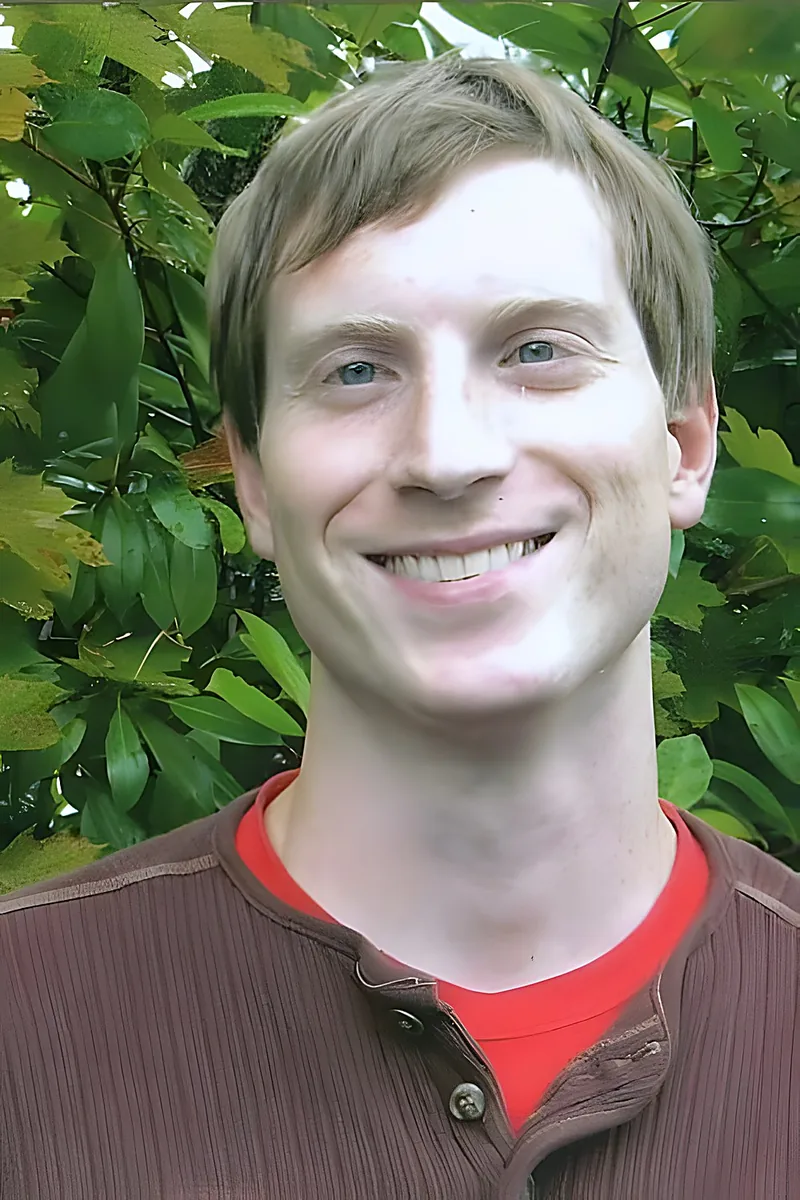
I am a Masters student in Physics at the University of Washington and have over 10 years of teaching and tutoring experience. Most recently, I worked as a teacher at the Yellow Wood Academy, a private high school that offers students a specialized one-on-one classroom environment. At YWA, I taught all high school science classes (including AP, Computer Programming, and Environmental Science) and all levels of high school math. In addition to my teaching and tutoring duties, I designed individualized lesson plans, curricula, homework assignments, and tests. Subjects I have successfully tutored Physics: all levels Chemistry: all levels high school, plus P-Chem, O-Chem Biology: all levels high school Math: all levels high school, plus Differential Equations, Statistics, some Group Theory. Standardized test preparation (incl. SAT, ACT, GRE, MCAT) Need help in another area? Just ask! While math and science are the subjects I am most passionate about, I am well-versed in many academic areas, and I may be able to help you.
When college physics courses hit circuits, capacitors, and electromagnetic induction, Daniel's electrical engineering training at Stevens kicks in — these aren't abstract textbook topics for him but the foundation of everything he's built and designed. He breaks intimidating multi-concept problems into smaller, logical steps, stripping away the fear factor that keeps students from seeing the physics clearly. His experience running calculus review sessions for 200+ students at a time means he's unusually good at finding the explanation that actually clicks.
Running an immunology lab at Columbia University Medical Center means Matthew applies physics daily in ways most tutors haven't — calibrating imaging equipment, analyzing force and pressure data in tissue samples, and troubleshooting instruments that depend on optics and electromagnetism. That hands-on fluency, combined with a physics degree and a 35 ACT, lets him teach college-level mechanics and E&M problems by connecting equations to the physical systems they actually describe.
Pursuing an MD at Stanford after a double major in economics and molecular/cellular biology, Maggie brings a pre-med perspective to college physics that makes topics like optics, fluid dynamics, and wave mechanics feel immediately relevant rather than abstract. She's especially sharp at teaching students to set up problems cleanly — translating a physical scenario into the right free-body diagram or energy equation before doing any math. Rated 5.0 by students.
College-level physics ramps up fast, especially when courses introduce calculus-based mechanics or electromagnetism for the first time. Charles works through these topics as part of his mechanical engineering curriculum at Yale, so he can walk through derivations of torque, moment of inertia, or Gauss's law with the fluency of someone who applies them in lab and design projects regularly.
Between earning a mechanical engineering bachelor's and pursuing his master's, Aaron has taken calculus-based physics from every angle — statics, dynamics, thermodynamics, fluid mechanics — and now applies those principles daily in graduate-level research and coursework. He breaks down problems by teaching students to sketch the physical situation first, identify constraints, and only then select the right conservation law or force equation. Holds a 5.0 rating.
College-level physics ramps up quickly, especially once calculus-based mechanics and electromagnetism enter the picture. Richard's time as a course assistant in Harvard's math department gave him deep comfort with the calculus underpinning topics like electric flux integrals and differential equations of motion. He teaches the physics and the math simultaneously, so students aren't left wondering where a derivation came from.
Chemical engineering at Vanderbilt means Greg solves physics problems daily — fluid mechanics, heat transfer, thermodynamics, and force balances are baked into every core course, so his explanations come from repeated, hands-on application rather than textbook summaries. His math double major gives him the calculus fluency to walk through derivations cleanly, especially when problems involve integration over continuous systems or solving second-order differential equations of motion. Rated 5.0 by students.
College-level physics demands more than plug-and-chug — problems in electrodynamics, rotational mechanics, or thermodynamics often require combining multiple principles in a single solution. Pranav digs into these multi-step problems as a Biomedical Engineering student at Johns Hopkins, where physics underpins much of his coursework. He walks through derivations and problem-solving strategies that build real fluency with the material rather than surface-level familiarity.
A computer science degree from UCLA means Michael spent semesters deep in the physics that underpins simulation and graphics — kinematics, force modeling, energy systems — and his 1560 SAT confirms the quantitative chops to handle calculus-based problem solving. He teaches students to treat each physics problem like debugging code: isolate what you know, identify the governing principle, then execute step by step until the answer falls out.
Studying applied physics at Cornell means Ritesh isn't just teaching college physics concepts — he's actively using them in coursework and research. He digs into the areas that trip up most introductory students, like applying Newton's laws to rotational systems, working through Gauss's law problems, or connecting energy conservation to real circuits. His 4.6 rating speaks to his ability to make those connections click.
Three science-focused bachelor's degrees — including biology — meant Garrett sat through the full calculus-based physics sequence and kept coming back to it in physiology and physical chemistry, where concepts like fluid dynamics, pressure gradients, and energy transfer show up again and again. That repeated exposure across disciplines gives him an intuitive feel for when to apply conservation of energy versus momentum, or how to reason through a thermodynamics problem without getting lost in the formalism. His 1530 SAT speaks to the quantitative sharpness he brings to each session.
A physics degree means Nima didn't just pass college physics — he built his entire undergraduate education on top of it, from classical mechanics through electromagnetism and modern physics. He breaks down multi-step problems by teaching students to identify the governing principle first, then translate it into math, which is where a 1580 SAT and deep comfort with calculus-based reasoning pay off.
Predentistry requires a deep pass through college physics — optics, fluid dynamics, mechanics of materials — and Erica tackled that coursework at Harvard alongside a History of Science degree that gave her an unusual ability to explain *where* physical concepts come from and how they evolved into the frameworks students use today. She breaks down problem-solving by connecting the conceptual narrative to the math, so students aren't just plugging into formulas but understanding the physics driving each step. Rated 4.9 by students.
Testimonials
Because the right College Physics tutor makes all the difference.
Average Session Rating – Based on 3.4M Learner Ratings
Other Olympia Tutors
Related Science Tutors in Olympia
Frequently Asked Questions
Varsity Tutors matches Olympia students with expert College Physics tutors for 1-on-1 instruction. We pair each student with a tutor based on their specific needs, learning style, and goals.
Whether you need homework help, exam prep, or want to get ahead, our College Physics tutors are ready to help.
Common challenges include gaps from earlier material, difficulty with specific concepts, and trouble applying learning to new problems. These issues can snowball quickly in College Physics.
A tutor identifies where you're stuck, fills in gaps, and provides targeted practice. The 1-on-1 format means you get help exactly where you need it.
Tutors work with your student's actual coursework—homework assignments, class notes, and upcoming tests. This keeps tutoring directly relevant to what's happening in the classroom.
When you share information about your student's school and curriculum, we can match you with a tutor who has relevant experience.
All tutors complete background checks, credential verification, and teaching evaluation. Many of our College Physics tutors hold advanced degrees or have years of teaching experience.
You can review tutor profiles to find someone with the right background for your student's level and needs.
Many students see improved grades within a few weeks, along with better understanding of College Physics concepts and more confidence tackling challenging material.
Tutors track progress and adjust their approach to ensure continued improvement.
Most students benefit from 1-2 sessions per week. More frequent sessions help if your student is significantly behind or has an important exam coming up.
Your tutor can recommend a schedule based on your student's specific situation and goals.
Tutoring is purchased in packages of hours, with rates varying by tutor experience. Varsity Tutors offers several options to fit different budgets and needs.
You can discuss pricing during your consultation to find what works best.
Your tutor will assess where your student is, discuss goals, and start working on priority areas. Most students bring current homework or upcoming test material to focus on.
By the end, you'll have a clear sense of how the tutor can help and a plan for moving forward.
Let’s find your perfect tutor
Answer a few quick questions. We’ll recommend the right plan and match you with a top 5% tutor.