Award-Winning AP Biology Tutors
serving Seattle, WA
AP Biology
Tutors in Seattle
Private 1-on-1 tutoring, weekly live classes for academic support, test prep & enrichment, practice tests and diagnostics, and more to elevate grades and test scores.
Based on 3.4M Learner Ratings
UniversitiesSchools & Universities
DeliveredHours Delivered
ProficiencyGrowth in Proficiency
Who needs tutoring?
No obligation. Takes ~1 minute.
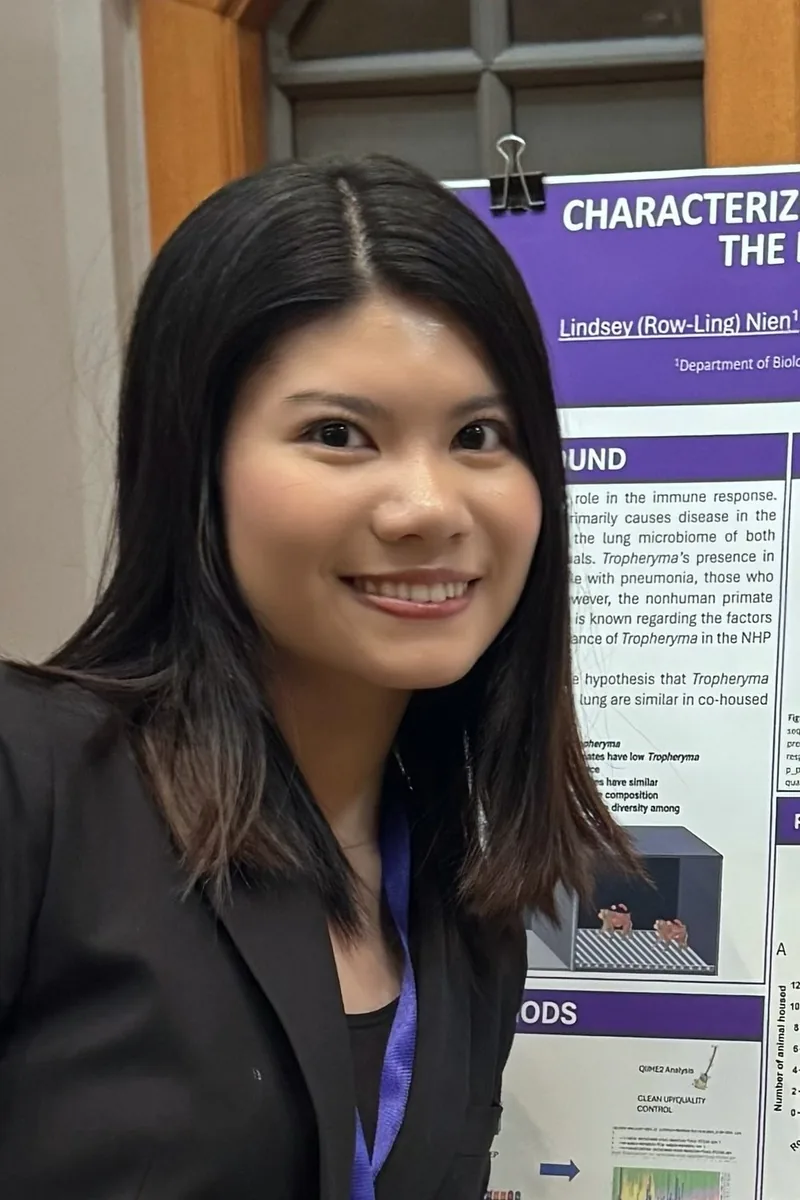
Hello:)) My name is Lindsey! I recently graduated college with a Bachelor's degree in Molecular, Cellular, and Developmental Biology from the University of Washington. I have over 2 years of tutoring and classroom experience specializing in subjects such as AP Biology, AP Chemistry, and various levels of math and science. The most important thing to me is my students feel comfortable to ask questions and explore concepts at their own pace. I believe that every student has unique strengths and learning styles, and it's my goal to understand them and to inspire their curiosity and confidence in these subjects. Outside of tutoring, I enjoy reading about scientific advancements and watching movies and eating. I'm excited to meet you all!!
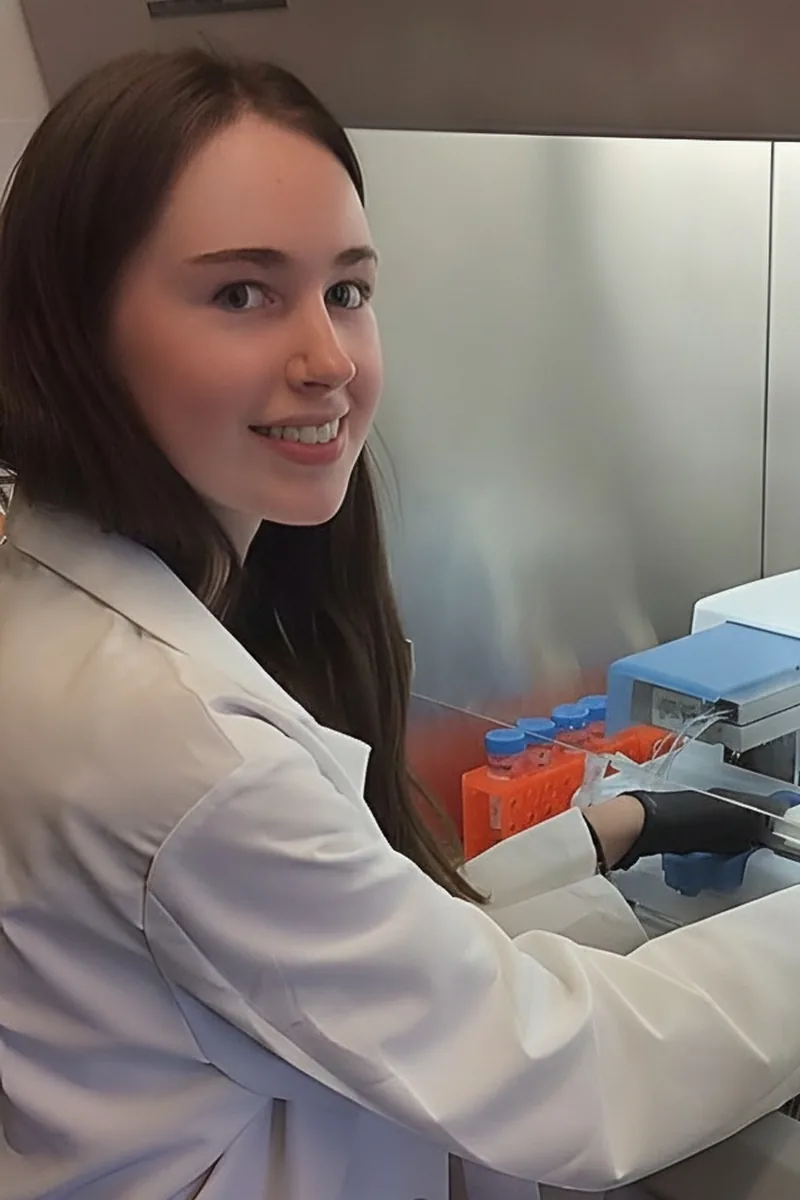
Working in a research lab at Oregon Health and Sciences University while studying biomedical engineering at Johns Hopkins, Helen is actively applying concepts like cell signaling, gene regulation, and protein function that sit at the heart of AP Bio's molecular and cellular units. Her engineering training gives her a systems-level approach to biology — tracing how inputs at the molecular scale produce outputs at the organism level — which is exactly the kind of multi-step reasoning the exam's free-response questions demand. Rated 4.8 by students.
Physics majors develop a habit of asking *why* a system behaves the way it does — and that instinct translates surprisingly well to AP Bio topics like enzyme kinetics, membrane potential, and energy flow through ecosystems, where students need to reason about rates and gradients rather than just label diagrams. Cory brings that quantitative, systems-level thinking to a subject most tutors approach purely through memorization, which is especially useful for the data-analysis and experimental-design questions the exam throws at students. Rated 4.9 by students.
Genetics is where most AP Bio students start losing confidence — pedigree analysis, gene expression regulation, and linking molecular events to inheritance patterns all demand a kind of layered thinking that pure memorization can't sustain. Mays studied biology at the University of Washington with a focus on genetics and microbiology, which means she can unpack how a point mutation in DNA leads to a misfolded protein and ultimately a phenotypic change, exactly the causal chain the exam's free-response questions expect students to articulate.
AP Biology's shift toward data analysis and experimental design catches many students off guard — it's no longer enough to memorize cell structures and metabolic pathways. Noel's policy-analysis training at the University of Chicago sharpened his ability to interpret graphs, evaluate experimental controls, and construct evidence-based arguments, which maps directly onto the AP exam's free-response demands. He pairs content review with targeted practice on the analytical skills the College Board actually tests.
The free-response questions on the AP Bio exam reward students who can explain *why* a process works, not just label its steps — and Rebecca's biology degree means she's spent years building that kind of mechanistic thinking around topics like gene regulation, cellular energetics, and ecological dynamics. She also brings strong writing chops from her English and composition background, which turns out to be a real advantage when students need to construct clear, logical explanations under time pressure. Rated 5.0 by students.
A UCLA biology grad with cum laude honors now pursuing his MD at the Medical College of Wisconsin, Abrahim has studied AP Bio's content at every level — from undergrad genetics and cell biology through the clinical physiology he encounters in medical school daily. He's particularly sharp at teaching students how to design and interpret experiments, a skill he honed through years of science coursework and standardized exam prep where data analysis is make-or-break. Rated 5.0 by students.
Graduate research in Chemical and Physical Biology at Vanderbilt meant Dennis spent years at the intersection of chemistry and living systems — dissecting metabolic pathways, protein interactions, and cellular energetics at a level that makes AP Bio's toughest biochemistry content second nature. His biochemistry undergraduate degree adds even more depth to the molecular biology and genetics units, where he can unpack processes like enzyme kinetics or gene regulation by grounding them in the actual chemistry students rarely get to see in a high school course. Rated 5.0 by students.
Ellie's biomedical engineering coursework at Yale — plus her autism research in the School of Medicine — means she's working with the molecular and cellular biology that AP Bio tests at a level where she can explain not just what happens during signal transduction or gene regulation, but why it matters in a living system. She also tutors a Differential Equations course weekly, so she's comfortable with the quantitative reasoning behind chi-square problems and data analysis that trips up students on the exam's free-response sections. Rated 5.0 by students.
Between her teaching assistant role for introductory biology at Cornell and her active cancer immunotherapy research on melanoma, Annie lives the material that AP Biology tests. She digs into the toughest units — cell signaling, gene expression and regulation, energy pathways — with the kind of mechanistic detail that earns 4s and 5s on the exam.
Dental school at UMKC required Nik to master the same molecular biology, genetics, and physiology that AP Bio covers — but at a clinical depth where understanding how a mutation affects protein folding actually matters for diagnosing patients. His biology degree gave him the foundational content, and his 4.9 rating from students suggests he's figured out how to make dense topics like cellular energetics and heredity click for others, not just himself.
Succeeding on the AP Biology exam means going beyond memorizing cell structures and metabolic pathways — it means interpreting experimental data, constructing explanations, and reasoning across biological scales from molecules to ecosystems. Jake studies Human Biology at Stanford, where his coursework in genetics, physiology, and ecology maps directly onto the AP curriculum's four big ideas.
As a neuroscience major on the pre-med track at Vanderbilt, Eileen lives inside the material AP Biology tests: cell signaling, gene expression, metabolic pathways, and evolutionary mechanisms. She unpacks dense topics like the lac operon or oxidative phosphorylation by sketching out each step visually, turning overwhelming detail into a logical sequence students can actually reconstruct on exam day.
AP Bio covers an enormous range — from cellular respiration and gene expression to ecology and evolution — and the exam rewards students who can apply concepts to unfamiliar experimental scenarios. Lauren's dual background in neuroscience and chemistry at Duke means she connects molecular-level detail to big-picture biological systems, which is exactly the kind of thinking the free-response questions demand.
A neuroscience degree plus a master's in biotechnology means Rithi has spent serious time with the molecular and cellular content that trips up most AP Bio students — think signal transduction pathways, gene regulation, and how neurons actually fire. She's now in medical school at Robert Wood Johnson, so she's applying these concepts daily at a level well beyond what the exam demands, which makes her especially sharp at unpacking the mechanistic "explain how" questions the free-response section loves to ask.
Few tutors bring a neuroscience specialization to AP Biology, which means Jhonatan can unpack signal transduction, membrane potentials, and nervous system physiology with a depth most students never get in the classroom. He also tackles the broader curriculum — from cellular respiration energetics to Hardy-Weinberg equilibrium — by tying each unit back to the four Big Ideas the exam is built around.
Testimonials
Because the right AP Biology tutor makes all the difference.
Average Session Rating – Based on 3.4M Learner Ratings
Practice AP Biology
Free practice tests, flashcards, and AI tutoring for AP Biology
Other Seattle Tutors
Related Science Tutors in Seattle
Frequently Asked Questions
AP Biology covers eight major units: chemistry of life, cell structure and function, cellular transport, cell communication and division, heredity, gene expression and regulation, natural selection, and ecology. The course emphasizes understanding biological systems and processes rather than memorizing facts, with a focus on scientific practices like data analysis and experimental design. Tutors can help you master these interconnected topics and develop the analytical skills the AP exam requires.
Score improvement depends on your starting point and how consistently you engage with tutoring. Students who work with tutors typically see gains of 1-3 points on the AP scale, though some improve more significantly by addressing specific weak areas. The key is identifying which units or question types challenge you most, then building targeted practice around those areas. A tutor can help you create a personalized study plan that maximizes your preparation time before the May exam.
Many students struggle with the breadth of content—AP Biology covers a lot of material, and it's easy to feel overwhelmed. Others find the free-response questions challenging because they require explaining concepts in depth and connecting ideas across units. Time management during the exam is another common issue, as students need to balance the 90-minute multiple-choice section with the 90-minute free-response section. Tutors can help you develop efficient study strategies, practice pacing, and strengthen your ability to articulate biological concepts clearly.
The AP Biology exam has two sections: a 90-minute multiple-choice section (60 questions) worth 50% of your score, and a 90-minute free-response section (6 questions) worth 50%. The multiple-choice questions test your understanding of concepts and your ability to analyze data, while the free-response questions require you to explain biological processes, design experiments, and make connections between topics. Success requires both broad content knowledge and strong analytical skills. A tutor can help you practice both question types, identify patterns in what you're missing, and develop strategies for each section.
Practice tests are essential for AP Biology preparation—they help you identify weak areas, get comfortable with the exam format, and build test-taking stamina. You should take full-length practice tests under timed conditions to simulate the real exam experience. After each test, review every question you missed to understand why, not just what the correct answer is. Tutors can help you analyze your practice test results, pinpoint patterns in your mistakes, and create targeted study plans to address specific units or question types before test day.
Varsity Tutors connects you with expert tutors for AP Biology in Seattle who understand both the curriculum and the exam format. When you get matched with a tutor, you can work together on areas where you need the most help—whether that's mastering difficult concepts, practicing free-response questions, or building test-taking strategies. The personalized 1-on-1 instruction allows your tutor to adjust pacing and focus to match your learning style and timeline before the May exam.
Most students benefit from 3-4 months of focused preparation, though this varies based on your starting point and how much time you can dedicate each week. If you're taking the course, tutoring during the school year helps you build a strong foundation and address gaps as you learn new material. If you're cramming closer to the exam, intensive tutoring can help you prioritize high-impact topics and practice efficiently. A tutor can help you create a realistic study schedule that fits your other commitments and maximizes your preparation time.
In your first session, your tutor will assess your current understanding of AP Biology concepts, discuss your goals for the exam, and identify which units or question types are most challenging for you. You'll talk about how much time you have to prepare and what your target score is, so the tutor can create a personalized study plan. From there, you'll start working on specific topics or practice problems, with your tutor tailoring the approach to your learning style and needs.
Let’s find your perfect tutor
Answer a few quick questions. We’ll recommend the right plan and match you with a top 5% tutor.