Award-Winning Calculus Tutors
serving Seattle, WA
Calculus
Tutors in Seattle
Private 1-on-1 tutoring, weekly live classes for academic support, test prep & enrichment, practice tests and diagnostics, and more to elevate grades and test scores.
Based on 3.4M Learner Ratings
UniversitiesSchools & Universities
DeliveredHours Delivered
ProficiencyGrowth in Proficiency
Who needs tutoring?
No obligation. Takes ~1 minute.
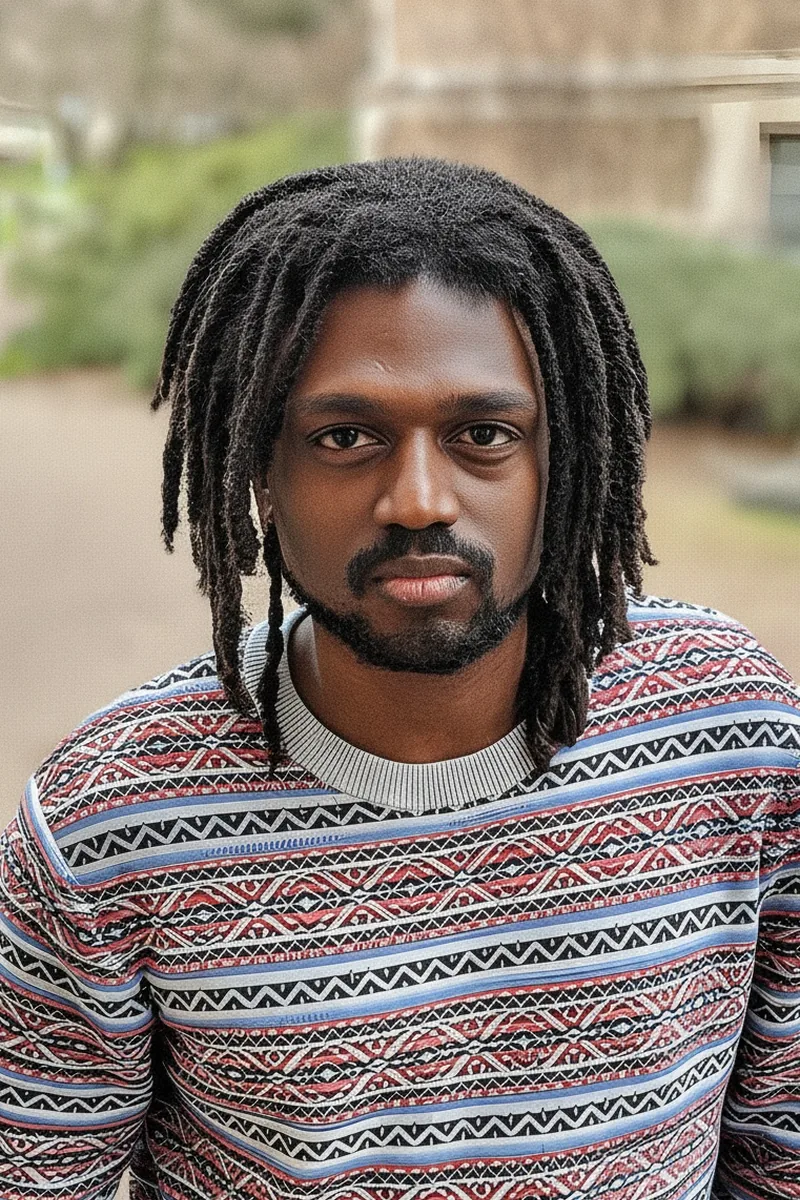
Whether it's a first encounter with limits or a deep dive into integration techniques like partial fractions and trig substitution, calculus rewards students who understand the ideas behind the procedures. Najja earned his math degree at Stanford and teaches derivatives and integrals by connecting formulas to their geometric meaning — what a derivative looks like on a graph, what an integral actually accumulates. That conceptual grounding makes even multi-step problems feel manageable.

Limits, derivatives, and integrals each build on the one before, so a shaky grasp of early concepts can snowball fast. Avalon tackles Calculus by slowing down at the foundational ideas — what a rate of change actually means, why the chain rule works the way it does — before moving into application problems. Her Political Economy background at USC means she's comfortable with the quantitative modeling that makes Calculus click.
An English major who scored a 35 on the ACT isn't the obvious calculus pick, but Grant's quantitative reasoning is genuine — and his close-reading instincts translate surprisingly well to parsing dense notation and multi-step problems. He treats a chain rule application the way he'd treat a complex sentence: breaking it into its component parts until each piece makes sense on its own. Rated 5.0 by students.
I am a Masters student in Physics at the University of Washington and have over 10 years of teaching and tutoring experience. Most recently, I worked as a teacher at the Yellow Wood Academy, a private high school that offers students a specialized one-on-one classroom environment. At YWA, I taught all high school science classes (including AP, Computer Programming, and Environmental Science) and all levels of high school math. In addition to my teaching and tutoring duties, I designed individualized lesson plans, curricula, homework assignments, and tests. Subjects I have successfully tutored Physics: all levels Chemistry: all levels high school, plus P-Chem, O-Chem Biology: all levels high school Math: all levels high school, plus Differential Equations, Statistics, some Group Theory. Standardized test preparation (incl. SAT, ACT, GRE, MCAT) Need help in another area? Just ask! While math and science are the subjects I am most passionate about, I am well-versed in many academic areas, and I may be able to help you.
I am an undergraduate earning my Bachelor's degree in Electrical Engineering from the University of Washington. I have already earned my Associate's of Arts with honors through the running start program, and graduated high school as a Valedictorian. I have worked with Disability Resource Services in taking notes for students, and have also offered assistance with homework to other students. As an engineering student, I am able to use my experience to offer assistance with math. I am also able to tutor in chemistry since I have already completed the general chemistry series. I believe that education is extremely important in life, not only for the purpose of knowledge, but also for the determination and ambition that learning teaches us. Understanding concepts not only takes time, but also dedication. As a student who has also attended many tutoring hours, I have come to understand that concepts sometimes require different approaches to finally have that idea click.
Hi, I'm Laura! I graduated summa cum laude from Eastern Washington University with a bachelor's of science degree in mathematics and a minor in sociology. There, I earned the Frances B. Huston award, the most prestigious award given to graduating students, for excellence in academics, leadership, and community service. From there, I became a student at the University of Washington (UW), earning my Master of Science in Applied Mathematics and a position as a PhD student in the department. I was also awarded the Carl S. Pearson award for academic excellence in the Master's program. I have been working as a PhD student since then, with expertise in all types of math including algebra, calculus, linear algebra, and numerical analysis, among others. I also have years of experience coding in both python and matlab! I spent three years as an undergraduate teaching assistant, helping teach both high school and college level math classes. I also taught multiple sections of calculus at the University of Washington as a Master's student, and I have served as a teaching assistant throughout my time at UW. My favorite thing about these positions were the opportunities to work one-on-one with students, developing new approaches to help them understand difficult concepts. I love coming up with new examples or intuitive ways of thinking through math problems. I think everybody can learn math, and I love helping students of all ages and backgrounds achieve their mathematical goals! I have a number of resources to use in lesson planning, and I also welcome any resources or suggestions provided by students and parents to help tailor the experience to your needs. Please feel free to contact me with any questions or to schedule a session!
An English PhD candidate with a 1560 SAT, Alex brings serious analytical horsepower to subjects outside the humanities — and calculus rewards exactly the kind of precise, logical reasoning that doctoral-level literary analysis demands. He tackles early concepts like limits and differentiation by treating each problem the way he'd treat a complex passage: breaking it into components, identifying what each piece does, and building toward a coherent interpretation.
As an adjunct faculty member teaching mathematics at Washington State University Vancouver, Moayad delivers calculus instruction daily — limits, derivatives, integrals, and their applications. He's particularly effective at bridging the gap between the mechanical steps of differentiation and the conceptual reasoning behind related rates and optimization problems that trip up so many students.
Pre-med biology students don't just take calculus — they depend on it, and Alice's path through Union College's Leadership in Medicine program means she's applied derivatives and integrals to real problems in biological modeling and quantitative coursework. She treats each calculus concept like a puzzle with multiple entry points, breaking down the chain rule or integration techniques until the strategy behind the solution is as clear as the answer itself. Her 1550 SAT and 5.0 tutoring rating back up that approach.
Studying biomedical engineering at Johns Hopkins means Helen doesn't just know calculus — she applies it constantly, from modeling biological systems to analyzing signal data in her research lab. That practical fluency shows up in how she teaches limits, integration techniques, and series convergence: every concept gets tied to a reason it exists. Students walk away understanding the logic behind the math, not just the steps.
Art history at Yale might not scream calculus, but Moses's coursework and broad tutoring range — from algebra through SAT prep — show he's comfortable with quantitative reasoning and knows how to scaffold mathematical ideas for students still building confidence. He breaks down early calculus concepts like limits and derivative rules by treating them the way he'd treat a visual analysis: one layer at a time, making sure each piece makes sense before adding the next. Rated 5.0 by students.
A physics degree means Cory spent years using derivatives and integrals as practical tools — modeling motion, analyzing forces, computing work and flux — before ever stepping into a tutoring session. He brings that applied perspective to calculus, unpacking concepts like the fundamental theorem and techniques of integration through real scenarios that give the math a reason to exist. Students consistently rate him 4.9 for making the subject feel less mechanical and more meaningful.
Teaching AP English for years means Marie is used to walking students through layered, abstract material — and early calculus concepts like limits and continuity demand that same patience with ideas that don't click immediately. Her approach treats unfamiliar notation the way she'd treat a difficult passage: slow it down, name each piece, and build meaning before moving forward. Rated 5.0 by students.
The jump from "find the derivative" to "know which technique to apply and why" is where most calculus students get stuck. Maria's Applied Math major at UCLA keeps her immersed in integration techniques, related rates, and series convergence well beyond the introductory level, so she can trace a tricky problem back to the exact concept a student needs to revisit.
The jump to calculus trips up many students not because limits and derivatives are impossibly hard, but because shaky algebra habits finally catch up with them. Clare identifies those gaps fast — she's taught every level from pre-algebra through advanced math — and rebuilds the missing links while pushing forward through integration techniques and series convergence. Her math degree means she can explain why the Fundamental Theorem works, not just how to apply it.
Integration techniques like u-substitution and integration by parts often feel like guesswork until someone shows you the underlying pattern recognition. Xiansheng approaches calculus problems by teaching students to read the structure of an expression first, then choose a method — a skill sharpened by years of analytical thinking in cellular and molecular biology.
An econometrics degree is essentially applied calculus — derivatives for optimization, integrals for accumulation, and limits holding the whole framework together. Chica brings that applied perspective to calculus tutoring, showing students why a concept like the chain rule matters before drilling the mechanics of it. She holds a 5.0 client rating.
An English and Spanish major isn't the typical calculus profile, but Elizabeth's 1490 SAT shows she can handle serious quantitative work, and her tutoring spans math subjects from algebra through calculus. She leans on her knack for breaking down language — parsing a limit definition or chain rule notation the way she'd parse a complex sentence — so the symbolic logic feels readable rather than alien.
Environmental science coursework at both the undergraduate and graduate level means Kourtney has applied calculus to real systems — modeling pollutant dispersion rates, analyzing exponential decay in contamination studies, and interpreting the differential relationships behind ecosystem change. That applied context gives her a way to teach derivatives and integrals as tools that describe how things actually shift over time, not just abstract symbol manipulation. Rated 5.0 by students.
Angela's Environmental Science coursework at Northeastern gave her constant practice with derivatives and integrals in applied contexts — modeling population growth, rates of resource depletion, and area under concentration curves. She brings that applied lens to calculus tutoring, connecting limit definitions and differentiation rules to problems that feel tangible rather than purely theoretical.
Calculus isn't Tsering's core teaching area, but her path to medical school required a full calculus sequence, and she's comfortable walking through derivatives, integrals, and limit concepts with students who need extra support. She's particularly effective at translating the abstract notation into plain-language explanations that make the logic click.
Limits, derivatives, and integrals each require a different kind of intuition, and Jon approaches calculus by making sure students can see what's happening graphically before diving into the algebra. His training in commercial aviation gave him hands-on experience with rates of change — climb gradients, velocity curves, acceleration — so he draws on concrete examples that make abstract notation click.
Studying biochemistry at Northeastern means Madyson applies calculus constantly — from modeling reaction rates to analyzing exponential decay in biological systems. She teaches derivatives and integrals with an emphasis on what the math actually describes, which makes concepts like the chain rule and area under a curve click faster.
Before every calculus exam at Stevens Institute of Technology, Daniel ran review sessions for over 200 students, walking through limits, derivatives, and integration techniques under real pressure. That experience taught him exactly where students get stuck — whether it's the chain rule, related rates, or setting up Riemann sums. He treats calculus as a subject that clicks once the intimidation is removed, not once you've memorized more formulas.
Intensely curious, I am interested in STEM subjects and the liberal arts. I tutor to help you reach your educational goals and because it's immensely gratifying to see my students succeed.
My name is Sameer Sahai, and I am currently pursuing a Bachelor's degree in Computer Science at the University of Washington. With over 3 years of tutoring experience, I specialize in subjects such as SAT, Algebra 2, AP Calculus AB, AP Computer Science A, and AP Physics C: Mechanics. My teaching philosophy centers on recognizing that each student learns differently; I tailor my lesson plans to meet individual needs, ensuring that concepts are both accessible and engaging. I am passionate about helping students build their confidence in math and science, as I believe that understanding these subjects opens doors to future opportunities. In addition to my tutoring experience, I have volunteered at a Hindi school, where I developed my skills in adapting to diverse learning styles. Outside of academics, I enjoy programming and leading coding clubs, which further fuels my enthusiasm for teaching.
I'm a dedicated tutor with over 5 years of experience, currently pursuing a Bachelor's degree in Informatics at the University of Washington with a double minor in Data Science and Statistics. I specialize in subjects like Algebra, AP Calculus AB, and AP Computer Science A, among others. My teaching philosophy is rooted in creating a supportive and engaging learning environment tailored to each student's unique needs. I strive to promote critical thinking and problem-solving skills through interactive methodologies. I find great joy in guiding students through their academic challenges and celebrating their milestones, which fuels my passion for tutoring. My goal is to empower each student to reach their full potential and develop a lifelong love for learning.
I'm a tutor who loves the moment when a concept finally clickswhether that's solving a calculus problem or debugging a first Python script. With experience teaching math from elementary to college level and professional training in full-stack development, I help students build confidence alongside competence in both math and programming. At Mathnasium, I worked with groups of 4-6 students at different levels, learning to adapt quickly to different learning styles. I bring that same flexibility to teaching HTML, CSS, JavaScript, Python, and other programming languages. I don't just give answersI guide students to discover solutions themselves because that's what sticks. Whether it's explaining why a for-loop isn't working, walking through derivatives, preparing for the SAT, or building a first web page, I focus on understanding over memorization. I'm patient but direct, and I adjust my approach based on what's actually working for each student. My goal is simple: make learning feel achievable, not intimidating, and give students tools they can use long after our sessions end.
Limits, derivatives, and integrals all build on each other, so one shaky concept can derail an entire semester. Akarsh approaches calculus by making sure each layer is solid before moving on — walking through chain rule applications or Riemann sums until the logic behind the formulas becomes second nature.
Comparative literature trains you to hold multiple complex systems in your head simultaneously and trace how they interact — a skill that maps surprisingly well onto the conceptual side of early calculus, where understanding what a limit *means* matters more than grinding through computation. Jacob's 1550 SAT confirms strong quantitative chops, and his teaching background at UC Berkeley means he knows how to break down intimidating new notation for students encountering it for the first time.
Yu's political science degree and education policy work involve more quantitative analysis than people expect — regression models, rate-of-change interpretations in policy data, and the kind of mathematical reasoning that underpins early calculus concepts like derivatives and accumulation. His Master's from Harvard's Graduate School of Education also means he knows how to break down the conceptual leap from algebra to calculus in a way that builds genuine understanding, not just procedural shortcuts.
Having completed AP Calculus BC and continued into college-level coursework at Princeton, Julie tackles everything from limit definitions and derivative rules through integration techniques and series convergence. She's especially sharp at explaining the conceptual "why" behind procedures like the chain rule or u-substitution, drawing on the same logical rigor her philosophy training demands.
Economics relies heavily on derivatives and integrals — marginal cost, consumer surplus, optimization under constraints — so Simon didn't just study calculus, he applied it daily throughout his degree. He's especially sharp at explaining the logic behind limit definitions and the chain rule, the two places where most students first lose the thread. That application-heavy perspective turns calculus from symbol manipulation into something students can actually visualize.
Lauren's degrees are in social sciences and French, so she's straightforward that calculus isn't her primary area — but her tutoring roster includes algebra and math broadly, meaning she's built a working fluency with the foundational reasoning that calculus demands. She takes a deliberate, concept-first approach to topics like continuity and rate of change, leaning on the same structured study methods that earned her a 5.0 rating across subjects.
Four years of volunteering as an SAT tutor sharpened Renee's quantitative skills — her 1530 SAT confirms that — but her real strength is translating abstract notation into language that clicks, a skill she built as a Writing Consultant breaking down complex ideas for diverse learners. She applies that same clarity to early calculus concepts like limits and continuity, walking through the reasoning behind each step so the logic holds up long after the session ends.
Both of Matthew's parents are university math professors, so calculus was dinner-table conversation long before it was a college course. That upbringing gave him an intuitive way of explaining limits, derivatives, and integration techniques that connects the visual logic of a graph to the formal notation students struggle with. Rated 4.9 by students, he's especially sharp at walking through related rates and optimization problems step by step.
Scoring a 34 on the ACT means Solange has the quantitative chops to handle calculus, even though her Harvard degrees are in sociology and women's studies. Her eight years of tutoring math at multiple levels give her a clear read on where students get stuck — particularly the conceptual shift from algebraic manipulation to thinking about instantaneous rates of change and accumulation. She breaks down the logic behind each new idea before diving into computation, so the notation stops feeling like a foreign language.
Philosophy at the University of Chicago is built on formal logic — the same structural reasoning that underpins proofs about limits, continuity, and the behavior of functions at boundary cases. Justin applies that logical rigor to calculus, breaking down each rule into a chain of reasoning rather than a formula to memorize, which is especially useful when students hit the conceptual wall around the chain rule or related rates. His 34 ACT and 5.0 tutoring rating back up the quantitative chops behind that approach.
Daniel's sociology degree isn't a math credential, but sociology's quantitative methods — analyzing rates of change in population data, modeling trends over time — sit surprisingly close to what early calculus actually asks students to do. His 1500 SAT confirms strong quantitative chops, and he brings a 5.0 tutoring rating to sessions where he breaks down derivatives and limits by connecting them to real patterns rather than abstract symbol-pushing.
Biomedical engineering at Northwestern means Ingrid has used calculus as a daily tool — computing integrals for drug delivery models, differentiating rate equations in biomaterials research, and applying differential equations in her work at the John Rogers Lab. That hands-on engineering context lets her teach concepts like the chain rule or integration by parts through problems where the math actually builds something, not just satisfies a homework prompt.
Testimonials
Because the right Calculus tutor makes all the difference.
Average Session Rating – Based on 3.4M Learner Ratings
Other Seattle Tutors
Related Math Tutors in Seattle
Frequently Asked Questions
Many students struggle with the transition from algebra and precalculus to the conceptual thinking required in Calculus. Common pain points include understanding limits and continuity, mastering derivative and integral applications, setting up word problems correctly, and connecting visual graphs to algebraic representations. Personalized 1-on-1 instruction helps students build these foundational concepts rather than just memorizing procedures, which is essential for success in Calculus and beyond.
Your first session is about understanding where you are and where you want to go. A tutor will assess your comfort with prerequisite topics (functions, limits, algebraic manipulation), identify specific areas of confusion, and discuss your goals—whether that's improving your grade, preparing for the AP Calculus exam, or building confidence for college-level math. From there, you'll develop a personalized plan that addresses your unique learning style and pace.
Clear mathematical communication is crucial in Calculus, especially for exams and college applications. Tutors help you organize multi-step problems logically, explain your reasoning at each stage, and avoid common notation mistakes. They also teach you how to present different problem types—derivatives, integrals, optimization, related rates—in ways that demonstrate understanding rather than just getting the right answer.
Word problems require translating real-world scenarios into mathematical models, then applying Calculus techniques—a multi-step process that challenges many students. Tutors break this down by teaching you how to identify what's being asked, set up equations correctly, choose the right Calculus tools (derivatives for rates of change, integrals for accumulation), and verify your answer makes sense in context. With guided practice, you'll recognize patterns and build confidence in tackling unfamiliar problem types.
Yes. Seattle-area schools use various approaches and textbooks, and tutors are experienced working across different curricula—whether your course emphasizes conceptual understanding, procedural fluency, or both. Tutors can align their instruction with your specific course materials, pacing, and teaching style, ensuring continuity between classroom and tutoring sessions.
Math anxiety often stems from feeling rushed or not understanding why procedures work. One-on-one tutoring creates a judgment-free space where you can ask questions, work at your own pace, and build understanding gradually. When you see the connections between concepts—how derivatives measure change, how integrals accumulate—Calculus becomes less intimidating and more logical. Many students find that personalized instruction transforms their relationship with math.
Absolutely. Tutors help you master both AP Calculus AB and BC content, teach you how to approach multiple-choice and free-response questions, and provide targeted practice on topics where you struggle. They'll also help you develop test-taking strategies—like managing time, showing work effectively, and avoiding common errors—so you're fully prepared on exam day.
Varsity Tutors connects you with expert tutors who have strong Calculus backgrounds and experience teaching Seattle-area students. You'll tell us about your goals, current level, and learning preferences, and we'll match you with someone who's the right fit. From there, you can schedule sessions that work with your schedule and start personalized instruction right away.
Let’s find your perfect tutor
Answer a few quick questions. We’ll recommend the right plan and match you with a top 5% tutor.