Award-Winning Middle School Math Tutors
serving Seattle, WA
Middle School Math
Tutors in Seattle
Private 1-on-1 tutoring, weekly live classes for academic support, test prep & enrichment, practice tests and diagnostics, and more to elevate grades and test scores.
Based on 3.4M Learner Ratings
UniversitiesSchools & Universities
DeliveredHours Delivered
ProficiencyGrowth in Proficiency
Who needs tutoring?
No obligation. Takes ~1 minute.
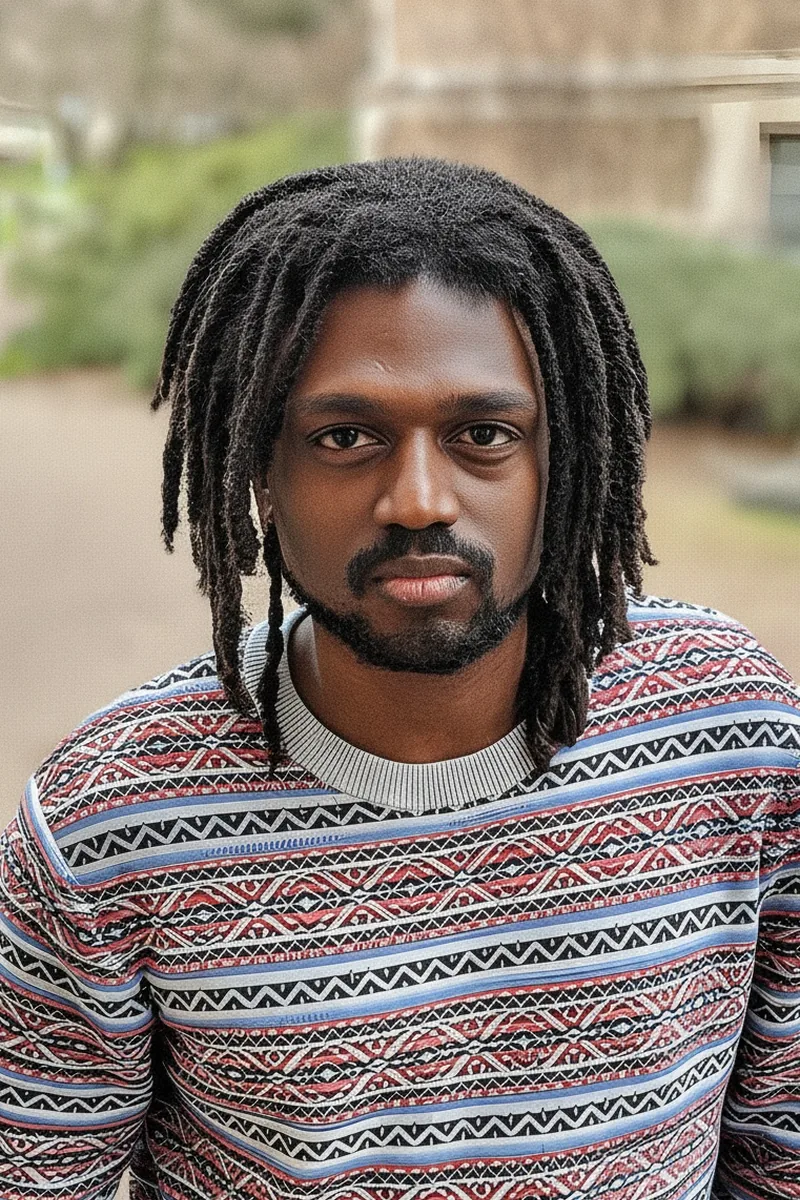
Having earned a math degree from Stanford, Najja knows exactly which gaps in fraction fluency, decimal operations, or integer reasoning will cause trouble once algebra arrives — and he catches them early. His current PhD work in history keeps him sharp at breaking dense material into logical sequences, a skill that translates directly to teaching middle schoolers how to organize multi-step problems instead of guessing at operations.
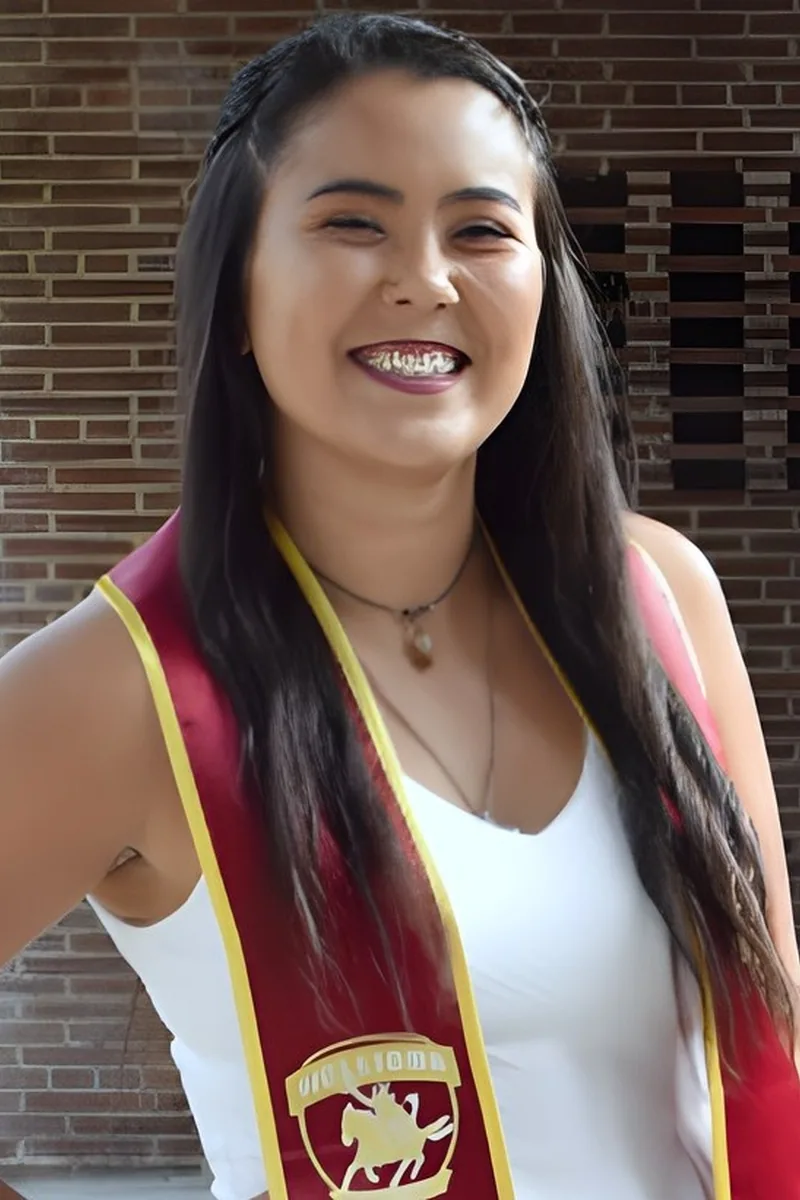
The jump from elementary math to middle school math trips students up when ratios, proportional reasoning, and negative numbers all land at once. Avalon's approach is to connect each new concept back to something concrete — percentages become budgeting problems, coordinate planes become map reading — so the abstraction doesn't feel arbitrary.
I developed a strong interest in mathematics after high school, when Algebra 1 showed me the value of learning concepts step by step. I graduated from the University of Washington with a BA in Music Education, a minor in Music, and a K-12 Teaching Certificate, while also completing college-level coursework in Algebra, Geometry, Trigonometry, and Pre-Calculus. Later, I returned to school for mathematics certification and went on to teach math from 4th through 12th grade during a twenty-three-year career in public education. I hold a current Washington Teaching Certificate in K-12 Choral Music and 4-12 Mathematics. For the past six years, I have focused exclusively on online math instruction, helping students with coursework, test preparation, and confidence-building through clear, logical explanations.
The jump from arithmetic to middle school math — ratios, basic geometry, expressions with variables — can feel sudden, and confidence matters as much as content at this stage. Helen teaches these topics by grounding them in concrete examples before moving to abstraction, a habit she picked up studying engineering at Johns Hopkins. She's especially good at identifying exactly where a student's understanding breaks down and rebuilding from that point.
Being in an accelerated pre-med program means Alice has taken math from arithmetic through calculus and uses it daily in her biology coursework — so she knows exactly which middle school skills (like fraction fluency and setting up equations) become non-negotiable later on. She treats each problem like a mini puzzle, teaching students to spot which strategy fits rather than defaulting to rote steps. Rated 5.0 by students.
At the middle school level, math starts asking students to think abstractly — proportional reasoning, integer operations, basic equation solving — and that transition can feel like a different subject entirely. Cory uses analogies drawn from everyday life to make concepts like ratios and negative numbers intuitive, turning confusion into genuine understanding. His patient, conversational style has earned him a 4.9 rating across dozens of sessions.
Intensely curious, I am interested in STEM subjects and the liberal arts. I tutor to help you reach your educational goals and because it's immensely gratifying to see my students succeed.
Fractions, ratios, and proportional reasoning click faster when students see how the numbers connect to real patterns — not just worksheets. Chica's econometrics background means she treats middle school math as the building blocks of quantitative thinking, walking through each concept until the logic behind it is clear. Rated 5.0 by students.
Xiansheng's cellular and molecular biology degree means he's been doing math disguised as science for years — unit conversions, ratios in solution prep, interpreting data tables — all of which map directly onto the quantitative reasoning middle schoolers are building. He's particularly effective at showing students how to organize their work on multi-step problems, a habit from lab science where skipping steps means ruined experiments. Rated 4.7 by students.
Fractions, ratios, and proportions don't have to be abstract — Angela ties them to real-world scenarios that make the logic click, drawing on her experience teaching K-12 students in classroom settings. Her substitute teaching background means she's comfortable adapting explanations on the fly when a student needs a concept like integer operations or basic geometry approached from a different angle. Rated 5.0 by students.
From ratios and proportions to introductory geometry and basic equation solving, Tsering covers the full spread of middle school math with an emphasis on connecting topics to each other. A student who sees that fractions, decimals, and percentages are the same idea expressed three ways is a student who stops dreading word problems. Her public health background means she's especially good at showing where math appears in real-world data.
Ratios, proportions, and early equation solving can feel like a sudden leap for students used to straightforward computation. Jon tackles middle school math by identifying exactly where a student's understanding breaks down — whether it's fraction operations, negative numbers, or translating word problems into expressions — and rebuilds from that specific point.
Update: I completed a two-month full-time guest teacher assignment teaching World Languages Spanish to high school students (9th-12th) Spanish 1/2/3. By utilizing a student-centered learning approach, cultural competence, and equitable teaching, I support students with pedagogy rooted in inquiry, hypothesis, information gathering, problem-solving, and action. I encourage all students to adopt an open-minded approach, and provide support to gifted students, students with disabilities, English Language Learners, and Multilanguage Learners with equity. "Not everything that is faced can be changed, but nothing can be changed until it is faced." James Baldwin I am in my second year of grad school, pursuing a dual master's degree in K-8 Elementary Education and K-12 Special Education (Mild to Moderate Disabilities). With my education grad studies and BFA from the Rhode Island School of Design (RISD), I synthesize creativity and best practices in education to find creative ways of supporting learners. My pursuit and purpose is to guide with compassion and enthusiasm. I encourage students to take ownership of their learning. By promoting student agency, students empower themselves to achieve in academic, social, emotional, and behavioral development. As an ADHD adult, I enjoy working with ADHD students and adults experiencing anxiety + depression. What is effortful for our neurodivergent brains is also our superpower! In my career, I have lived and worked in NYC as an editorial photographer, actor, and dancer. I lived in Berlin and pursued performance art + music while honing my communications skills in digital art + copywriting in Marketing. In Los Angeles, I succeeded as a commercial and theatrical actor. My skill set is suited for collaboration with all students to support and develop their passion for learning, exploration, and critical thinking. I live in southeastern Washington State and teach in northeastern Oregon and southeastern Washington State public school districts. I support students in the following subjects: Elementary School Reading Elementary School Math AP English High School English Middle School English Middle School Math Digital Media & Graphic Design Fine Arts & Filmmaking Creative Writing Study Skills & Organization German 1/2 Spanish 1/2/3 Spanish Language Arts English Language Learners English Language Development Algebra 1/2 Special Education (all subjects) High School Math "We all have ability. The difference is how we use it." Stevie Wonder Thank you for reading! Ms. Anna C.
Fractions, ratios, and proportions stop being abstract when a student sees how they connect to real problems — and Madyson's biochemistry background means she uses those tools daily. She breaks down multi-step word problems into smaller, logical pieces so middle schoolers build genuine number sense instead of relying on shortcuts.
Math intimidation is real for middle schoolers — Daniel tackles it head-on by stripping away the anxiety around fractions, ratios, and pre-algebra so students can actually think clearly. His experience breaking down concepts for his younger brother and for large groups at Stevens gave him a knack for making problems like proportions and integer operations feel approachable.
I'm a tutor who loves the moment when a concept finally clickswhether that's solving a calculus problem or debugging a first Python script. With experience teaching math from elementary to college level and professional training in full-stack development, I help students build confidence alongside competence in both math and programming. At Mathnasium, I worked with groups of 4-6 students at different levels, learning to adapt quickly to different learning styles. I bring that same flexibility to teaching HTML, CSS, JavaScript, Python, and other programming languages. I don't just give answersI guide students to discover solutions themselves because that's what sticks. Whether it's explaining why a for-loop isn't working, walking through derivatives, preparing for the SAT, or building a first web page, I focus on understanding over memorization. I'm patient but direct, and I adjust my approach based on what's actually working for each student. My goal is simple: make learning feel achievable, not intimidating, and give students tools they can use long after our sessions end.
Fractions, ratios, and early equation-solving can feel like a sudden leap from the arithmetic kids are used to — Greg breaks those transitions down so the logic behind each step is clear. His chemistry background at Cornell means he's constantly using middle school math concepts in real-world contexts, which gives students a reason to care about what they're learning. Rated 5.0 by students.
Julie is pursuing a certificate in Statistics and Machine Learning alongside her philosophy degree at Princeton — a combination that means she thinks about math both computationally and conceptually. For middle schoolers tackling pre-algebra and proportional reasoning, she breaks down each problem's logic so students understand the *why* before memorizing the *how*. Rated 4.9 by families.
Scott approaches middle school math by connecting each new topic — proportions, basic geometry, or introductory statistics — back to ideas students already understand. His background in anthropology actually sharpens this skill: he's trained to find patterns and explain complex systems in accessible terms. Rated 4.8 by students.
Fractions, ratios, and pre-algebra concepts click faster when a student understands the reasoning behind each step — not just the procedure. Sherry's experience as a classroom aide and mentor to middle school girls means she knows how to break down topics like proportional relationships and integer operations in ways that actually stick. Rated 5.0 by students.
The jump from fifth-grade math to pre-algebra and early geometry catches many middle schoolers off guard, especially when proportional reasoning and negative numbers enter the picture. Asta tackles these transitional concepts by connecting them to patterns students already recognize, making ratios, percents, and coordinate graphing feel less abstract. She holds a 5.0 client rating.
Years of tutoring her younger brother and his friends gave Ellie a front-row seat to the specific places middle schoolers get stuck — fractions turning into decimals, proportional reasoning, and that tricky leap into basic equation solving. She breaks each concept into concrete steps and ties them to scenarios kids actually care about. Her background coaching youth soccer also means she knows how to keep younger learners engaged and motivated.
Scoring a 35 ACT and 1570 SAT means Amber has the quantitative chops to teach middle school math cold, but her theater background is what makes her especially effective — she knows how to read an audience, adjust on the fly, and make a concept land. She zeroes in on the specific spot where a student's understanding breaks down, whether that's negative number operations or setting up basic equations, and rebuilds from there. Rated 5.0 by students.
From fractions and decimals in sixth grade to linear equations and geometry in eighth, middle school math covers an enormous range in a short time. Jessica's teaching background with students ages 8–15 means she knows exactly where the common stumbling blocks are — and how to address them before they snowball. She tailors her explanations to each student's reasoning style, whether that means visual models, real-world examples, or structured practice.
Fractions, decimals, and proportional reasoning are the concepts that either build a student's confidence in math or quietly undermine it for years. Valerie's background spans subjects from classics to emergency medicine, and she channels that range into finding the analogy or explanation that makes a tricky middle school concept land for each learner.
Biology majors do more math than most people realize — Joseph spent his UCLA undergrad calculating dilution ratios, analyzing statistical datasets, and working through quantitative models, all of which map directly onto the proportional reasoning and equation-solving middle schoolers are tackling for the first time. His public health master's at Yale keeps him knee-deep in data interpretation daily, so he teaches these concepts as practical skills with real stakes rather than abstract exercises. Rated 4.9 by families.
The jump from elementary math to middle school math introduces fractions, decimals, ratios, and negative numbers all at once, and it's easy for gaps to snowball. Maggie has spent years working with middle schoolers on exactly this transition, pinpointing where a concept broke down and rebuilding fluency from that point forward. Her 5.0 rating speaks to how well that approach lands with students and families.
Building number sense in middle school — whether it's fraction operations, proportional reasoning, or early work with variables — sets the trajectory for every math class that follows. JF has been tutoring students as young as third grade since high school and knows how to make concepts like ratios and integer arithmetic click before they become obstacles in algebra.
Testimonials
Because the right Middle School Math tutor makes all the difference.
Average Session Rating – Based on 3.4M Learner Ratings
Other Seattle Tutors
Related Math Tutors in Seattle
Frequently Asked Questions
Middle school math shifts from learning procedures (like "how to divide") to understanding why those procedures work. This conceptual jump is where many students struggle. Tutors help bridge this gap by teaching students to see the patterns and reasoning behind formulas and operations, making advanced topics like algebra and geometry feel less abstract and more connected to what they already know.
Word problems require students to translate language into math—a skill that takes practice. Expert tutors teach proven strategies like identifying what you're solving for, breaking multi-step problems into smaller chunks, and drawing diagrams or models to visualize the problem. With consistent practice and feedback, students build confidence in tackling word problems across different contexts.
Showing work reveals a student's thinking process, making it easier to spot where confusion happens and to award partial credit. More importantly, it helps students organize their thoughts and catch their own mistakes. Tutors emphasize showing work not as busy-work, but as a tool for clarity and learning—skills that transfer to algebra, geometry, and beyond.
Yes. Seattle's 9 school districts use various math programs, and tutors who work with middle school students are familiar with different approaches and textbooks. When you connect with a tutor, you can share your student's specific curriculum, and they'll tailor instruction to match what's being taught in class while reinforcing conceptual understanding.
Math anxiety often stems from past struggles or feeling lost in a fast-paced classroom. Personalized 1-on-1 instruction creates a low-pressure environment where students can ask questions freely and learn at their own pace. As tutors help students understand concepts deeply and experience small wins, confidence naturally grows—and anxiety decreases.
Multi-step equations are a gateway skill to algebra, so mastering them matters. Tutors break the process into manageable steps, teach students to identify inverse operations, and emphasize checking work by substituting the answer back into the original equation. Practice with varied problem types helps students see patterns and build fluency without memorizing rules blindly.
Graphing connects abstract equations to visual representations—a powerful way to deepen understanding. Tutors use interactive methods to help students plot points, understand slope and intercepts, and see how changes to an equation affect the graph. This visual-conceptual bridge makes algebra more intuitive and prepares students for higher math.
The first session is typically a get-to-know-you meeting where the tutor assesses your student's strengths, identifies specific challenges, and learns about their learning style. Rather than jumping into problem-solving, tutors use this time to build rapport and understand what topics need focus. This foundation helps create a personalized plan that works for your student's unique needs.
Let’s find your perfect tutor
Answer a few quick questions. We’ll recommend the right plan and match you with a top 5% tutor.