Award-Winning ACT Residual
Tutors
ACT Residual
Tutors
Private 1-on-1 tutoring, weekly live classes for academic support, test prep & enrichment, practice tests and diagnostics, and more to elevate grades and test scores.
Based on 3.4M Learner Ratings
UniversitiesSchools & Universities
DeliveredHours Delivered
ProficiencyGrowth in Proficiency
Who needs tutoring?
No obligation. Takes ~1 minute.
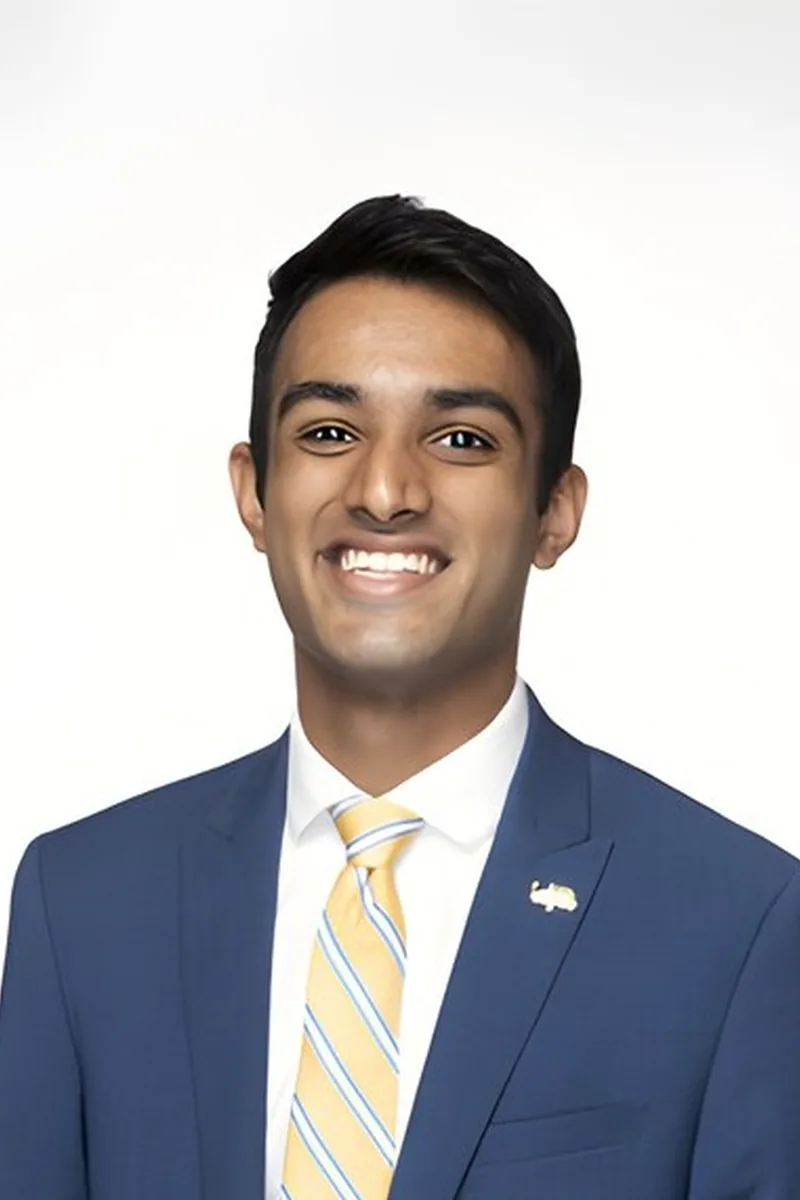
I am a recent grad from Georgia Tech, majoring in Industrial and Systems Engineering (an intersection of math, computer science, and business) and minoring in Business and Technology. I am originally from Columbus, OH, but chose to come down to Atlanta after getting a full-ride scholarship from Georgia Tech. In my spare time, I love playing/watching sports and travelling around the world (when possible!).
I'm a huge Red Sox fan and love watching detective shows when I have free time.
I am currently a 4th year medical student at Baylor College of Medicine and previously graduated from Rice University, Summa Cum Laude with a Bachelor's degree in Cognitive Science and Biochemistry & Cell Biology. I have served on admissions interview committees for Rice and Baylor College of Medicine, have mentored and edited essays for numerous college and graduate school applicants, and served as a private tutor and classroom instructor for Advanced Biology and Chemistry courses for 3+ years.
I'm a current medical student at the University of Arizona College of Medicine with undergraduate degrees from Washington and Lee in chemical engineering and anthropology. I have extensive experience in tutoring and teaching since 2010, and am ready to help you with your learning needs! I focus on standardized testing (SAT/ACT) and also tutor in a wide range of math, English, and Spanish classes. In my free time, I like to run, do CrossFit, volunteer, and watch TV!
I am happy to accommodate and work with learners on the spectrum.
I am currently a resident physician at Northwestern Hospital.
I'm Anna! I'm currently a student in the MD/MBA program between Northwestern University's Feinberg School of Medicine and the Kellogg School of Management, and graduated from Northwestern University as part of the Honors Program in Medical Education. I attended the Bergen County Academies in New Jersey, a selective, application-based magnet school, for high school.
I'm a rising junior at Columbia University studying English literature and computer science. I'm excited to begin my first summer working with Varsity Tutors! My strongest tutoring areas include ACT test prep, algebra and calculus I, computer science (Java and C) and building reading and writing skills (including essay assignments). I have experience tutoring and mentoring middle school and high school students. My tutoring style is relaxed but efficient; I always try to keep the material interesting and focus on the big picture over minutiae. When I'm not tutoring, I occupy my time by reading, swimming, playing tennis, eating Chipotle, and finding new music.
I am currently studying chemical engineering at the University of Michigan. I have always helped out my fellow students with schoolwork, and I have tutored in the National Honor Society for three years. My tutoring strengths include my abilities to stay calm, be patient, and offer different perspectives on the learning process. I do not just help my students learn the material, but I also teach them how to learn it. I tutor math and test prep courses. Outside of school and tutoring, I play the piano. I have played classical piano for 13 years and jazz piano for 7.
I'm eager to teach students how to make connections and understand any part of the world they need!
I am a Neuroscience and Behavior major at Columbia University. Although my major is centered in the STEM field, I am also passionate about human rights work, global engagement, and local outreach. While my future plans are subject to change, I see myself continuing in academia, going to medical school, and becoming a physician.
I am a rising sophomore at Harvard College and am about to declare as a Mechanical Engineering concentrator, working towards a Bachelor of Science degree. I've always enjoyed sharing my knowledge with my peers and those around me and have done so in both formal and informal settings. I've been a tutor for both Math and Spanish programs in high school and enjoyed the strides I made with students. I am willing to tutor any subject I have a background in, but am strong in mathematics, the sciences, Spanish, history, writing, and ACT prep. I enjoy teaching mathematics most due to the joy I can see in children once they master a topic and can answer even pointed questions meant to stump them, and maybe even put their knowledge to real world use. As a tutor, I like to give a strong foundation to orient my student, and then gradually grant them more freedom and independence until they can feel themselves grasp the concept, pointing out pitfalls or common errors along the way; teachers who used these methods on me always left the most lasting impressions. Outside of my studies, I really enjoy listening to music, both old favorites and new interests, reading classics, and gaming/playing basketball with my friends.
I am a Yale graduate with over 8 years experience tutoring students from a variety of backgrounds. I recently graduated from the Yale School of Public Health with a MPH concentrating in Epidemiology and Global Health. I also received my B.S. from Yale with a double major in Molecular, Cellular, and Developmental Biology and French. I have experience both leading group classes and working with students one on one. I will respond to a student's strengths, weaknesses, and learning style in order to help them succeed and make the most of our time together. I earned a perfect score of 36 on the ACT, 2280 on the SAT, and qualified as a National Merit Scholar on the PSAT. I look forward to working with you!
I am available to tutor a range of middle school and high school subjects, but I am most excited about tutoring test prep. I remember how stressful preparing for college can be and I am eager to do my part in helping students fulfill their college goals. I believe that learning is a collaborative process and I am committed to being as actively involved in the student's learning as I can. In my spare time, I enjoy reading, going to the movies (I try to see each Oscar nominee before the ceremony every year.), and am a huge Michigan sports fan.
I am a MD resident physician in Radiology and 2020 graduate of Rice University. Throughout my academic and professional journey, I've found that one of the most rewarding parts of education is helping others reach their potential. I've worked with students across many stages, from high schoolers preparing for the SAT/ACT, to applicants refining personal statements for college and medical school, to medical students tackling board exams. In each of these settings, my goal remains the same: to help students not just learn material but learn how to learn. My teaching philosophy is built on the belief that success doesn't depend on being naturally gifted, it comes from consistency, structure, and a willingness to improve. I work with students to develop individualized study plans, set achievable milestones, and build momentum. I focus on helping students become confident learners who can approach problems with clarity and strategy.
I am currently a fourth year medical student in Indianapolis. I completed my undergraduate education at Indiana University Bloomington, where I majored in Biology and Spanish. I also completed two minors in Mathematics and Chemistry. While at IU, I worked for the Department of Mathematics and Department of Spanish. I also worked as a Peer Tutor for the IU Athletics Department, tutoring in several subjects including statistics, chemistry, physics, and Spanish. I graduated from college with a 4.0, and I entered medical school shortly thereafter. Since coming to medical school, I have excelled in all of my pre-clinical coursework, and I currently rank in the Top 20% of my class. I feel very comfortable and confident tutoring other students in a variety of subjects from math and science to Spanish. I like to think that the same techniques I have used to excel in all phases of my education can be easily adapted to other students and help you achieve your academic goals, just as I have!
I am a recent graduate of Cornell University, where I received a B.S. in Chemical Engineering and graduated Magna Cum Laude. Over the past several years, I have worked with students from diverse backgrounds and experiences tutoring thermodynamics (my personal favorite), chemistry, and math. I have also tutored in the past for ACT/SAT and other subjects such as history, but I am deeply passionate about science and engineering. I tend to push my students to understand conceptual topics, as opposed to rote or algorithmic learning. In my free time, I love to bake sourdough, learn about history, garden, and recently started biking again.
I am a patient, intellectual, and calm college student at the University of Michigan passionate about tutoring others to improve their proficiency in a wide variety of subjects. I teach students by creating individualized plans that cater to the strengths and weaknesses of the student. I work hard and as long as it takes to ensure that the student derives maximum benefit. I love teaching a wide variety of subjects, and have a speciality in standardized tests.
I am a 2023 graduate of the University of Notre Dame with a Finance/Economics major and a minor in Innovation and Entrepreneurship. I am a passionate student in the math and business realms, as I enjoy the intuitiveness of the former and the real-world potential of the latter. During classes in middle and high school, I developed a reputation of being a good source of help within my classes in a non-tutor capacity, and grew that into a peer tutor role a couple times a week during lunch my senior year of high school. What I hope to accomplish with my tutoring is ensure that you not only achieve your desired grade/score, but see how the different concepts relate to each other in the bigger picture. The more important part is to critically think about the subject matter in other, more unfamiliar contexts. Also, in my math subjects, I seek to provide personal secrets in realms including quicker computation strategies, unique acronyms for certain rules, and other intuitive shortcuts.
I am an undergraduate of the Johns Hopkins University, majoring in Biomedical Engineering and Computer Science. I have years of experience tutoring and teaching math and various sciences from an elementary to a college level. I primarily tutor college level courses such as physics and biochemistry, but also have extensive experience in social sciences, biology, and higher mathematics such as Calculus and Differential Equations. I believe that demonstrating the various real-world applications of a given concept is the best method to increase a student's understanding.
I am excited to help anyone who might need it!
I am no longer needed.
I am 22 years old and just graduated from the University of Kentucky with a double degree in French and Biochemistry. I have been a tutor for over a year now at UK's tutoring center. I believe that anyone can learn anything with enough practice and encouragement, and I love helping students overcome challenges and gain more self-confidence!
I'm Dennis. I study physics, math, and computer science. I have done research about cosmic ray acceleration at supernova shock fronts in the Princeton University Department of Astrophysics, simulating how the turbulent plasmas push protons and ions. I have also worked at the Norfolk State University Department of Engineering, designing, simulating, optimizing, and building light filters for wavelength-division optical-electronic multiplexers. Another field I study is the mathematics of quasicrystals and aperiodic tilings, such as the Penrose tiling of rhombuses.
I'm a sophomore at Vanderbilt University, majoring in Physics and Classics and minoring in Mathematics and Computer Science. I'm qualified to teach a wide variety of subjects, but prefer to focus on the fields I'm studying in school listed above; I have a passion for those areas that I want to share with everyone, no matter the education level or confidence. I believe that no one is "bad at math," but many people haven't been taught math and science concepts in a way that matches how they best learn. As a result, I try to tailor my teaching style to be the best it can be for each individual student. With regard to math and physics, I myself prefer a physical, graphical understanding of different concepts, so I do best at explaining what seemingly abstract concepts actually mean in the real world and how they act on a graph.
I'm experienced in and passionate about (especially computer skills, Python, and math) with others. I try to convey the principles and thought process that are the basis of my own understanding of the subject, not just rules to follow or things to memorize. Being able to explain your answer is even more important than simply getting it right! My tutoring style is personalized, with plenty of examples and frequent knowledge checks to ensure I and my student(s) are in sync. In my spare time I enjoy cycling, skiing, woodworking, reading, and vacationing to Lake Superior.
I'm referring to math, of course, but I didn't always like the subject. Until about age 16, I thought of math as a boring, mind-numbing process of blindly memorizing formulas and then forgetting them after the test, but a series of wonderful teachers showed me the truth. I had thought that everything in math was invented arbitrarily just to torture students, but actually it all made sense in a deep way. When I caught a glimpse of what math really was, I found it irresistible and I ended up majoring in math in college at UChicago. I'm currently a Master's student in Computer Science at NYU.
I'm Alyssa! I graduated from Texas Christian University in 2021 with a Bachelor's degree in Kinesiology and a minor in Psychology (with Honors and a 4.0 GPA!). I am a current Doctorate of Physical Therapy student at Texas Woman's University, continuing my education in Kinesiology and related subjects.
I'm a college student attending the University of Michigan and I'm majoring in chemistry and computer science. I have two years of extensive experience tutoring high schoolers in chemistry and all subjects of the SAT and ACT. I can also say that I understand completely how difficult the process of test prep and high school chemistry can be because I recently survived the whole process myself having taken IB chem and the ACT/SAT in the last 1-2 years and studying and prepping extensively for them. That being said, I'm always super eager not just to tutor students in those subjects, but also to offer the best advice and guidance I can in tackling those challenges as a high schooler and as someone planning for college. I believe it's super important as a tutor not just to spoon-feed answers but to teach how to problem-solve, so I take care to solidify our understanding of the methods to approach a problem. Most of all, I try to be as flexible and communicative as possible.
I am a recent magna cum laude graduate of Duke University and a full-time educator in North Carolina. I have a passion for helping young people figure things out and have experience writing professionally.
I am currently pursuing a Bachelors of Science in Aerospace Engineering at the Georgia Institute of Technology. I am also a graduate of the high school International Baccalaureate Program. I have informal experience tutoring high school physics, but am most passionate about tutoring students for the ACT standardized test, having had extensive experience preparing for standardized tests throughout high school. I am eager to aid students in boosting their scores before their upcoming college applications, an important milestone in many students' lives. In my free time, I also enjoy playing tennis.
I am a math enthusiast who is passionate about helping students gain confidence and achieve. I began tutoring other students in middle school and continued throughout high school. I believe all students have the potential to understand math, but they can be intimated or have trouble finding the learning method that works for them. With my extensive experience tutoring students of various age groups through different mediums, I have seen how my emphasis on building a strong foundation and understanding how concepts/formulas work, patience, and encouragement helped students see math in an approachable manner. I participated and scored well in various math competitions throughout high school. Additionally, I am experienced in high school standardized test preparation. I am also a native Mandarin speaker.
I am a rising sophomore at Cornell University, studying Human Biology, Health and Society. I am on the premed track and am pursuing a minor in South Asian Studies. I was born in India and grew up in Singapore and Buffalo, NY, where I currently live. This past semester, I tutored middle and high school students in math, biology, and chemistry in Ithaca. I also particularly enjoy tutoring for standardized tests such as the ACT, as I feel it is where students are able to make a lot of progress quickly, and it also tends to be the most rewarding for both the students and for me! As someone who loves making organized and detailed plans, I believe having a clear set of goals for one's future is the key to success, and this can be applied to anything, from a single test to one's entire career. I would love to help my students with setting goals and making plans in their high school and/or college careers, in addition to tutoring a specific subject! In college, I am most involved with Cornell's Hindu Student Council and SPICMACAY, an Indian classical music and dance organization. Outside of academia, I sing South Indian classical music and play many different genres of the piano.
I am most excited about helping other students achieve their dreams of going to medical school by helping them study for the MCAT. Besides MCAT tutoring, my favorite subjects are chemistry, biology, and math which are all subjects I have tutored in before. I believe that every student can learn the material they hope to with the right guidance and effort. I hope that I can help students realize their full potential and grow in confidence as a learner. Outside of teaching, I like to perform in musicals, most recently I have been in local productions of Mamma Mia and Footloose, as well spend time with friends.
I am unsure exactly what I want to study, I will likely explore Public Policy, Political Science, and Symbolic Systems. I also graduated from the University of Minnesota Talented Youth Math Program (UMTMYP) in 10th grade where I studied up through Linear Algebra and Multivariable Calculus. With a teacher for a mother, I have been raised appreciating and understanding the value of education. I love tutoring and have been doing it for many years. I started a tutoring program at an inner-city charter school to mentor and teach underserved students ranging from K-12. Additionally, I have worked as an independent tutor for students. I can tutor for a variety of subjects, especially standardized tests and math. As a recent high school graduate, I know the college application and testing process well and can help explain and guide in what often seems overwhelming. I have also been tutored myself, so I know the value of a great tutor and hope to provide that for others. As a tutor, I want to create an environment of learning, excitement, and joy. Outside of school, I enjoy playing tennis, longboarding, and exploring the beautiful lakes of Minnesota!
I am currently a student at Duke University studying Biomedical Engineering and Economics. Just a little bit about me and some of my interests. Some of my favorite academic interests include memoirs and modern classics. I think Catcher in the Rye is still one of my all time favorite books but Percy Jackson, a modern classic, is up there too. Beyond academics, I take great guilty pleasure in watching TV shows such as Westworld, Sherlock, How I Met Your Mother, and even The Bachelorette when I'm at a low point.
I am a student at Cornell University pursuing a double major in Biological Sciences, concentrating in computational biology, and Computer Science. I have tutored math, biology, physics, and French to middle school and high school students. I have also facilitated group discussion sessions for English language learners. I love learning new things and helping others understand these concepts as well.
I am a current sophomore at Rensselaer Polytechnic Institute, where I am majoring in Biology as part of the 7 Year Accelerated Medical Program. I am also minoring in Healthcare Economics and Policy. My favorite subjects in school are Chemistry, Biology, and Math, but I also enjoy the process of writing and editing thought provoking essays. During high school, I spent time tutoring for the National Honor Society. My approach to tutoring is to teach the concepts in a simplistic manner and reinforcing the concepts while adding difficulty through effective practice problems. In my free time, I have recently found myself reading, working out, drawing, and spending time with my siblings.
I'm a recent college graduate with degrees in Biological Sciences and Russian from Ohio University. During my time there, I tutored students in a variety of subjects, including biology, chemistry, and Spanish. In addition, I worked as both a peer advisor and teaching assistant, which gives me insight into the learning strategies and study skills that students need to succeed. As a tutor, I like to focus on doing actual problems with students because it is the most effective way to immediately identify their strengths and weaknesses and to address them. In my free time, I like to lift weights, read books, and spend time with my friends.
Testimonials
Because the right ACT Residual tutor makes all the difference.
Average Session Rating – Based on 3.4M Learner Ratings
Top 20 Test Prep Subjects


Top 20 Subjects
Frequently Asked Questions
ACT Residual refers to the gap between a student's predicted ACT score (based on their PSAT or prior test performance) and their actual ACT score. This residual—the difference between expected and actual results—often reveals specific skill gaps or test-taking inefficiencies that weren't apparent before. Students seek help with ACT Residual when they're underperforming relative to their abilities, which typically points to issues like pacing problems, misunderstanding question formats, or anxiety that impacts performance on test day.
The most frequent culprits are timing mismanagement (running out of time on Reading or Science sections), careless errors on easier questions due to rushing, and difficulty with specific question types that require different strategies than classroom learning. Many students also struggle with the Science section's unique format—which tests reasoning more than content knowledge—and the Reading section's dense passages and compressed time limits. Test anxiety and unfamiliarity with the exact phrasing of ACT questions can also cause capable students to score lower than expected.
Tutors start by analyzing your practice test results and comparing predicted vs. actual scores to pinpoint which sections and question types are causing the gap. They then use targeted practice with timed drills, teach section-specific strategies (like the "paired passages" technique for Reading or the "data representation" approach for Science), and help you practice under test-like conditions to build stamina and confidence. Regular feedback on your pacing, careless mistakes, and strategy execution helps close the gap between what you're capable of and what you're actually scoring.
Many students with negative residuals lose points simply by spending too long on difficult questions early in a section, leaving no time for easier questions later. Tutors teach strategic allocation—like spending less time on Science passages you can't understand and more on the data-based questions, or skipping the hardest Reading passages initially and returning to them. Practicing with strict time limits on individual question types helps you internalize a realistic pace, and learning which questions to attempt vs. skip strategically can often recover 2-4 points without improving your actual knowledge.
The Reading and Science sections are the biggest culprits because they require both speed and accuracy in unfamiliar formats. Reading's dense passages and rapid-fire questions trip up students who read too carefully or get lost in details, while Science's emphasis on data interpretation (rather than content recall) surprises students expecting a traditional science test. Math can also show a residual gap when students rush through easier problems or misread what's being asked. Tutors focus heavily on these sections because improving your approach to them often yields the largest score gains.
Closing a residual gap typically requires 4-8 weeks of focused, targeted practice rather than generic test prep. Most effective schedules include 2-3 tutoring sessions per week combined with 5-7 hours of independent practice, with heavy emphasis on timed section drills and full practice tests every 1-2 weeks to track progress. The key is practicing strategically—drilling your weak question types repeatedly, taking full tests under timed conditions to build stamina, and reviewing every single mistake to understand the pattern behind it. This focused approach usually yields 2-5 point improvements, which directly reflects the residual gap closing.
Test anxiety often manifests as a negative residual because anxiety causes rushed decisions, careless errors on questions you'd normally get right, and difficulty focusing during the timed sections—especially the grueling Science section. Tutors help by building confidence through repeated exposure to test conditions in low-stakes practice, teaching concrete strategies (like the "mark and move" technique) that reduce decision paralysis, and helping you distinguish between "I don't know this" and "I'm panicking." Many students find that mastering pacing and strategy reduces anxiety naturally, since much of test-day stress comes from feeling out of control.
If your residual is primarily due to timing, strategy, or careless errors rather than content gaps, you can typically improve 2-5 points by closing it—which translates to moving from underperforming relative to your ability back to performing as expected. Some students see larger gains (5-8 points) if their residual reveals multiple fixable issues across sections. However, if your residual is small (1-2 points), you're likely already performing close to your potential, and further improvement requires deeper content review. A tutor can assess your specific residual and give you realistic expectations based on its root causes.
Let’s find your perfect tutor
Answer a few quick questions. We’ll recommend the right plan and match you with a top 5% tutor.