Award-Winning AP
Tutors
AP
Tutors
Private 1-on-1 tutoring, weekly live classes for academic support, test prep & enrichment, practice tests and diagnostics, and more to elevate grades and test scores.
Based on 3.4M Learner Ratings
UniversitiesSchools & Universities
DeliveredHours Delivered
ProficiencyGrowth in Proficiency
Who needs tutoring?
No obligation. Takes ~1 minute.
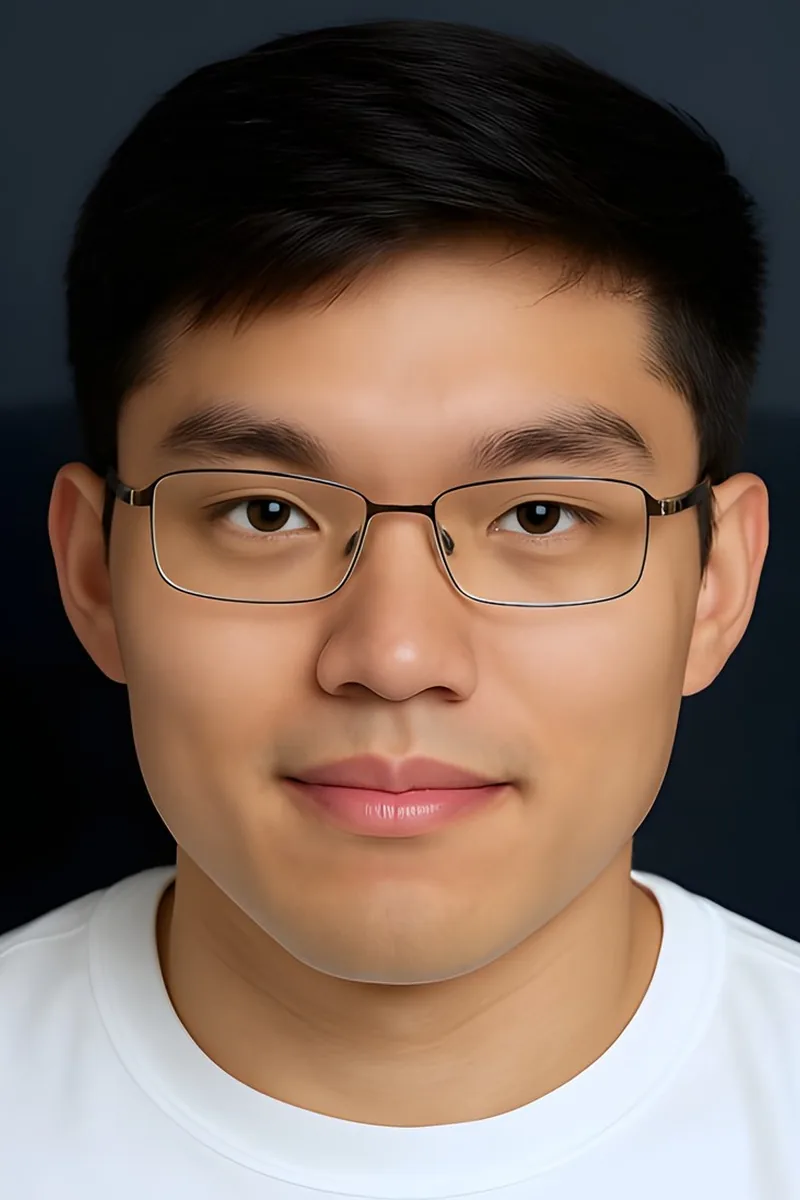
Brice covers AP coursework across calculus (AB and BC), physics, biology, and computer science — a range that reflects his STEM depth as an MIT computer science student. He zeroes in on the specific reasoning each AP exam rewards, whether that's justifying a solution on the Calc BC free response or designing an algorithm for the AP CS A exam.
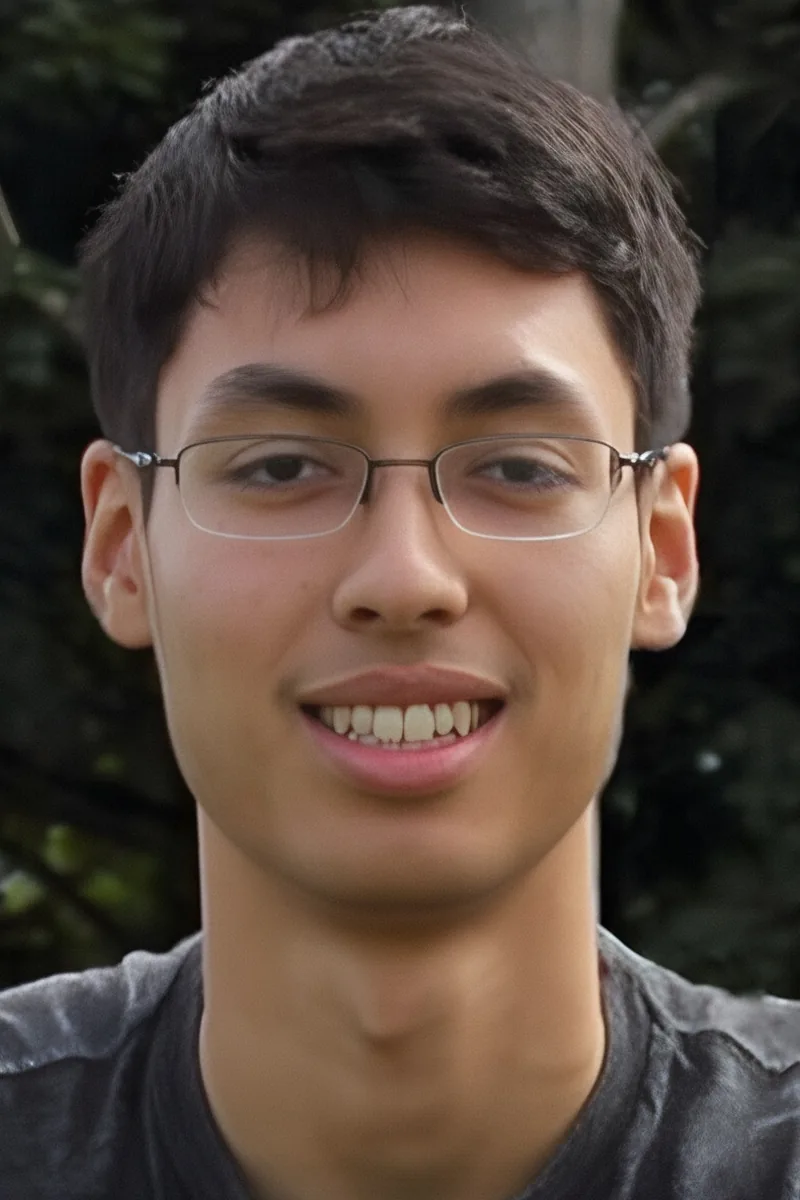
Five AP exams, five scores of 5 — in Calculus BC, Statistics, Computer Science, Biology, and Chemistry. William knows what the College Board is actually testing and how to study for it efficiently, whether the exam is STEM-heavy or requires timed free-response writing. He builds subject-specific review plans that prioritize the highest-yield topics rather than grinding through every chapter equally.
At Cornell, Alex is studying statistics and economics — a combination that gives him real depth in AP Calculus (AB and BC), AP U.S. Government & Politics, and the quantitative reasoning that runs through multiple AP exams. His 1560 SAT and 34 ACT show the kind of disciplined test-taking that translates directly to AP prep, where understanding how free-response rubrics allocate points matters as much as knowing the content. He's particularly sharp at teaching students to structure their answers so the reasoning earns full credit, not just partial.
Two biomedical engineering degrees — one from Boston University, one from Tufts — mean Varuna has already passed through the gauntlet of calculus, biology, chemistry, and physics at a level well beyond what AP exams demand. She uses that depth to zero in on the specific reasoning each AP science and math exam rewards, teaching students how free-response graders distinguish a 4 from a 5. Rated 4.9 by students.
Oliver's AP experience spans both science and math — from AP Biology, where he digs into cellular processes and genetics, to AP Calculus BC, where he unpacks integration techniques and series convergence. His biochemistry and MCD biology degrees from CU Boulder mean he's not just teaching to the exam but connecting AP content to the deeper concepts behind it. Students consistently rate him 5.0.
Orlando teaches across a wide range of AP subjects, including AP Statistics and AP Calculus BC, where he connects abstract formulas to the kind of applied reasoning the College Board actually tests. His economics background means he's comfortable with data interpretation, modeling, and the quantitative thinking that runs through multiple AP exams.
I am highly praised by my students and supervisors. Even today I still kept the communication with many students.
A Dartmouth neuroscience graduate now pursuing medicine and business, Arianna brings genuine depth to AP science subjects — AP Biology, AP Chemistry, and AP Physics — where her understanding of cellular mechanisms, chemical reactions, and quantitative reasoning goes well beyond what the exams require. She also covers AP math courses, teaching students to connect procedures to the underlying logic that free-response graders actually reward. Rated 4.8 by students.
An engineering student at Columbia with a 34 ACT, Shin covers AP prep across STEM subjects — AP Calculus AB and BC, AP Chemistry, and AP Physics — where his earth and environmental engineering coursework means he's already tackled the underlying material at a level beyond what the exams require. He teaches students to structure free-response answers around the specific reasoning graders look for, particularly in calculus and chemistry where showing clear, logical steps is what separates partial credit from full marks. Rated 5.0 by students.
Noah's International Relations degree and 34 ACT put him in strong position for AP exams on the humanities and social studies side — AP Government, AP World History, AP US History — where success depends on constructing clear arguments from complex source material. He also covers AP English exams, teaching students to move from a vague first impression of a passage to the kind of specific, well-supported analysis that earns top rubric scores.
Having served as the peer tutor for statistics and biology courses at Trinity while earning her neuroscience degree cum laude, Lindsey knows how to break dense AP content into language that actually makes sense — especially in AP Psychology, AP Biology, and AP Statistics, where her coursework overlaps directly with exam material. She teaches students to connect concepts to real-world examples, which is exactly the kind of applied understanding that turns shaky 3s into confident 4s and 5s. Rated 5.0 by students.
Jared earned his B.S. in Biological Sciences from Cornell and has taught AP Biology and AP Chemistry — two of the most content-dense AP exams — breaking down everything from cellular respiration pathways to equilibrium calculations into manageable, testable chunks. His experience as a Cornell TA means he knows how to pace review sessions so students hit exam day with both content mastery and confidence in free-response strategy.
Ben genuinely enjoys standardized tests — he scored a 33 on the ACT and finds the logical structure of AP exams similarly satisfying to decode. He teaches students to recognize how AP free-response questions are scored and how to allocate time across multiple-choice sections, whether the subject is AP Biology, AP US History, or another exam. Rated 5.0 by students.
Scoring well on AP exams comes down to understanding what the College Board is actually testing — and that varies dramatically between subjects. Shua covers AP content across humanities, social studies, and math, and he's particularly effective at teaching students how to decode free-response rubrics and allocate their time strategically. His own 1440 SAT reflects the kind of structured test-taking mindset he brings to AP prep.
Preparing for AP exams requires more than content knowledge — it demands fluency with the specific way each test asks questions and scores responses. Nikki, who earned a 32 ACT and studies mechanical engineering, brings disciplined test-preparation strategies and strong analytical skills to AP coursework across math and science subjects.
Katharine's pre-med science background — spanning biology, chemistry, microbiology, and cell biology — gives her real depth in AP sciences, where she can unpack the underlying mechanisms rather than just drilling vocabulary lists. She also covers AP-level math and English, adjusting her approach to match each exam's particular scoring demands. Rated 5.0 by students.
Juggling AP Biology, AP Calculus AB, AP Environmental Science, and AP English Language herself, Nicole knows firsthand how to manage the pacing and workload that come with a loaded AP schedule. She breaks down each exam's scoring rubric so students understand exactly what earns points on free-response questions, not just what sounds like a good answer.
Between a health sciences degree with a pre-med concentration and current dental school coursework, Taylor has lived the kind of rigorous science and math content that AP exams in biology, anatomy, and calculus demand. She's especially effective at distilling dense material into memorable frameworks — the kind of sticky shortcuts that make complex AP concepts click during a timed exam. Rated 4.8 by students.
Katherine's strengths in AP prep center on the humanities and language side — AP French Language and Culture, plus the essay-driven exams where strong analytical writing and close reading separate 4s from 5s. Her art history master's trained her to build tight, evidence-based arguments under constraints, which is exactly what AP free-response graders reward. Rated 5.0 by students.
Katerina's English degree and 31 ACT give her a particular edge in the essay-driven AP exams — AP English Literature, AP English Language, and AP U.S. History — where knowing how to build a thesis under timed pressure is the difference between a 3 and a 5. She teaches students to dissect prompts the way graders read them, identifying exactly where vague analysis costs points and where specific textual evidence earns them. Rated 4.9 by students.
Economics training sharpens a particular kind of thinking — building arguments from data, interpreting graphs under time pressure, and writing concise analytical responses — that transfers directly to AP exam strategy across subjects like AP Physics 2, AP US History, and the essay-driven English exams. John covers a wide spread of AP content on both the STEM and humanities sides, and his own coursework in economics means he's comfortable teaching students to read stimulus material critically and structure free-response answers that hit every rubric point.
Payal teaches AP courses across math and science, including AP Calculus BC and AP Statistics, where she's built a deep familiarity with exam formatting, scoring rubrics, and the specific conceptual leaps each test demands. Her 1530 SAT and physics degree reflect the kind of rigorous analytical thinking that translates directly into AP exam strategy.
Double-majoring in Arabic and English Literature gave Andrea a particular edge in the humanities-oriented AP exams — AP English Literature, AP English Language — where the ability to close-read a passage and build a structured argument under time pressure is exactly what earns top scores. Her certified ESL/TESOL background also means she can unpack dense AP prompts for students who are still building academic English fluency, turning confusing rubric language into clear action steps. Rated 4.7 by students.
I am an interdisciplinary educator with an Ed.M. from the Harvard Graduate School of Education and a B.A. from Dartmouth College. My background is primarily in integrated arts learning and museum education and I specialize in visual arts, history and art history, and object-based learning. In all subjects, I take a creative, inquiry-based and learner-centered approach, designing opportunities for each unique individual to meet their learning goals.
I'm not tutoring or buried in my textbooks, you will either find me rock climbing at the Triangle Rock Club, playing Ultimate Frisbee, working on my car, or enjoying the great outdoors (beaches, mountains, forests--you name it, I love it). On rainy weekends I enjoy tinkering with computers and old electronics, playing Pokemon, or picking at my guitar.
I am a junior Mechanical Engineering major at Yale, and I hope to become a Naval Aviator after college. I am also a varsity sailor, and enjoy playing music with friends when I can get some free time. I have been tutoring my fellow students throughout my entire academic career, and I would best describe my tutoring style as one that adapts to each students' needs. For example, I have always tried to frame questions in a different way so that the student can better understand the question. Some students need visual representations of numbers and systems to understand them, and others benefit more by understanding the concepts behind each formula. I prefer to tutor in math and physics, and especially with real world application problems. I hope to help students improve their standardized test scores and their understanding of the math and sciences so that they can achieve their academic goals!
I am a rising sophomore at Harvard College and am about to declare as a Mechanical Engineering concentrator, working towards a Bachelor of Science degree. I've always enjoyed sharing my knowledge with my peers and those around me and have done so in both formal and informal settings. I've been a tutor for both Math and Spanish programs in high school and enjoyed the strides I made with students. I am willing to tutor any subject I have a background in, but am strong in mathematics, the sciences, Spanish, history, writing, and ACT prep. I enjoy teaching mathematics most due to the joy I can see in children once they master a topic and can answer even pointed questions meant to stump them, and maybe even put their knowledge to real world use. As a tutor, I like to give a strong foundation to orient my student, and then gradually grant them more freedom and independence until they can feel themselves grasp the concept, pointing out pitfalls or common errors along the way; teachers who used these methods on me always left the most lasting impressions. Outside of my studies, I really enjoy listening to music, both old favorites and new interests, reading classics, and gaming/playing basketball with my friends.
I'm Solange - a recent graduate from Harvard where I studied Sociology & Women's Studies. I've been tutoring for eight years now, and have worked with a wide range of ages and in a wide range of subjects. Some of my specialties are college prep/test taking II worked in the admissions office on campus); social sciences; and literature/writing.
I am proud to be a part of Varsity Tutors! I am originally from San Antonio, TX; I completed my undergraduate education at Rice University in Houston where I received a bachelor's degree in Biochemistry and Cell Biology. Currently, I am in my second year of medical school at Baylor College of Medicine.
I am an aspiring applied mathematician, with particular interest in image processing and climate science. I graduated in May 2017 from Washington University in St. Louis with a bachelor's in physics and mathematics, and am beginning a PhD program in September 2017 at the University of Chicago in Computational and Applied Mathematics. I've tutored introductory physics students for three years and enjoyed it thoroughly, as a chance to help other students while revisiting fundamental concepts to enhance my own knowledge. I'm eager to continue reaching out and helping students of math and physics to succeed and, furthermore, to appreciate the beauty and power of these subjects.
I am currently a senior at Harvard College where I study chemistry, and I'll be attending Columbia Medical School next year. I have years of experience tutoring college students in math (mostly calculus) and chemistry including both general and organic chemistry. In addition, I am very familiar with all sections of the SAT and ACT having prepared several high school students for these tests. I believe that every student is capable of boosting his or her baseline score on these tests, so long as he or she works hard to get to know the format of the tests and the most popular types of questions. I tutor because I love seeing students develop a genuine passion for the subjects they once disliked (such as math and science), once they understand the power of these subjects and their applications to the real world.
I am a graduate of MIT. I received my Bachelor of Science in Mathematics with minors in Management Science and Ancient and Medieval Studies. Since graduation, I have started my PhD at Georgia Tech in Operations Research. Throughout my career I have TA'd several math and computer science courses at the college level. I have also taught at summer programs for gifted middle school and high school students. I am passionate about tutoring kids in math and science because I think that a strong foundation in STEM at an early age can set the tone for their future. In my spare time I like to engage in athletics, and was a Division 1 rower in college.
I am excited to be home and help fellow straphangers on their educational paths! My largest wealth of tutoring experience is in foreign languages--particularly French--but I also feel very comfortable editing essays of any kind and working through standardized test concepts. My availability is extremely flexible, and anywhere in New York City works for me. I look forward to working with you.
I am currently attending Johns Hopkins University, pursuing a dual degree in Computer Science and Applied Math and Statistics. I love helping students and I love the feeling I get knowing that I was able to use my knowledge to make someone else happier. My favorite subject to teach is math because there are so many ways to learn it and if one way does not help I can use another. I used to teach taekwondo and interacted with all kinds of students, and I'm excited to help out more!
I'm eager to help you in your education. I'm a recent graduate of Harvard College looking to apply to law school. My senior thesis was written on John Dewey's ideas of education, which I deeply believe has incredible power to transform individuals and society.
I am a graduate of the University of Chicago where I received my undergraduate degree in political science. Right after graduation, I worked as an academic and test prep tutor as well as admissions consultant in Hong Kong. For the past two years, I worked with a number of students to help prepare them for college in the United States.
I am exploring my creativity by pursuing a double major in Asian Languages and Cultures with a focus in Korean, studying abroad in South Korea as a Benjamin A. Gilman Scholar, leading workshops that teach 3D printing and CAD for undergraduate students as the president of 3D4E, advocating for the first-generation and low-income student community as the Outreach Chair of the Quest+ Scholars Network, and getting involved with the Society of Women Engineers' outreach committee. I currently hold a work-study position as an administrative clerical aide in the Institute of Sustainability and Energy at Northwestern and was an undergraduate researcher in the John Rogers Lab. As I look forward with aspirations of applying to graduate school, areas of research in biomedical engineering and biotechnology that I am particularly interested in include biomaterials, pharmaceuticals, and drug delivery systems. Outside of the classroom, I enjoy learning on my own and sharing my experience and knowledge with my peers and other students. I hope to make use of my experiences with academics and learning in high school and so far in my undergraduate career in order to effectively tutor students who may be experiencing the same struggles in learning that I also experienced.
I am a recent graduate of Williams College, where I studied political science with sidelines in history and English. Next fall, I am headed to Ithaca to study at Cornell Law School. I have experience tutoring in all subjects for high school standardized tests and in writing and history at higher levels, and am excited to pass on the benefits of my study as a tutor for the LSAT. I look forward to working with you!
I am a very motivated individual that will ensure all my students succeed in their studies. I have a great teaching style that is unique to each student that I work with, and I work hard to make sure my students not only master the material they need to learn, but also understand how to study and prepare on their own.
I am a Yale graduate with over 8 years experience tutoring students from a variety of backgrounds. I recently graduated from the Yale School of Public Health with a MPH concentrating in Epidemiology and Global Health. I also received my B.S. from Yale with a double major in Molecular, Cellular, and Developmental Biology and French. I have experience both leading group classes and working with students one on one. I will respond to a student's strengths, weaknesses, and learning style in order to help them succeed and make the most of our time together. I earned a perfect score of 36 on the ACT, 2280 on the SAT, and qualified as a National Merit Scholar on the PSAT. I look forward to working with you!
Testimonials
Because the right AP tutor makes all the difference.
Average Session Rating – Based on 3.4M Learner Ratings
Top 20 Other Subjects


Top 20 Subjects
Frequently Asked Questions
AP exam scores range from 1-5, with a 3 considered passing for college credit at most institutions. Students working with tutors typically see 1-2 score point improvements, though the gains depend on starting level and subject difficulty. A student scoring a 2 in AP Biology might reach a 4 with focused tutoring on free-response strategies and conceptual gaps, while a student at a 3 in AP US History could push to a 5 by mastering document analysis and argument construction. The key is identifying which of the exam's components—multiple choice, free response, or synthesis essays—need the most work.
AP courses demand both content mastery and exam-specific skills that high school courses don't always teach. Students commonly struggle with free-response questions, which require synthesizing multiple concepts and explaining reasoning clearly—not just knowing facts. Time management is another major challenge; AP exams compress hours of material into 2-3 hours of testing. Additionally, many students underestimate the shift from memorization to application: AP Biology requires understanding *why* processes work, not just what happens; AP US History demands analyzing primary sources rather than recalling dates; AP Calculus requires conceptual understanding alongside computational fluency. Personalized tutoring targets these specific weak points rather than reviewing the entire curriculum.
The strongest AP tutors combine deep subject expertise with exam-specific knowledge. They should have scored a 4 or 5 on the AP exam they teach, or hold a college degree in that subject area—this ensures they understand not just content, but which concepts are tested most heavily and how the College Board frames questions. Beyond subject knowledge, effective AP tutors understand the exam's rubrics intimately; they can teach students exactly what graders look for in free-response answers and how to structure arguments for maximum points. Experience teaching or tutoring AP specifically matters too, since strategies for AP Calculus differ fundamentally from strategies for AP Literature. Look for tutors who can explain *why* an answer is correct according to AP standards, not just that it is.
Each AP exam has a distinct format and scoring structure, and students who understand these details gain a strategic advantage. For example, AP exams with multiple choice typically weight it 50% of the score, so mastering test-taking strategies—eliminating wrong answers, managing time, recognizing College Board's common wrong-answer patterns—directly impacts the final score. Free-response sections have published rubrics that show exactly what earns points; a tutor can teach students to write answers that hit every rubric requirement rather than writing what seems right. Some AP exams like AP Seminar and AP Research require specific portfolio components with their own scoring criteria. Personalized instruction breaks down these format-specific strategies so students aren't just studying content—they're optimizing their approach to the exact test they'll take.
Prerequisites vary by subject. AP Calculus requires strong algebra and precalculus foundations—students struggling with function composition or trigonometric identities will hit a wall in calculus without addressing those gaps first. AP Chemistry demands solid understanding of stoichiometry and atomic structure from regular chemistry. AP US History benefits from strong reading comprehension and essay-writing skills, since the exam emphasizes document analysis and thesis-driven arguments. AP Biology requires comfort with scientific reasoning and data interpretation. A tutor's first role is often diagnosing these foundational gaps and deciding whether to build them up or work around them. Students who enter AP courses underprepared in prerequisites benefit significantly from tutoring that addresses both the gap and the AP content simultaneously.
Free-response questions are where many AP students lose points because they require more than knowing the answer—they demand clear explanation and evidence of reasoning. Tutors teach students to decode what each question is actually asking (analyze vs. explain vs. evaluate have different meanings to the College Board), then structure responses to match the published rubric exactly. For example, an AP Biology free response might require identifying a concept, explaining how it applies to a scenario, and predicting an outcome; a tutor ensures students hit all three components rather than just answering partially. Practice with real past exam questions is essential, and tutors provide immediate feedback on what works and what doesn't according to actual AP grading standards. This targeted practice typically shows results quickly—students often see 5-10 point improvements on free-response sections within weeks of focused tutoring.
AP multiple-choice questions test deeper understanding than typical high school tests; they often include plausible wrong answers designed to catch common misconceptions. Effective tutoring teaches students to recognize these traps and use strategic elimination. For instance, in AP Biology, an answer might be factually true but not address what the question asks; students learn to identify this distinction. Time management matters too—AP exams give limited time per question, so tutors teach students which questions to tackle first and when to make an educated guess rather than spend three minutes on one problem. Additionally, tutors help students understand *why* the correct answer is right and why each wrong answer is wrong, which builds conceptual understanding rather than just test-taking tricks. Regular practice with released AP exams, analyzed with a tutor, reveals patterns in how the College Board tests each topic.
Ideally, tutoring begins early in the AP course so students build strong foundations and develop exam-specific skills throughout the year rather than cramming in the final weeks. Students who start tutoring in September or October have time to address conceptual gaps, practice free-response questions repeatedly, and refine their approach before May. However, students who begin tutoring in March or April can still see meaningful improvement by focusing intensively on the highest-yield topics and exam strategies. The timing also depends on the student's starting point: a student earning A's in the course might only need 4-6 weeks of targeted exam prep, while a student struggling with the course content needs longer to build understanding. Tutors assess where each student stands and create a timeline that addresses both content mastery and exam strategy, whether that's a full-year partnership or a focused sprint before test day.
Let’s find your perfect tutor
Answer a few quick questions. We’ll recommend the right plan and match you with a top 5% tutor.