Award-Winning PSAT Critical Reading
Tutors
PSAT Critical Reading
Tutors
Private 1-on-1 tutoring, weekly live classes for academic support, test prep & enrichment, practice tests and diagnostics, and more to elevate grades and test scores.
Based on 3.4M Learner Ratings
UniversitiesSchools & Universities
DeliveredHours Delivered
ProficiencyGrowth in Proficiency
Who needs tutoring?
No obligation. Takes ~1 minute.
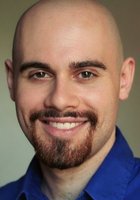
Most PSAT Critical Reading mistakes come from the same place: students pick the answer that sounds right instead of the one supported by the text. John teaches a line-reference method that turns every question into a scavenger hunt for evidence, which removes the guesswork from both literature and social-science passages. His dual background in English and drama gives him a sharp eye for tone, argument structure, and the rhetorical moves the test loves to ask about.
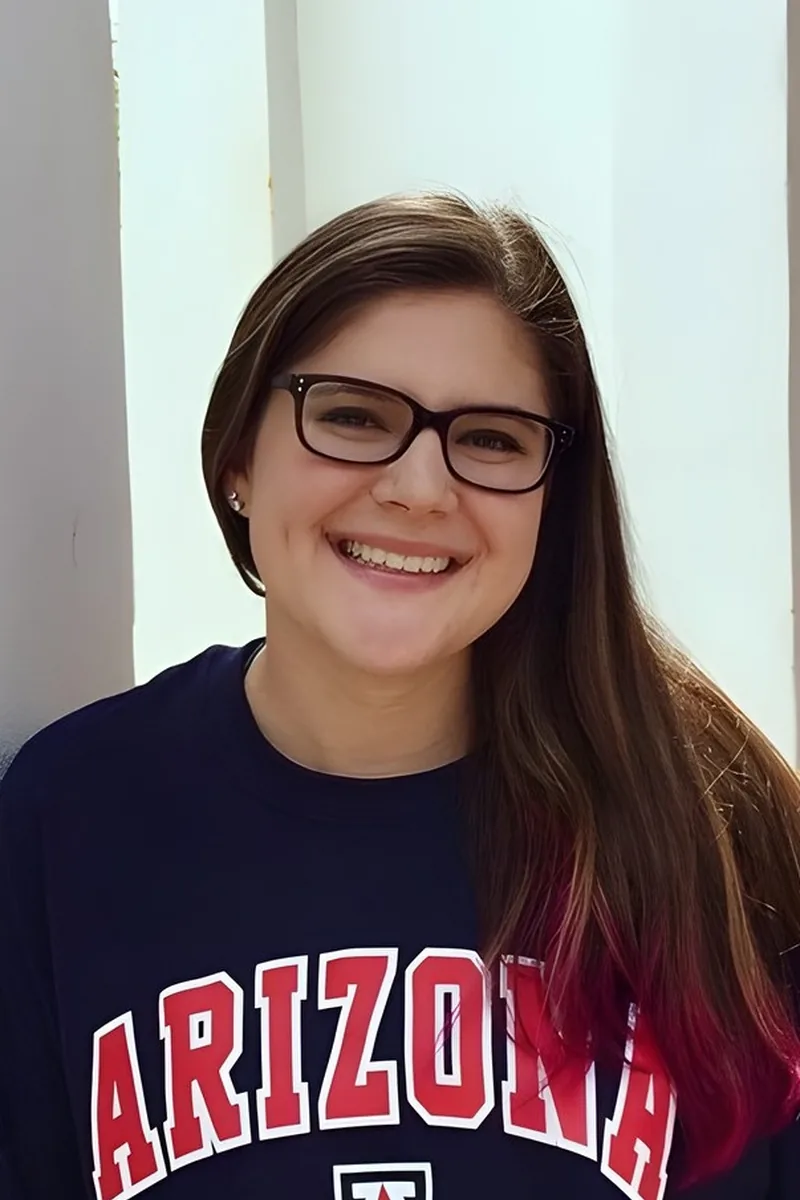
The PSAT Critical Reading section rewards a very specific skill: finding the one answer choice fully supported by the passage, even when two or three look plausible. Alex teaches students to identify the textual evidence that eliminates distractors, a technique he refined through his own 1590 SAT performance and years of coaching students through tricky inference and vocabulary-in-context questions.
Medical school admissions required Anna to digest vast amounts of dense, argument-driven prose under pressure — a skill that maps directly onto the PSAT Critical Reading section's evidence-based questions. She teaches students to identify exactly where a passage's reasoning shifts, which is the moment the College Board tends to plant its most convincing wrong answers. Her 1590 SAT and 5.0 rating confirm she can execute that precision when the clock is running.
I am a recent graduate from a masters program in biostatistics at Columbia University. I received my Bachelor of Arts in biological sciences, with a focus in neurobiology at Northwestern University. In August, I will be starting a doctoral program in biostatistics at NYU. I was a teaching assistant at Columbia University in my department and also have tutored graduate students and undergraduates privately as well. My primary areas of tutoring are math and statistics coursework in addition to math sections on standardized tests such as the GRE and GMAT. I am very passionate about helping students feel more confident and excited about math. In my spare time, I enjoy running, playing piano, and spending time with friends and family.
I am an interdisciplinary educator with an Ed.M. from the Harvard Graduate School of Education and a B.A. from Dartmouth College. My background is primarily in integrated arts learning and museum education and I specialize in visual arts, history and art history, and object-based learning. In all subjects, I take a creative, inquiry-based and learner-centered approach, designing opportunities for each unique individual to meet their learning goals.
I am currently a resident physician at Northwestern Hospital.
Critical reading on the PSAT comes down to one skill most students underestimate: identifying what the author is actually arguing versus what the passage merely mentions. Elliot's training in cognitive science — where parsing dense academic writing is a daily requirement — makes him particularly effective at teaching students to track an author's reasoning across long passages. His 5.0 rating and 1540 SAT score back up that expertise.
I am a second year law student at the University of Chicago who hails from the San Francisco Bay Area! I tutor the SAT, ESL, and Spanish. I was an AVID tutor in high school, and after college I taught an ESL class and tutored a high school student in Spanish. In law school, I am involved with the Lawyers in the Classroom program. My tutoring philosophy is based on listening to students work through problems and helping them to spot their confusions or incorrect assumptions. I believe students learn much better when they aren't simply told the right answer or right reasoning; they need to get there on their own.
I am proud to be a part of Varsity Tutors! I am originally from San Antonio, TX; I completed my undergraduate education at Rice University in Houston where I received a bachelor's degree in Biochemistry and Cell Biology. Currently, I am in my second year of medical school at Baylor College of Medicine.
I'm eager to teach students how to make connections and understand any part of the world they need!
I am a member of the Brown Class of 2018, pursuing a bachelors degree in mathematics. I graduated from Phillips Exeter Academy in 2014. (I am able to help anyone with the boarding school admissions process.) Outside of academia, I pursue my passions in dance, travel, volunteering, reading and art. My tutoring subjects are mathematics (from elementary school to college level) and standardized testing (SAT, SAT subject tests, PSAT, and SSAT). I have tutored mainly high school students in the New York State Regents exams and AP Calculus, although I also have experience with students in middle and elementary school. Since I have been through many school systems, including public, private, studying abroad, and boarding school, I have learned many different techniques and can attack a problem from various angles. Ultimately, my teaching style is full of tips and tricks to break down complicated topics into simple, more understandable ideas.
I am a Yale graduate with over 8 years experience tutoring students from a variety of backgrounds. I recently graduated from the Yale School of Public Health with a MPH concentrating in Epidemiology and Global Health. I also received my B.S. from Yale with a double major in Molecular, Cellular, and Developmental Biology and French. I have experience both leading group classes and working with students one on one. I will respond to a student's strengths, weaknesses, and learning style in order to help them succeed and make the most of our time together. I earned a perfect score of 36 on the ACT, 2280 on the SAT, and qualified as a National Merit Scholar on the PSAT. I look forward to working with you!
I am currently attending New York University where I am pursuing a degree in Finance and Statistics. I have previous experience tutoring individuals in math, a subject I have always excelled at academically. My knowledge and interest in mathematics, makes it easy for me to frame and deconstruct seemingly complicated concepts and theories in ways students will be able to understand and remember. Outside of academia I enjoy playing tennis, going to movies, and spending time with friends and family.
I am a graduate from Georgetown University, where I received a Bachelor of Arts degree in Mathematics with a minor in Music. I'm currently pursuing a Master's of Science in Business Analytics at Carnegie Mellon University. I've been tutoring since I started high school, focusing on mathematics and writing. Throughout my college career I was employed both privately and by Georgetown University to tutor peers and high school students in the Washington, D.C. area. I worked with students taking classes in all levels of mathematics falling under Algebra, Calculus, Combinatorics, and Problem Solving.
I am an incoming medical student at the University of Miami Miller School of Medicine. I graduated from Rice University in 2025 with a Bachelor of Science in Biology with minors in Medical Humanities and Business.
I am a graduate of Columbia University with a degree in Drama and Theatre Arts. I taught math and essay writing to my peers in high school and college, and have tutored a close friend in her mathematics courses since junior year of high school. I am most comfortable and passionate about tutoring SAT prep, particularly the Math section and subject tests. I believe in supporting and encouraging my students and making material as accessible as possible, breaking down what may be difficult subject matter into terms and concepts that they already understand. I firmly believe in the potential of every student to grasp material that they may think is out of reach, and aim to reduce the stress factor of studying as much as possible. Outside of tutoring, I am a professional actor and playwright, and in my free time (a rare, mystical thing these days) I enjoy playing guitar and mandolin, practicing yoga, and my PS4.
The PSAT Critical Reading section rewards students who can distinguish an author's central claim from supporting details under tight time pressure. Nishad, who earned a 1580 SAT composite, breaks down passage types — science, social science, literature, historical documents — and teaches a different attack strategy for each. That structural awareness is what separates National Merit contenders from students who plateau in practice.
I am a graduate of the University of Chicago, with a bachelor's degree in psychology and linguistics. Currently, I am pursuing a master's degree in speech-language pathology at Teachers College, Columbia University. In the past, I have worked as a teacher's aide in a public school classroom, a mentor to middle school girls, an instructor and tutor at the literacy education organization 826, and a summer camp counselor. I tutor a diverse range of subjects, and I find that I especially enjoy tutoring language arts, reading, and writing at all levels, from elementary school all the way up to college/grad school test prep. As a tutor, I am committed to helping students reach their full potential as learners. Throughout my years as an educator, I have seen firsthand the remarkable academic growth that can occur when tutors provide students with the individualized support that they need. In my spare time, I enjoy reading, journaling, and learning about other languages and cultures.
I am currently studying chemical engineering at the University of Michigan. I have always helped out my fellow students with schoolwork, and I have tutored in the National Honor Society for three years. My tutoring strengths include my abilities to stay calm, be patient, and offer different perspectives on the learning process. I do not just help my students learn the material, but I also teach them how to learn it. I tutor math and test prep courses. Outside of school and tutoring, I play the piano. I have played classical piano for 13 years and jazz piano for 7.
I am a new graduate of Pomona College, in Claremont, CA, where I studied Religion and Philosophy. While there, I wrote many papers of a wide variety, working on strong arguments, organization, and phrasing. I peer edited as well as volunteering with groups that mentored high school students, focusing on college admissions work, continuing and expanding my experiences from high school of tutoring for standardized testing. Additionally, I taught beginning violin to younger children.
I am a junior studying Writing for Screen and Television at the University of Southern California's School of Cinematic Arts. For the past two spring semesters I worked as a CollegeSpring Mentor, tutoring Green Dot Charter high school juniors for the SAT and teaching them predatory skills for college. In addition to my experience tutoring for the SAT, as a screenwriting major I most enjoy teaching my favorite subject, English. I love showing students the power language endows upon them to communicate their ideas and beliefs with others. I believe every student deserves the chance to succeed and to try to capitalize on their strengths while encouraging them to improve in areas they may traditionally find challenging. Endowing a student with confidence in themselves through patience and support is the best way not only to improve academic performance, but also transform them into lifelong learners. I try to share not only my passion for knowledge with students, but also my love of sports (football, baseball, and softball), action films, and global affairs. Seeing students not only improve academically but also show improved confidence and happiness is the most rewarding part of my job.
I am available to tutor a range of middle school and high school subjects, but I am most excited about tutoring test prep. I remember how stressful preparing for college can be and I am eager to do my part in helping students fulfill their college goals. I believe that learning is a collaborative process and I am committed to being as actively involved in the student's learning as I can. In my spare time, I enjoy reading, going to the movies (I try to see each Oscar nominee before the ceremony every year.), and am a huge Michigan sports fan.
I'm a rising junior at Brown University studying biomedical engineering. I have lots of experience in middle school through college level instruction in STEM and SAT/ACT prep. My goal is to provide a fun and productive learning environment by only teaching subjects that I am passionate about.
I am 22 years old and just graduated from the University of Kentucky with a double degree in French and Biochemistry. I have been a tutor for over a year now at UK's tutoring center. I believe that anyone can learn anything with enough practice and encouragement, and I love helping students overcome challenges and gain more self-confidence!
I am a lifelong learner, teacher, and researcher in the field of physics. I received a PhD in Physics from the University of Michigan and a BS in Physics from Rice University. I have four years of physics teaching experience at the University of Michigan, primarily undergraduate laboratory courses with an emphasis on electromagnetism, circuits, waves, optics, and real-world applications of these and other physical phenomena. Many of these courses, including one I helped design, focused on helping non-STEM students master physics concepts that may be difficult to grasp in a standard classroom setting. I have tutored in a variety of subjects since high school, but most recently I have spent several years helping students understand concepts and succeed in coursework throughout a large variety of college-level physics topics, from basic mechanics to advanced electrodynamics and special relativity.
I am available to tutor in a broad range of subjects, though I am most passionate about Economics, History, and Civics. Please feel free to contact me and I would be happy to arrange a session.
I am currently pursuing a Bachelors of Science in Aerospace Engineering at the Georgia Institute of Technology. I am also a graduate of the high school International Baccalaureate Program. I have informal experience tutoring high school physics, but am most passionate about tutoring students for the ACT standardized test, having had extensive experience preparing for standardized tests throughout high school. I am eager to aid students in boosting their scores before their upcoming college applications, an important milestone in many students' lives. In my free time, I also enjoy playing tennis.
The PSAT Critical Reading section rewards the same close-reading instincts Sydney honed across her Carnegie Mellon English honors coursework — identifying how authors build arguments, use evidence, and shift tone within a passage. She breaks down each question type so students learn to eliminate trap answers confidently, building skills that pay off on test day and carry over to the SAT.
I am excited to help anyone who might need it!
I am an aspiring applied mathematician, with particular interest in image processing and climate science. I graduated in May 2017 from Washington University in St. Louis with a bachelor's in physics and mathematics, and am beginning a PhD program in September 2017 at the University of Chicago in Computational and Applied Mathematics. I've tutored introductory physics students for three years and enjoyed it thoroughly, as a chance to help other students while revisiting fundamental concepts to enhance my own knowledge. I'm eager to continue reaching out and helping students of math and physics to succeed and, furthermore, to appreciate the beauty and power of these subjects.
I am a rising sophomore at Case Western Reserve University studying engineering. I have taken most high-school level standardized tests, and have scored consistently above the 95th percentile. I have tutored small groups of students throughout high school, and also have experience as a private tutor. Outside of the classroom, I enjoy playing Ultimate Frisbee with my college club team.
The PSAT Critical Reading section is many students' first encounter with college-level passage analysis, and the jump from classroom reading to timed standardized questions can feel disorienting. Danielle breaks down how to identify author purpose, track argument structure, and eliminate trap answers — skills she honed scoring a 1550 on the SAT. Her 5.0 rating speaks to how well that structured approach clicks with students.
I'm not tutoring, I love walking through New York for design inspiration and taking carpentry, metalworking, and illustration classes.
Critical reading on the PSAT rewards students who can distinguish what an author actually states from what they merely imply — a skill Keith honed through years of close textual analysis at Williams and in law school. He teaches a concrete annotation method that keeps students anchored to evidence instead of drifting into speculation on inference questions.
I am planning now to shift to a more educational career. Last year I worked at a small tutoring center, and I decided to branch out even more and work here.
A year as a course assistant in Harvard's math department might seem unrelated to PSAT Critical Reading, but teaching calculus to undergraduates builds a specific skill: explaining exactly what a problem states versus what students assume it states. Richard applies that same precision to passage-based questions, training students to distinguish the author's actual claim from answer choices that subtly rephrase it into something the text never quite supports. His 1600 SAT confirms he can execute that level of close reading under real testing constraints.
Critical reading on the PSAT comes down to tracking arguments: what does the author actually claim, what evidence supports it, and where does the reasoning shift? Max's training in biology research — where evaluating published arguments is a daily task — translates directly into the analytical skills this section demands. He teaches students to annotate strategically so they spend less time re-reading and more time answering.
The PSAT Critical Reading section rewards students who can distinguish what a passage actually says from what it implies, and Tracy's approach targets exactly that skill. She walks through evidence-based question pairs step by step, training students to anchor every answer in specific lines of text rather than gut feeling.
I'm a graduate of Columbia University with a B.A. in History. I'm passionate about history and English, but I'm a competent math tutor as well. I have received outstanding scores on my SAT and AP tests, and am confident in my ability to pass on these skills to the next generation.
Testimonials
Because the right PSAT Critical Reading tutor makes all the difference.
Average Session Rating – Based on 3.4M Learner Ratings
Practice PSAT Critical Reading
Free practice tests, flashcards, and AI tutoring for PSAT Critical Reading
Top 20 Test Prep Subjects


Top 20 Subjects
Frequently Asked Questions
Score improvement depends on your starting point and commitment level, but most students see meaningful gains within 8-12 weeks of focused preparation. If you're scoring in the mid-range, improving by 50-100 points is realistic with consistent practice and strategic instruction. Students starting lower often see larger percentage improvements, while those already scoring 700+ may see more modest gains as they approach the ceiling. The key is identifying your specific weak areas—whether that's vocabulary in context, inference questions, or pacing—and targeting those directly.
Most students struggle with pacing and time management, especially on longer passages. Many read too slowly, leaving insufficient time to answer all questions carefully, while others rush through and miss important context clues. The second major challenge is distinguishing between answers that are partially correct versus fully supported by the text—PSAT questions reward precision, and even strong readers can second-guess themselves. Working with a tutor helps you develop efficient reading strategies and learn to identify what the test makers are actually testing for, rather than choosing answers that simply sound good.
A solid study plan spans 8-12 weeks with 3-4 focused sessions per week. Start by taking a full-length practice test to identify your baseline and specific weak areas—whether you struggle more with paired passages, vocabulary-in-context questions, or evidence-based questions. Week 1-2 should focus on understanding question formats and learning test-specific strategies; weeks 3-8 involve drilling individual question types and passages matched to your difficulty level; the final weeks emphasize full-section practice under timed conditions. Regular practice tests (every 2-3 weeks) help you track progress and adjust your focus as needed.
An effective PSAT Critical Reading tutor understands not just the content, but the test makers' logic—they can explain why a correct answer is right and why the tempting wrong answers exist. They should assess your reading speed, comprehension level, and test-taking habits early on, then customize strategies to your learning style rather than using one-size-fits-all approaches. The best tutors also teach you to annotate strategically, manage time pressure, and build confidence through incremental wins on progressively harder questions. Look for someone who emphasizes reasoning over memorization and gives you tools you can use on test day.
Test anxiety in Critical Reading often stems from time pressure, difficult vocabulary, or uncertainty about whether you're interpreting passages correctly. Building confidence through repeated, timed practice under low-stakes conditions is the most effective antidote—your brain learns that you can handle the pressure. Developing a consistent pre-test ritual (deep breathing, positive self-talk, reviewing your strategy) also helps. During the actual test, remember that you don't need to understand every word or get every question right to score well; practicing selective reading and strategic guessing on your lowest-confidence questions can reduce anxiety while protecting your score.
Vocabulary matters less on the modern PSAT than it did previously, since most challenging words appear in context and the test emphasizes comprehension over memorization. That said, building a working knowledge of common academic and test-prep vocabulary (words like "ambiguous," "analogous," "pragmatic") helps you understand both the passages and answer choices faster. Rather than traditional vocab lists, effective preparation focuses on learning vocabulary-in-context questions—where tutors teach you to use surrounding text clues to determine word meaning. This dual approach (modest vocabulary building plus strong context-clue skills) is more efficient than memorizing hundreds of words you may never see.
The PSAT uses the same question formats and reasoning skills as the SAT's Evidence-Based Reading and Writing section, making them highly compatible for preparation. The main differences are that PSAT passages are slightly shorter, vocabulary is less challenging, and the curve is different—but the underlying test design is identical. If you're preparing for the PSAT now, you're building skills that transfer directly to the SAT, so strong PSAT prep sets you up well for future testing. Many students actually find this reassuring: mastering PSAT Critical Reading means you're already on track for SAT success.
Let’s find your perfect tutor
Answer a few quick questions. We’ll recommend the right plan and match you with a top 5% tutor.