Award-Winning AP Physics C: Mechanics Tutors
serving Sacramento, CA
AP Physics C: Mechanics
Tutors in Sacramento
Private 1-on-1 tutoring, weekly live classes for academic support, test prep & enrichment, practice tests and diagnostics, and more to elevate grades and test scores.
Based on 3.4M Learner Ratings
UniversitiesSchools & Universities
DeliveredHours Delivered
ProficiencyGrowth in Proficiency
Who needs tutoring?
No obligation. Takes ~1 minute.
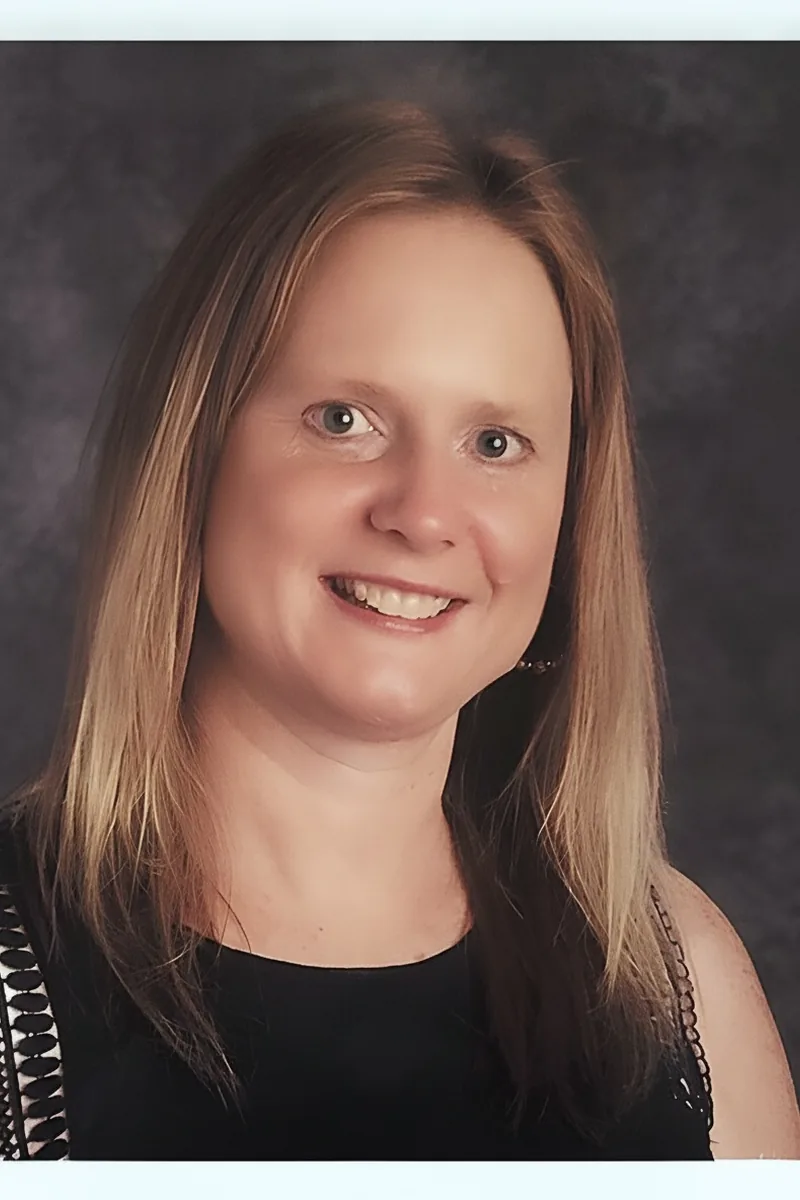
An applied physics degree means Karen didn't just study mechanics for an exam — she built her entire undergraduate education around the Newtonian framework, calculus-based problem-solving, and laboratory work that AP Physics C condenses into a single course. She's especially sharp at connecting real-world scenarios (a spinning figure skater, a car banking a curve) to the free-body diagrams and integrals students need to produce under timed conditions. Rated 5.0 by students.

Jared's PhD work in mechanical engineering at Lehigh means he's solving advanced dynamics problems daily — the kind where AP Physics C's rotational kinematics and work-energy integrals are just the warm-up. His biomedical engineering background adds a practical dimension: he can show students how a torque problem on the exam mirrors the same mechanics behind joint loading or prosthetic design, making abstract calculus-based physics feel grounded in something real.
Free-body diagrams, rotational inertia, and conservation of energy problems all require calculus-based reasoning that trips students up when they try to rely on formulas alone. Emily completed the full pre-med physics sequence at Cornell and spent her senior year tutoring calculus — two skills that converge directly in AP Physics C: Mechanics. She breaks multi-step problems into the underlying math so students see why the setup matters as much as the answer.
Emily's computational biology major at Cornell pairs heavy calculus and physics coursework with programming — a combination that trained her to model real systems mathematically, which is exactly what AP Physics C: Mechanics demands when a problem asks you to integrate a variable force or derive an equation of motion. Her 36 ACT and 1590 SAT reflect the kind of quantitative precision that pays off on the exam's trickiest free-response questions, especially those involving work-energy theorem applications and non-constant acceleration. Rated 4.9 by students.
Biochemistry might seem unrelated to mechanics, but Shira's coursework in physics and calculus — plus a 1550 SAT — means she's built the quantitative chops to handle the kinematics, force analysis, and integration problems that define AP Physics C. She approaches mechanics the way she approaches lab work: isolate the variables, set up the math carefully, then check whether the answer makes physical sense. Rated 4.9 by students.
Rice's mechanical engineering program puts Ashton through calculus-based statics, dynamics, and kinematics every semester — the same core mechanics that AP Physics C tests, just applied to real structural and machine systems. That daily exposure means he can spot whether a student's free-response mistake is a physics misread or a calculus execution error, and address the right one. His 32 ACT underscores the quantitative fluency backing his approach.
Having earned a BS in both physics and math from Yale, Anthony did the calculus-based mechanics — Lagrangian setups, variable-force integrations, rotational energy derivations — before pivoting to a PhD in economics, which means he teaches the material with the clarity of someone who's already fully digested it rather than still learning alongside students. His 1560 SAT and 5.0 tutoring rating back up what his physics training makes obvious: he can untangle the spots where the calculus and the physical reasoning collide, especially on free-response problems that demand both.
A PhD in Chemical and Biomolecular Engineering from Buffalo built on a nuclear engineering foundation means Sabry has spent years solving the calculus-heavy mechanics problems — work-energy integrals, rigid body torque derivations, variable-force differential equations — that AP Physics C tests in compressed form. He co-instructed both undergraduate and graduate physics and mechanics courses during his doctoral program, so he knows exactly where students confuse the physical setup with the mathematical execution and can address each independently.
Having scored a 1580 SAT and studied computer science, Rishik brings a programmer's discipline to AP Physics C: Mechanics — treating each problem like an algorithm where you define your variables (forces, constraints, coordinate system) before executing the calculus. He also tutors both AP Physics C exams alongside AP Calculus BC, so he's comfortable moving between the electricity side and the mechanics side while keeping the underlying math sharp. Rated 4.6 by students.
Between his mechanical engineering studies at Case Western Reserve and a perfect 36 ACT, Kevin has the calculus chops and physical intuition that AP Physics C: Mechanics rewards — especially on free-response problems where a sloppy free-body diagram dooms the entire solution. He zeroes in on the skill most students underestimate: translating a physical setup into the right differential expression before any computation begins, whether it's a variable-mass system or a non-trivial torque problem.
Having TA'd multiple engineering courses at WashU while earning dual degrees in mechanical and energy engineering, Ava spent semesters breaking down the same calculus-based force analysis, work-energy theorems, and rotational dynamics that define the AP Physics C: Mechanics curriculum. Her 35 ACT speaks to the quantitative precision she brings to exam prep, and her current graduate work in environmental engineering keeps her fluent in the applied physics and differential equations students encounter on test day.
Studying mathematics and physics at Harvard, Matthew is building the calculus and mechanics toolkit simultaneously — which means he sees the connection between a differential equation and a physical system as one idea, not two separate steps. His 34 ACT and deep comfort with multivariable calculus let him dig into the trickier AP Physics C territory, like work done by position-dependent forces or setting up moment-of-inertia integrals for composite objects, with real mathematical fluency. Rated 4.9 by students.
Testimonials
Because the right AP Physics C: Mechanics tutor makes all the difference.
Average Session Rating – Based on 3.4M Learner Ratings
Practice AP Physics C: Mechanics
Free practice tests, flashcards, and AI tutoring for AP Physics C: Mechanics
Nearby AP Physics C: Mechanics Tutors
Other Sacramento Tutors
Related Science Tutors in Sacramento
Frequently Asked Questions
AP Physics C: Mechanics focuses on classical mechanics and covers kinematics, Newton's laws, work and energy, momentum, circular motion, oscillations, and gravitation. The course emphasizes calculus-based problem solving, which distinguishes it from AP Physics 1. Students learn to apply mathematical reasoning to real-world physics scenarios, making it essential to have strong calculus skills alongside physics understanding.
The main difficulty stems from integrating calculus with physics concepts—students must not only understand the physics but also apply derivatives and integrals correctly. Many students struggle with problem-solving pacing during the exam, as questions require multi-step reasoning and careful setup. Additionally, the free-response section demands clear communication of methodology, which many students find more demanding than multiple-choice questions.
Personalized 1-on-1 instruction allows tutors to identify your specific weak areas—whether that's circular motion, energy conservation, or calculus application—and target those gaps directly. Tutors can also teach you strategic problem-solving approaches, help you practice free-response questions with feedback on your explanations, and build your confidence with timed practice tests that mirror the actual exam format.
Score improvement depends on your starting point and effort level, but students typically see meaningful gains—often 1-2 points on the 1-5 AP scale—when they work consistently with a tutor for several months. The key is identifying weak topics early, practicing problems regularly, and refining your test-taking strategy. Starting tutoring 3-4 months before the exam gives you solid time to build mastery and confidence.
The free-response section rewards clear methodology and correct setup as much as the final answer. Start by identifying the relevant physics principles, define your variables, show your calculus steps, and explain your reasoning. Tutors can help you practice writing concise, well-organized solutions and teach you how to earn partial credit even if your final answer isn't perfect—a crucial skill for maximizing your score.
Varsity Tutors connects you with expert tutors in Sacramento who specialize in AP Physics C: Mechanics and understand the specific challenges of the curriculum. When you get matched with a tutor, you can discuss your current level, target score, and availability to create a personalized study plan that fits your schedule and learning style.
Practice tests are critical because they help you build stamina, identify weak topics under timed conditions, and get comfortable with the exam format. Taking full-length practice tests every 2-3 weeks allows you to track progress and refine your pacing strategy. A tutor can review your practice test results with you, pinpoint patterns in your mistakes, and help you develop targeted strategies to address them.
Yes, calculus proficiency is essential since the course uses derivatives and integrals to solve physics problems. If you're weak in calculus, consider getting support in that area alongside your physics tutoring, or find a tutor who can help you strengthen both skills together. Many students find that understanding the physics concept first, then applying the calculus, makes both subjects easier to grasp.
Let’s find your perfect tutor
Answer a few quick questions. We’ll recommend the right plan and match you with a top 5% tutor.