Award-Winning AP Biology Tutors
serving Sacramento, CA
AP Biology
Tutors in Sacramento
Private 1-on-1 tutoring, weekly live classes for academic support, test prep & enrichment, practice tests and diagnostics, and more to elevate grades and test scores.
Based on 3.4M Learner Ratings
UniversitiesSchools & Universities
DeliveredHours Delivered
ProficiencyGrowth in Proficiency
Who needs tutoring?
No obligation. Takes ~1 minute.
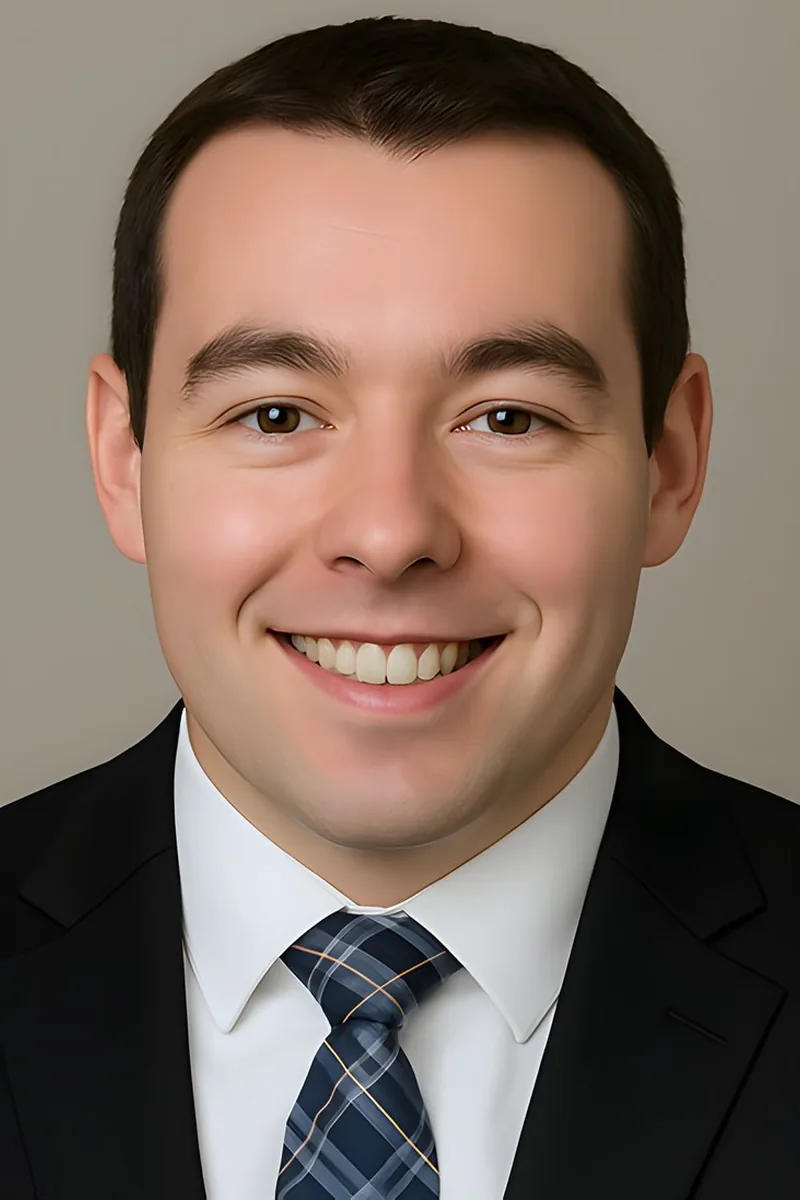
Having earned AP credit in biology himself and now deep into medical school coursework, Timothy knows exactly how the College Board tests cellular respiration, genetics, and ecology — and where students lose easy points on free-response questions. He teaches the exam's four big ideas as interconnected themes rather than isolated chapters, which is how the test actually works.
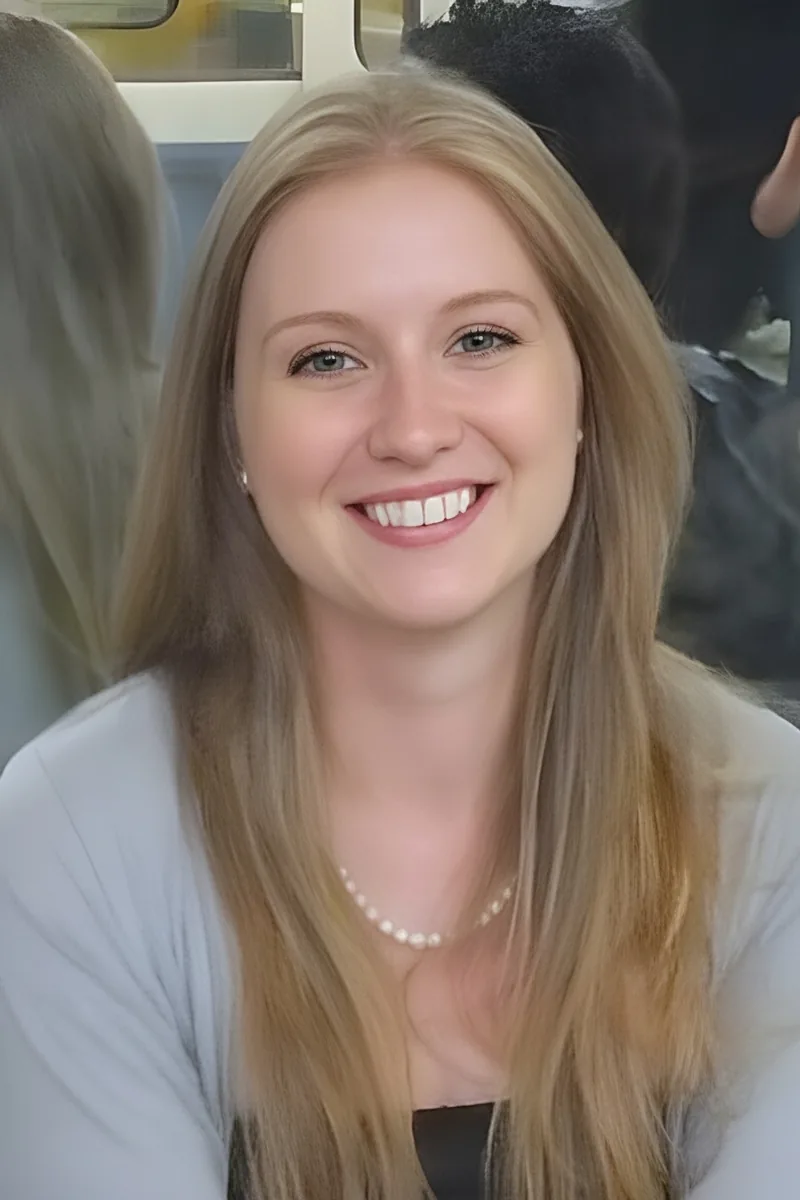
Christina's computer science background gives her an unusual edge for AP Bio's data analysis and experimental design questions — she's comfortable with statistical reasoning, interpreting graphs, and the kind of algorithmic thinking that makes tracing metabolic pathways or gene expression cascades more systematic. Her ACT score of 34 also signals strong science reading skills, which matters for an exam where decoding dense passages and pulling evidence from figures is half the battle.
As an undergraduate teaching assistant for a developmental and physiology biology course at UCLA, Raquel spent semesters breaking down the same cellular processes, gene expression pathways, and organism-level systems that AP Bio exams test — and she did it while fielding live questions from confused students, which is a different skill than just knowing the material. Her nutrition sciences background adds an unusual edge for the metabolism and energy flow units, where she can explain why ATP yield matters in real physiological terms rather than as an abstract diagram.
Preparing for medical school meant Nicole lived inside AP Biology-level content — cellular respiration pathways, genetics, and ecological systems — long after her own AP exam. She tackles the course's toughest units, like signal transduction and gene regulation, by tying each mechanism back to a bigger biological story that makes the details easier to retain. Her public health minor also adds depth to the ecology and evolution free-response questions.
AP Biology's free-response questions demand more than memorized definitions; they require students to design experiments, interpret data, and argue from evidence. Justin studied neuroscience and physiology at the undergraduate level, so he brings firsthand fluency with cellular signaling, genetics, and ecological modeling to every session. He digs into the reasoning behind each biological system so students can handle the application-heavy format of the AP exam.
UCLA's biology program gave Nathan a thorough grounding in the lab-based side of AP Bio — dissecting ecological relationships, working through microbiology, and studying physiology systems that map directly onto the exam's organism-level questions. His additional coursework in anatomy and nutrition means he can teach students to trace how structure connects to function across biological scales, from cellular membranes up to whole-organism homeostasis.
Studying integrative biology at UC Berkeley means Jack is currently working through the same cellular processes, genetics, and ecology content that AP Bio covers — except at the college level, where he's expected to connect mechanisms across biological scales rather than treat each unit in isolation. His anthropology side adds an unusual strength on the evolution and population biology units, since he's trained to analyze how organisms — especially humans — adapt to environments over time. A 1590 SAT reflects the kind of precise, evidence-based reasoning that AP Bio's free-response questions demand.
As a former undergraduate student instructor for UC Berkeley's General Biology lab — the gateway course for aspiring bio majors — Caroline knows exactly which AP Biology concepts trip students up, from cellular respiration energetics to Hardy-Weinberg equilibrium. Her molecular biology degree means she can explain gene regulation and signal transduction at a depth that goes well beyond what most AP review books offer. She connects each unit back to experimental design, which is critical for the free-response section.
As a pre-biology student at UC Santa Barbara, Alan is working through the same college-level genetics, ecology, and cell biology material that forms the backbone of the AP Bio curriculum — so the content is current, not rusty. He's especially drawn to the ecological and evolutionary reasoning side of the course, which pairs well with students who need to strengthen their data interpretation and argument-building skills for the exam's free-response questions. Rated 4.7 by students.
Ecology and evolution are where Jonathan lights up — his integrative biology degree built around understanding how organisms interact with environments and how populations change over time, which gives him a natural entry point into AP Bio's ecology, natural selection, and speciation units. He's also comfortable with the molecular side, but his real strength is teaching students to reason through experimental design and data interpretation questions where they have to connect population-level patterns back to genetic mechanisms. Rated 4.9 by students.
Ruthie studied the biological basis of behavior in college, which means she didn't just memorize AP Bio content like cell signaling and genetics — she had to apply it to understand how nervous systems produce behavior, how neurotransmitters cross synapses, and how gene expression shapes organisms at every level. That interdisciplinary angle is especially useful for the exam's ecology and evolution units, where students need to connect molecular mechanisms to organism-level outcomes. Rated 5.0 by students.
Todd's undergraduate biology degree from UIUC gives him the content foundation for AP Bio, but it's his 33 ACT and analytical training through his University of Chicago graduate work that sharpen how he teaches the exam's trickiest skill: translating dense lab data into clear, structured free-response answers. He zeroes in on the units where students lose the most points — cellular energetics and heredity — and builds the kind of process-level reasoning that turns memorized pathways into usable knowledge on test day.
Studying neurobiology and behavior at Penn means Emily lives in the territory where AP Bio gets hardest — signal transduction, nervous system function, and the molecular machinery behind how cells communicate and respond to their environment. She's especially good at unpacking the genetics-to-phenotype pipeline, showing students how a mutation in one gene can ripple through protein folding, cell signaling, and ultimately organism-level behavior. Rated 5.0 by students.
Saniya's neuroscience degree at Rhodes College required her to learn biology from the molecular scale up — gene expression, cell signaling, neural communication — which means she's tackled AP Bio's toughest conceptual territory in a context where every pathway had to connect to a bigger physiological story. She's continued auditing advanced coursework in anatomy, histology, and embryology since graduating, so the organism-level units on body systems and development are still sharp. Rated 5.0 by students.
As a Cornell biology student on a pre-med track, Karim is actively studying the same cellular processes, genetics, and ecological concepts that AP Bio tests — so his explanations come with the freshness of someone working through this material at the college level right now. He's especially strong at breaking down how organisms maintain homeostasis and how evolutionary pressures shape populations, the kinds of big-picture connections the exam's data-interpretation questions demand. Rated 5.0 by students.
A Yale biochemistry degree plus a year of wet lab research at the NIH means Matthew knows AP Biology's toughest units — molecular genetics, cellular energetics, signal transduction — from the inside out. He teaches the exam's data-analysis questions the way a working scientist reads them: by identifying variables, controls, and what the graph is actually telling you. His 4.9 rating speaks to how well that real-world perspective translates in sessions.
As a neuroscience major on the pre-med track at Vanderbilt, Eileen lives inside the material AP Biology tests: cell signaling, gene expression, metabolic pathways, and evolutionary mechanisms. She unpacks dense topics like the lac operon or oxidative phosphorylation by sketching out each step visually, turning overwhelming detail into a logical sequence students can actually reconstruct on exam day.
AP Biology's shift toward data analysis and experimental design catches many students off guard — it's no longer enough to memorize cell structures and metabolic pathways. Noel's policy-analysis training at the University of Chicago sharpened his ability to interpret graphs, evaluate experimental controls, and construct evidence-based arguments, which maps directly onto the AP exam's free-response demands. He pairs content review with targeted practice on the analytical skills the College Board actually tests.
Biophysics at Rice means Aadith studies biological systems through a quantitative lens — analyzing protein folding energetics, membrane dynamics, and molecular interactions — which gives him an unusual edge on AP Bio's units covering macromolecule structure, enzyme kinetics, and cellular energetics. He's also actively taking biochemistry coursework alongside his physics major, so he can explain concepts like the chemiosmotic mechanism or allosteric regulation with the kind of molecular-level precision that earns full credit on free-response questions.
Owen is a neuroscience major at Brown, which means AP Biology's toughest units — cell signaling, gene expression, and cellular energetics — overlap directly with material he's studied at the college level. He teaches students to think like the exam demands: interpreting experimental data, constructing explanations using evidence, and connecting molecular-scale processes to organism-level outcomes.
AP Bio covers an enormous range — from molecular genetics to ecology — and the exam rewards students who can apply concepts to unfamiliar experimental scenarios, not just recall definitions. Phillip studies biomedical engineering at Brown, so he regularly engages with cell signaling, gene expression, and physiological systems at a level well beyond the AP curriculum. He teaches students to interpret data figures and design experiments the way the free-response questions demand.
Studying biomedical engineering at Duke means Eric thinks about biological systems at the molecular, cellular, and organismal levels every day. He tackles AP Biology's toughest units — signal transduction, gene regulation, and energy flow through ecosystems — by tying them back to the underlying logic that the AP exam rewards.
Testimonials
Because the right AP Biology tutor makes all the difference.
Average Session Rating – Based on 3.4M Learner Ratings
Practice AP Biology
Free practice tests, flashcards, and AI tutoring for AP Biology
Nearby AP Biology Tutors
Other Sacramento Tutors
Related Science Tutors in Sacramento
Frequently Asked Questions
AP Biology covers eight major units: chemistry of life, cell structure and function, cellular transport, cell communication and division, heredity, gene expression and regulation, natural selection, and ecology. The exam tests your understanding of these concepts through multiple-choice questions, short-answer responses, and free-response essays that require you to apply biological principles to real-world scenarios. A strong tutor can help you master both the content knowledge and the analytical skills needed to connect these topics on test day.
Score improvement depends on your starting point and how consistently you engage with tutoring and practice. Students who work with a tutor typically see gains by identifying knowledge gaps, mastering question formats, and developing stronger test-taking strategies. Many students improve by 1-2 score points (on the 1-5 scale) over a few months of focused preparation, though some see even greater gains by addressing foundational concept gaps early.
Many students struggle with the breadth of content—there's a lot to master across eight units—and the exam's emphasis on applying concepts rather than just memorizing facts. The free-response questions, which require you to explain biological processes and interpret data, trip up students who haven't practiced explaining their thinking clearly. Tutors can help you develop strategies for managing the workload, building conceptual understanding, and practicing the types of explanations the College Board rewards.
Most students benefit from starting AP Biology prep 3-4 months before the exam in May, though earlier is better if you're struggling with foundational concepts. A typical study schedule involves 5-7 hours per week of focused preparation, including practice tests, concept review, and targeted tutoring on weak areas. Starting tutoring early in the school year allows you to build a strong foundation and address gaps before test prep season gets intense.
Practice tests are essential—they help you understand the exam format, identify which topics you need to review, and build stamina for the 3-hour exam. Taking full-length practice tests under timed conditions reveals pacing challenges and question types that trip you up. A tutor can review your practice test results with you, pinpoint patterns in your mistakes, and help you develop strategies to avoid those errors on test day.
Varsity Tutors connects you with expert tutors in Sacramento who specialize in AP Biology and understand the specific demands of the exam. When you get matched with a tutor, you can discuss your current level, target score, and timeline so they can create a personalized study plan. Whether you need help mastering tough concepts, practicing free-response questions, or building test-taking confidence, a tutor can tailor their approach to your needs.
Test anxiety often stems from feeling unprepared or uncertain about question formats—both things tutoring directly addresses. By practicing under timed conditions and getting feedback from a tutor, you build confidence in your knowledge and test-taking strategies. Tutors can also help you develop a pre-exam routine and strategies for staying calm during the test, like breaking down complex questions and managing your time effectively.
Your first session is a chance to assess where you are and where you want to go. A tutor will likely discuss your current understanding of AP Biology concepts, review any recent tests or assignments, and learn about your goals—whether that's mastering specific units, improving your free-response writing, or boosting your overall score. Together, you'll create a personalized plan that focuses on your biggest priorities and fits your timeline before the May exam.
Let’s find your perfect tutor
Answer a few quick questions. We’ll recommend the right plan and match you with a top 5% tutor.