Award-Winning AP Chemistry Tutors
serving Sacramento, CA
AP Chemistry
Tutors in Sacramento
Private 1-on-1 tutoring, weekly live classes for academic support, test prep & enrichment, practice tests and diagnostics, and more to elevate grades and test scores.
Based on 3.4M Learner Ratings
UniversitiesSchools & Universities
DeliveredHours Delivered
ProficiencyGrowth in Proficiency
Who needs tutoring?
No obligation. Takes ~1 minute.
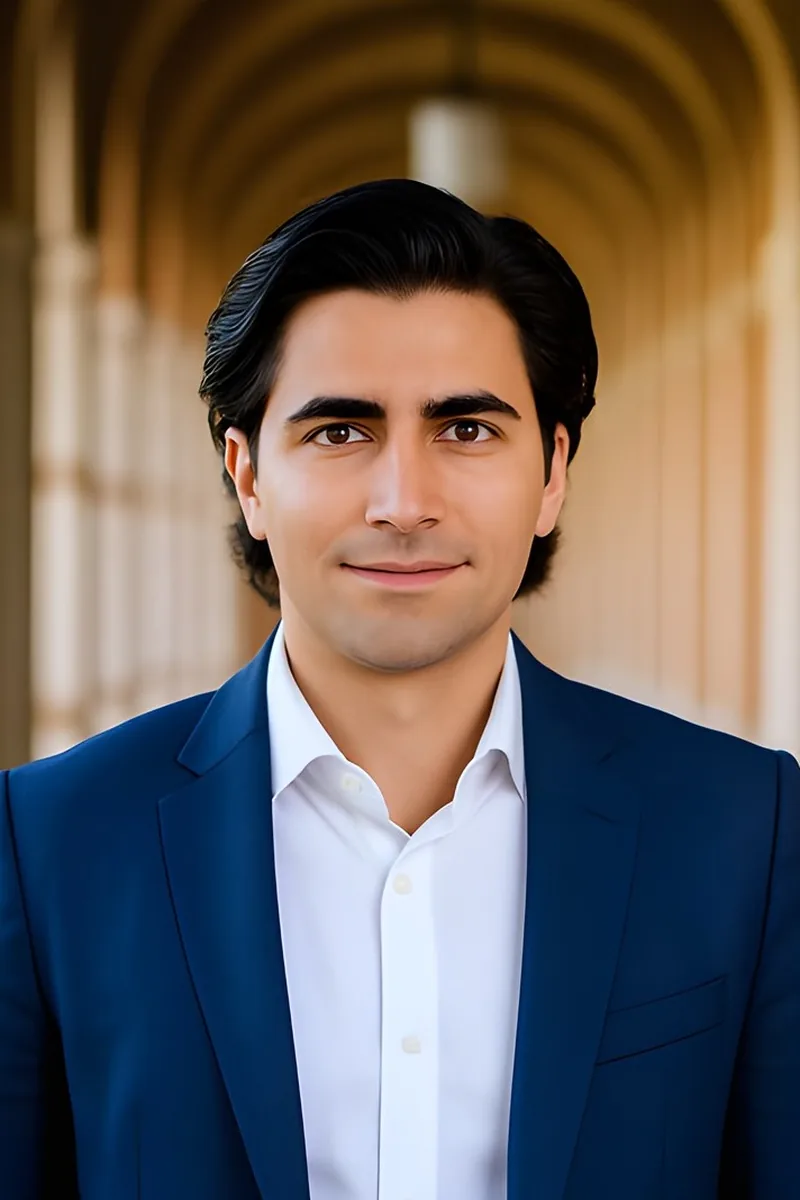
Rice University's biology curriculum gave Perry a college chemistry foundation built around real applications — understanding how Le Chatelier's principle governs physiological buffering, or why Gibbs free energy determines whether a metabolic pathway runs forward. He brings that applied lens to AP Chemistry's free-response questions, teaching students to reason through problems rather than pattern-match from practice sets. Rated 5.0 by students.
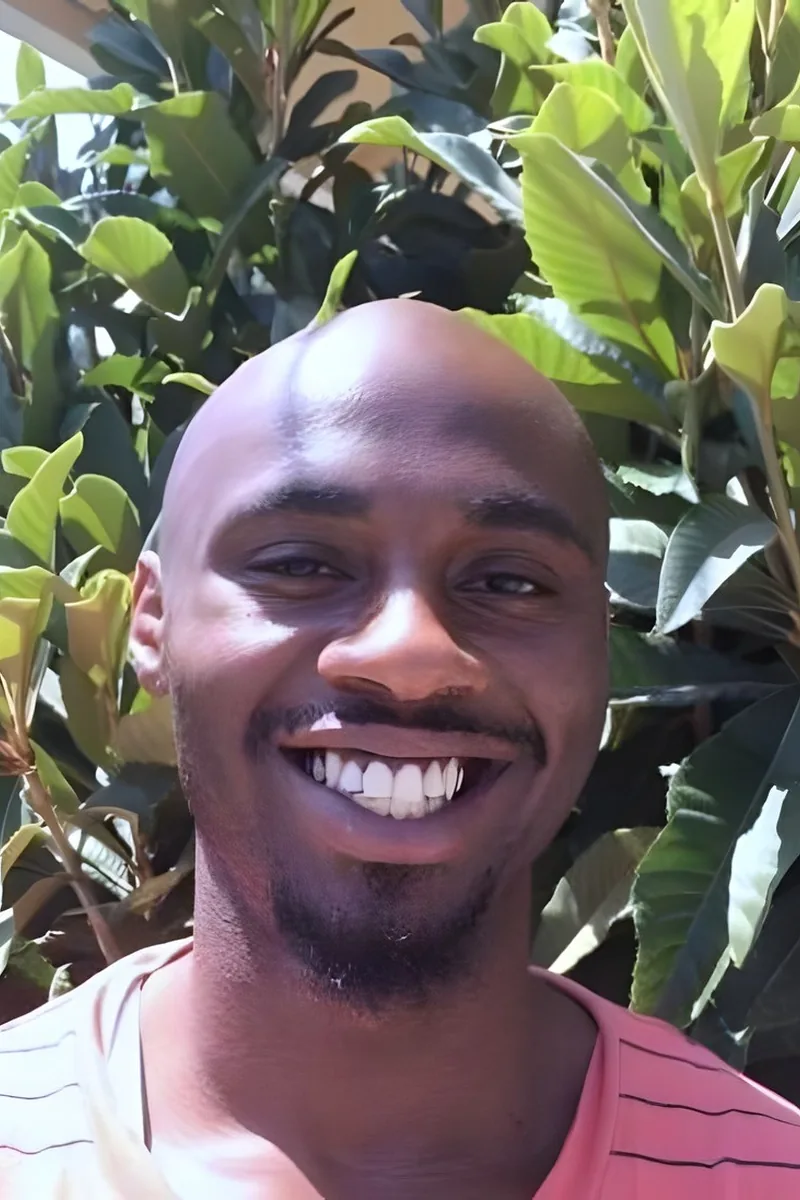
AP Chemistry's toughest sections — equilibrium, thermodynamics, electrochemistry — demand both conceptual understanding and fast quantitative reasoning. Brian brings strong analytical instincts from his Caltech science training, where rigorous problem-solving across disciplines was the norm. He breaks down multi-step free-response problems into the kind of logical chains that earn full credit on exam day.
Equilibrium, thermodynamics, and electrochemistry form the backbone of AP Chemistry's toughest units, and they're also central to Phillip's biomedical engineering coursework at Brown. He tackles these topics by connecting abstract equations — like the Nernst equation or Le Chatelier's principle — to concrete lab scenarios students can visualize. His 5.0 rating speaks to how well that approach lands.
Thermochemistry, equilibrium, and electrochemistry each demand a different kind of thinking, which is part of what makes AP Chem so challenging. Kate tackles each unit by connecting the math to the molecular-level story — explaining why Le Chatelier's principle works, not just how to apply it. Her engineering coursework in chemistry gives her a practical fluency that translates well to exam prep.
AP Chemistry's jump from memorizing periodic trends to applying thermodynamics and equilibrium concepts trips up a lot of students. Eric's engineering coursework at Duke required mastering these same principles — reaction kinetics, enthalpy calculations, electrochemistry — and he teaches them with the quantitative rigor the AP exam demands. Rated 5.0 by students.
AP Chemistry's free-response questions demand more than knowing reactions — they require students to connect thermodynamic principles, equilibrium shifts, and kinetic data into coherent, quantitative arguments. Rhea, a biology major at UChicago on the pre-med track, brings deep fluency in chemistry and a 36 ACT that speaks to her command of timed, high-stakes exams. She breaks down topics like electrochemistry and molecular orbital theory into frameworks students can actually apply on exam day.
Thermodynamics, electron orbitals, kinetics — AP Chemistry sits right at the intersection of Dennis's physics and math training. His research simulating turbulent plasmas and designing optical filters required deep fluency with atomic behavior and energy transfer, so he explains concepts like equilibrium and electrochemistry through the underlying physics rather than just memorized rules.
Georgia Tech's chemical engineering curriculum threw Aimee into college-level thermodynamics, kinetics, and reaction engineering years before most students encounter those ideas — which means she can teach AP Chemistry's toughest conceptual leaps, like connecting enthalpy diagrams to spontaneity or interpreting rate law data, from genuine fluency rather than textbook familiarity. Her 4.9 rating and experience as a teaching assistant show she can translate that depth into clear, patient explanations when a student is stuck on a free-response problem at 9 p.m. the night before the exam.
Teaching 12th grade Chemistry at a high-performing Philadelphia magnet school means Kathleen sees exactly which AP Chemistry concepts — from equilibrium reasoning to periodic trends — trip students up on exams, and she's built classroom-tested strategies for each one. Her Penn M.S.Ed in Secondary Science Education and her chemistry degree give her both the content depth and the pedagogical training to explain why a reaction proceeds the way it does, not just how to get the right answer. Rated 5.0 by students.
Equilibrium expressions, thermodynamics, and electrochemistry all demand comfort with both conceptual reasoning and quantitative precision. JF's math and computational science background at Stanford makes the mathematical side of AP Chem — ICE tables, rate law calculations, stoichiometric conversions — second nature, freeing up mental energy for the deeper conceptual understanding the exam rewards. Rated 5.0 by students.
Thermodynamics, equilibrium, and electrochemistry each demand a different kind of thinking, and AP Chemistry punishes students who treat them as separate chapters instead of interconnected ideas. Jonathan's background spans both biology and chemistry at Cornell, so he unpacks concepts like Gibbs free energy and Le Chatelier's principle by showing how they govern real chemical and biological systems. Rated 4.9 by students.
A mechanical engineering degree from WashU (Magna Cum Laude) and refinery work at ExxonMobil mean Caroline has applied thermodynamics, kinetics, and gas behavior in industrial settings where precision isn't optional — that real-world fluency translates directly to AP Chemistry's most calculation-heavy units. She teaches concepts like enthalpy changes and reaction spontaneity by connecting them to the energy systems she actually engineered, giving students a concrete anchor for abstract ideas. Rated 5.0 by students.
AP Chemistry's leap from stoichiometry to thermodynamics and equilibrium trips up students who were comfortable in general chem. Matthew, pursuing his biochemistry degree at Yale, unpacks these concepts by showing how energy, entropy, and reaction kinetics actually govern the molecular behavior students already learned about. His 5.0 rating speaks to how well that approach lands.
Equilibrium calculations and thermodynamics tend to be the units where AP Chemistry separates students who understand the 'why' from those running on memorized procedures. Sharan digs into the conceptual logic behind Le Chatelier shifts and Gibbs free energy so that quantitative problems feel like extensions of ideas, not isolated formulas. Her premed science background at Cornell keeps her sharp on exactly the kind of rigorous problem-solving the AP exam rewards.
Cornell's chemical engineering program put Rahul through physical chemistry, thermodynamics, and reaction engineering courses where AP Chemistry concepts like enthalpy, equilibrium, and kinetics were just the starting point — so he can teach those topics with the depth that makes free-response questions feel manageable. He's especially sharp on thermochemistry, his self-described favorite, and connects energy diagrams and Hess's law to the industrial-scale processes he studied as an engineer. Rated 4.9 by students.
Computational biology at Cornell means Emily lives at the intersection of quantitative reasoning and molecular science — she's worked through the same college-level chemistry that AP students are preparing for, but with the added demand of modeling chemical systems computationally. She teaches topics like equilibrium and reaction energetics by emphasizing the mathematical structure underneath, so students learn to read what equations are actually telling them about molecular behavior. Rated 4.9 by students.
Neuroscience at Yale meant David didn't just take chemistry — he needed it to make sense of membrane potentials, neurotransmitter synthesis, and receptor pharmacology, all of which rest on principles like electrochemistry and molecular interactions that show up directly on the AP Chemistry exam. That gives him a knack for explaining why a reaction proceeds spontaneously or how intermolecular forces dictate physical properties, because he learned those concepts as tools for solving real problems, not as isolated textbook chapters. Rated 5.0 by students.
Thermodynamics, electrochemistry, and equilibrium calculations in AP Chemistry require more than formula memorization — they demand fluency with why reactions behave the way they do. Abrahim's chemistry background spans general through physical and organic at UCLA, and his direct teaching style zeroes in on the conceptual reasoning that earns 4s and 5s on exam day.
Stoichiometry, equilibrium, and thermodynamics each demand a different kind of thinking, and AP Chemistry throws all of them at students in one year. Nova's strong science background at Brown — spanning both biology and chemistry — means she can unpack reaction mechanisms and dimensional analysis with the precision this exam requires.
Cornell's Chemistry & Chemical Biology program meant Samantha spent years doing the kind of lab work and quantitative problem-solving that AP Chemistry's free-response section is designed to test — from designing experiments around reaction stoichiometry to interpreting spectroscopic data. She's a deeply visual teacher who uses molecular models and diagrams to make abstract ideas like orbital hybridization and intermolecular forces click, especially for students who struggle when the textbook stays purely symbolic. Rated 5.0 by students.
AP Chemistry's toughest problems — multi-step equilibrium calculations, thermodynamic predictions, electrochemistry — demand the kind of quantitative fluency that comes naturally to a physics major. Nima walks through these concepts by building from first principles, connecting Le Chatelier's principle or Gibbs free energy to the underlying logic rather than a memorized rule set. His 1580 SAT speaks to the precision he brings to problem-solving.
The jump from regular chemistry to AP Chemistry usually hits hardest around equilibrium, thermodynamics, and electrochemistry, where problems demand both quantitative precision and conceptual reasoning. Rebecca pairs her biology degree's deep chemistry coursework with a knack for walking through multi-step free-response questions so students learn to show their thinking clearly under exam pressure.
Cornell's biology curriculum required Viraj to work through college-level chemistry — from reaction energetics to molecular interactions — in courses where chemical reasoning underpins everything from cellular metabolism to pharmacology. He applies that cross-disciplinary perspective to AP Chemistry topics like intermolecular forces and solution chemistry, teaching students to predict behavior at the molecular level instead of memorizing isolated rules. Rated 5.0 by students.
Eric earned his master's in inorganic chemistry and scored a 1500 on the SAT, so he knows both the content depth and the test-taking stamina that AP Chemistry demands. He digs into the trickiest parts of the exam — equilibrium calculations, electrochemistry, and thermodynamic reasoning — with the kind of precision that turns 3s into 5s. His 5.0 client rating speaks to how well that approach lands.
Few AP Chemistry tutors have actually written and graded college chemistry exams for years. Jeremy, a Yale-trained Ph.D. who has taught General Chemistry at the college level many times, knows precisely how equilibrium, thermodynamics, and kinetics questions are designed to test conceptual understanding versus rote calculation. He breaks down free-response strategies and teaches students to connect the big ideas the exam rewards.
Thermodynamics, equilibrium, and electrochemistry each require a different way of reasoning, and AP Chemistry punishes students who try to memorize their way through. Lauren minors in chemistry at Duke and uses her lab experience to ground abstract ideas — like Gibbs free energy or reaction kinetics — in tangible processes students can actually visualize.
Running an immunology lab at Columbia University Medical Center means Matthew deals with chemical assays, buffer systems, and reaction protocols daily — the kind of hands-on chemistry that makes AP topics like acid-base equilibria and reaction energetics feel concrete rather than abstract. His physics degree also sharpens how he teaches the thermodynamics and kinetics portions of the exam, where understanding energy relationships mathematically is just as important as knowing the chemistry. A 35 ACT and 1540 SAT reflect the analytical precision he brings to exam preparation.
AP Chemistry's free-response questions demand more than knowing reactions — they require students to connect thermodynamic principles, equilibrium shifts, and kinetic data into coherent written arguments. Andrew's molecular biology background means he understands these concepts at the research level, and his 4.8 rating shows he communicates that understanding clearly.
A biophysics major and premed student at Johns Hopkins, Czarina is currently deep in the college chemistry sequence that AP Chemistry is designed to preview — so she knows exactly which concepts, like molecular orbital theory and colligative properties, carry the most weight on the exam versus which ones fade into background noise. She earned a 770 on the SAT Chemistry Subject Test and teaches the subject by linking quantitative problem-solving to the physical intuition behind each reaction. Rated 5.0 by students.
Premed neuroscience coursework at Rice University means Aditi has worked through college-level chemistry where concepts like electron configuration, molecular geometry, and acid-base reactions aren't optional — they're prerequisites for understanding how the brain functions at a chemical level. She unpacks AP Chemistry's conceptual questions by tying abstract ideas back to observable phenomena, making topics like periodicity and bonding theory stick. Rated 4.8 by students.
Cornell's engineering curriculum put Ravnoor through rigorous college-level chemistry, and his computer science training sharpened the algorithmic thinking that pays off when students need to systematically work through multi-step problems like limiting reagent calculations or electrochemical cell setups. He teaches AP Chemistry's quantitative sections by treating each problem like a debugging exercise — isolating variables, checking units at every step, and building toward answers methodically rather than jumping to formulas. Rated 5.0 by students.
Notre Dame's pre-med track put Aidan through the full college chemistry gauntlet — general and organic — where concepts like electron configuration, molecular polarity, and reaction spontaneity weren't just exam topics but prerequisites for everything that followed. He scored a 35 on the ACT, and that same precision shows up in how he teaches AP Chemistry's trickiest quantitative work, particularly gas law problems and solution chemistry where one missed conversion derails the entire calculation.
Thermodynamics, equilibrium, and reaction kinetics form the backbone of AP Chemistry — and they're also foundational to Owen's neuroscience studies at Brown, where understanding chemical behavior at the molecular level is non-negotiable. He unpacks abstract concepts like Gibbs free energy and intermolecular forces by tying them to tangible examples, making the logic behind each problem visible before students ever touch a calculator.
Forty-plus AP and general chemistry students have worked through thermodynamics, electrochemistry, and equilibrium calculations with Amy, and her 5.0 rating speaks to the results. Her master's in environmental toxicology keeps her deeply connected to the material — she teaches AP concepts like Gibbs free energy and kinetics as tools scientists actually use, not just formulas to memorize for the exam.
AP Chemistry's toughest stretch for most students is the leap from stoichiometry into equilibrium, thermodynamics, and electrochemistry, where conceptual reasoning matters as much as calculation. Jhonatan's extensive lab science background in biological sciences means he thinks about chemical principles in applied contexts — reaction kinetics, buffer systems, Gibbs free energy — and explains them with that same concreteness.
AP Chemistry's toughest questions — equilibrium calculations, electrochemistry, thermodynamic spontaneity — demand both math fluency and chemical intuition. Rithi's neuroscience and biotechnology training means she's applied these principles in real research contexts, not just on paper. Her 4.9 rating speaks to how clearly she breaks down even the most abstract reaction dynamics.
Thermodynamics, equilibrium, and electrochemistry tend to be the units where AP Chemistry students hit a wall — the math gets heavier and the conceptual leaps get bigger. Amanda tackles these topics by connecting abstract chemical principles to biological systems she knows deeply from her medical training, which makes ideas like Gibbs free energy or Le Chatelier's principle feel less arbitrary. Rated 4.7 by students.
Thermodynamics, equilibrium, and electrochemistry each require a different style of problem-solving, and AP Chemistry crams all of them into one exam. Andrew's biochemistry degree and lab research give him deep fluency with these concepts at the molecular level, so he can unpack why Le Chatelier's principle works or how entropy drives spontaneity — not just which formula to plug numbers into.
Thermodynamics, equilibrium, and electrochemistry are where most AP Chemistry students start losing their footing. Sharon tackles these topics by connecting abstract concepts to biological systems she knows inside out from medical school — like why buffer systems matter in blood pH regulation. That cross-disciplinary lens makes the toughest AP Chem material more intuitive.
Cornell's environmental engineering program requires a chemistry sequence heavy on aqueous equilibria, redox reactions, and thermodynamics — exactly the content that dominates AP Chemistry's most demanding free-response questions. Akanksha draws on that coursework plus her experience teaching chemistry through Cornell's STEP program to walk students through topics like acid-base titrations and reaction energetics with real-world environmental applications that make the material stick. Rated 4.8 by students.
Testimonials
Because the right AP Chemistry tutor makes all the difference.
Average Session Rating – Based on 3.4M Learner Ratings
Practice AP Chemistry
Free practice tests, flashcards, and AI tutoring for AP Chemistry
Nearby AP Chemistry Tutors
Other Sacramento Tutors
Related Science Tutors in Sacramento
Frequently Asked Questions
Score improvement depends on your starting point and how consistently you engage with tutoring. Most students who work with a tutor 1-2 times weekly see meaningful gains within 4-6 weeks, particularly in their weakest content areas. Many students jump from a 2 or 3 to a 4 or 5, though realistic expectations matter—tutoring accelerates learning by providing personalized feedback and targeted practice that classroom instruction alone may not offer.
Students typically struggle with three main areas: conceptual understanding of equilibrium and thermodynamics, balancing complex chemical equations, and translating between different representations (molecular diagrams, equations, and graphs). The exam also requires strong time management—you have 210 minutes for 60 multiple-choice questions and 7 free-response questions. Personalized tutoring helps you identify which concepts are causing confusion and develop strategies to work through problems efficiently.
The exam has two sections: 60 multiple-choice questions (90 minutes) and 7 free-response questions (120 minutes). The multiple-choice section tests breadth across all units, while free-response questions dive deeper into synthesis and problem-solving. Success requires both quick recall and the ability to explain your reasoning—tutors can help you practice both pacing strategies for multiple-choice and how to structure clear, complete free-response answers that earn full credit.
Practice tests are essential—they reveal exactly where your knowledge gaps are and build familiarity with the exam's question formats and timing demands. Taking full-length practice tests under timed conditions every 2-3 weeks gives you a realistic score estimate and helps reduce test anxiety. Tutors use practice test results to guide what to study next, making your preparation far more efficient than studying randomly.
Ideally, starting 3-4 months before the exam (around January for the May test) gives you time to build foundational understanding and work through practice problems systematically. However, tutoring can help even if you start later—even 6-8 weeks of focused work can significantly improve your score if you're strategic about which topics to prioritize. Tutors can assess where you stand and create a realistic study plan based on your timeline.
Yes—the redesigned AP Chemistry exam includes lab-based free-response questions that test your understanding of experimental design, data analysis, and how to interpret results. Tutors can help you understand common lab scenarios, practice analyzing experimental data, and learn how to write clear explanations of what your observations mean chemically. This is often an area where students gain quick points with targeted practice.
Varsity Tutors connects you with expert tutors who specialize in AP Chemistry for students in Sacramento. You can specify your goals—whether you want to improve from a 3 to a 4, master specific units, or build confidence before test day—and get matched with a tutor who fits your needs and schedule. The first session is a great opportunity to discuss your current understanding and create a personalized study plan.
Effective AP Chemistry prep combines three elements: understanding concepts deeply (not just memorizing), practicing problems consistently, and reviewing mistakes. Space your studying across several months rather than cramming—this helps your brain retain information better. Tutors guide you through each unit systematically, help you identify misconceptions early, and teach you how to approach unfamiliar problem types, which is far more valuable than passive review.
Let’s find your perfect tutor
Answer a few quick questions. We’ll recommend the right plan and match you with a top 5% tutor.