Award-Winning AP Physics C: Mechanics Tutors
serving San Francisco, CA
AP Physics C: Mechanics
Tutors in San Francisco
Private 1-on-1 tutoring, weekly live classes for academic support, test prep & enrichment, practice tests and diagnostics, and more to elevate grades and test scores.
Based on 3.4M Learner Ratings
UniversitiesSchools & Universities
DeliveredHours Delivered
ProficiencyGrowth in Proficiency
Who needs tutoring?
No obligation. Takes ~1 minute.
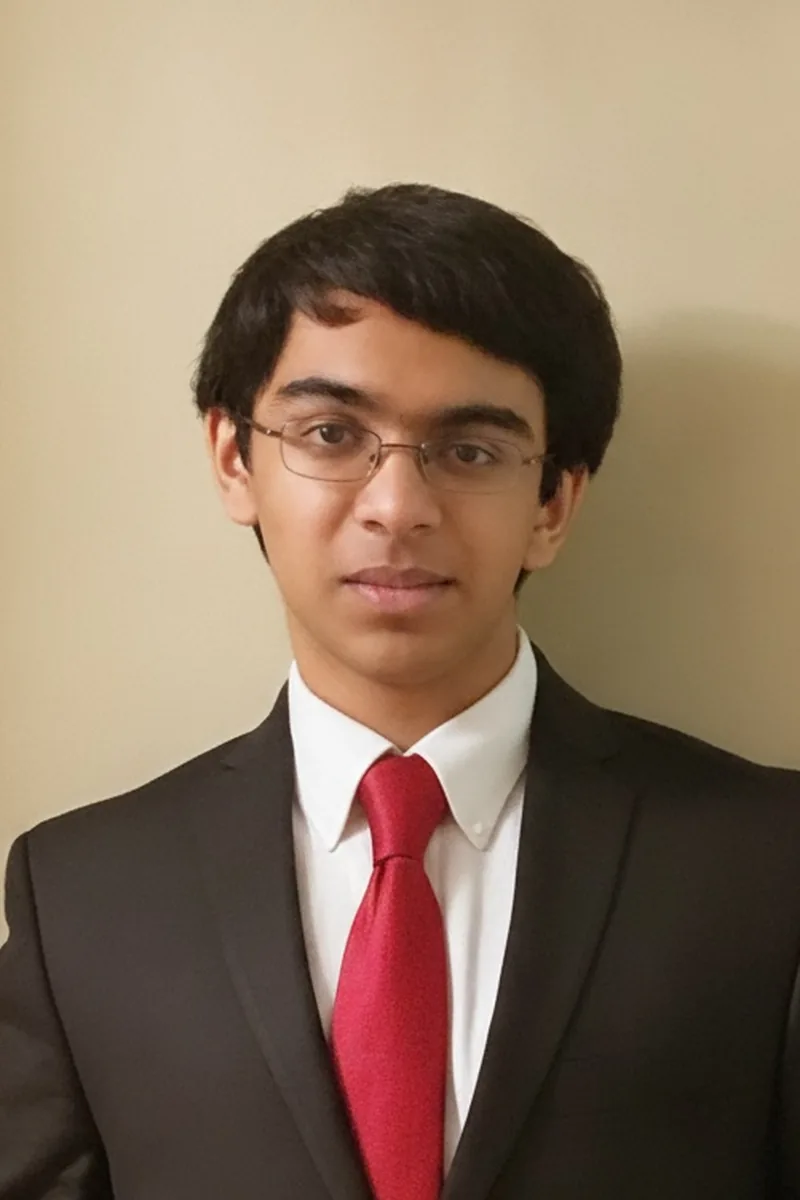
Biophysics at Rice means Aadith solves mechanics problems where the calculus isn't optional — modeling forces on protein structures, analyzing torque in molecular motors, applying Newton's laws to systems most students never picture in a physics classroom. That cross-disciplinary lens gives him a knack for teaching students how to read a physical scenario and decide whether to reach for an energy integral or a force-based differential equation. His 1590 SAT underscores the mathematical precision he brings to every free-response setup.
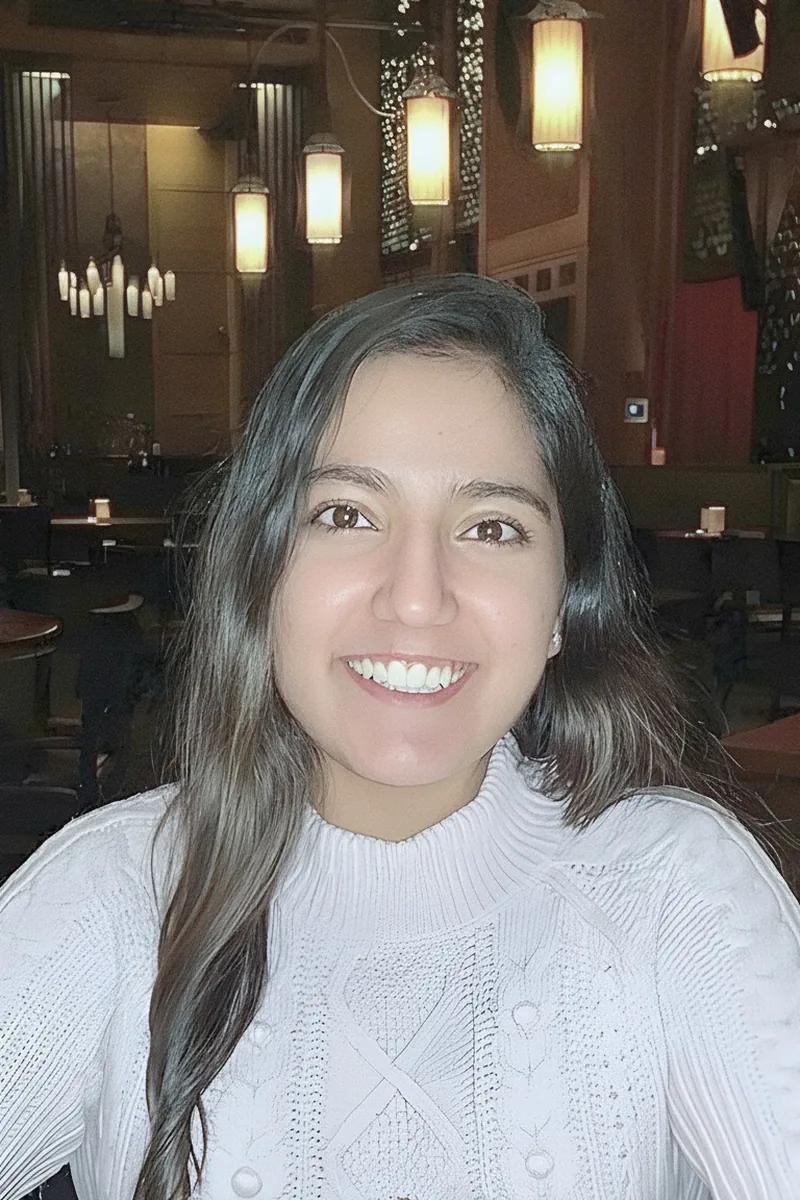
Biology majors at Cornell don't usually seek out calculus-based physics — but Drishti's 1500 SAT and her comfort across both AP Calculus BC and AP Physics C suggest she genuinely clicks with the quantitative side of science, not just the biological. She's especially useful for students who need someone to slow down on the free-body-diagram-to-integral pipeline, translating the physical setup into the calculus without assuming steps are obvious. Rated 5.0 by students.
Having scored a 1580 SAT and studied computer science, Rishik brings a programmer's discipline to AP Physics C: Mechanics — treating each problem like an algorithm where you define your variables (forces, constraints, coordinate system) before executing the calculus. He also tutors both AP Physics C exams alongside AP Calculus BC, so he's comfortable moving between the electricity side and the mechanics side while keeping the underlying math sharp. Rated 4.6 by students.
John scored a 36 on the ACT and tutors the full calculus-to-physics pipeline — AP Calculus AB, AP Physics 1, and AP Physics C: Mechanics — so he sees exactly where students' math skills break down under the pressure of a mechanics problem. He teaches students to recognize which physical scenarios call for integration versus differentiation before they even write an equation, turning the free-response section into a series of deliberate decisions rather than panicked formula hunts. Rated 4.9 by students.
Jonathan earned his PhD in physics, which means the calculus-based mechanics in AP Physics C — from deriving equations of motion for coupled oscillators to setting up torque integrals for non-uniform rigid bodies — is territory he's navigated at a research level. His teaching fellowship during graduate school had him running students through exactly these problems, building intuition for when to apply Newton's second law in differential form versus jumping straight to energy methods. Rated 5.0 by students.
I'm pursuing a double major in Mathematics and English at Vanderbilt University. I have been tutoring math since High School and have native proficiency in Mandarin Chinese. I am dedicated to helping students explore the study methods that will fit their individual needs.
Kimanthi's biomedical engineering degree from Duke required the same calculus-heavy mechanics — torque on prosthetic joints, force integrals through fluid systems, energy methods applied to biomechanical models — that AP Physics C tests in a more abstract form. That background means she can ground rotational dynamics and work-energy problems in tangible physical scenarios, giving students an intuitive hook before the math gets dense. Rated 5.0 by students.
Engineering coursework at Notre Dame means Alexandra is solving calculus-based mechanics problems every week — free-body diagrams with variable forces, work-energy integrals, the full Newton's second law treatment that AP Physics C demands. Her 1530 SAT and 32 ACT point to the quantitative comfort that lets her explain the reasoning behind each setup rather than just walking through formulas. Rated 5.0 by students.
Studying Mechanical & Aerospace Engineering at Princeton, Nicolas solves calculus-based mechanics problems daily that go well beyond what the AP exam asks — rigid body dynamics, energy methods for complex systems, and the vector calculus behind rotational motion. That depth lets him quickly pinpoint whether a student's mistake lives in the physics reasoning or the integral setup, and fix the actual gap. Rated 5.0 by students.
Studying mathematics and physics at Harvard, Matthew is building the calculus and mechanics toolkit simultaneously — which means he sees the connection between a differential equation and a physical system as one idea, not two separate steps. His 34 ACT and deep comfort with multivariable calculus let him dig into the trickier AP Physics C territory, like work done by position-dependent forces or setting up moment-of-inertia integrals for composite objects, with real mathematical fluency. Rated 4.9 by students.
Decades of chemical engineering work gave Steven a particular fluency with the calculus-based mechanics that AP Physics C demands — he's applied Newton's laws, energy methods, and differential equations to real industrial systems, not just textbook scenarios. He explains each concept multiple ways, layering physical intuition with worked examples until the connection between the physics and the integral clicks. Rated 4.9 by students.
Simulating cosmic ray acceleration through turbulent plasmas requires exactly the kind of calculus-based mechanics reasoning that AP Physics C tests — Newton's laws applied to complex systems, rotational dynamics, and energy methods. Dennis walks students through the hardest problems on the exam by teaching them to set up the physics first and let the calculus follow naturally. Rated 4.7 by students.
Testimonials
Because the right AP Physics C: Mechanics tutor makes all the difference.
Average Session Rating – Based on 3.4M Learner Ratings
Practice AP Physics C: Mechanics
Free practice tests, flashcards, and AI tutoring for AP Physics C: Mechanics
Nearby AP Physics C: Mechanics Tutors
Other San Francisco Tutors
Related Science Tutors in San Francisco
Frequently Asked Questions
AP Physics C: Mechanics covers kinematics, Newton's laws, work and energy, momentum, circular motion, oscillations, and gravitation. The course emphasizes calculus-based problem solving, which distinguishes it from AP Physics 1. Students learn to apply differential and integral calculus to physics concepts, making it essential to have strong math foundations before enrolling.
The main difficulty lies in the combination of rigorous physics concepts and calculus requirements. Many students struggle with the transition from algebra-based to calculus-based reasoning, pacing through problem sets, and understanding when to apply different problem-solving approaches. Additionally, the exam format requires quick decision-making under time pressure, which can amplify anxiety for students who haven't practiced extensively with timed problems.
Score improvement depends on your starting point and consistency with preparation. Students who work with tutors typically see gains of 1-2 score points (on the 1-5 scale) over several months, though students starting from a weaker foundation may see more dramatic improvements. The key is identifying specific weak areas—whether that's conceptual understanding, calculus application, or exam pacing—and targeting those systematically through practice and feedback.
Your first session typically focuses on assessment and goal-setting. A tutor will review your current understanding of core mechanics concepts, identify where you're strongest and where you need support, and discuss your target score and timeline. This helps create a personalized study plan that addresses your specific challenges, whether that's mastering free-body diagrams, understanding energy conservation, or improving your exam pacing strategy.
Practice tests are critical for success. They help you identify weak topics, build test-taking stamina, and become familiar with the exam format and timing constraints. Working through full practice exams under timed conditions reveals whether your struggles are conceptual or strategy-based. Most students benefit from taking at least 3-4 full practice tests before exam day, with review and targeted practice between each one.
If you're taking the course, consistent study throughout the school year is ideal. For focused exam prep in the final weeks before the May exam, most students benefit from 5-10 hours per week of active practice and review. The timeline depends on your baseline—students with strong calculus skills and prior physics experience may need less time, while those building foundational understanding should start earlier and pace more gradually.
Common mistakes include misapplying Newton's second law in circular motion problems, incorrectly setting up energy conservation equations, and rushing through free-response questions without showing complete work. Time management is another major issue—students often spend too long on difficult multiple-choice questions and don't leave enough time for free-response sections. Working with a tutor to review past exams and practice deliberate problem-solving helps you avoid these pitfalls.
Look for tutors with strong physics and calculus backgrounds, ideally with AP exam experience or physics teaching background. They should understand both the conceptual foundations and the exam-specific strategies needed to score well. When you connect with a tutor through Varsity Tutors, you can discuss their experience with AP Physics C specifically and their approach to addressing common student challenges in mechanics and calculus-based problem solving.
Let’s find your perfect tutor
Answer a few quick questions. We’ll recommend the right plan and match you with a top 5% tutor.