Award-Winning AP Physics C: Mechanics Tutors
serving Mission Viejo, CA
AP Physics C: Mechanics
Tutors in Mission Viejo
Private 1-on-1 tutoring, weekly live classes for academic support, test prep & enrichment, practice tests and diagnostics, and more to elevate grades and test scores.
Based on 3.4M Learner Ratings
UniversitiesSchools & Universities
DeliveredHours Delivered
ProficiencyGrowth in Proficiency
Who needs tutoring?
No obligation. Takes ~1 minute.
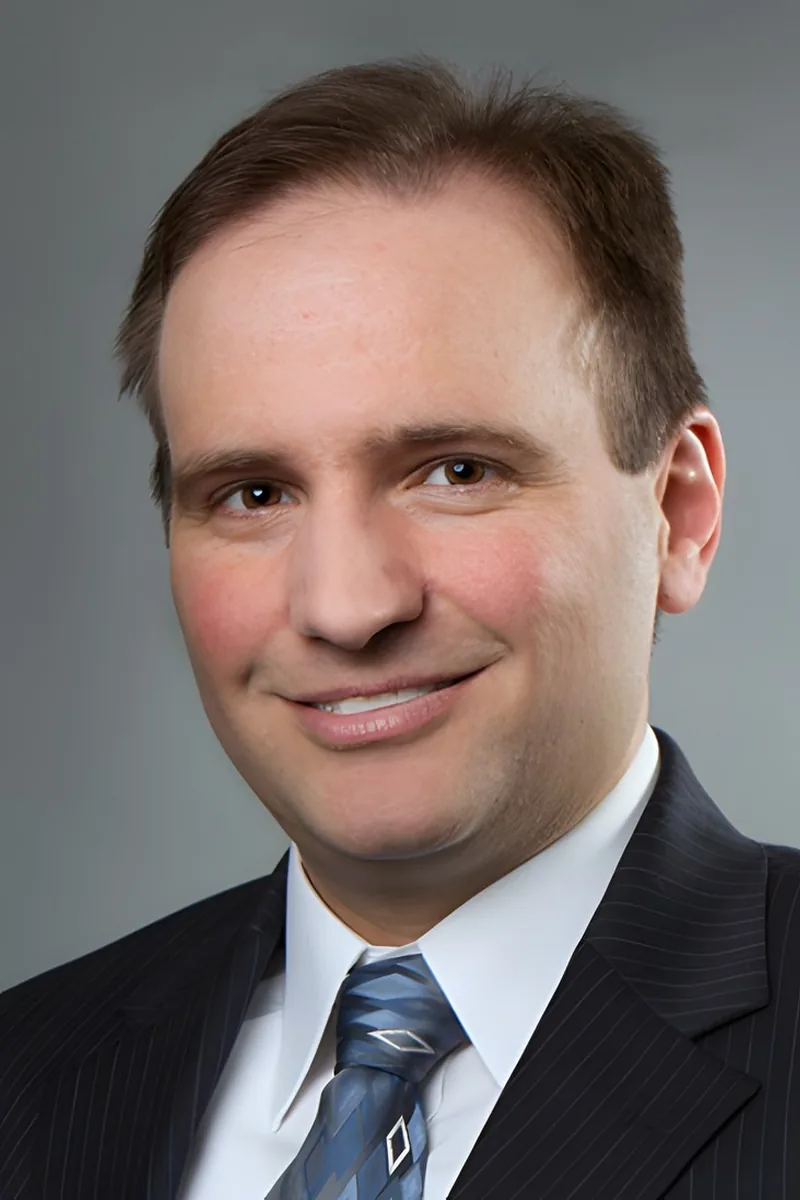
Jonathan earned his PhD in physics, which means the calculus-based mechanics in AP Physics C — from deriving equations of motion for coupled oscillators to setting up torque integrals for non-uniform rigid bodies — is territory he's navigated at a research level. His teaching fellowship during graduate school had him running students through exactly these problems, building intuition for when to apply Newton's second law in differential form versus jumping straight to energy methods. Rated 5.0 by students.
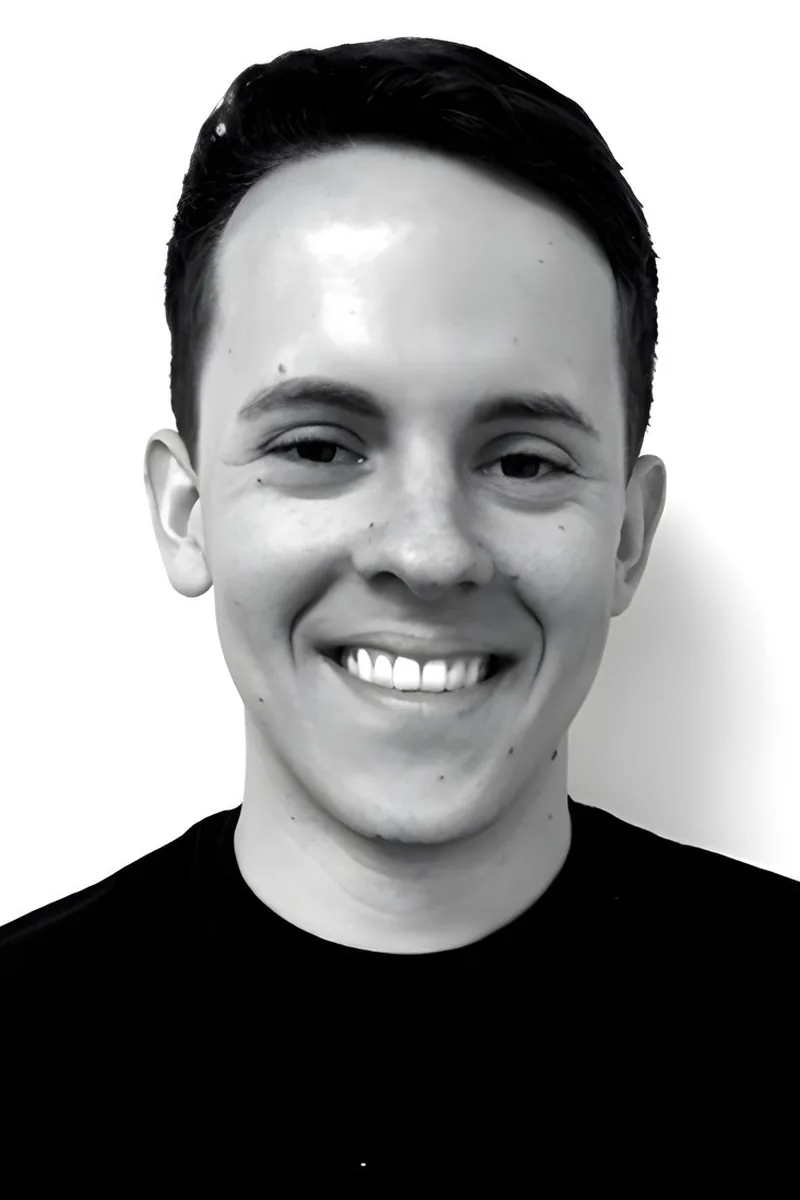
Jared's PhD work in mechanical engineering at Lehigh means he's solving advanced dynamics problems daily — the kind where AP Physics C's rotational kinematics and work-energy integrals are just the warm-up. His biomedical engineering background adds a practical dimension: he can show students how a torque problem on the exam mirrors the same mechanics behind joint loading or prosthetic design, making abstract calculus-based physics feel grounded in something real.
Emergency medicine demands snap physics intuition — understanding how forces transfer through a body, how momentum changes in a collision, how energy dissipates on impact — and Victoria built that intuition through her pre-med physics coursework before medical school at Boston University. She teaches AP Physics C: Mechanics by grounding each calculus setup in a concrete physical scenario, making sure students can articulate *why* they're integrating a force over a displacement before they ever pick up a pencil. Her math-and-physics double focus across 25 tutoring subjects means she catches the exact moment a student's confusion shifts from the mechanics to the calculus.
Free-body diagrams, rotational inertia, and conservation of energy problems all require calculus-based reasoning that trips students up when they try to rely on formulas alone. Emily completed the full pre-med physics sequence at Cornell and spent her senior year tutoring calculus — two skills that converge directly in AP Physics C: Mechanics. She breaks multi-step problems into the underlying math so students see why the setup matters as much as the answer.
Between his mechanical engineering studies at Case Western Reserve and a perfect 36 ACT, Kevin has the calculus chops and physical intuition that AP Physics C: Mechanics rewards — especially on free-response problems where a sloppy free-body diagram dooms the entire solution. He zeroes in on the skill most students underestimate: translating a physical setup into the right differential expression before any computation begins, whether it's a variable-mass system or a non-trivial torque problem.
Data analytics trains you to model systems mathematically and interpret what the numbers actually mean — skills Vishank applies directly when tackling AP Physics C: Mechanics problems that require setting up kinematic equations or integrating variable forces. His coursework in calculus through linear algebra, combined with tutoring across both math and science, means he can diagnose whether a student's struggle on a free-response problem is a physics misunderstanding or a calculus execution error. Rated 4.9 by students.
A math degree gives Dalila the calculus fluency that separates AP Physics C from the algebra-based course — she's comfortable setting up the integrals and derivatives that underpin variable-force problems, work-energy applications, and kinematics beyond constant acceleration. She also tutors AP Physics 1, AP Physics 2, and both SAT Math Subject Tests, so she understands how to scale her explanations depending on whether a student needs help with the underlying physics concepts or specifically with translating a free-body diagram into a solvable differential equation.
Sanjana's applied math studies at Harvard and her role as a Course Assistant for introductory calculus mean she's fluent in the exact differential and integral techniques that AP Physics C: Mechanics layers onto every force, torque, and energy problem. She's especially effective at bridging the gap when students grasp the physics intuitively but struggle to translate a scenario — say, a block on a spring with friction — into the correct differential equation and solve it cleanly. Rated 5.0 by students.
Biomedical engineering at Rice means Aurnab regularly applies calculus-based mechanics to biological systems — modeling forces on skeletal structures, analyzing motion in prosthetic designs — so the kinematics and Newton's laws on the AP Physics C exam map directly onto problems he's already solving in his coursework. His 36 ACT and 1590 SAT point to the mathematical precision that matters most when students need to cleanly set up a work-energy integral or differentiate a position function under exam time pressure. Rated 4.9 by students.
Holding dual degrees in mathematics and physics, Maxwell brings the rare ability to see both sides of every AP Physics C: Mechanics problem simultaneously — the physical intuition and the calculus machinery. Where many students stumble is in translating a free-body diagram into the correct line integral or second-order differential equation; Maxwell treats that translation step as the core skill to master, not an afterthought. Rated 5.0 by students, with a 1520 SAT backing up the quantitative chops.
Having scored a 1580 SAT and studied computer science, Rishik brings a programmer's discipline to AP Physics C: Mechanics — treating each problem like an algorithm where you define your variables (forces, constraints, coordinate system) before executing the calculus. He also tutors both AP Physics C exams alongside AP Calculus BC, so he's comfortable moving between the electricity side and the mechanics side while keeping the underlying math sharp. Rated 4.6 by students.
Bettina didn't just study mechanics in a textbook — she earned a PhD in mechanical engineering, meaning she's derived equations of motion for real systems where assumptions about friction, constraints, and rigid-body approximations actually matter. That depth shows up when she teaches AP Physics C: Mechanics topics like rotational dynamics and gravitational potential energy, because she can explain not just how to set up the integral but why that particular model fits the physical situation.
Testimonials
Because the right AP Physics C: Mechanics tutor makes all the difference.
Average Session Rating – Based on 3.4M Learner Ratings
Practice AP Physics C: Mechanics
Free practice tests, flashcards, and AI tutoring for AP Physics C: Mechanics
Nearby AP Physics C: Mechanics Tutors
Other Mission Viejo Tutors
Related Science Tutors in Mission Viejo
Frequently Asked Questions
AP Physics C: Mechanics covers kinematics, dynamics, energy and momentum, circular motion, oscillations, and gravitation. The course emphasizes calculus-based problem-solving and conceptual understanding of how objects move and interact through forces. For students in Mission Viejo preparing for the AP exam, mastering these foundational topics is essential since the exam tests both conceptual reasoning and mathematical application across all these units.
AP Physics C: Mechanics requires strong calculus skills alongside physics reasoning—you're not just memorizing formulas, but deriving and applying them in novel situations. Many students struggle with translating word problems into mathematical models, managing multi-step problem-solving under time pressure, and connecting abstract concepts like work and energy to real-world scenarios. Personalized tutoring helps identify where your understanding breaks down and builds confidence in tackling complex problems systematically.
Score improvement depends on your starting point and consistency, but students typically see meaningful gains—often 1-2 points on the 1-5 AP scale—when they work with a tutor to target weak areas, practice problem-solving strategies, and take full-length practice exams regularly. The key is identifying whether you're struggling with conceptual understanding, mathematical execution, or exam pacing, then addressing those specific gaps. Most students benefit from starting tutoring 3-4 months before the May exam to allow time for skill-building and practice.
Your first session focuses on assessment and goal-setting. The tutor will review your current understanding of key AP Physics C: Mechanics concepts, identify which units or problem types challenge you most, and learn about your exam timeline and target score. From there, you'll develop a personalized study plan that prioritizes your weak areas while reinforcing strengths. This diagnostic approach ensures every session is tailored to your needs rather than following a generic curriculum.
Practice tests are critical—they reveal not just what you don't know, but how you perform under timed conditions, where you lose points to careless errors, and how well you manage the 90-minute exam window. Taking full-length practice tests every 2-3 weeks and reviewing them with a tutor helps you refine pacing, identify recurring mistakes, and build test-day confidence. Varsity Tutors connects you with tutors who use official AP practice materials and teach strategic approaches to different question types.
Common pitfalls include misapplying kinematic equations to non-constant acceleration scenarios, confusing work and energy, making sign errors in force and momentum problems, and rushing through multi-part questions without showing clear reasoning. Students also often struggle with free-response questions that require setting up differential equations or justifying answers conceptually. A tutor can help you develop a systematic approach to each problem type, catch these patterns in your practice work, and build the habits that prevent them on test day.
Ideally, you should begin focused exam preparation 3-4 months before the May AP exam, though this depends on your current comfort level with the material. If you're struggling with foundational concepts, starting earlier (even in the fall) gives you time to build understanding before intensive practice begins. For students in Mission Viejo, connecting with a tutor early in the school year allows you to reinforce classroom learning and identify gaps before they compound, making spring review much more efficient.
Look for tutors with strong physics and calculus backgrounds, ideally with experience teaching or tutoring AP Physics C specifically. They should understand the College Board's exam format, have access to official practice materials, and be able to explain concepts in multiple ways since physics reasoning is deeply individual. Varsity Tutors connects you with expert tutors who have proven success helping students master mechanics and prepare for the AP exam with confidence.
Let’s find your perfect tutor
Answer a few quick questions. We’ll recommend the right plan and match you with a top 5% tutor.