Award-Winning AP Physics C: Mechanics Tutors
serving Fresno, CA
AP Physics C: Mechanics
Tutors in Fresno
Private 1-on-1 tutoring, weekly live classes for academic support, test prep & enrichment, practice tests and diagnostics, and more to elevate grades and test scores.
Based on 3.4M Learner Ratings
UniversitiesSchools & Universities
DeliveredHours Delivered
ProficiencyGrowth in Proficiency
Who needs tutoring?
No obligation. Takes ~1 minute.
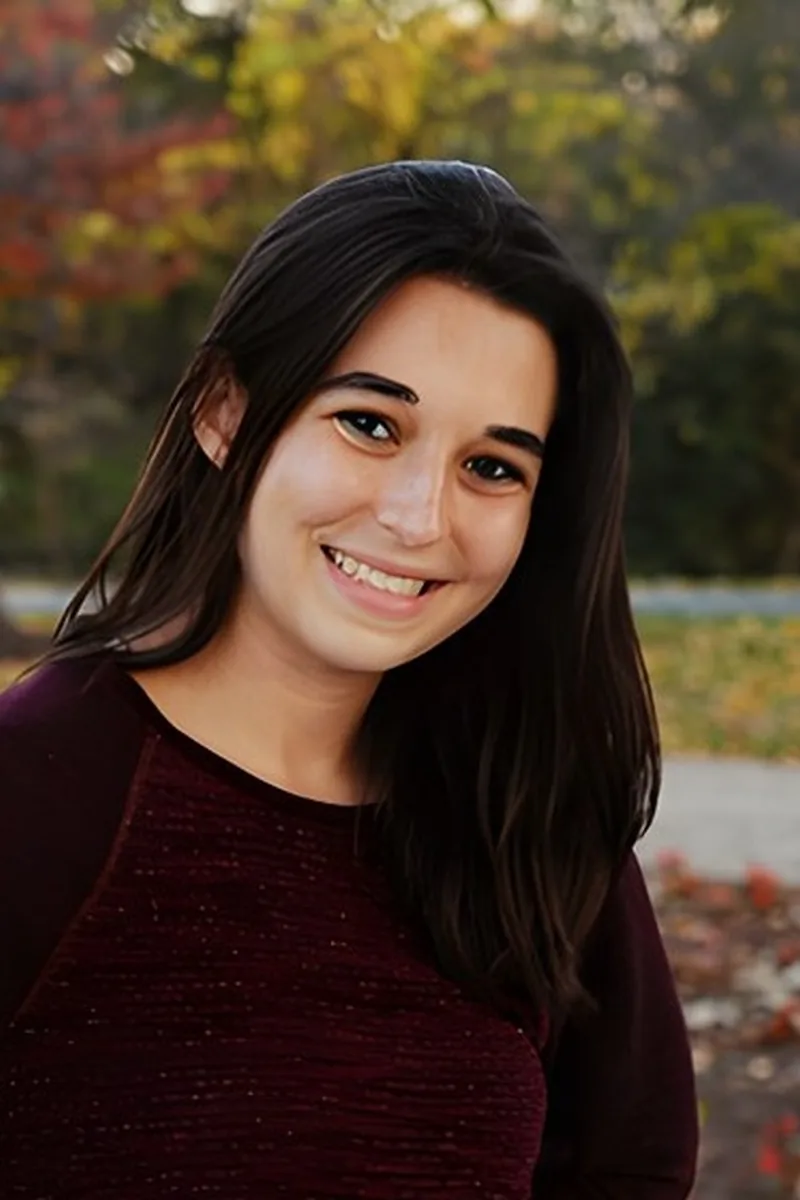
Engineering coursework at Notre Dame means Alexandra is solving calculus-based mechanics problems every week — free-body diagrams with variable forces, work-energy integrals, the full Newton's second law treatment that AP Physics C demands. Her 1530 SAT and 32 ACT point to the quantitative comfort that lets her explain the reasoning behind each setup rather than just walking through formulas. Rated 5.0 by students.
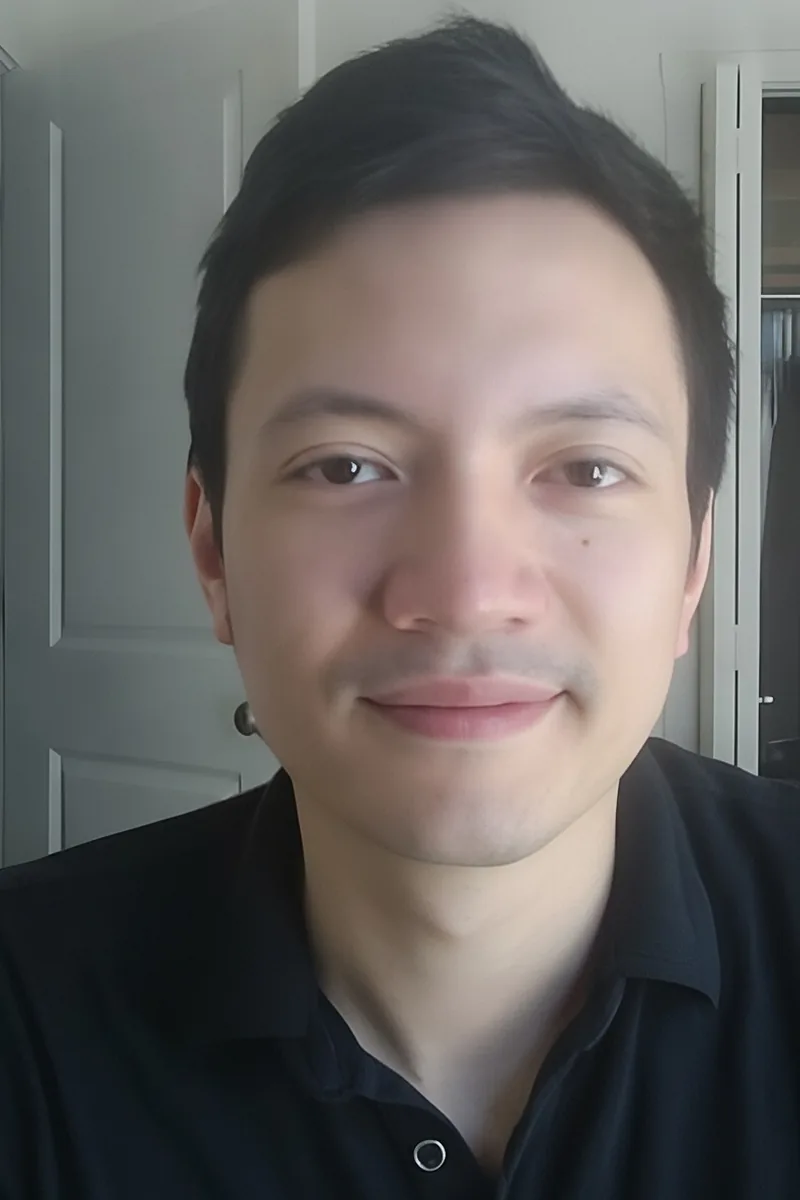
Mechanics is where Cory is most at home. He treats AP Physics C: Mechanics as a student's first real encounter with calculus-based reasoning about the physical world — deriving kinematic equations from integrals, connecting Newton's laws to differential equations in rotational dynamics, and building intuition for conservation laws that goes beyond plugging into formulas. His physics degree means the vector calculus never gets hand-waved away.
Between his mechanical engineering studies at Case Western Reserve and a perfect 36 ACT, Kevin has the calculus chops and physical intuition that AP Physics C: Mechanics rewards — especially on free-response problems where a sloppy free-body diagram dooms the entire solution. He zeroes in on the skill most students underestimate: translating a physical setup into the right differential expression before any computation begins, whether it's a variable-mass system or a non-trivial torque problem.
I am a graduate of Cornell University's College of Arts and Sciences. I received my Bachelor of Arts in Chemistry with Distinction in 2015. Since graduation, I was a physics/chemistry teacher and soccer coach at a private school in Virginia for a year, where I led the soccer team to an undefeated season. Before teaching and coaching professionally, I was a Teaching Assistant for the Cornell Math and Physics Departments, where I taught many subjects including calculus, mechanics, electromagnetism. Throughout my time at Cornell and as a teacher, I tutored subjects ranging from the SAT to AP Physics and Algebra II, which is where my true talents lie: in small group or one-on-one settings where I can give students the full attention they deserve and tailor my approach specifically to their learning styles. This is why I am now pursuing tutoring as a part-time occupation at Varsity Tutors. I embrace teaching all math and science subjects, especially physics and calculus, at both the college and high school level and will go above and beyond to make sure all of my students succeed, according to their definition of success. In my spare time, I enjoy playing league soccer, basketball, tennis and guitar, and also like to travel and see as much of the world as I can.
Biophysics at Rice means Aadith solves mechanics problems where the calculus isn't optional — modeling forces on protein structures, analyzing torque in molecular motors, applying Newton's laws to systems most students never picture in a physics classroom. That cross-disciplinary lens gives him a knack for teaching students how to read a physical scenario and decide whether to reach for an energy integral or a force-based differential equation. His 1590 SAT underscores the mathematical precision he brings to every free-response setup.
Vaughn's physics degree and 1590 SAT mean the calculus-based problem-solving AP Physics C: Mechanics demands — setting up Newton's second law as a differential equation, computing work done by variable forces — is squarely in his wheelhouse. He zeroes in on dimensional analysis and unit tracking as a way to catch errors before they cascade through multi-step free-response problems, a habit that pays off especially in rotational dynamics where signs and reference frames get tricky.
Cornell pre-med students rarely double down on calculus-based physics, but Pratik tutors AP Physics C: Mechanics alongside AP Chemistry and AP Biology — giving him a cross-disciplinary lens that's especially useful when mechanics problems involve biological or chemical systems in free-response scenarios. His 35 ACT confirms the quantitative fluency needed to walk students through setting up torque equations or integrating variable forces without losing sight of the underlying physics.
Four years of teaching undergraduate physics labs at the University of Michigan — especially circuits, electromagnetism, and wave mechanics — gave Michael a sharp eye for where students' calculus intuition breaks down inside a physics problem. For AP Physics C: Mechanics, he zeroes in on that breakdown point: translating a physical setup (a block on a spring, a rotating disk with non-uniform mass) into the correct integral or differential equation. His PhD-level fluency means he can explain not just which formula applies, but why the math takes that particular form.
Decades of chemical engineering work gave Steven a particular fluency with the calculus-based mechanics that AP Physics C demands — he's applied Newton's laws, energy methods, and differential equations to real industrial systems, not just textbook scenarios. He explains each concept multiple ways, layering physical intuition with worked examples until the connection between the physics and the integral clicks. Rated 4.9 by students.
Rice's physics program throws Will into calculus-based mechanics every day — working through Lagrangian setups, variable-force integrations, and the rotational dynamics problems that make AP Physics C's free-response section so demanding. His approach starts with the underlying physical principle, then builds the math around it piece by piece, so students internalize the reasoning instead of pattern-matching to memorized solutions.
Emergency medicine demands snap physics intuition — understanding how forces transfer through a body, how momentum changes in a collision, how energy dissipates on impact — and Victoria built that intuition through her pre-med physics coursework before medical school at Boston University. She teaches AP Physics C: Mechanics by grounding each calculus setup in a concrete physical scenario, making sure students can articulate *why* they're integrating a force over a displacement before they ever pick up a pencil. Her math-and-physics double focus across 25 tutoring subjects means she catches the exact moment a student's confusion shifts from the mechanics to the calculus.
Biomedical engineering throws you into calculus-based mechanics from day one — Spencer's coursework has him modeling forces on biological systems using the same Newtonian framework and integral setups that AP Physics C tests on free-response problems. His 35 ACT and parallel teaching across both AP Calculus BC and AP Physics C mean he can diagnose whether a student's stuck on the physics concept or the calculus execution, and address the right one.
Testimonials
Because the right AP Physics C: Mechanics tutor makes all the difference.
Average Session Rating – Based on 3.4M Learner Ratings
Practice AP Physics C: Mechanics
Free practice tests, flashcards, and AI tutoring for AP Physics C: Mechanics
Nearby AP Physics C: Mechanics Tutors
Other Fresno Tutors
Related Science Tutors in Fresno
Frequently Asked Questions
AP Physics C: Mechanics requires strong calculus skills alongside physics conceptual understanding—many students struggle with the mathematical rigor rather than the physics itself. The course demands comfort with derivatives and integrals to solve motion, forces, and energy problems, plus the ability to apply these tools to unfamiliar scenarios under timed conditions. Common pain points include translating word problems into equations, managing multi-step problem solving, and distinguishing between when to use different approaches (force-based vs. energy-based methods).
Score improvement depends on your starting point and consistency, but students who work with tutors typically see meaningful gains by exam day—often moving from a 2 or 3 to a 4 or 5 with focused preparation. The key is identifying your specific weak areas early (whether that's rotational motion, energy conservation, or problem-solving strategy) and building targeted practice around them. With 3-4 months of regular tutoring and practice, most students can close conceptual gaps and develop the timing strategies needed for the 90-minute exam.
Your first session focuses on assessment and goal-setting. A tutor will review your current understanding of key AP Physics C: Mechanics topics, identify which areas need the most work (kinematics, forces, energy, momentum, rotation, etc.), and understand your timeline and target score. From there, you'll develop a personalized study plan that prioritizes your weakest concepts while building problem-solving speed and confidence with the exam format.
Practice tests are essential—they reveal which concepts you've mastered and which ones still need work, plus they help you develop pacing strategy for the 90-minute exam. Taking full-length practice tests under timed conditions 4-6 weeks before the exam is ideal, so you have time to address weak areas before test day. Many students discover they understand the physics but rush through calculations or misread questions; practice tests expose these patterns before they cost you points on the real exam.
Yes—AP Physics C: Mechanics is calculus-based, and you'll need to confidently take derivatives and integrals to solve problems involving acceleration, velocity, work, and rotational motion. If your calculus foundation is shaky, addressing that early is critical; many tutors recommend reviewing derivative and integral rules before diving into physics applications. The good news is that physics tutors can help you see how calculus tools actually work in context, which often makes the math feel more intuitive than in a pure calculus class.
Look for tutors with strong physics backgrounds—ideally those who've taught or tutored AP Physics C specifically and understand the exam's format and time constraints. They should be able to explain concepts clearly, help you develop problem-solving strategies (not just give you answers), and adapt their teaching to your learning style. Varsity Tutors connects you with expert tutors in Fresno who have proven success helping students master both the conceptual and mathematical sides of mechanics.
Most students benefit from starting tutoring 3-4 months before the exam, allowing time to work through all major topics (kinematics, forces, work/energy, momentum, rotation, oscillations, and gravitation) and build problem-solving fluency. If you're starting closer to exam day, intensive weekly sessions focused on your weakest areas can still make a real difference. Consistency matters more than total hours—regular weekly tutoring beats cramming in the final weeks.
Building confidence through repeated practice with timed problems is the best anxiety-reducer—when you've solved similar problems dozens of times, the exam feels less intimidating. Tutors can also teach you pacing strategies (like which problems to tackle first, when to skip and return to a problem, and how to check your work efficiently) that reduce the feeling of being rushed. Going into the exam knowing you're prepared and have a solid strategy makes a huge difference in managing stress and thinking clearly under pressure.
Let’s find your perfect tutor
Answer a few quick questions. We’ll recommend the right plan and match you with a top 5% tutor.