Award-Winning AP Physics C: Mechanics Tutors
serving Concord, CA
AP Physics C: Mechanics
Tutors in Concord
Private 1-on-1 tutoring, weekly live classes for academic support, test prep & enrichment, practice tests and diagnostics, and more to elevate grades and test scores.
Based on 3.4M Learner Ratings
UniversitiesSchools & Universities
DeliveredHours Delivered
ProficiencyGrowth in Proficiency
Who needs tutoring?
No obligation. Takes ~1 minute.
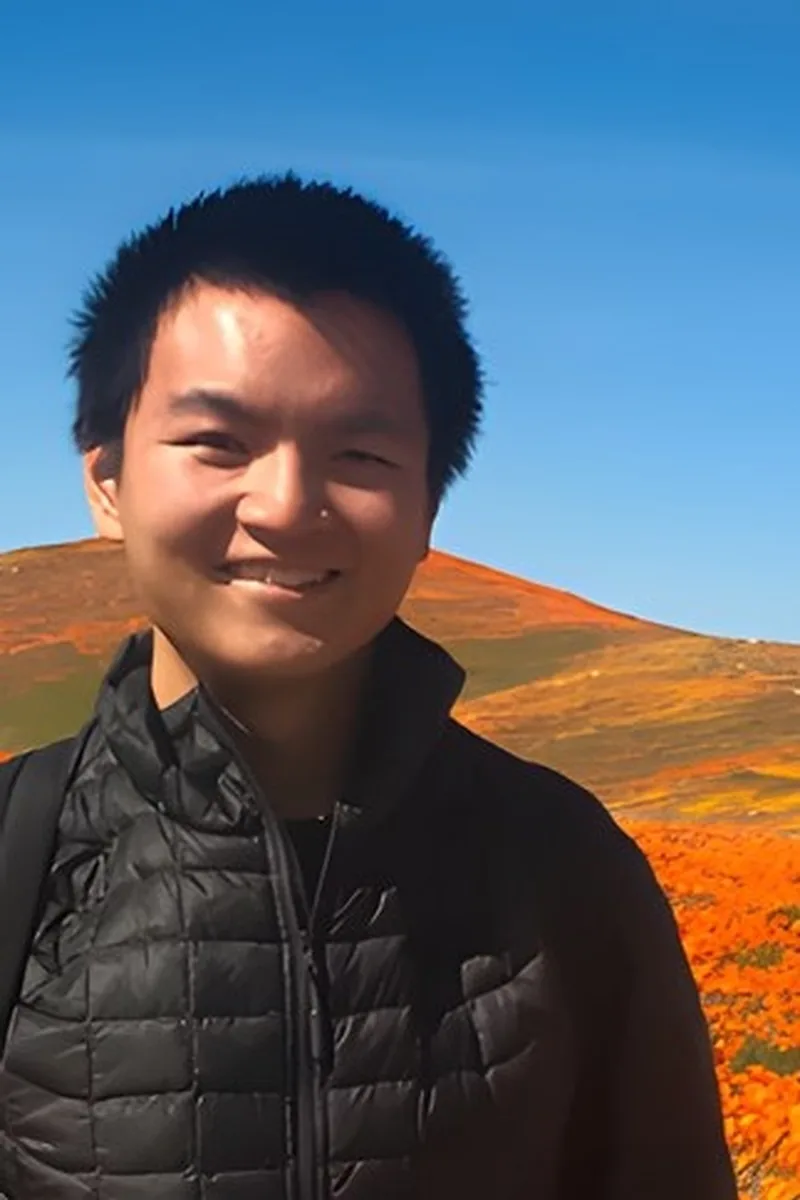
UCLA's engineering curriculum has David solving the same calculus-based mechanics — work-energy integrals, variable-force problems, rotational inertia derivations — that the AP Physics C exam tests, and his computer science training adds a systematic, algorithmic approach to setting up multi-step free-response problems. He's especially sharp at teaching students to diagram a physical system, identify which conservation law applies, and then write the correct integral or derivative before calculating anything. Rated 4.8 by students.
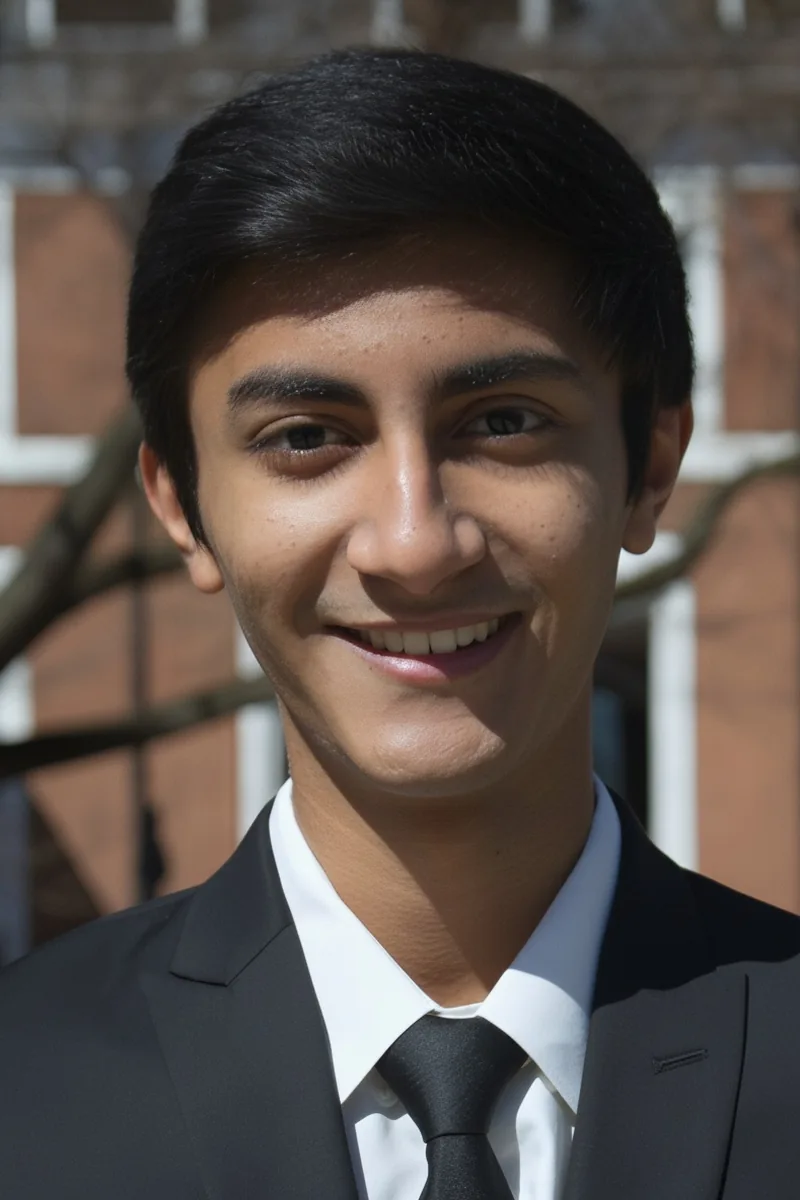
Bidyut's biomedical engineering coursework at Johns Hopkins fuses calculus-based mechanics with real physical systems — analyzing forces on prosthetic joints, modeling fluid dynamics in arteries — so the Newtonian mechanics and rotational problems on the AP Physics C exam feel like simplified versions of what he already does daily. He scored a 36 ACT and holds a 5.0 tutoring rating, and he's particularly sharp at showing students how to translate a word problem into the correct integral or differential equation before touching any numbers.
A math degree gives Dalila the calculus fluency that separates AP Physics C from the algebra-based course — she's comfortable setting up the integrals and derivatives that underpin variable-force problems, work-energy applications, and kinematics beyond constant acceleration. She also tutors AP Physics 1, AP Physics 2, and both SAT Math Subject Tests, so she understands how to scale her explanations depending on whether a student needs help with the underlying physics concepts or specifically with translating a free-body diagram into a solvable differential equation.
Double-majoring in physics and computer science at Stony Brook, Kiran lives in the calculus-based mechanics world daily — setting up work-energy integrals, deriving equations of motion, solving the same kinds of problems AP Physics C puts on the free-response section. His 34 ACT and physics coursework give him both the mathematical fluency and the physical intuition to explain why a particular integral applies to a given force scenario, not just how to evaluate it.
Scoring a 5 on both AP Physics C: Mechanics and AP Calculus BC while taking 16 AP courses total, Derek built the habit of connecting calculus tools to physical intuition under real exam pressure — and he brings that same efficiency to tutoring. His computer science major at Harvard sharpens his approach to mechanics problems: decompose the system, identify constraints, then execute the math cleanly, much like debugging code. Rated 4.9 by students, he's particularly effective at teaching the structured problem-solving that turns rotational dynamics and variable-force scenarios into manageable steps.
An applied physics degree means Karen didn't just study mechanics for an exam — she built her entire undergraduate education around the Newtonian framework, calculus-based problem-solving, and laboratory work that AP Physics C condenses into a single course. She's especially sharp at connecting real-world scenarios (a spinning figure skater, a car banking a curve) to the free-body diagrams and integrals students need to produce under timed conditions. Rated 5.0 by students.
Simulating cosmic ray acceleration through turbulent plasmas requires exactly the kind of calculus-based mechanics reasoning that AP Physics C tests — Newton's laws applied to complex systems, rotational dynamics, and energy methods. Dennis walks students through the hardest problems on the exam by teaching them to set up the physics first and let the calculus follow naturally. Rated 4.7 by students.
Biology majors at Cornell don't usually seek out calculus-based physics — but Drishti's 1500 SAT and her comfort across both AP Calculus BC and AP Physics C suggest she genuinely clicks with the quantitative side of science, not just the biological. She's especially useful for students who need someone to slow down on the free-body-diagram-to-integral pipeline, translating the physical setup into the calculus without assuming steps are obvious. Rated 5.0 by students.
Rice's mechanical engineering program puts Ashton through calculus-based statics, dynamics, and kinematics every semester — the same core mechanics that AP Physics C tests, just applied to real structural and machine systems. That daily exposure means he can spot whether a student's free-response mistake is a physics misread or a calculus execution error, and address the right one. His 32 ACT underscores the quantitative fluency backing his approach.
Jared's PhD work in mechanical engineering at Lehigh means he's solving advanced dynamics problems daily — the kind where AP Physics C's rotational kinematics and work-energy integrals are just the warm-up. His biomedical engineering background adds a practical dimension: he can show students how a torque problem on the exam mirrors the same mechanics behind joint loading or prosthetic design, making abstract calculus-based physics feel grounded in something real.
Chemical-biological engineering at the undergraduate level means Kristen solved mechanics problems with real calculus stakes — variable-force work integrals, rotational inertia derivations, coupled differential equations — long before they became exam questions. Her 36 ACT and 1590 SAT speak to the quantitative sharpness she brings to the trickiest AP Physics C problems, especially when students need to bridge the gap between setting up Newton's second law in differential form and actually executing the integration. Rated 4.9 by students.
I'm pursuing a double major in Mathematics and English at Vanderbilt University. I have been tutoring math since High School and have native proficiency in Mandarin Chinese. I am dedicated to helping students explore the study methods that will fit their individual needs.
Testimonials
Because the right AP Physics C: Mechanics tutor makes all the difference.
Average Session Rating – Based on 3.4M Learner Ratings
Practice AP Physics C: Mechanics
Free practice tests, flashcards, and AI tutoring for AP Physics C: Mechanics
Nearby AP Physics C: Mechanics Tutors
Other Concord Tutors
Related Science Tutors in Concord
Frequently Asked Questions
AP Physics C: Mechanics focuses on classical mechanics and includes kinematics, Newton's laws, work and energy, momentum, circular motion, oscillations, and gravitation. The course emphasizes calculus-based problem solving, requiring students to understand derivatives and integrals as they apply to physics concepts. This rigorous curriculum prepares students for the AP exam and college-level physics coursework.
AP Physics C: Mechanics demands strong mathematical skills alongside conceptual understanding—students must not only grasp physics principles but also apply calculus to solve complex problems. Many students struggle with the transition from algebra-based physics to calculus-based reasoning, and the fast pace of the course leaves little time to catch up if concepts aren't mastered early. Time management during the exam is another common challenge, as students must work through multi-step problems efficiently.
Personalized 1-on-1 instruction allows tutors to identify your specific weak areas—whether that's understanding free-body diagrams, mastering energy conservation, or applying calculus to kinematics problems—and tailor lessons accordingly. Tutors can help you develop problem-solving strategies, work through practice exam questions under timed conditions, and build confidence in areas where you feel stuck. Regular practice with feedback accelerates learning far more effectively than studying alone.
Score improvement depends on your starting point, consistency with tutoring, and effort outside sessions. Students who work with tutors typically see meaningful gains by focusing on their weakest topics and practicing regularly with guidance. Most students benefit from starting tutoring several months before the exam to allow time for deep understanding rather than last-minute cramming. Your tutor can help you set realistic goals based on your current performance and timeline.
Your first session is an assessment and planning meeting. Tutors will review your current understanding of AP Physics C: Mechanics concepts, discuss your goals (target AP score, areas of struggle), and learn your learning style. Together, you'll create a personalized study plan that addresses your priorities, whether that's mastering foundational concepts, improving problem-solving speed, or building exam confidence. This foundation ensures every session after is focused and productive.
Practice tests are essential for AP Physics C: Mechanics because they reveal which topics need more work, help you develop pacing strategies, and reduce test anxiety by familiarizing you with the exam format and question types. Taking full-length practice exams under timed conditions mimics the real test experience and helps you identify whether you struggle with conceptual questions, calculations, or time management. Your tutor can review your practice test results to pinpoint patterns in your mistakes and adjust your study plan accordingly.
Varsity Tutors connects you with experienced tutors who specialize in AP Physics C: Mechanics and understand the specific challenges of the course. When you get matched with a tutor, you can review their qualifications, experience with AP Physics, and student reviews to ensure they're a good fit for your learning style. The matching process considers your goals, schedule, and preferred approach so you can start working with someone who's set up to help you succeed.
Most students benefit from 1-2 tutoring sessions per week starting 3-4 months before the AP exam, combined with independent practice between sessions. The exact frequency depends on your current level, how much time you can commit to studying on your own, and how quickly you're progressing. Your tutor can recommend a schedule that balances intensive review of difficult topics with practice problems and full-length exams as test day approaches.
Let’s find your perfect tutor
Answer a few quick questions. We’ll recommend the right plan and match you with a top 5% tutor.