Award-Winning AP Physics C: Mechanics Tutors
serving Los Angeles, CA
AP Physics C: Mechanics
Tutors in Los Angeles
Private 1-on-1 tutoring, weekly live classes for academic support, test prep & enrichment, practice tests and diagnostics, and more to elevate grades and test scores.
Based on 3.4M Learner Ratings
UniversitiesSchools & Universities
DeliveredHours Delivered
ProficiencyGrowth in Proficiency
Who needs tutoring?
No obligation. Takes ~1 minute.
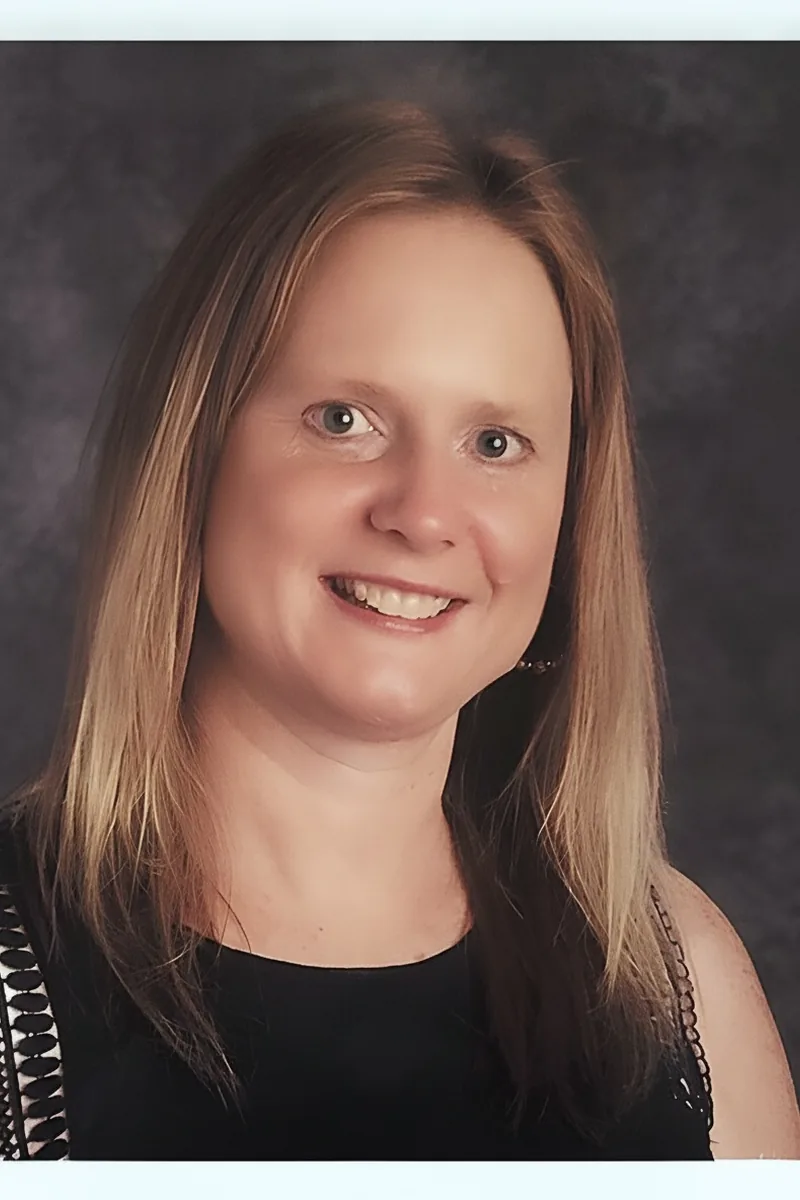
An applied physics degree means Karen didn't just study mechanics for an exam — she built her entire undergraduate education around the Newtonian framework, calculus-based problem-solving, and laboratory work that AP Physics C condenses into a single course. She's especially sharp at connecting real-world scenarios (a spinning figure skater, a car banking a curve) to the free-body diagrams and integrals students need to produce under timed conditions. Rated 5.0 by students.

Free-body diagrams, rotational inertia, and conservation of energy problems all require calculus-based reasoning that trips students up when they try to rely on formulas alone. Emily completed the full pre-med physics sequence at Cornell and spent her senior year tutoring calculus — two skills that converge directly in AP Physics C: Mechanics. She breaks multi-step problems into the underlying math so students see why the setup matters as much as the answer.
I'm pursuing a double major in Mathematics and English at Vanderbilt University. I have been tutoring math since High School and have native proficiency in Mandarin Chinese. I am dedicated to helping students explore the study methods that will fit their individual needs.
Steven's biology degree from Drexel included the calculus-based physics sequence that maps directly onto AP Physics C: Mechanics — kinematics, Newton's laws in differential form, and energy conservation problems that demand clean integral setups. Where many science-track tutors skim the mechanics, his organismal physiology concentration meant applying force and motion concepts to biological systems, giving him a concrete way to explain why a free-body diagram matters before any calculus happens. Rated 5.0 by students.
Jonathan earned his PhD in physics, which means the calculus-based mechanics in AP Physics C — from deriving equations of motion for coupled oscillators to setting up torque integrals for non-uniform rigid bodies — is territory he's navigated at a research level. His teaching fellowship during graduate school had him running students through exactly these problems, building intuition for when to apply Newton's second law in differential form versus jumping straight to energy methods. Rated 5.0 by students.
Chemical-biological engineering at the undergraduate level means Kristen solved mechanics problems with real calculus stakes — variable-force work integrals, rotational inertia derivations, coupled differential equations — long before they became exam questions. Her 36 ACT and 1590 SAT speak to the quantitative sharpness she brings to the trickiest AP Physics C problems, especially when students need to bridge the gap between setting up Newton's second law in differential form and actually executing the integration. Rated 4.9 by students.
Three years of tutoring introductory physics students while completing dual bachelor's degrees in physics and mathematics — followed by a PhD in Computational Mathematics — means Justin has taught the calculus-based mechanics in AP Physics C from both sides of the chalkboard. He digs into the spots where students typically stall, like setting up angular momentum problems or knowing when a scenario calls for energy methods versus force analysis, and walks through the underlying math until the physics clicks. Rated 5.0 by students.
Three physics degrees and a 1570 SAT give Bryan the kind of deep mathematical fluency that AP Physics C: Mechanics rewards — particularly on problems where students need to set up differential equations for non-uniform circular motion or derive momentum impulse through integration. He teaches the course across both high school and college levels, so he knows exactly which conceptual leaps trip students up when the exam shifts from straightforward kinematics to multi-step rotational problems. Rated 5.0 by students.
Thirty years of teaching physics and holding a state certification means Michael has watched thousands of students hit the same stumbling blocks in calculus-based mechanics — the shift from memorizing kinematic equations to actually deriving motion from Newton's second law in integral form. His molecular biology graduate work gave him the quantitative rigor to teach across disciplines, and he uses that cross-training to connect force diagrams and energy methods to the kind of systematic reasoning that clicks on free-response problems.
Rice's mechanical engineering program puts Ashton through calculus-based statics, dynamics, and kinematics every semester — the same core mechanics that AP Physics C tests, just applied to real structural and machine systems. That daily exposure means he can spot whether a student's free-response mistake is a physics misread or a calculus execution error, and address the right one. His 32 ACT underscores the quantitative fluency backing his approach.
Studying mathematics and physics at Harvard, Matthew is building the calculus and mechanics toolkit simultaneously — which means he sees the connection between a differential equation and a physical system as one idea, not two separate steps. His 34 ACT and deep comfort with multivariable calculus let him dig into the trickier AP Physics C territory, like work done by position-dependent forces or setting up moment-of-inertia integrals for composite objects, with real mathematical fluency. Rated 4.9 by students.
Rachel's business economics major might not scream physics, but her 35 ACT and deep math background — she tutors through AP Calculus BC — mean she's comfortable with the calculus-based problem-solving that Mechanics demands. She approaches kinematics and force problems the way an economics student would: set up the model carefully, define your variables, then let the math do the work.
Testimonials
Because the right AP Physics C: Mechanics tutor makes all the difference.
Average Session Rating – Based on 3.4M Learner Ratings
Practice AP Physics C: Mechanics
Free practice tests, flashcards, and AI tutoring for AP Physics C: Mechanics
Nearby AP Physics C: Mechanics Tutors
Other Los Angeles Tutors
Related Science Tutors in Los Angeles
Frequently Asked Questions
AP Physics C: Mechanics focuses on classical mechanics and covers kinematics, dynamics, energy, momentum, circular motion, oscillations, and gravitation. The course emphasizes calculus-based problem-solving, requiring students to understand derivatives and integrals as they apply to physics concepts. For students in Los Angeles preparing for the exam, mastering these interconnected topics and their mathematical foundations is essential for success on both the multiple-choice and free-response sections.
AP Physics C: Mechanics demands both strong conceptual understanding and solid calculus skills—many students struggle when these two areas aren't equally developed. The free-response questions require students to set up complex multi-step problems, derive equations, and explain their reasoning clearly, which takes practice to master. Time management is another major challenge, as students must work through calculations efficiently while avoiding careless errors that cost points.
Score improvement depends on your starting point and how consistently you apply personalized instruction to your studying. Students who work with tutors typically see meaningful gains by identifying and addressing specific weak areas—whether that's conceptual gaps in a particular unit or consistent mistakes in problem-solving approach. Most students benefit from targeting their lowest-scoring topics first and then building problem-solving speed and accuracy through guided practice.
The AP exam is typically administered in May, so most students benefit from beginning focused preparation 2-3 months in advance. However, consistent studying throughout the school year—rather than cramming—leads to stronger conceptual understanding and better retention. Varsity Tutors can help you create a realistic study schedule that balances your current coursework with targeted exam prep, ensuring you cover all topics and have time for practice tests before test day.
Practice tests reveal exactly where you're losing points and help you develop timing strategies for the 90-minute exam. By taking full-length practice tests under timed conditions, you'll identify whether your struggles are conceptual (misunderstanding a topic), computational (algebra or calculus errors), or strategic (running out of time). Tutors can review your practice test performance to pinpoint patterns and adjust your study plan accordingly.
Free-response questions reward clear problem-solving methodology and mathematical reasoning, not just correct answers. Practice writing out your work step-by-step, labeling variables, and explaining your approach—graders give partial credit for correct reasoning even if your final answer is wrong. Working with a tutor helps you develop a consistent problem-solving framework and learn how to communicate your physics thinking in the way AP graders expect.
Many students struggle with energy and momentum problems because they require choosing the right approach (conservation laws vs. work-energy theorem) and setting up equations correctly. Circular motion and oscillations also challenge students who haven't solidified their understanding of periodic motion and angular relationships. Identifying your personal weak areas through diagnostic quizzes and practice problems is the first step—a tutor can then focus your study time where you need it most.
Varsity Tutors connects you with expert tutors who assess your current understanding, identify gaps, and create a customized study plan aligned with your goals and timeline. Sessions focus on explaining difficult concepts, working through practice problems together, and building your problem-solving confidence. Whether you're strengthening fundamentals or polishing your free-response technique, tutors adapt to your learning style and pace.
Let’s find your perfect tutor
Answer a few quick questions. We’ll recommend the right plan and match you with a top 5% tutor.