Award-Winning AP Physics C: Mechanics Tutors
serving San Jose, CA
AP Physics C: Mechanics
Tutors in San Jose
Private 1-on-1 tutoring, weekly live classes for academic support, test prep & enrichment, practice tests and diagnostics, and more to elevate grades and test scores.
Based on 3.4M Learner Ratings
UniversitiesSchools & Universities
DeliveredHours Delivered
ProficiencyGrowth in Proficiency
Who needs tutoring?
No obligation. Takes ~1 minute.

Twenty-five years teaching physics in Massachusetts public schools means Jacques has watched thousands of students hit the same walls on AP Physics C — and he knows exactly how to dismantle them, particularly around variable-force problems and the calculus of rotational inertia. His Princeton chemical engineering degree built the mathematical backbone, but it's the decades of classroom reps that sharpened his ability to explain why you set up the integral that way, not just how to evaluate it. Rated 4.8 by students.
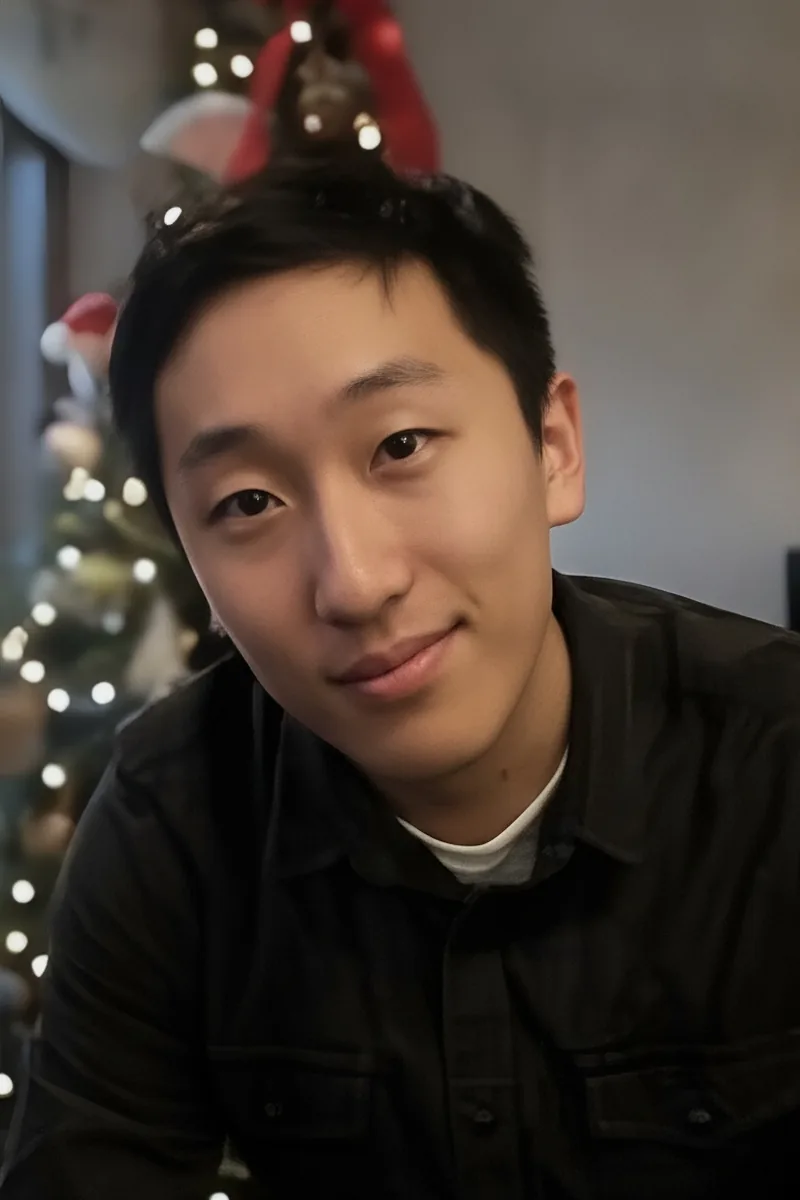
Between his mechanical engineering studies at Case Western Reserve and a perfect 36 ACT, Kevin has the calculus chops and physical intuition that AP Physics C: Mechanics rewards — especially on free-response problems where a sloppy free-body diagram dooms the entire solution. He zeroes in on the skill most students underestimate: translating a physical setup into the right differential expression before any computation begins, whether it's a variable-mass system or a non-trivial torque problem.
Three physics degrees and a 1570 SAT give Bryan the kind of deep mathematical fluency that AP Physics C: Mechanics rewards — particularly on problems where students need to set up differential equations for non-uniform circular motion or derive momentum impulse through integration. He teaches the course across both high school and college levels, so he knows exactly which conceptual leaps trip students up when the exam shifts from straightforward kinematics to multi-step rotational problems. Rated 5.0 by students.
Rice's mechanical engineering program puts Ashton through calculus-based statics, dynamics, and kinematics every semester — the same core mechanics that AP Physics C tests, just applied to real structural and machine systems. That daily exposure means he can spot whether a student's free-response mistake is a physics misread or a calculus execution error, and address the right one. His 32 ACT underscores the quantitative fluency backing his approach.
Most pre-med students avoid the calculus-heavy physics — Manideep leans into it, tackling AP Physics C: Mechanics alongside his biological sciences coursework at Northwestern, where he also TAs in the sciences. He breaks down conservation of energy and momentum problems by starting with the physical scenario and building the integral from there, so students learn a repeatable process instead of hunting for the right formula. Rated 5.0 by students.
Thirty years of teaching physics and holding a state certification means Michael has watched thousands of students hit the same stumbling blocks in calculus-based mechanics — the shift from memorizing kinematic equations to actually deriving motion from Newton's second law in integral form. His molecular biology graduate work gave him the quantitative rigor to teach across disciplines, and he uses that cross-training to connect force diagrams and energy methods to the kind of systematic reasoning that clicks on free-response problems.
Studying mathematics and physics at Harvard, Matthew is building the calculus and mechanics toolkit simultaneously — which means he sees the connection between a differential equation and a physical system as one idea, not two separate steps. His 34 ACT and deep comfort with multivariable calculus let him dig into the trickier AP Physics C territory, like work done by position-dependent forces or setting up moment-of-inertia integrals for composite objects, with real mathematical fluency. Rated 4.9 by students.
AP Physics C: Mechanics isn't the obvious fit for a political science major — but Lila also tutors calculus, pre-calculus, and both AP Physics C courses, and her 36 ACT reflects the quantitative chops that calculus-based mechanics actually demands. She's especially useful for students who need someone to slow down and rebuild the connection between a free-body diagram and the integral it implies, rather than racing through derivations.
Pharmacy school trains you to think in systems — how one variable cascades through an entire mechanism — and Lillian applies that same reasoning to mechanics problems where forces, constraints, and calculus all interact at once. Her prepharmacy science background covers the physics and math rigor AP Physics C demands, and her 34 ACT confirms the quantitative chops to back it up. She's especially effective at teaching students to identify which physical principle governs a problem before touching any equations, rated 4.9 by students.
Holding dual degrees in mathematics and physics, Maxwell brings the rare ability to see both sides of every AP Physics C: Mechanics problem simultaneously — the physical intuition and the calculus machinery. Where many students stumble is in translating a free-body diagram into the correct line integral or second-order differential equation; Maxwell treats that translation step as the core skill to master, not an afterthought. Rated 5.0 by students, with a 1520 SAT backing up the quantitative chops.
John scored a 36 on the ACT and tutors the full calculus-to-physics pipeline — AP Calculus AB, AP Physics 1, and AP Physics C: Mechanics — so he sees exactly where students' math skills break down under the pressure of a mechanics problem. He teaches students to recognize which physical scenarios call for integration versus differentiation before they even write an equation, turning the free-response section into a series of deliberate decisions rather than panicked formula hunts. Rated 4.9 by students.
Cornell pre-med students rarely double down on calculus-based physics, but Pratik tutors AP Physics C: Mechanics alongside AP Chemistry and AP Biology — giving him a cross-disciplinary lens that's especially useful when mechanics problems involve biological or chemical systems in free-response scenarios. His 35 ACT confirms the quantitative fluency needed to walk students through setting up torque equations or integrating variable forces without losing sight of the underlying physics.
Testimonials
Because the right AP Physics C: Mechanics tutor makes all the difference.
Average Session Rating – Based on 3.4M Learner Ratings
Practice AP Physics C: Mechanics
Free practice tests, flashcards, and AI tutoring for AP Physics C: Mechanics
Nearby AP Physics C: Mechanics Tutors
Other San Jose Tutors
Related Science Tutors in San Jose
Frequently Asked Questions
AP Physics C: Mechanics focuses on classical mechanics and includes kinematics, Newton's laws, work and energy, momentum, circular motion, oscillations, and gravitation. The course emphasizes calculus-based problem solving, which distinguishes it from AP Physics 1. For students in San Jose, understanding these core topics deeply is essential since the AP exam requires both conceptual understanding and the ability to apply calculus to physics problems.
The main difficulty lies in integrating calculus with physics concepts—students must not only understand the physics but also manipulate derivatives and integrals to solve problems. Many students struggle with the transition from algebra-based physics to calculus-based reasoning, and the time pressure on the exam makes it easy to make computational errors. Personalized tutoring helps identify whether gaps are in physics understanding or mathematical execution, allowing targeted practice in weak areas.
The exam consists of two sections: a 45-minute multiple-choice section (35 questions) and a 45-minute free-response section (3 questions). The multiple-choice section tests breadth of knowledge and quick problem-solving, while free-response questions require detailed explanations and multi-step solutions. Understanding how to manage time across both sections and knowing when to show work versus estimate is critical for maximizing your score.
Score improvement depends on your starting point and how consistently you engage with practice. Students who work with tutors typically see gains of 1-2 points on the 1-5 AP scale, though improvement varies based on initial understanding and effort. The most significant gains come from identifying specific problem areas—whether it's circular motion, energy conservation, or calculus application—and drilling those concepts with targeted practice tests and problem sets.
Practice tests are essential for AP Physics C: Mechanics success. They help you understand the exam's pacing, identify weak topics, and build test-taking stamina. Ideally, you should take full-length practice tests under timed conditions every 2-3 weeks leading up to the exam, then review mistakes carefully. Tutors can help you analyze which types of problems consistently trip you up and develop strategies to address them before test day.
Your first session typically involves assessing your current understanding of key mechanics concepts, reviewing your course materials, and identifying specific challenges—whether that's free-body diagrams, energy problems, or calculus integration. The tutor will also discuss your timeline and goals (improving your grade, preparing for the AP exam, etc.) to create a personalized study plan. This diagnostic approach ensures your tutoring focuses on areas where you'll see the most improvement.
Common mistakes include misapplying Newton's second law in non-inertial reference frames, making sign errors with vectors, and incorrectly setting up calculus expressions for kinematics problems. Students also often rush through free-response questions without clearly showing their work, losing points for reasoning even when their final answer is correct. Time management is another issue—students frequently run out of time on the free-response section. Tutors help you slow down, use systematic problem-solving approaches, and practice showing complete solutions.
Look for tutors with strong backgrounds in physics and calculus, ideally with experience teaching or tutoring AP-level material. Tutors familiar with the College Board's exam format and scoring rubrics can provide valuable insight into what graders are looking for on free-response questions. Varsity Tutors connects you with expert tutors who understand the specific challenges of AP Physics C: Mechanics and can tailor instruction to your learning style and goals.
Let’s find your perfect tutor
Answer a few quick questions. We’ll recommend the right plan and match you with a top 5% tutor.